The Best Healthy Alternatives to Vaping Worth Trying in 2026
The Best Healthy Alternatives to Vaping Worth Trying in 2026
Short answer: The healthiest alternatives to vaping are FDA-approved nicotine replacement (a patch, gum or lozenge) if you still need nicotine, plus nicotine-free swaps for the habit: sugar-free gum, exercise, breathing tools and nicotine-free pouches. Free quit coaching is available at 1-800-QUIT-NOW, and Smokefree.gov has free tools for the first weeks.
You told yourself it was just water vapor. Maybe you started vaping to quit cigarettes, or maybe you picked it up because the flavors tasted like a smoothie and the clouds looked harmless. Either way, you're here because something shifted, and you're searching for healthy alternatives to vaping. The cough that won't quit. The $150-a-month habit. The nagging feeling that "healthier than cigarettes" is a low bar. The good news is that 2026 has more viable healthy alternatives to vaping than ever before.
The less good news? Most listicles on this topic are written by companies selling you a different thing to inhale. So let's be honest about what works, what the science actually says, and what's just marketing dressed up as wellness.
Key Takeaways
- Vaping still carries real health risks, including respiratory damage and nicotine dependence, even if it's less harmful than combustible cigarettes.
- The best alternatives to vaping address both the chemical dependency (nicotine) and the behavioral habit (hand-to-mouth, oral fixation).
- Exercise, functional pouches, and breathing tools are among the most evidence-backed healthy alternatives to vaping available right now.
- Not all "nicotine-free" products are equal. Some swap one problem for another. Ingredients matter.
Why People Are Quitting Vaping in 2025 and 2026
The cultural tide is turning. According to 2024 National Youth Tobacco Survey data from the FDA and CDC, current e-cigarette use among U.S. youth dropped from 2.13 million (7.7%) in 2023 to 1.63 million (5.9%) in 2024. That's half a million fewer young people vaping in a single year. The same survey also tracks nicotine pouches; see our 2026 nicotine pouch statistics.
But the adults who started years ago are still hooked. And the health data keeps stacking up against them.
A 2025 systematic review published in PMC analyzed 119 studies and found that non-smoker current vapers had a 90% higher risk of respiratory symptoms compared to non-users (relative risk of 1.90). That's not a rounding error. That's your lungs telling you something, and a strong reason to explore healthy alternatives to vaping sooner rather than later.
The reasons people want out tend to cluster around three things: physical health concerns, the cost of maintaining a nicotine habit, and the realization that dependence on any substance, even one delivered through a sleek device, still controls your day.
Healthy Alternatives to Vaping That Actually Work
Here's where it gets practical. The healthy alternatives for vaping fall into a few broad categories: behavioral replacements, pharmacological tools, physical activity, and functional oral products. Some work best in combination.
1. Nicotine Replacement Therapy (NRT)
If your primary goal is quitting nicotine, NRT remains the most studied approach. Patches, gums, and lozenges deliver controlled doses of nicotine without the tar, formaldehyde, or acrolein found in vape aerosol.
NRT isn't sexy. Nobody posts their nicotine patch on Instagram. But decades of clinical trials support its effectiveness, and the FDA lists patches, gum and lozenges among its approved quit-smoking products, sold over the counter at virtually every pharmacy. Many people use NRT as a first step before transitioning to fully nicotine-free healthy alternatives to vaping.
Best for: People whose main problem is nicotine withdrawal, not the behavioral ritual.
Limitation: You're still consuming nicotine. NRT is a stepping stone, not a destination.
2. Exercise (Yes, Really)
This one sounds like advice from your high school gym teacher, but the data backs it up as one of the best alternatives to vaping. According to Smokefree.gov, even short bouts of aerobic exercise reduce the urge to smoke or vape. A systematic review in PMC found moderate-to-high quality evidence that exercise can aid nicotine cessation in the short term, with several studies reporting temporary reductions in cravings.
The mechanism is straightforward. Exercise floods your brain with dopamine and endorphins, the same neurochemicals that nicotine hijacks. A 15-minute jog won't erase a three-year vaping habit, but it can get you through a craving window without reaching for a device. As a free, accessible option, exercise ranks among the most reliable healthy alternatives to vaping.
Best for: People looking for alternatives to vaping for anxiety and stress. Exercise addresses both the neurochemical and psychological components.
3. Controlled Breathing Tools
Products like the Komuso Shift have carved out a niche in the quit-vaping space. The concept is simple: a wearable metal tube that extends your exhale, activating the parasympathetic nervous system and reducing anxiety. Komuso Design markets it as a tool that satisfies the oral fixation of vaping while also functioning as a breathwork device.
There's no nicotine, no vapor, no battery. It's essentially a structured breathing exercise you can wear around your neck. The evidence on breathwork for anxiety is solid. The evidence on this specific product for smoking cessation is more anecdotal, but the logic is sound. For people exploring healthy alternatives for vaping, breathing tools offer a low-risk entry point.
Best for: People who vape primarily out of habit or to manage stress, not for the nicotine buzz.
4. Functional Pouches (Zero-Nicotine)
The nicotine pouch market is exploding. Global Market Insights projects it will grow from $8.6 billion in 2025 to $44.2 billion by 2034. But most of that growth is in nicotine-containing pouches, which means you'd be swapping one form of nicotine delivery for another.
The more interesting development is the emergence of zero-nicotine functional pouches that deliver cognitive performance ingredients sublingually (under the tongue). These products are quickly becoming some of the best alternatives to vaping for people who started vaping for the focus and alertness, not the nicotine itself, and want those effects without nicotine.
The best versions combine ingredients with real clinical backing. More on this below.
5. Herbal and Aromatherapy Inhalers
Brands like FÜM, MONQ, and ARRØ sell devices that let you inhale essential oils or flavored air. They address the hand-to-mouth ritual and the sensory experience of vaping without delivering nicotine or producing combustion byproducts.
The honest assessment: these products are fine for the behavioral component. If you vape because you like having something in your hand and taking a pull, they can fill that gap. But the Boston Children's Hospital notes that "the long-term safety of inhaling vitamins and plant extracts isn't yet proven." Inhaling anything into your lungs, even essential oils, is a different biological event than swallowing a capsule or placing a pouch under your lip. Among healthy alternatives to vaping, inhalers sit in a gray area precisely because they still involve inhalation.
Best for: People who need the physical ritual. Less ideal if you're trying to stop inhaling things altogether.
Comparing the Best Alternatives to Vaping
| Alternative | Nicotine-Free? | Addresses Oral Fixation? | Evidence Level | Cost (Monthly) |
|---|---|---|---|---|
| NRT (Patches/Gum) | No | Gum only | Strong | $30-$50 |
| Exercise | Yes | No | Strong | Free |
| Breathing Tools | Yes | Yes | Moderate | $30-$115 (one-time) |
| Zero-Nicotine Pouches | Yes | Yes | Moderate to Strong (ingredient-dependent) | varies by brand, e.g. $7.00 per can in an NZE 5-pack, $16.00 for one Ultra Focus can (brand sites, Oct 2026); Roon from $9.16 per tin on subscription |
| Aromatherapy Inhalers | Yes | Yes | Weak to Moderate | $15-$40 |
Nicotine Replacement vs Nicotine-Free Swaps
Nicotine replacement treats the nicotine; nicotine-free swaps treat the habit. Most people quitting a vape need one of each. Here is how the options compare on what they contain and what they are approved for.
| Option | Nicotine | FDA status | What it replaces | Evidence |
|---|---|---|---|---|
| Nicotine patch | Yes | FDA-approved over-the-counter quit aid | Nicotine, not the ritual | FDA |
| Nicotine gum or lozenge | Yes | FDA-approved over-the-counter quit aid | Nicotine plus some of the oral habit | FDA |
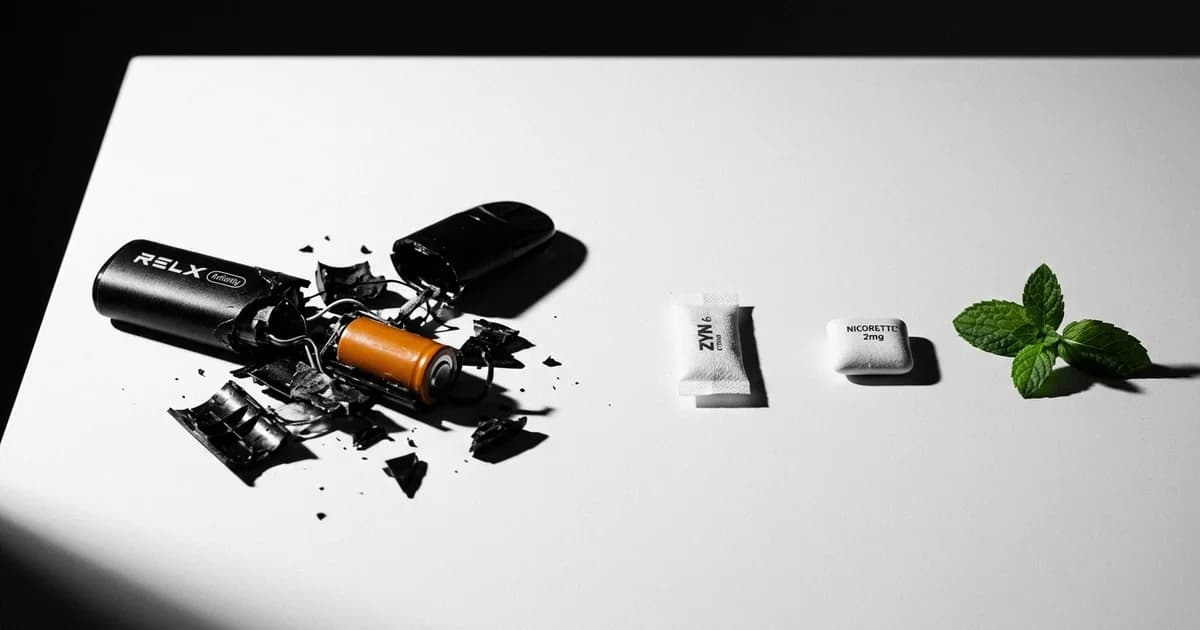
| Nicotine pouch (e.g. ZYN) | Yes | 20 ZYN products authorized for sale (Jan 2025); not a quit aid | Vape nicotine, in a pouch | FDA list |
| Nicotine-free pouch (e.g. Roon) | No | Not reviewed as a quit aid | The oral habit, plus caffeine | Label doses; Roon is 80 mg caffeine |
| Aroma inhaler | No | Not FDA-approved | Hand-to-mouth and inhale ritual | Long-term safety of inhaling plant extracts not proven (Boston Children's) |
| Exercise | No | Not applicable | The craving window | Smokefree.gov |
Source: FDA product lists, Smokefree.gov and brand product pages, checked Oct 2026.
Where these numbers come from: every row above links to its source, and prices on this page come from the brands' own product pages. No product was lab-tested or trialed by us for this guide. Disclosure: Roon makes a competing caffeine pouch, and this page links to it. If you want a product-by-product list with prices, see our healthy vaping alternatives worth trying.
Distractions That Help in the First Two Weeks
The best distractions fill the few minutes a craving takes to pass; the CDC's quit guidance notes every craving passes. Keep two or three ready before the urge hits:
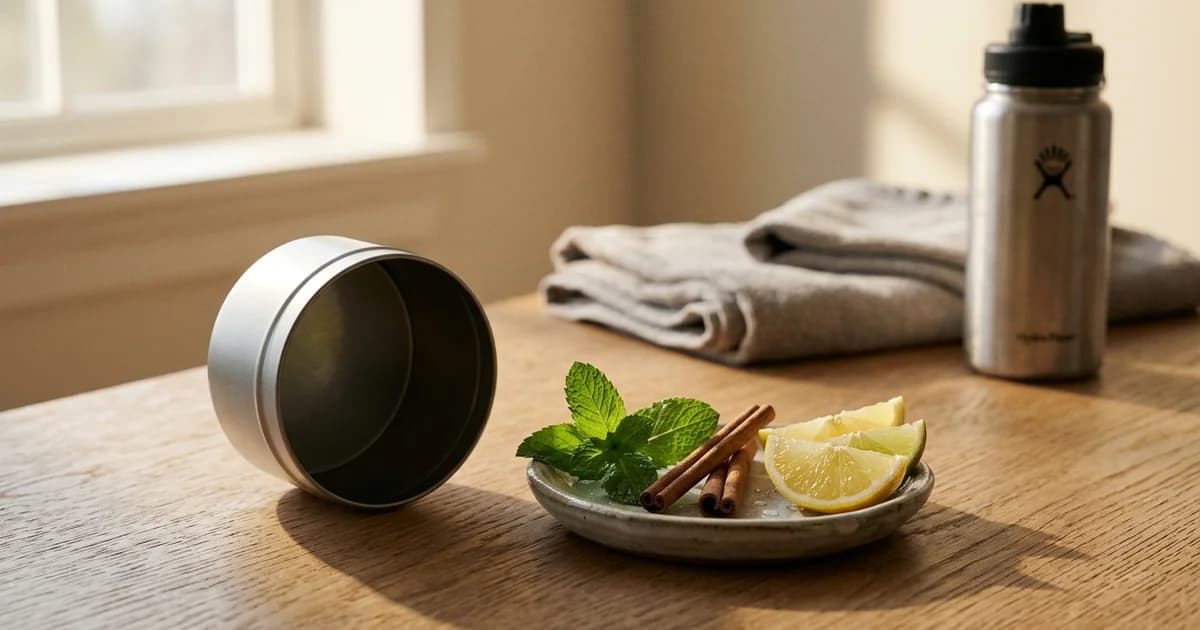
- Keep your mouth busy: sugar-free gum, a cinnamon toothpick or a nicotine-free pouch.
- Move for five minutes: a brisk walk or a few flights of stairs; Smokefree.gov notes short bouts of exercise reduce cravings.
- Slow your exhale: four slow breaths, each out-breath longer than the in-breath.
- Change the cue: if you vaped with coffee or in the car, change the place or the order for the first two weeks.
- Call for help: 1-800-QUIT-NOW connects you to free coaching.
Week by week, see the benefits of quitting vaping as your body recovers.
The Science Behind the Stack: What to Look for in a Functional Pouch
Not all pouches are created equal. If you're evaluating zero-nicotine pouches as healthy alternatives to vaping, the ingredient list matters more than the branding.
Here's what the research supports:
Caffeine + L-Theanine is the most studied nootropic combination in existence. A study published on PubMed found that 97 mg of L-Theanine combined with 40 mg of caffeine helped participants focus attention during demanding cognitive tasks. The L-Theanine improves attention-switching accuracy and promotes alpha-wave activity, adding calm focus on top of caffeine's alertness. It's the reason green tea feels different from coffee.
Theacrine and Methylliberine are newer to the conversation but gaining traction fast. A study published in Cureus found that combining caffeine with theacrine and methylliberine improved cognitive performance and reaction time without negatively affecting mood. A separate trial published in PMC studying tactical personnel found that the combination of caffeine, methylliberine, and theacrine may improve physical and cognitive performance over a longer period compared to caffeine alone.
The key advantage of theacrine? Your body doesn't build tolerance to it the way it does with caffeine. That means you don't need to keep increasing the dose to get the same effect. This tolerance-free profile is what makes functional pouches stand out among healthy alternatives to vaping for long-term use.
Addressing the Anxiety Question
A lot of people vape because they believe it calms them down. And in the short term, nicotine does activate certain calming pathways. But the CDC points out that nicotine use during adolescence can harm the parts of the brain that control attention, learning, mood, and impulse control. Long-term, nicotine dependence tends to increase baseline anxiety because your nervous system starts to need the substance just to feel normal.
If you're searching for alternatives to vaping for anxiety, the most effective approach combines a behavioral replacement (something for your hands and mouth) with ingredients that actually support calm focus without nicotine. L-Theanine, for example, promotes alpha brain wave activity, the same pattern associated with relaxed alertness during meditation. Pairing that kind of ingredient with a physical ritual makes functional pouches some of the best alternatives to vaping for anxiety management.
Healthy Alternatives to Vaping: Focus Without Nicotine
Here's the bottom line. You probably started vaping for one of two reasons: the ritual or the cognitive kick. The ritual can be replaced with breathing tools, exercise habits, or oral products. The cognitive kick can be replaced with ingredients that have actual clinical data behind them. The best healthy alternatives to vaping address both sides of that equation.
Roon was built for exactly this use case. It's a zero-nicotine sublingual pouch containing Caffeine (80 mg), L-Theanine, Theacrine, and Methylliberine, the same stack shown in peer-reviewed research to support sustained focus, faster reaction time, and steady energy for 6 to 8 hours. No vapor. No smoke. No tolerance buildup. No nicotine. As far as healthy alternatives to vaping go, Roon checks every box: nicotine-free, science-backed, and designed to satisfy the oral fixation that keeps people reaching for a vape.
If you've been using nicotine as a focus tool and you're ready to drop the dependency, this is what moving forward looks like. Not another thing to inhale. Just clean cognitive performance, delivered under your tongue.
Try Roon at takeroon.com.
Sources: FDA-approved quit products; FDA list of authorized nicotine pouches; CDC on e-cigarette health effects; Smokefree.gov on exercise and cravings; systematic review of vaping and respiratory symptoms.