Supplements to Increase GABA: A Science-Based Guide
Supplements to Increase GABA: A Science-Based Guide
Short answer: Oral GABA probably reaches the brain poorly, so the better-supported options work indirectly: L-theanine and magnesium (calm without sedation), valerian (sedating, for sleep), and making sure vitamin B6 is not low. Most GABA-raising evidence for these comes from animal studies; human trials measure calm or sleep, not brain GABA.
Your brain has a built-in braking system. It's called GABA (gamma-aminobutyric acid), and finding the right supplements to increase GABA has become one of the most searched topics in the stress-management space. GABA is the primary inhibitory neurotransmitter in your central nervous system. When GABA levels drop too low, the result is a nervous system stuck in overdrive: racing thoughts, poor sleep, tension that won't quit.
But here's the problem. Most people buying supplements to increase GABA are working with incomplete information. Some of these products work through well-documented mechanisms. Others rely on shaky science and a lot of marketing.
This guide breaks down what actually works, what doesn't, and why the method of increasing GABA matters more than the molecule on the label.
Key Takeaways
- Oral GABA supplements face a well-known absorption problem: limited ability to cross the blood-brain barrier.
- Indirect GABA boosters like L-theanine, magnesium, and valerian root work through different, often better-supported mechanisms.
- The best supplements that increase GABA do so without causing sedation or tolerance buildup.
- Stacking the right compounds can support GABAergic activity while keeping you alert and functional.
What GABA Actually Does in Your Brain
GABA works by binding to receptors on neurons and reducing their firing rate. Think of it as the volume knob for neural activity. When GABA binds to its receptors (primarily GABA-A and GABA-B), it makes neurons less likely to fire, which produces a calming effect on the entire nervous system.
This is why drugs that enhance GABA activity, like benzodiazepines and barbiturates, have such powerful sedative effects. They don't add GABA to your brain. They amplify the GABA that's already there.
The distinction matters for anyone researching supplements to increase GABA. You need to understand that there are two fundamentally different strategies: adding more GABA directly, or helping your existing GABA system work better. Knowing what supplements increase GABA in the brain requires understanding both approaches.
The Problem with Oral GABA Supplements
GABA is sold as a standalone supplement in capsule and powder form. It's cheap, widely available, and the logic seems straightforward: low GABA causes anxiety, so take more GABA. Simple.
Except it's not. The blood-brain barrier (BBB) is a selective membrane that controls what enters your brain from your bloodstream. And GABA, as a molecule, has a complicated relationship with that barrier, which is why many people turn to indirect supplements to increase GABA instead.
According to a review published in Frontiers in Psychology, it has long been thought that GABA cannot cross the BBB, though the studies examining this question are "often contradictory and range widely in their employed methods." A 2020 systematic review in Frontiers in Neuroscience reinforced this uncertainty, noting that while oral GABA intake has shown some benefits for stress and sleep in human trials, the mechanism remains unclear.
The Cleveland Clinic puts it plainly: much of supplemental GABA might not be able to get into your brain.
So where does that leave you? With a molecule that might work through peripheral pathways (like the gut-brain axis) but has no reliable evidence of directly raising brain GABA levels when swallowed as a pill. This is the core limitation that makes indirect supplements to increase GABA a better bet for most people.
There's a more recent angle worth noting. A 2025 study published in npj Science of Food found that long-term GABA supplementation in animal models alleviated anxiety-like behaviors and increased GABA levels in the prefrontal cortex. Promising, but still animal data. The human evidence remains thin.
Supplements That Increase GABA Through Better Mechanisms
The smarter approach isn't to dump more GABA into your gut and hope it reaches your brain. It's to use compounds that either enhance your brain's own GABA production, protect existing GABA from breakdown, or act directly on GABA receptors. These are the supplements that increase GABA through pathways the science actually supports.
Here's what the research tells us.
L-Theanine
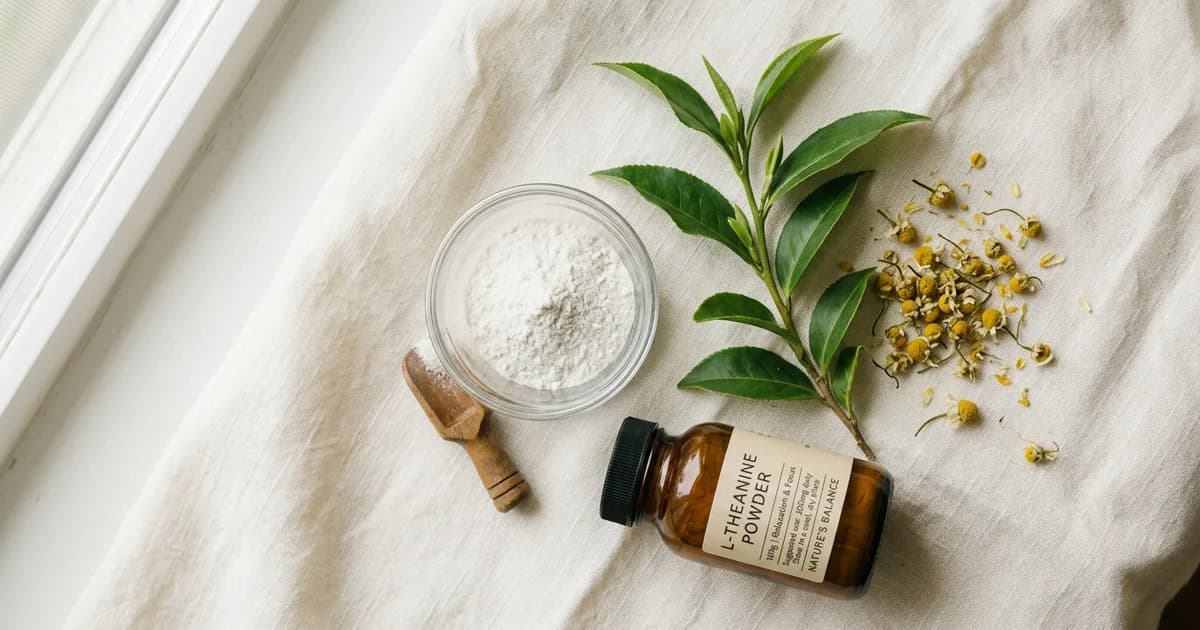
L-theanine is an amino acid found naturally in green tea, and it's one of the better-studied supplements linked to GABA, though the GABA increase itself was shown in animals. It crosses the blood-brain barrier easily, which already gives it an advantage over oral GABA. Once in the brain, L-theanine influences several neurotransmitter systems; in rats it increased GABA levels (Nathan 2006 review). See L-theanine vs GABA and GABA plus L-theanine.
The mechanism is well-characterized. L-theanine raises GABA, serotonin, and dopamine while simultaneously reducing excitatory glutamate activity. The net effect is calm alertness, not sedation. This is why tea drinkers report feeling relaxed but focused, even though tea contains caffeine.
Research on L-theanine consistently shows reductions in subjective stress and improvements in attention. Typical effective doses range from 100mg to 200mg. For anyone asking what supplements increase GABA in the brain without causing drowsiness, L-theanine has the most human data on calm and attention, though no human study has measured it raising brain GABA.
Magnesium
Magnesium is a mineral involved in over 300 enzymatic reactions in your body, and its relationship with GABA is direct and well-documented. As one of the most studied supplements to increase GABA receptor function, magnesium deserves a place in any serious protocol.
According to research summarized by NCBI, magnesium acts on the GABAergic system in two ways: it reduces presynaptic glutamate release (lowering excitatory activity) and enhances GABA receptor function. A study published in PubMed demonstrated that magnesium's anxiolytic effects in mice were mediated through GABA-A receptor activation, confirmed when those effects were blocked by a GABA-A receptor antagonist.
The Cleveland Clinic notes that magnesium supplementation tends to improve outcomes in people with mild anxiety, and that deficiency may contribute to anxiety symptoms.
Not all forms of magnesium are equal for brain health. Magnesium glycinate and magnesium L-threonate are generally preferred for absorption; the evidence that L-threonate raises brain magnesium comes from rat studies. Magnesium oxide, the cheapest form, has poor bioavailability and is mostly useful as a laxative.
| Magnesium Form | Bioavailability | Best For |
|---|---|---|
| Magnesium L-Threonate | High (crosses BBB in rats) | Cognitive function, GABA support |
| Magnesium Glycinate | High | Anxiety, sleep quality |
| Magnesium Citrate | Moderate | General supplementation |
| Magnesium Oxide | Low | Not recommended for brain health |
Valerian Root
Valerian root has been used as a calming agent for centuries, and its mechanism involves direct interaction with the GABA system. Valerenic acid, the primary active compound, inhibits the enzyme that breaks down GABA (GABA transaminase), effectively raising GABA levels in the synaptic cleft. This makes valerian one of the more targeted supplements to increase GABA through enzyme inhibition.
Valerian also appears to bind directly to GABA-A receptors, though with much weaker affinity than pharmaceutical drugs. The result is a mild sedative effect that's useful for sleep but less ideal for daytime focus.
This is the trade-off with valerian. It works on the GABA system, but it tends to push toward drowsiness rather than alert calm. If your goal is better sleep, valerian is a reasonable choice. If your goal is focused productivity, it's the wrong tool.
Taurine
Taurine is an amino acid that acts as a GABA-A receptor agonist, meaning it binds to the same receptors that GABA does and produces similar inhibitory effects. It's abundant in the brain and plays a role in regulating neuronal excitability, which is why it appears on many lists of supplements to increase GABA naturally.
The evidence for taurine as a standalone anti-anxiety supplement is still developing, but its mechanism is sound. It's also one of the safest amino acids to supplement: a risk assessment set 3g per day as the observed safe level (Shao and Hathcock 2008).
B6 (Pyridoxine)
Vitamin B6 is a required cofactor for the enzyme glutamic acid decarboxylase (GAD), which converts glutamate into GABA. Without adequate B6, your brain literally cannot produce GABA at normal rates. This makes B6 one of the most fundamental supplements to increase GABA production at the enzymatic level.
Low B6 status is more likely in older adults, people with kidney disease or alcohol dependence, and those taking certain medications (NIH ODS). Correcting a B6 deficiency can have a measurable impact on GABA production, though supplementing beyond normal levels doesn't appear to provide extra benefit.
Supplements to Increase GABA: What the Evidence Actually Looks Like
Here's a comparison of the major supplements to increase GABA, ranked by the strength of evidence and practical usefulness.
| Supplement | Mechanism | Crosses BBB? | Sedating? | Evidence Strength |
|---|---|---|---|---|
| L-Theanine | Increases GABA (shown in animals), reduces glutamate | Yes | No | Moderate for calm/stress outcomes; GABA increase shown in animals |
| Magnesium (Glycinate/Threonate) | GABA-A receptor modulation, glutamate reduction | Yes (Threonate, in rats) | Mild | Moderate (mechanism mostly animal; human anxiety data mixed) |
| Valerian Root | GABA transaminase inhibition, GABA-A binding | Yes | Yes | Moderate |
| Taurine | GABA-A receptor agonist | Yes | Mild | Moderate |
| Vitamin B6 | Cofactor for GABA synthesis | Yes | No | Strong (if deficient) |
| Oral GABA | Direct GABA supplementation | Unclear | Variable | Weak |
The pattern is clear. The supplements that increase GABA most effectively don't try to brute-force GABA through the blood-brain barrier. They work with your brain's existing chemistry to optimize GABAergic signaling.
How to Increase GABA Naturally (Without Supplements)
The best human evidence for raising brain GABA without a pill comes from yoga. In a randomized MRS study, 12 weeks of yoga (n=19) improved mood and anxiety more than metabolically matched walking (n=15), and those gains tracked with higher thalamic GABA levels (Streeter 2010). It is a small study, but it measured GABA in human brains directly, which most supplement studies do not. Regular exercise, enough sleep and limiting alcohol are the other common recommendations, with less direct GABA data. Those non-supplement options are ranked by evidence in how to increase GABA naturally.
Asking about one ingredient? See which supplements increase GABA, ingredient by ingredient. For product picks, see best GABA supplements.
How to Stack GABA-Supporting Supplements
Single-ingredient approaches have limits. The most effective strategy for using supplements to increase GABA combines compounds that work through different mechanisms.
A well-designed stack might include:
- L-theanine (100-200mg) for direct GABA enhancement and glutamate reduction
- Magnesium glycinate (200-400mg) for GABA receptor support and baseline mineral status
- B6 (25-50mg) to ensure the GABA synthesis pathway has what it needs
Upper limits: vitamin B6 100 mg/day for adults (NIH ODS; nerve damage reported with long-term high doses); supplemental magnesium 350 mg/day of elemental magnesium (NIH ODS); check whether your label lists elemental magnesium, since 200-400mg of magnesium glycinate compound contains only about 30-55mg of elemental magnesium. Valerian can add to sedatives and alcohol. Ask a clinician if you take benzodiazepines, sleep aids or seizure medication.
This combination addresses GABA from three angles: production, receptor sensitivity, and excitatory/inhibitory balance. None of these supplements to increase GABA cause tolerance buildup with regular use, and none produce the sedation that makes valerian or high-dose GABA impractical during working hours.
The key principle: you want to support GABA activity without tipping into sedation. Calm focus, not drowsy calm.
Calm Focus Without the Fog
Most people searching for supplements to increase GABA aren't looking to sedate themselves. They want to quiet the mental noise so they can actually think clearly and get things done.
That's the exact problem Roon was designed to solve. It's a zero-nicotine sublingual pouch built around L-theanine, caffeine (80mg), theacrine, and methylliberine. The L-theanine promotes GABA activity for a calm, steady baseline while the other ingredients provide clean energy that lasts 6 to 8 hours without jitters or a crash.
No sedation. No tolerance buildup. Just the kind of focus where your brain feels quiet enough to do its best work.
Calm focus, not drowsy calm. Try Roon.
Roon contains caffeine and is for adults 18+. Skip it if you are pregnant, caffeine-sensitive, or take sedatives or stimulant medication without checking with your clinician.
Sources
- Boonstra E et al. Frontiers in Psychology, 2015. Review of oral GABA and the blood-brain barrier. PubMed
- Nathan PJ et al. Journal of Herbal Pharmacotherapy, 2006. Review, mostly animal data on L-theanine. PubMed
- Poleszak E. Pharmacological Reports, 2008. Magnesium and GABA-A receptors, in mice. PubMed
- Streeter CC et al. Journal of Alternative and Complementary Medicine, 2010. RCT with MRS, n=34. PubMed
- Shao A, Hathcock JN. Regulatory Toxicology and Pharmacology, 2008. Taurine risk assessment. PubMed
- NIH Office of Dietary Supplements: Vitamin B6, Magnesium