Guarana vs Caffeine: Is the Whole-Plant Extract Really Different From Coffee?
Roon Team
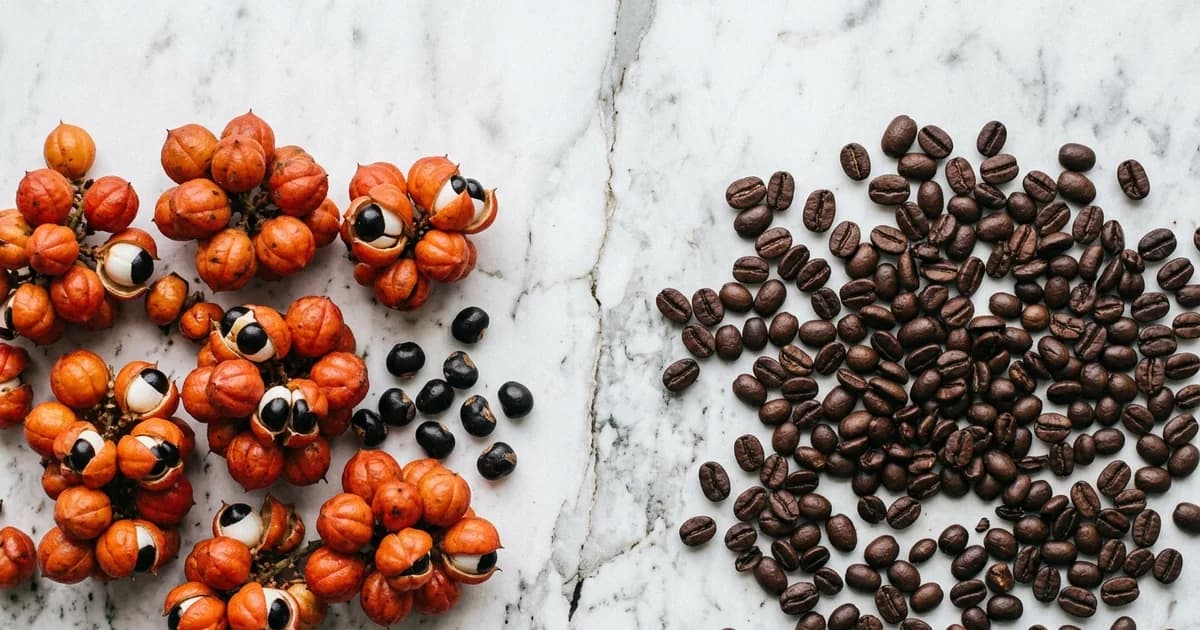
Guarana vs Caffeine: Is the Whole-Plant Extract Really Different From Coffee?
Guarana shows up on every energy drink label as if it were something more exotic than caffeine. The pitch is seductive: a wild Amazonian berry that delivers smoother, longer, cleaner energy than your coffee ever could. So in the guarana vs caffeine debate, is the whole-plant extract actually different, or is it caffeine wearing a costume?
The short answer: guarana is mostly a caffeine delivery system, and a potent one. The interesting part is what rides alongside the caffeine, and whether any of it changes how you feel.
Let's separate the chemistry from the marketing.
Key Takeaways
- Guarana's main active compound is caffeine. Gram for gram, guarana seeds carry more of it than coffee beans.
- The "slow-release, no-crash" story is mostly marketing. The evidence that guarana behaves differently than equivalent-dose caffeine is thin.
- Guarana contains extra plant compounds (tannins, saponins, catechins), but these are present in small amounts in most products.
- The real variable with any botanical is the dose. Extract strength swings wildly, so you rarely know exactly how much caffeine you're getting.
What Guarana Actually Is
Guarana is the seed of Paullinia cupana, a climbing plant from the Amazon basin in Brazil. People grind the roasted seeds into a powder and add it to teas, supplements, and energy drinks.
The headline fact is the caffeine concentration. According to Medical News Today, citing 2023 research, guarana seeds contain 2–8% caffeine, while coffee beans contain 1–3% caffeine. By that math, guarana is roughly two to three times more caffeine-dense than coffee by weight.
That density is why guarana earned its reputation. It isn't a different stimulant. It's a richer source of the same one.
Guarana vs Caffeine: Same Molecule, Different Wrapper
Here is the part the labels gloss over. The caffeine in guarana is chemically identical to the caffeine in coffee, tea, or a pure caffeine pill. Your liver cannot tell them apart.
So when people ask is guarana stronger than caffeine, the question is slightly confused. Guarana contains caffeine. A 5% caffeine guarana extract is just a concentrated way to deliver the molecule. Milligram for milligram in your bloodstream, caffeine is caffeine.
What changes the experience is dose and what else comes along for the ride. That's where guarana's other compounds enter the picture.
The "Whole Plant" Argument
Beyond caffeine, guarana carries tannins, saponins, and catechins. These are antioxidant plant compounds, and they're the basis for the "more than just caffeine" claim.
Two ideas get repeated constantly:
- Tannins slow caffeine absorption, giving a gentler, longer release with no crash.
- The plant compounds add cognitive benefits beyond what caffeine alone provides.
Both deserve scrutiny, because both are stated as fact far more often than the data supports.
Does Guarana Really Release Caffeine Slower?
This is the central promise of nearly every guarana energy drink on the shelf, and it's the weakest link in the story. The "slow-release, no-crash" claim is widely repeated by sellers but poorly supported by controlled human pharmacokinetic data.
The theory sounds plausible. Tannins bind to caffeine in the seed, so absorption might be slower. But "might happen in a seed" and "measurably changes your blood caffeine curve after you swallow a capsule" are very different claims.
When you isolate the variables, most of the smoothness people credit to guarana comes down to dose. A modest amount of caffeine from any source feels smoother than a triple espresso. Attribute that to the plant, and you've confused the messenger with the message.
If you want a genuinely smoother caffeine curve, the better-studied lever is pairing caffeine with L-theanine, the calming amino acid in tea. That combination has real evidence behind it for reducing jitter while keeping the alertness. We cover that pairing in depth in our breakdown of why caffeine and L-theanine work better together.
Guarana and Cognitive Performance: What the Research Shows
Some research suggests guarana can support attention and task performance, but the trials are small, often use combination products, and rarely compare guarana against an equal dose of plain caffeine. That last gap matters enormously.
A 2023 systematic review and meta-analysis published in Nutrients examined guarana's effect on cognitive performance, and you can read the discussion around that analysis on MDPI. The honest takeaway is that the field is muddy. Effects exist in some studies, but disentangling guarana's "extra" compounds from its caffeine content is the unsolved problem.
Until a study gives one group guarana and another group matched-dose caffeine, and the guarana group still wins, the cleanest interpretation stands: most of guarana's punch is the caffeine.
Guarana vs Coffee vs Other Caffeine Sources
Here's a practical comparison of common caffeine sources, including where a dosed formula fits in. This is the guarana caffeine comparison most labels won't give you straight.
| Source | Caffeine density / dose | Onset | Crash risk | Dose certainty |
|---|---|---|---|---|
| Coffee (brewed) | ~80–100 mg per cup | 30–60 min | Moderate | Variable by brew |
| Guarana extract | 2–8% caffeine by weight (up to ~5.3% pure) | 30–60 min | Moderate | Low (extract varies) |
| Energy drink (guarana-based) | Often 80–160 mg + sugar | 30–60 min | Higher (sugar + caffeine) | Medium |
| Pure caffeine pill | Exact mg labeled | 30–45 min | Higher if overdosed | High |
| Roon sublingual pouch | 80 mg caffeine + 60 mg L-theanine + 25 mg Dynamine + 5 mg TeaCrine | 5–10 min | Low (L-theanine + dosed stack) | High (each compound labeled) |
The pattern is clear. The further left you go, the less you know about your actual caffeine intake. The "natural" sources are the ones with the least dose certainty, because botanical extract strength swings batch to batch.
The Real Issue: You Don't Know Your Dose
The most important difference in guarana effects vs caffeine isn't the molecule. It's measurement.
When you drink coffee, the caffeine ranges widely by bean, roast, and brew. When you take guarana, the extract concentration can sit anywhere across that 2–8% band. According to Medical News Today, pure guarana can contain up to 5.3% caffeine, while espresso coffee contains about 0.21% caffeine, which tells you how wide the spread between sources really is.
That uncertainty matters because caffeine has a ceiling. The FDA suggests that consuming 400 mg of caffeine per day is safe, but too much caffeine can cause side effects, such as jittering, tremors, agitation, and anxiety. You cannot manage a budget you can't measure. A "natural energy" guarana drink with an undisclosed extract strength makes that math impossible.
Conclusion
Guarana is not a smarter, gentler cousin of caffeine. It's a caffeine-dense seed with some antioxidant compounds along for the ride, wrapped in marketing that promises more than the data delivers.
The molecule doing the work is caffeine, the same one in your coffee. The "slow-release, no-crash" story leans on tannin chemistry that hasn't held up well in controlled human studies, and guarana's cognitive edge over matched-dose caffeine remains unproven. What separates a good caffeine experience from a bad one is the dose you take, the timing, and whether anything is there to soften the edges. Knowing your numbers beats trusting a label that says "natural."
Frequently Asked Questions
Is guarana stronger than caffeine?
The question mixes up the source and the molecule. Guarana contains caffeine, and a very concentrated amount of it. Guarana seeds carry 2–8% caffeine versus 1–3% in coffee beans, so guarana is more caffeine-dense by weight. But in your bloodstream, a given milligram of caffeine acts the same regardless of whether it came from guarana or coffee.
Does guarana cause less of a crash than coffee?
There's little controlled evidence that guarana produces a smoother curve than an equal dose of plain caffeine. The "no-crash" claim is repeated by sellers far more than it's demonstrated in pharmacokinetic studies. Most perceived smoothness tracks with how much caffeine you took, not which plant it came from.
How much caffeine is in a guarana energy drink?
It varies, often 80 to 160 mg per can, frequently alongside added sugar. Because guarana extract strength isn't standardized across products, the exact caffeine contribution from the guarana itself is usually unclear. Read the total caffeine line on the label rather than trusting the word "guarana."
Is guarana more natural or healthier than coffee?
Both are plant-derived caffeine sources. Guarana adds tannins, saponins, and catechins, but usually in small amounts. "Natural" doesn't mean lower risk. Excess caffeine from any source can cause anxiety, tremors, and palpitations, which is why staying under the FDA's 400 mg daily guidance matters more than the source.
What's the real difference in guarana vs coffee?
Chemically, the caffeine is identical. The practical differences are caffeine density (guarana is higher by weight), format (guarana usually arrives in pills or drinks, coffee as a beverage), and dose certainty (coffee and guarana extracts both vary, which makes precise dosing hard).
Does guarana improve focus or memory?
Some small studies suggest guarana can support attention, but they rarely compare it against a matched dose of plain caffeine, so it's hard to credit anything beyond the caffeine. The 2023 Nutrients meta-analysis on guarana and cognition shows mixed, hard-to-isolate results rather than a clear standalone effect.
What's Actually Doing the Work
This whole comparison comes down to one question: what is actually doing the work? With guarana, the answer is caffeine you can't precisely measure, dressed up as something rarer. That's the gap Roon was built to close.
Instead of leaning on a variable botanical extract, Roon names and doses every compound: 80 mg caffeine, 60 mg L-theanine, 25 mg methylliberine (Dynamine), and 5 mg theacrine (TeaCrine) in a sublingual pouch. You know exactly what you're taking. The L-theanine is the part with real evidence for smoothing caffeine's edge, which is the benefit guarana only promises.
Roon isn't a replacement for sleep, and it isn't a license to ignore your daily caffeine ceiling. It's a way to get a known dose, with a 5 to 10 minute onset and a 6 to 8 hour window built for steady focus without the jitters or the crash. If you've been chasing "clean energy" through mystery extracts, try Roon and see what knowing your dose feels like.
Written by Roon Team