Guarana: Does the "Slow-Release Caffeine" Story Actually Hold Up?
Roon Team
Guarana: Does the "Slow-Release Caffeine" Story Actually Hold Up?
Open almost any energy drink or pre-workout, and you will find guarana somewhere on the label, usually next to a promise of smooth, sustained energy without the crash. The pitch is everywhere. The seed contains caffeine, the story goes, but it releases that caffeine slowly because it is wrapped in natural plant compounds.
It is a clean, appealing idea. It is also mostly wrong.
The science behind guarana is genuinely interesting, and some of its cognitive effects are real. But the specific "slow-release caffeine" claim, the one that sells most of the product, does not survive a close reading of the actual pharmacology. Here is what the research says, what guarana actually does, and how to think about it next to plain caffeine.
Key Takeaways
- Guarana is the most caffeine-dense plant on Earth. Its seeds run 2 to 8 percent caffeine by weight, compared to 1 to 3 percent for coffee beans.
- The "slow-release" claim fails the lab test. A controlled dissolution study found caffeine from guarana is absorbed at the same rate as plain caffeine.
- Some cognitive effects appear at doses too low to be caffeine. This points to other active compounds in the seed, not a special caffeine delivery system.
- For predictable focus, precise dosing beats a variable botanical extract.
What Is Guarana, Exactly?
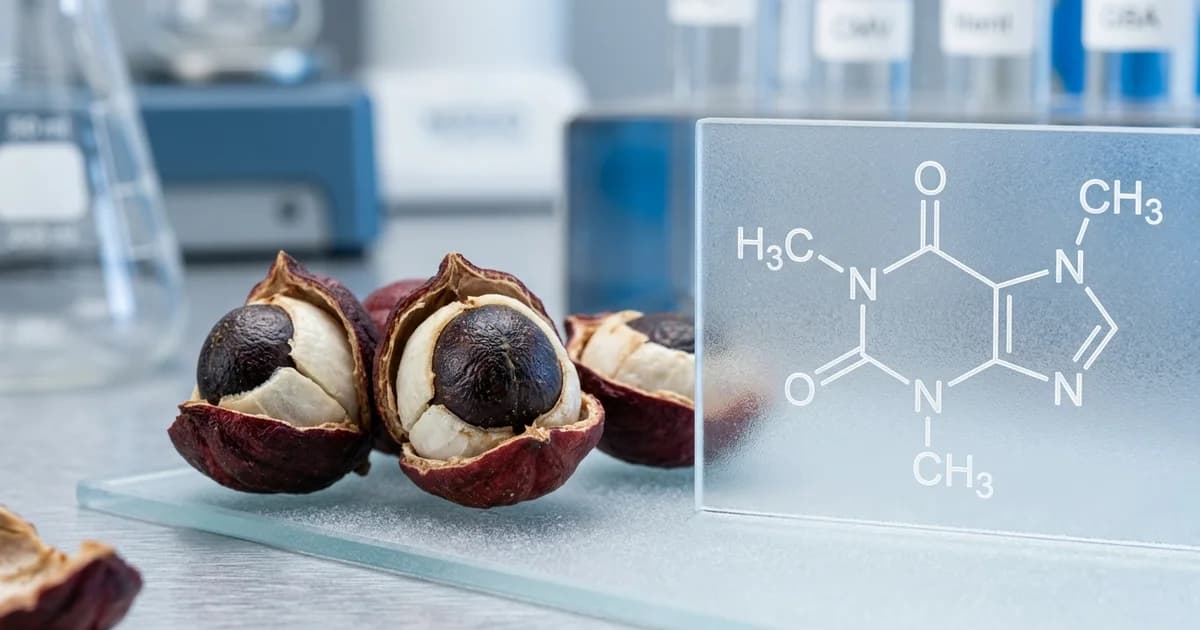
Guarana is the seed of Paullinia cupana, a climbing plant native to the Amazon basin and cultivated mostly in Brazil. Indigenous communities have used it for centuries as a stimulant and traditional remedy.
The seed earns its reputation for one reason: caffeine density. According to the NIH LiverTox database, guarana seeds contain 2 to 8 percent caffeine, far higher than the 1 to 3 percent found in coffee beans. That makes it one of the most concentrated natural caffeine sources you can buy.
The seed carries more than caffeine, though. It also holds theobromine and theophylline, two related stimulant compounds, plus catechins, epicatechins, and procyanidins, which are antioxidant plant chemicals. That mix matters for the rest of this story.
Guarana Caffeine Content: How Much Are You Actually Getting?
A typical guarana dose delivers caffeine in the same ballpark as a strong cup of coffee, but the exact amount swings widely.
Because raw seed runs anywhere from 2 to 8 percent caffeine, the dose in any given product depends entirely on processing and extraction. ScienceInsights notes that a 500 mg capsule of guarana powder lands around 130 mg of caffeine, roughly one cup of brewed coffee. Concentrated extracts can pack far more.
This is the first practical problem with guarana. On a coffee or a dosed caffeine pill, you know the number. With a whole-seed botanical, the caffeine content depends on the seed batch, the extraction method, and how the brand labels it. Two products with the same "guarana" line on the label can hit very differently.
Guarana vs Caffeine: Is It Really "Slow Release"?
No. The most-repeated claim about guarana, that its caffeine releases slowly, does not hold up when you test it directly.
The logic sounds reasonable on paper. Guarana seeds are rich in tannins, and the theory says these compounds bind caffeine, slowing how fast it enters your bloodstream. A gentler curve, no spike, no crash. Marketing has run with this for decades.
Then someone actually measured it. A study published in the Journal of Pharmacy and Pharmacology compared the dissolution and absorption of caffeine from guarana against an equal dose of free caffeine. The finding was blunt: there were no meaningful differences in absorption. The release and uptake of caffeine from guarana matched plain caffeine.
In other words, once caffeine is in your system, your body cannot tell whether it came from a seed or a tablet. Caffeine is caffeine. It hits peak blood levels in roughly the same window and clears on the same schedule, with a half-life of about five hours either way.
So why do so many people report a smoother ride on guarana? Part of it is expectation and the placebo effect, which is powerful with stimulants. Part of it may be the other compounds riding along in the seed. And part of it is simply dose: a small guarana serving carries less caffeine than a double espresso, and less caffeine usually means fewer jitters. That is not slow release. That is just a smaller dose.
Guarana Benefits That Actually Have Evidence
The slow-release story is shaky, but guarana is not snake oil. Some of its effects are real, and a few are genuinely intriguing.
The strongest evidence is for short-term cognition. In a dose-ranging trial published in the Journal of Psychopharmacology, researchers Haskell, Kennedy, and colleagues gave healthy adults four doses of guarana extract and tracked mood and mental performance through the day. Guarana improved secondary memory and lifted ratings of alertness and contentment.
Here is the twist that makes the finding worth your attention. The two lower doses outperformed the higher ones, and the smallest effective dose contained less than 9 mg of caffeine, well below the level usually needed to move cognition. That strongly suggests something other than caffeine is doing part of the work, likely the seed's other xanthines or its antioxidant compounds.
Beyond cognition, the evidence thins out. Guarana is often sold for weight loss, energy, and athletic performance, but most of those claims lean on caffeine alone or on small studies that combine guarana with other ingredients, which makes the guarana contribution hard to isolate.
A quick honest summary of where the science stands:
| Claimed benefit | Evidence strength | What is likely doing the work |
|---|---|---|
| Short-term alertness | Strong | Caffeine, plus possibly other compounds |
| Secondary memory and mood | Moderate | Non-caffeine seed compounds (effects seen below 9 mg caffeine) |
| "Slow-release" smooth energy | Weak to none | Smaller dose and expectation, not delayed absorption |
| Fat loss and metabolism | Weak | Caffeine, often combined with other stimulants |
| Antioxidant intake | Plausible | Catechins and procyanidins |
So Where Does Guarana Actually Fit?
Think of guarana as a caffeine source with a few interesting extras, not as a smarter delivery system for caffeine.
If you like the idea of getting your caffeine from a whole-plant botanical with some antioxidant compounds along for the ride, guarana is a reasonable choice. The traditional use is real and the cognitive research, while modest, is encouraging.
What you should not expect is a fundamentally different caffeine experience. The crash you get from guarana, if you overdo it, is the same caffeine crash you get from anything else, because it is the same molecule clearing on the same timeline. Buying guarana to avoid a spike-and-crash cycle is buying a story, not a mechanism.
If your real goal is steady, predictable focus, the smarter move is to control two things the guarana label cannot guarantee: the exact dose and what you pair the caffeine with. That is a formulation question, and it is where the interesting work in cognitive performance is happening now. For more on that side of the science, see our deep dives on L-theanine and caffeine and why caffeine crashes happen.
Conclusion
Guarana deserves credit and skepticism in equal measure. It is the most caffeine-dense seed in nature, it carries a handful of compounds that may support short-term memory and mood, and it has a long, legitimate history of traditional use.
The slow-release claim, though, is the weak link. Controlled testing shows caffeine from guarana enters and leaves your body on the same schedule as plain caffeine, so the smooth, no-crash promise comes down to dose size and expectation rather than any special release mechanism. The smoothness people feel is usually just less caffeine.
If you want sustained focus, the variable that matters is not where your caffeine grew. It is how precisely it is dosed and what it is paired with.
Frequently Asked Questions
Does guarana really release caffeine slowly?
Not according to controlled testing. A study in the Journal of Pharmacy and Pharmacology compared caffeine absorption from guarana against an equal dose of plain caffeine and found no meaningful difference in release or uptake. Once caffeine is in your bloodstream, your body processes it identically regardless of the source. The "slow-release" feeling most people describe usually comes from taking a smaller dose, plus the placebo effect, rather than a delayed-absorption mechanism in the seed.
How much caffeine is in guarana?
Guarana seeds contain 2 to 8 percent caffeine by dry weight, making them more caffeine-dense than coffee beans, which run 1 to 3 percent. In practice, the dose you get depends on the product. A 500 mg guarana powder capsule delivers around 130 mg of caffeine, similar to a cup of brewed coffee, while concentrated extracts can carry much more. This variability is one reason it is hard to know your exact caffeine intake from guarana.
Is guarana better than coffee?
Neither is clearly better; they deliver the same active molecule. Guarana is more caffeine-dense per gram and brings along antioxidant compounds and minor stimulants like theobromine. Coffee is cheaper, well studied, and easier to dose by the cup. The choice comes down to preference, convenience, and whether you want the extra seed compounds. Just do not pick guarana expecting a slower or crash-free caffeine experience, because the pharmacology does not support that.
What are the proven benefits of guarana?
The clearest benefit is short-term alertness, which comes from its caffeine. Beyond that, dose-ranging research has shown improvements in secondary memory and mood, and some of these effects appeared at doses too low to be caffeine alone. That hints at other active seed compounds. Claims around fat loss and athletic performance are weaker and often rely on caffeine or on combinations with other ingredients, which makes guarana's specific role hard to confirm.
Can guarana cause a crash or jitters?
Yes. Because guarana delivers ordinary caffeine, it can produce the same jitters, anxiety, and post-stimulant crash as any caffeine source if you take too much. The seed offers no special protection against this. Lower doses feel smoother simply because they contain less caffeine. If you are sensitive to stimulants, the amount of caffeine matters far more than whether it came from guarana, coffee, or a tablet.
Why do people say guarana feels smoother?
Three things, none of which is slow release. First, many guarana servings contain less caffeine than a strong coffee, and a smaller dose naturally feels gentler. Second, the placebo effect is strong with stimulants, so expecting smooth energy can produce it. Third, the seed's non-caffeine compounds may contribute a mild mood lift. The combination feels pleasant, but it is not evidence that the caffeine itself is being released gradually.
Precise Dosing Beats a Botanical Guessing Game
The whole appeal of guarana is the promise of steady, crash-free focus. The problem, as the research shows, is that a whole-seed botanical cannot actually deliver that on purpose. You get a variable caffeine dose and a smoothness that depends on how little you happened to take.
Roon approaches the same goal from the opposite direction. Instead of relying on one plant's unpredictable matrix, each sublingual pouch carries a fixed, labeled stack: 80 mg caffeine, 60 mg L-theanine, 25 mg methylliberine (Dynamine), and 5 mg theacrine (TeaCrine). You know exactly what you are getting, and the L-theanine is there specifically to take the edge off the caffeine. The format kicks in within 5 to 10 minutes and is built for 6 to 8 hours of focus without the jitters, crash, or tolerance creep.
Roon is not a medical product and it will not fix poor sleep or replace good habits. But if you have been chasing smooth, sustained focus through guarana and never quite trusted the dose, a precise stack is worth a look. Try Roon when you want your caffeine to behave predictably.
Written by Roon Team