The Best Supplements for Mood and Energy in 2026
Roon Team
The Best Supplements for Mood and Energy in 2026
You slept seven hours. You ate breakfast. You're still dragging by 2 p.m., wondering where your motivation went. If you've been searching for the best supplements for mood and energy, you're not alone.
The best supplements for mood and energy, much like the best energy and metabolism supplements, don't just paper over fatigue with stimulants. They address the actual biochemistry behind why you feel flat: neurotransmitter imbalances, micronutrient gaps, and a stress response stuck in overdrive. The difference between a supplement that works and one that doesn't comes down to mechanism, dose, and evidence.
Here's what the science actually supports right now.
Key Takeaways
- Not all "energy" supplements are stimulants. Some of the best supplements for mood and energy work by filling nutritional gaps or modulating stress hormones.
- Stacking specific compounds together (like caffeine + L-theanine) produces better results than taking either alone.
- Dose matters more than brand. A supplement with a clinically studied dose will outperform a proprietary blend every time.
- Consistency beats heroic doses. Most of these compounds need days or weeks of regular use to reach full effect.
1. Caffeine + L-Theanine: The Gold Standard Among Best Supplements for Mood and Energy
If you only take one thing from this list, make it this combination.
Caffeine is the most widely used psychoactive compound on the planet, and for good reason. It blocks adenosine receptors, reducing the signal that tells your brain you're tired. The problem? Caffeine alone often brings jitters, anxiety, and a hard crash a few hours later.
L-theanine fixes that. This amino acid, found naturally in green tea, promotes alpha brain wave activity, the same pattern associated with calm, focused attention. A study published on PubMed found that the L-theanine and caffeine combination improved both speed and accuracy on attention-switching tasks at 60 and 90 minutes, while also reducing susceptibility to distracting information.
A separate trial indexed on PubMed confirmed that combining moderate doses of L-theanine and caffeine improved accuracy during task switching, increased self-reported alertness, and reduced tiredness. This is why the caffeine-theanine stack consistently ranks among the best supplements for mood and energy.
Effective dose: 40-100mg caffeine paired with 100-200mg L-theanine.
The ratio matters. Most research uses roughly a 1:2 caffeine-to-theanine ratio. Too much caffeine relative to theanine, and you lose the calming effect.
2. Magnesium: The Deficiency You Probably Have
Magnesium is involved in over 300 enzymatic reactions in your body. It regulates neurotransmitter signaling, supports energy metabolism, and modulates the HPA axis (your body's central stress response system). That makes it one of the best supplements for mood and energy, especially if you're running low.
The problem is that most people don't get enough of it. According to a study published in Frontiers in Nutrition, low dietary magnesium intake is associated with increased depression risk in American adults. The mechanism is straightforward: magnesium shortage may lead to overactivation of NMDA receptors, causing neurotoxicity.
A review published in Nutrients confirms that magnesium deficiency is linked to depression through its influence on glutamatergic and GABAergic neurotransmission.
Best forms: Magnesium glycinate (for mood and sleep), magnesium threonate (for cognitive function), or magnesium malate (for energy and muscle recovery). Skip magnesium oxide. It has poor bioavailability.
Effective dose: 200-400mg elemental magnesium daily.
3. Ashwagandha: The Cortisol Regulator
Ashwagandha (Withania somnifera) is an adaptogen, meaning it helps your body calibrate its stress response rather than simply suppressing it. If your low mood and energy stem from chronic stress, ashwagandha deserves a serious look, and many experts consider it one of the best supplements for mood and energy in that context.
A randomized, double-blind, placebo-controlled study on PubMed found that ashwagandha intake was associated with greater reductions in morning cortisol (P < .001) compared to placebo. Lower cortisol means less of that wired-but-exhausted feeling that chronic stress produces.
Effective dose: 300-600mg of a root extract standardized to withanolides (like KSM-66 or Sensoril), taken daily for at least 4-8 weeks.
One caveat: Ashwagandha can interact with thyroid medications and immunosuppressants. If you're on either, talk to your doctor first.
4. Creatine: Not Just for the Gym
Most people associate creatine with muscle building. That's fair. But your brain uses creatine too, and the cognitive data is making it a strong contender among the best supplements for mood and energy.
A systematic review and meta-analysis published in Frontiers in Nutrition found that creatine monohydrate supplementation may improve cognitive function in adults, particularly in the domains of memory, attention, and executive function. An earlier systematic review in PMC also found evidence that short-term memory and reasoning may be improved by creatine supplementation.
The mechanism is simple. Your brain accounts for about 20% of your body's total energy expenditure. Creatine helps regenerate ATP, your cells' primary energy currency. More available ATP means your neurons can fire more efficiently under demanding conditions.
Effective dose: 3-5g creatine monohydrate daily. No loading phase needed.
5. Rhodiola Rosea: The Fatigue Fighter
Rhodiola is another adaptogen, but it works differently than ashwagandha. Where ashwagandha primarily targets cortisol, rhodiola appears to influence serotonin and dopamine pathways while also reducing fatigue markers. For anyone looking for the best supplements for mood and energy during periods of acute mental demand, rhodiola is a strong option.
A systematic review in PMC examined evidence for rhodiola's effects on physical and mental fatigue, finding support for its adaptogenic properties in healthy populations. A double-blind crossover study on PubMed tested a standardized rhodiola extract on young physicians during night duty and found measurable improvements in mental performance under fatigue conditions.
Effective dose: 200-600mg daily of an extract standardized to 3% rosavins and 1% salidroside.
Rhodiola works best as a short-to-medium-term intervention. Some researchers suggest cycling it (5 days on, 2 days off) to maintain efficacy.
6. Omega-3 Fatty Acids (EPA/DHA): The Baseline Builder
Omega-3s aren't flashy. They won't give you a noticeable "boost" 30 minutes after you take them. But they form the structural foundation of your brain cell membranes and influence inflammation pathways that directly affect mood, earning them a place on any list of the best supplements for mood and energy.
A meta-analysis published in PLOS ONE examined omega-3 supplementation in depressed patients and found evidence supporting improvement in depressive symptomatology, though results across studies were not uniform.
The key detail: EPA appears to matter more than DHA for mood. Look for a supplement with at least 1,000mg EPA per day. Most generic fish oil capsules contain far less than that.
Effective dose: 1,000-2,000mg combined EPA/DHA daily, with a higher proportion of EPA.
7. Theacrine + Methylliberine: The Next-Generation Stimulants
These two next-generation nootropic compounds are structurally related to caffeine but behave differently in the body. Theacrine activates dopamine receptors and adenosine pathways without the tolerance buildup that caffeine produces over time. Methylliberine acts faster but has a shorter duration, creating a smooth onset curve when paired with theacrine.
A study published in the Journal of the International Society of Sports Nutrition found that a combination of caffeine, methylliberine, and theacrine showed similar benefits on reaction time during vigilance tasks compared to caffeine alone, but with less unfavorable hemodynamic changes. A study published in Cureus found that the caffeine, theacrine, and methylliberine combination increased cognitive performance and reaction time without interfering with mood in adult male esports players.
The practical takeaway: stacking these three compounds gives you sustained cognitive performance without the jitters, crash, or escalating tolerance that straight caffeine produces. For people seeking the best supplements for mood and energy with minimal side effects, this trio is hard to beat.
How to Pick the Best Supplements for Mood and Energy
| Supplement | Best For | Onset | Daily Dose |
|---|---|---|---|
| Caffeine + L-Theanine | Focused alertness | 15-30 min | 40-100mg / 100-200mg |
| Magnesium | Mood, sleep, stress | 1-2 weeks | 200-400mg |
| Ashwagandha | Chronic stress, cortisol | 4-8 weeks | 300-600mg |
| Creatine | Mental energy, memory | 2-4 weeks | 3-5g |
| Rhodiola Rosea | Acute fatigue | 30-60 min | 200-600mg |
| Omega-3 (EPA/DHA) | Baseline mood support | 4-8 weeks | 1,000-2,000mg |
| Theacrine + Methylliberine | Sustained focus, no crash | 15-30 min | Varies by product |
The best approach to choosing the best supplements for mood and energy isn't picking one supplement. It's building a stack that addresses your specific weak points. If your primary issue is chronic stress, start with magnesium and ashwagandha, or explore targeted supplements for chronic fatigue if exhaustion is your main concern. If you need sharper on-demand focus, the caffeine, L-theanine, theacrine, and methylliberine combination is the strongest evidence-backed option.
The Nootropic Stack, Simplified
Building your own stack of the best supplements for mood and energy from individual ingredients works. But it also means buying five or six separate products, measuring doses, and hoping everything plays well together.
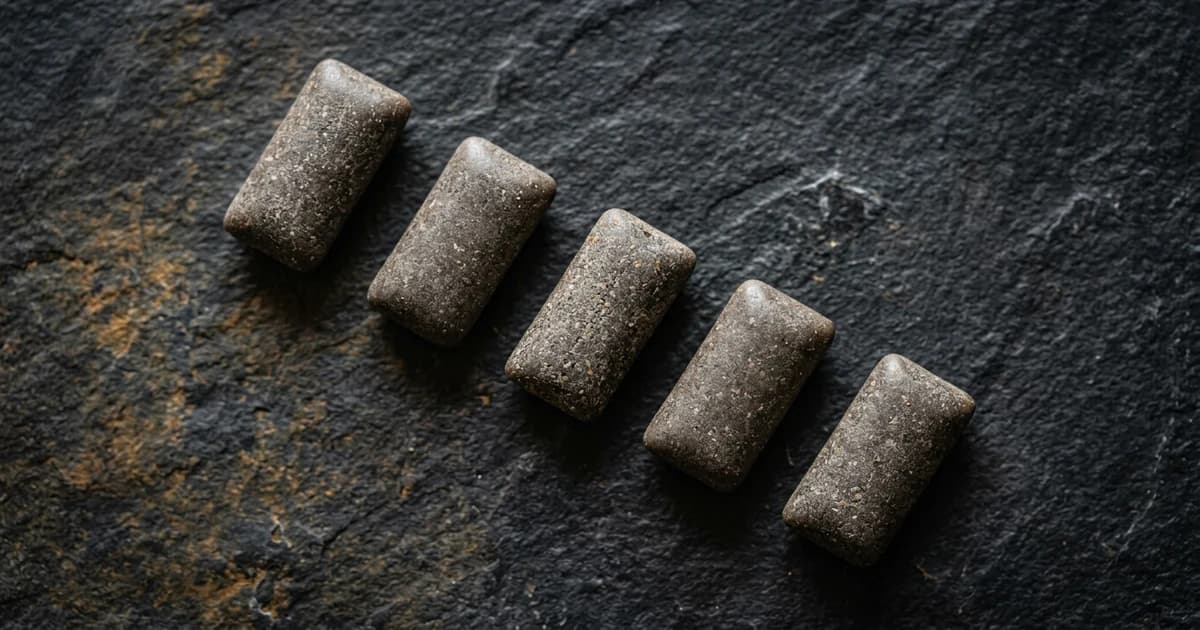
Roon took a different approach. Roon's nootropic pouches are a sublingual format that combines caffeine (80mg), L-theanine, theacrine, and methylliberine into a single, pre-dosed format. No pills, no powders, no guesswork. You get 6-8 hours of clean, sustained focus, and because the ingredients absorb sublingually, they hit faster than capsules that have to pass through your digestive system.
Zero nicotine. No tolerance buildup. No crash.
If you've been assembling your own nootropic stack one bottle at a time, it might be worth trying the version that's already been built for you. Check out Roon here.