Does Zyn Have Caffeine? No. Here's What It Actually Contains
Roon Team
Does Zyn Have Caffeine? No. Here's What It Actually Contains
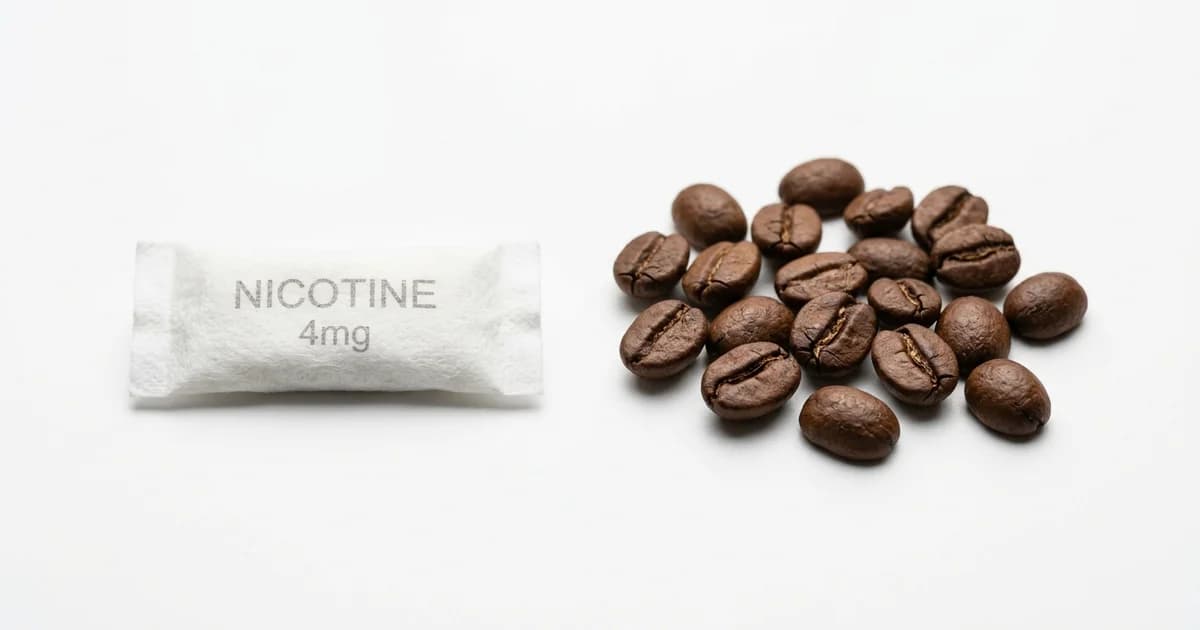
You popped a Zyn pouch expecting a caffeine hit alongside the nicotine buzz. Or maybe you Googled "does Zyn have caffeine" because the Coffee flavor had you confused. Either way, the answer is straightforward: Zyn contains zero caffeine. Not even the Coffee-flavored ones.
But that simple answer opens up a more interesting question. If Zyn doesn't deliver caffeine, what is it doing to your brain? And if you're using nicotine pouches for focus and energy, is there a better tool for the job?
Let's get into it.
Key Takeaways
- Does Zyn have caffeine? No, regardless of flavor, including Coffee.
- Zyn's active ingredient is nicotine salt (nicotine bitartrate dihydrate), available in 3mg and 6mg strengths.
- Nicotine can temporarily sharpen attention, but it builds tolerance and dependence quickly.
- Caffeine-based pouches and nootropic pouches now exist as nicotine-free alternatives for cognitive performance.
What's Actually Inside a Zyn Pouch? Does Zyn Have Caffeine or Other Stimulants?
Zyn is a tobacco-leaf-free nicotine pouch made by Swedish Match, a subsidiary of Philip Morris International. According to Zyn's official FAQ, the pouches contain nicotine salt along with food-grade ingredients: fillers, pH balancers, sweeteners, and flavorings.
Here's a simplified breakdown of the ingredient categories:
| Ingredient Category | What It Does | Examples |
|---|---|---|
| Nicotine salt | Active stimulant | Nicotine bitartrate dihydrate |
| Structural agents | Gives the pouch its shape | Microcrystalline cellulose, gum arabic, maltodextrin |
| pH adjusters | Controls nicotine absorption rate | Sodium carbonate, sodium bicarbonate |
| Sweeteners | Improves taste | Acesulfame K, sucralose |
| Flavorings | Creates the flavor profile | Varies by product |
Notice what's missing from that list. No caffeine. No amino acids. No nootropics of any kind. The only psychoactive compound in a Zyn pouch is nicotine. So does Zyn have caffeine hidden anywhere in its formula? Absolutely not.
But What About Coffee-Flavored Zyn?
This is where most of the confusion around "does Zyn have caffeine" comes from. Zyn sells a Coffee flavor, and it's reasonable to assume coffee-flavored means coffee-containing. It doesn't.
Zyn's UK product page states directly that Coffee pouches "use high-quality flavourings to replicate authentic coffee flavours without real coffee beans." The coffee taste is entirely artificial. No beans, no brew, no caffeine.
Think of it like coffee-flavored ice cream. It tastes like coffee. It is not coffee.
Why People Ask "Does Zyn Have Caffeine" So Often
The reason this question gets searched so often is that nicotine and caffeine produce overlapping effects. Both are stimulants. Both can increase alertness and reaction time. Both act on your central nervous system.
A review published in PMC found that nicotine had positive effects on fine motor skills, short-term episodic memory, and working memory performance. That sounds a lot like what people report from their morning coffee.
But the similarities end there. The two compounds work through completely different mechanisms, and their long-term profiles couldn't be more different.
Nicotine: Short-Term Gain, Long-Term Cost
Nicotine activates acetylcholine receptors in the brain, triggering dopamine release in the reward pathway. That's why Zyn feels good. That's also why Zyn is addictive.
According to the CDC, repeated nicotine use causes the brain to adapt, building tolerance so you need more to get the same effect. Nicotine dependence can also harm mental health and become a source of stress on its own.
Wikipedia's entry on nicotine describes nicotine dependence as "characterized by tolerance, physical dependence" among other withdrawal symptoms. Your body adjusts to the presence of nicotine and begins to require it just to maintain baseline function.
This is the core problem with using Zyn for focus. Whatever cognitive boost you get in week one will diminish by week four. And by then, you're not using nicotine to perform better. You're using it to feel normal.
Caffeine: A Different (and Safer) Stimulant Profile
Caffeine works primarily by blocking adenosine receptors, which delays the feeling of tiredness. Caffeine doesn't create the same dopamine surge that nicotine does, which is why caffeine dependence, while real, is far less severe than nicotine dependence.
Caffeine also pairs well with other compounds. A study published in Nutritional Neuroscience found that combining 40mg of caffeine with 97mg of L-theanine improved cognitive performance and subjective alertness compared to placebo. The caffeine provides the stimulation. The L-theanine smooths out the jitters and anxiety that caffeine can cause alone.
That combination, caffeine plus L-theanine, has become the foundation of most modern nootropic stacks for a reason. It works, and it works consistently without building the kind of tolerance nicotine does.
Does Zyn Have Caffeine? No. Should It?
Here's where the question gets interesting. Zyn dominates the nicotine pouch market. According to a 2026 analysis from NYU, Zyn held 63.4% market share in 2024, and Zyn was the first nicotine pouch brand to receive FDA marketing authorization in January 2025. It is no longer the only one: On! PLUS received authorization for six products in December 2025.
But Zyn was never designed to be a cognitive performance product, which is why so many users are now exploring nicotine-free Zyn alternatives. Zyn is a nicotine delivery system, period. The focus and energy effects are side effects of nicotine stimulation, not the primary purpose.
That distinction matters because an entire category of products now exists specifically to deliver focus and energy through a pouch format, without nicotine. NBC News reported on the growing caffeine pouch trend, describing them as "a cross between nicotine pouches and energy drinks."
These zero-nicotine sublingual pouch products use the same sublingual delivery method as Zyn but swap nicotine for caffeine, nootropics, or both.
Nicotine Pouches vs. Caffeine Pouches: A Direct Comparison
Now that we've answered does Zyn have caffeine (no), the next question is whether caffeine-based alternatives are worth considering. If you're exploring pouch alternatives for focus and weighing them against nicotine pouches, the differences are worth understanding.
| Factor | Zyn (Nicotine Pouch) | Caffeine/Nootropic Pouch |
|---|---|---|
| Active ingredient | Nicotine (3mg or 6mg) | Caffeine, L-theanine, and/or other nootropics |
| Caffeine content | None | Varies (typically 40-100mg) |
| Addiction potential | High (nicotine is highly addictive) | Low to moderate (caffeine dependence is mild) |
| Tolerance buildup | Rapid | Slow, especially with nootropic stacks |
| Duration of effect | 20-40 minutes | 2-6 hours depending on formulation |
| Cognitive mechanism | Acetylcholine receptor activation | Adenosine blocking + varied nootropic pathways |
| FDA status | Marketing authorization granted | Dietary supplement category |
The trade-offs are clear. Nicotine hits faster and harder, but it hooks you. Caffeine and nootropic stacks deliver longer, more stable cognitive support without the same dependency risk.
The Science Behind Caffeine + Nootropic Stacks
The most effective cognitive pouches don't rely on caffeine alone. They combine caffeine with compounds that extend its benefits and reduce its downsides.
L-Theanine is the most well-studied pairing. A systematic review in PMC found that the caffeine and L-theanine combination was associated with decreased distractibility and improved concentration, including reduced activity in the brain's default mode network (the region linked to mind-wandering).
Theacrine (sold as TeaCrine) and methylliberine (sold as Dynamine) are newer compounds that extend the duration of caffeine's effects. A randomized crossover study published in Cureus found that combining caffeine with theacrine and methylliberine increased cognitive performance and reaction time without negatively affecting mood.
A double-blind, placebo-controlled trial in the Journal of the International Society of Sports Nutrition added further evidence, noting that co-ingestion of caffeine, methylliberine, and theacrine may improve cognitive performance over a longer period compared to caffeine alone.
This is the stack architecture that separates a basic caffeine pouch from a true cognitive performance product. Caffeine starts the engine. L-theanine keeps it smooth. Theacrine and methylliberine keep it running longer.
What to Look for in a Caffeine Pouch If You're Switching From Zyn
Not all caffeine pouches are created equal. The category is growing fast, and quality varies wildly. Since Zyn doesn't have caffeine, if you're moving away from nicotine and toward a performance-focused alternative, here's what actually matters:
- Caffeine dose: Look for a dose around 80mg, comparable to a cup of coffee. When paired with L-theanine, theacrine, and methylliberine, that's enough to deliver sustained focus without jitters or a crash.
- Nootropic support: Caffeine alone is fine. Caffeine plus L-theanine, theacrine, and methylliberine is better. The combination extends duration and smooths out the experience.
- Zero nicotine: This should be obvious, but check the label. Some brands market "nicotine alternatives" that still contain nicotine.
- Sublingual delivery: Pouches that absorb through the gum lining bypass the digestive system, which means faster onset and more predictable dosing than capsules or drinks.
The Bottom Line: Does Zyn Have Caffeine? Never Has, Never Will
Zyn does not have caffeine. Zyn never has. The Coffee flavor is just a flavor, nothing more.
If you're using Zyn because you want sharper focus and sustained energy, you're getting those effects from nicotine, a compound that will build tolerance and create dependence with regular use. The initial cognitive boost fades. The habit doesn't.
The science on caffeine-plus-nootropic stacks tells a different story. Compounds like L-theanine, theacrine, and methylliberine, combined with a moderate caffeine dose, can support 6-8 hours of clean, sustained focus without the addiction risk.
That's exactly what Roon was built to do. Roon is a zero-nicotine sublingual pouch containing 80mg of caffeine, L-theanine, theacrine, and methylliberine. Same format as Zyn. Same ritual. No nicotine, no crash, no tolerance spiral. Just the cognitive performance stack the science actually supports.