DHA vs EPA for the Brain: Which Omega-3 Does What
Roon Team
DHA vs EPA for the Brain: Which Omega-3 Does What
Most fish oil bottles lump them together as "omega-3s," but DHA vs EPA for the brain is the distinction that actually matters. They are two different fatty acids that do two different jobs. One builds the physical structure of your neurons. The other works more like a cleanup crew, calming inflammation and shaping the chemical environment your brain cells live in.
If you are buying a supplement based on the total omega-3 number on the front label, you are missing the part that determines what you actually get out of it.
Here is the clean version of the difference, and what the research says about which one to prioritize for memory, mood, and long-term cognitive health.
Key Takeaways
- DHA is structural. It is the dominant omega-3 in brain tissue and a building block of neuronal cell membranes.
- EPA is functional. It works mainly through anti-inflammatory and signaling pathways, and the strongest mood evidence points to EPA.
- They are not interchangeable. Your body converts very little EPA into DHA, so a high-EPA product will not build brain structure the way DHA does.
- The ratio on the label matters more than the total milligrams. Read the back panel, not the front.
DHA vs EPA for the Brain: The Core Difference
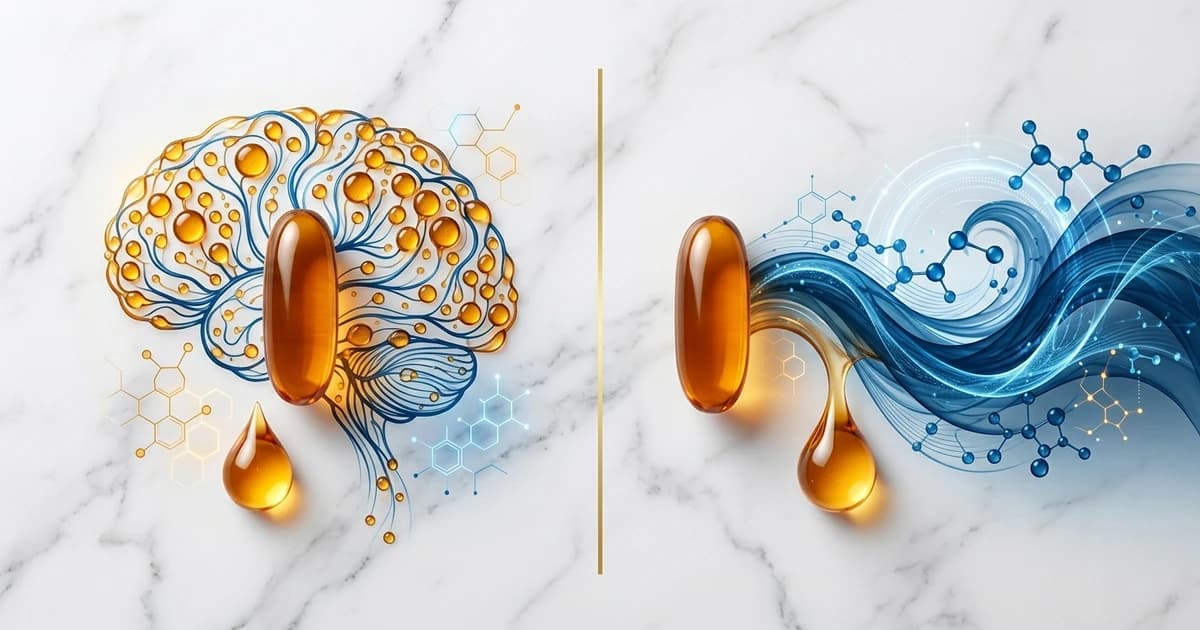
DHA builds the brain. EPA defends it. That single sentence explains most of the research.
DHA (docosahexaenoic acid) is the structural fat. It sits inside the membranes of your neurons and keeps them flexible, which supports how signals pass between cells. According to a narrative review in Ageing Research Reviews, omega-3 status is linked to brain morphology and volume in healthy older adults, with DHA being the fatty acid most concentrated in neural tissue.
EPA (eicosapentaenoic acid) plays a different role. It is present in the brain at far lower levels than DHA, and the body clears it quickly. Its value comes from what it does on the way through: dampening inflammatory signaling and influencing the molecules that affect mood and blood flow.
So when people ask about dha or epa cognition, the honest answer is that they contribute through separate routes. You want both, but for different reasons.
What DHA Does: Brain Structure and Architecture
DHA is the most abundant omega-3 in the human brain, making it the primary candidate for anything involving brain structure. Roughly speaking, it accounts for a large share of the omega-3 fatty acids packed into gray matter and neuronal membranes.
Think of your neurons as having walls made partly of fat. DHA is a key brick. When those membranes contain enough DHA, they stay fluid, which supports the speed and quality of communication between cells.
This is why DHA gets the spotlight in early development and in healthy aging. The same WHIMS-MRI analysis published on PubMed Central found that higher red blood cell levels of EPA plus DHA corresponded with larger total brain and hippocampal volumes in older women. The hippocampus is the region most tied to memory formation.
That said, supplementing DHA later in life is not a guaranteed memory upgrade. A randomized controlled trial known as the CANN study gave DHA-rich fish oil to older adults with memory complaints and did not find improvements in cognition or brain structure over the trial period. Structure is a long-game substrate, not a switch you flip in a month.
The practical takeaway on dha brain structure: DHA is the fat you want for building and maintaining the physical hardware, and the benefit compounds over years, not days.
What EPA Does: The Anti-Inflammatory and Mood Angle
EPA is the omega-3 with the strongest evidence for mood, and it works largely through anti-inflammatory pathways. It is barely stored in the brain compared to DHA, yet it influences brain function in ways DHA does not.
EPA is a precursor to specialized signaling molecules that resolve inflammation. Chronic low-grade inflammation is one of the mechanisms researchers connect to low mood, which is part of why EPA, not DHA, tends to win the head-to-head trials here.
A meta-analysis published in Translational Psychiatry concluded that omega-3 formulas with a higher proportion of EPA were more effective for depressive symptoms, while DHA-dominant formulas showed weaker effects. Harvard Health has summarized similar findings, noting that EPA appears to drive the mood benefit in the research.
To be clear, this is about supporting mood and not treating any medical condition. If you are dealing with clinical depression, that is a conversation for a doctor, not a supplement aisle.
The epa anti-inflammatory brain angle is the cleanest way to remember it: EPA is less about building cells and more about managing the inflammatory and signaling environment those cells operate in.
Why You Cannot Just Pick One
Your body converts almost no EPA into DHA, and the reverse conversion is also poor. This is the core reason the two are not interchangeable.
If you take a high-EPA product expecting it to maintain brain structure, the DHA your membranes need will not magically appear. And if you take pure DHA hoping for the mood and inflammation benefits, you are leaning on the fat that does that job least well.
This is also why total milligrams on the front of the bottle mislead people. A product advertising "1,200 mg omega-3" might be mostly filler fats with only a fraction as EPA and DHA. Read the supplement facts panel and find the specific EPA and DHA numbers.
DHA vs EPA: Side-by-Side Comparison
Here is the dha vs epa difference in one view.
| Feature | DHA | EPA |
|---|---|---|
| Primary role | Structural building block of neurons | Anti-inflammatory and signaling |
| Brain concentration | High, the dominant brain omega-3 | Low, cleared quickly |
| Best evidence for | Brain structure, development, healthy aging | Mood support, inflammation |
| Memory link | Tied to brain and hippocampal volume | Indirect, via inflammation |
| Conversion | Body makes very little from EPA | Body makes very little from DHA |
| Timeline | Long-term, builds over months and years | Faster functional effects |
So What Is the Best Omega-3 for Memory?
For memory specifically, DHA is the stronger structural bet, but the most sensible target is a combined intake that keeps your overall omega-3 status high. Memory depends on healthy brain architecture, and DHA is the architecture fat.
The metric worth tracking is your Omega-3 Index, which measures the EPA plus DHA content of your red blood cell membranes as a percentage. According to OmegaQuant, an index at or above 8% is considered the desirable range, while many people in Western countries sit well below it.
Reaching that level takes consistent intake. NutraIngredients reported on research estimating the doses required to move most people into the optimal range, and for the average person that means a meaningful daily amount of EPA and DHA from food or supplements over time.
So the "best omega 3 for memory" is not a single molecule. It is a habit: enough DHA to maintain structure, enough EPA to manage inflammation, sustained long enough to raise your index. If you want the deeper nutrition context, our guide to healthy fats for brain health and our breakdown of the omega-3 index and how to read it go further than this article can.
How to Apply This
A few practical rules based on the science above:
- For general brain maintenance and aging, favor a product with solid DHA, since structure is the foundation.
- For mood and inflammation support, look for a higher EPA ratio, in line with the trial evidence.
- For most people, a combined EPA and DHA intake covers both bases.
- Track the back label, not the front. The EPA and DHA numbers are what count.
- Be patient. Membrane fats change slowly. Think quarters, not days.
The Bottom Line on Structure vs Function
DHA and EPA are not rivals. They are specialists. DHA is the structural fat that builds and maintains the physical brain, which makes it the better-supported choice for memory and healthy aging. EPA is the functional fat that works through anti-inflammatory and signaling pathways, which is why it carries the stronger evidence for mood.
The mistake is treating "omega-3" as one thing. The smarter move is reading the EPA and DHA split, picking the ratio that matches your goal, and staying consistent long enough for your omega-3 status to actually climb.
Build the structure with DHA. Support the function with EPA. Give it time.
Frequently Asked Questions
Is DHA or EPA better for the brain?
It depends on the goal. DHA is the dominant structural omega-3 in brain tissue, so it is the stronger choice for brain architecture, memory, and healthy aging. EPA has the better evidence for mood and inflammation. Most people benefit from both, since the body converts very little of one into the other. For overall brain maintenance, prioritize DHA while keeping EPA in the mix.
Does EPA cross into the brain?
EPA does reach the brain, but it is present at far lower levels than DHA and the body clears it quickly. Rather than accumulating in membranes the way DHA does, EPA tends to act through signaling and anti-inflammatory pathways. Its brain benefits come from this functional role, not from building structure, which is why EPA and DHA are studied as separate tools.
Which omega-3 is best for memory?
DHA has the stronger structural case for memory because it is the primary omega-3 in neuronal membranes and the hippocampus, the brain's main memory region. Research links higher EPA plus DHA blood levels to larger brain volume. The best approach is consistent combined intake over months, since membrane fats build slowly and short trials often show little change.
What is a good DHA to EPA ratio?
There is no single perfect ratio for everyone. For mood support, the trial evidence favors formulas with a higher EPA proportion. For structural brain maintenance and memory, a product with strong DHA makes more sense. Many general-purpose fish oils run close to a balanced split, which works for most people who want both benefits at once.
Can my body convert EPA into DHA?
Barely. The conversion of EPA to DHA in humans is inefficient, and the reverse is also poor. This is the central reason the two are not interchangeable and why a high-EPA product will not maintain DHA-dependent brain structure on its own. If you want both effects, you need both fats in your diet or supplement.
What is the Omega-3 Index and why does it matter?
The Omega-3 Index measures the combined EPA and DHA content of your red blood cell membranes as a percentage. According to OmegaQuant, a level at or above 8% is the desirable range, and many people fall below it. It is a more useful number than the milligrams on a bottle because it reflects what actually reaches your tissues over time.
How long does it take omega-3s to affect the brain?
Longer than most people expect. Functional effects tied to EPA, such as inflammation signaling, can shift relatively quickly. Structural changes tied to DHA happen slowly because membrane fats turn over gradually. Raising your Omega-3 Index into the optimal range typically takes consistent intake over several months, which is why short supplement trials often fail to show big cognitive gains.
Membrane Fats Are the Foundation. They Are Not the Whole Building.
DHA and EPA are the slow-build substrate. They shape the physical and chemical environment your brain operates in, and that work happens over months and years. There is no version of this where you take a fatty acid today and feel sharper this afternoon. That is simply not how structural nutrition works.
Acute focus is a different layer entirely. When you need to be locked in for a specific block of work, that is about neurotransmitter signaling in the moment, not membrane composition. Roon is built for that acute layer: a sublingual pouch with 80 mg caffeine, 60 mg L-theanine, 25 mg methylliberine (Dynamine), and 5 mg theacrine (TeaCrine), designed for a 5 to 10 minute onset and 6 to 8 hours of sustained focus without the jitters or crash.
To be clear about what it is not, Roon is not a replacement for omega-3s or any other long-term nutrition. Think of it as the tool for the work session and your DHA and EPA intake as the foundation underneath it. Keep building the structure with your diet, and reach for the acute layer when the moment calls for it.
Written by Roon Team