CoQ10 vs PQQ: Which Mitochondrial Brain-Energy Supplement Wins?
Roon Team
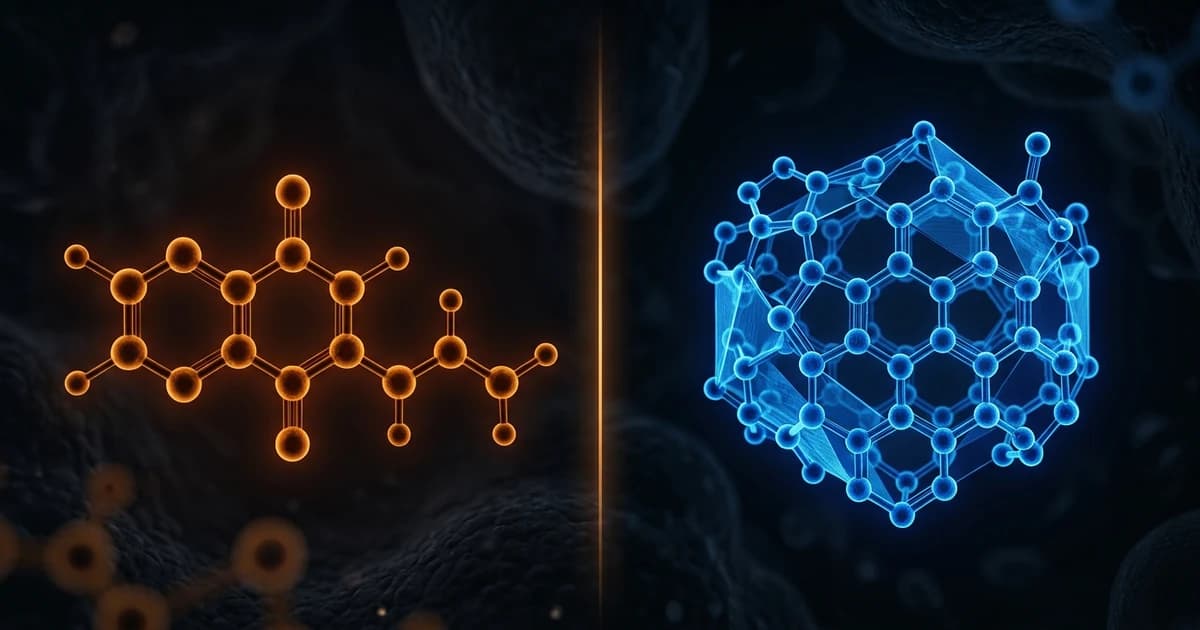
CoQ10 vs PQQ: Which Mitochondrial Brain-Energy Supplement Wins?
Your brain burns roughly 20% of your body's energy while weighing about 2% of it. That energy comes from mitochondria, the tiny power plants inside every cell. So when people talk about a CoQ10 vs PQQ matchup, they are really asking one question: which molecule keeps those power plants running better?
Both supplements get sold as the answer to mental fatigue, slow recall, and the foggy 3 p.m. wall. They work in different ways, though, and one of them carries a caveat most marketing pages quietly skip.
This is the honest head-to-head. We will look at what each does, what the human evidence actually shows, and whether stacking them is worth your money.
Key Takeaways
- CoQ10 helps mitochondria produce energy and acts as an antioxidant. It is the better-studied molecule, but oral CoQ10 has weak proof it reaches the human brain.
- PQQ signals cells to build new mitochondria, a process called biogenesis. The human cognitive data is promising but limited, mostly in older adults.
- Both are slow, structural plays measured over weeks, not a same-day focus tool.
- Taking CoQ10 and PQQ together may beat either alone for cognitive outcomes, based on early trial data.
- Neither molecule gives you acute, on-demand focus. That is a different job entirely.
CoQ10 vs PQQ: The Quick Verdict
If you want the short answer: CoQ10 keeps existing mitochondria working, while PQQ helps your cells grow more of them. They solve adjacent problems, not the same one.
CoQ10 wins on depth of research and a clear mechanism inside the energy chain. PQQ wins on a more interesting mechanism for the brain, but with thinner human data and a real absorption question.
Neither is a quick hit. Think of both as a long-horizon bet on cellular health, closer to a retirement contribution than a payday.
What CoQ10 Actually Does
Coenzyme Q10 is a fat-soluble compound that sits in the inner mitochondrial membrane. Its main job is shuttling electrons through the electron transport chain, the final step where your cells convert fuel into ATP. It also works as an antioxidant, protecting cell membranes from oxidative damage.
Your body makes its own CoQ10, but output drops over time. According to Doctronic, CoQ10 production peaks around age 20 and falls by roughly 1% each year after that. Statin medications can lower it further.
Ubiquinol vs PQQ, and the Form Question
CoQ10 comes in two forms, and this matters before you compare it to anything. Ubiquinone is the oxidized form; ubiquinol is the reduced, "active" form your body uses.
On the ubiquinol vs PQQ absorption debate, the form of CoQ10 you pick changes the math. A pharmacy guide from Bolt Pharmacy notes that ubiquinol may offer modest absorption advantages in some people, but formulation quality often matters more than the form itself.
Here is the inconvenient part. A 2025 overview in PMC found no clinical studies showing that orally taken CoQ10 directly crosses the blood-brain barrier and reaches the human brain. The heart and muscle evidence is stronger. The brain evidence is mostly inferred.
What PQQ Actually Does
Pyrroloquinoline quinone is a small quinone compound found in foods like fermented soy, kiwi, and green tea. Its headline trick is different from CoQ10's. Instead of helping existing mitochondria, PQQ appears to switch on the genes that build new ones.
Research summarized by Life Extension describes PQQ as a stimulator of mitochondrial biogenesis, working through a signaling protein called PGC-1alpha. More mitochondria, in theory, means more capacity to make energy.
PQQ is also a strong antioxidant. A review in PMC reported that 20 mg of PQQ per day improved cognitive measures and regional blood flow in older adults in a randomized, placebo-controlled trial.
The PQQ vs CoQ10 Brain Catch
PQQ has its own blood-brain barrier problem. One analysis published on Taylor & Francis noted that PQQ's water solubility and electrical charge mean it cannot easily cross the barrier on its own.
So both molecules face the same hard question for any pqq vs coq10 brain comparison: getting into the bloodstream is not the same as getting into neurons. The cognitive trials show real effects, but the exact route into the brain is still being worked out.
CoQ10 vs PQQ: Side-by-Side Comparison
Here is a clean mitochondrial supplements comparison, including how an acute focus product fits in for context.
| Feature | CoQ10 (Ubiquinol/Ubiquinone) | PQQ | Roon (acute focus) |
|---|---|---|---|
| Main job | Powers existing mitochondria | Helps build new mitochondria | Fast, on-demand focus |
| Mechanism | Electron transport, antioxidant | Mitochondrial biogenesis, antioxidant | Caffeine + L-theanine + Dynamine + TeaCrine |
| Onset | Weeks | Weeks | 5 to 10 minutes |
| Human brain evidence | Strong body, weak BBB proof | Promising, limited, older adults | Strong for caffeine/L-theanine attention |
| Typical dose | 100 to 300 mg | 10 to 20 mg | 1 sublingual pouch |
| Best for | Long-term cellular health, statin users | Long-term cellular health, memory | Same-day deep work, no crash |
Roon is in this table for honesty, not to declare a winner. It does a completely different job, which we will get to.
Can You Take CoQ10 and PQQ Together?
Yes, and the early evidence suggests the combination may outperform either one alone. Taking CoQ10 and PQQ together pairs two complementary mechanisms: PQQ helps build mitochondria, CoQ10 helps them run.
A widely cited 2009 study captures the logic. As summarized by Dr. Brad Stanfield, 20 mg of PQQ plus 300 mg of CoQ10 produced greater cognitive improvements than PQQ alone in middle-aged adults.
That said, "may be better together" is not the same as proven. The combination trials are small and short. If you want a long-term cellular health play and you can afford both, stacking them is defensible. Just keep your expectations measured.
Which One Should You Choose?
Choose CoQ10 if you are over 40, take a statin, or want the molecule with the deepest research record. Ubiquinol is the easier-to-absorb form for most people.
Choose PQQ if your interest is specifically cognitive and you like the biogenesis mechanism. The dose is small and the cognitive trials, while limited, are encouraging.
Choose both if you are building a long-horizon mitochondrial routine and budget allows. Just understand what you are buying: slow, structural support, not a switch you flip before a meeting.
And if what you actually want is to focus right now, neither is the tool. That is a different category of supplement built for a different timescale.
The Honest Limits of Both
Mitochondrial supplements are a patience game. The mechanisms are real, the antioxidant effects are well documented, and the cognitive trials are genuinely interesting. None of that translates to a noticeable jolt of focus an hour after your first capsule.
The blood-brain barrier question hangs over both molecules. CoQ10 lacks direct human proof of brain entry. PQQ struggles to cross on its own. The benefits people report are likely real, but the brain-delivery story is incomplete for the best brain energy supplement contenders in this space.
Treat them as long-term infrastructure. Then, separately, decide how you want to handle acute focus on a busy day.
Frequently Asked Questions
Is PQQ stronger than CoQ10?
Not stronger, different. CoQ10 supports the mitochondria you already have by helping them produce ATP and resist oxidative stress. PQQ helps signal the growth of new mitochondria. PQQ is used at much smaller doses, around 10 to 20 mg versus 100 to 300 mg for CoQ10, but a smaller dose does not mean a more powerful effect. They target adjacent problems, so "stronger" is the wrong frame.
Should I take CoQ10 and PQQ together?
You can, and early trial data suggests the pairing may produce better cognitive results than PQQ alone. PQQ helps build new mitochondria while CoQ10 helps run them, so the mechanisms complement each other. The combination studies are small and short, though, so treat the stack as a reasonable long-term bet rather than a guaranteed upgrade. Talk to your doctor if you take medication such as statins or blood thinners.
Does CoQ10 or PQQ work for instant focus?
No. Both are slow, structural supplements that act over weeks by supporting mitochondrial function. Neither delivers same-day, on-demand focus the way caffeine-based options do. If your goal is to lock into deep work this afternoon, a fast-absorbed focus product is the right category. Use CoQ10 or PQQ for long-term cellular health, not for beating an afternoon slump.
Which form of CoQ10 is best, ubiquinol or ubiquinone?
Ubiquinol is the reduced, active form and may absorb modestly better in some people, especially older adults. Ubiquinone is cheaper and still effective, particularly in a well-made oil-based softgel. Formulation quality often matters more than which form you choose. For most people the practical answer is simple: pick a quality product and take it with a fat-containing meal to aid absorption.
Does PQQ cross the blood-brain barrier?
This is unsettled. PQQ's water solubility and charge suggest it does not easily cross the barrier on its own, yet human trials still report cognitive and blood-flow improvements in older adults at 20 mg per day. The likely explanation involves indirect effects or delivery routes researchers are still mapping. The cognitive benefits appear real; the exact path into the brain is not fully confirmed.
How long until CoQ10 or PQQ improves brain energy?
Plan on weeks, not days. These molecules work by supporting mitochondrial function and biogenesis, which is a gradual process. Most cognitive trials run 8 to 12 weeks before measuring outcomes. If you expect a noticeable difference within a few hours, you will be disappointed. Consistency over a couple of months is the right way to judge whether either one helps you.
The Tool These Two Were Never Built To Be
CoQ10 and PQQ are long-horizon mitochondrial bets. They support the machinery that makes energy, and the research, while incomplete on brain delivery, is worth taking seriously over a timescale of months. If you want to invest in your cellular health, they earn a place in the conversation.
What they cannot do is help you focus in the next ten minutes. That job belongs to a different category, and pretending otherwise sets you up for disappointment.
Where Fast Focus Actually Lives
This article has drawn a clean line: CoQ10 and PQQ are slow, structural supplements, and both still carry an open question about how much reaches the brain. That is fine for a months-long cellular health routine. It is useless when you need to start a deep-work block right now.
Roon was built for that second job. Each sublingual pouch delivers 80 mg caffeine, 60 mg L-theanine, 25 mg methylliberine (Dynamine), and 5 mg theacrine (TeaCrine), absorbed under the lip for a 5 to 10 minute onset and a 6 to 8 hour window of focus with no jitters and no crash. The caffeine and L-theanine pairing has solid human evidence for improving attention and reaction time, which is exactly the acute outcome the mitochondrial molecules do not target.
To be clear, Roon is not a mitochondrial supplement and not a replacement for a long-term CoQ10 or PQQ routine. The two approaches answer different questions. If you want on-demand focus to sit alongside your cellular health stack, try Roon for the days you need to show up sharp.
Written by Roon Team