The Cornell Choline-in-Pregnancy Trial: 930 mg
Roon Team
The Cornell Choline-in-Pregnancy Trial: 930 mg and Kids' Attention Years Later
Most nutrition findings fade by the time a kid hits kindergarten. This one didn't.
A team at Cornell ran a tightly controlled choline pregnancy study in which expectant mothers ate either the recommended amount of choline or roughly double it during the third trimester. Seven years later, the researchers tracked down the children and tested their attention. The kids whose mothers got the higher dose held their focus better, on a task built to make focus hard.
That gap, between a nutrient most pregnant women under-consume and a measurable cognitive edge years down the line, is what makes this trial worth a careful read.
Key Takeaways
- The Cornell trial compared 930 mg/day of choline against a 480 mg/day control arm, near the 450 mg/day adequate intake for pregnancy, in the third trimester.
- Children of the higher-dose mothers showed better sustained attention at age 7, measured with a signal detection task.
- An earlier readout of the same trial found faster infant information processing speed across four ages in the first year.
- Most pregnant women fall well short of recommended choline intake, and standard prenatal vitamins often skip it entirely.
What the Choline Pregnancy Study Actually Tested
The Cornell choline pregnancy study was a randomized, double-blind, controlled feeding trial, which is the strongest design nutrition science offers. Participants ate provided meals so researchers knew exactly how much choline each woman consumed.
Led by Marie Caudill, Barbara Strupp, and Richard Canfield, the team assigned pregnant women in their third trimester to one of two groups. One group consumed 480 mg of choline per day; the other consumed 930 mg per day. The lower number sits near the 450 mg/day adequate intake set for pregnancy. The higher number is roughly double it.
Then they followed the children. Not for weeks. For years.
This matters because prenatal choline acts during a narrow window of rapid brain building. The third trimester is when fetal neurons multiply and wire together at high speed, and choline feeds several processes in that work, including cell membrane construction and the synthesis of the neurotransmitter acetylcholine.
The Seven-Year Follow-Up: Sustained Attention
The headline result: children whose mothers consumed 930 mg of choline daily showed measurably better sustained attention at age seven than children whose mothers consumed 480 mg.
The 2022 follow-up, published in The FASEB Journal, used a signal detection task. Kids watched for brief, faint visual signals over a 12-minute session and pressed a button when they saw one. It is a deliberately boring, demanding test, which is exactly the point. Sustained attention shows its cracks under that kind of load.
The 930 mg group scored higher on the primary attention measure. The more telling detail is what happened over time within the session. For the briefest 17-millisecond signals, the 480 mg group showed a 22.9% decline in hits across the session compared to a 1.5% increase in hits for the 930 mg group, and the groups did not differ in vigilance decrement for 29 or 50 ms signals.
Read that again. The lower-dose kids faded as the task wore on. The higher-dose kids didn't.
That pattern, holding steady on the hardest signals while everyone else drifts, is the signature of strong choline sustained attention in children. The researchers also checked for confounds. The inference of improved sustained attention by the 930 mg group is strengthened by the absence of group differences for false alarms, omissions, and off-task behaviors.
It wasn't that one group was simply more impulsive or more cooperative. The difference sat specifically in the ability to keep perceiving a faint signal.
The Earlier Signal: Infant Processing Speed
The 7-year data didn't come out of nowhere. The same trial produced an earlier result in infancy that pointed the same direction.
In the 2018 readout, published in The FASEB Journal, the team measured infant information processing speed at four ages across the first year. Mean reaction time averaged across the four ages was faster for infants born to mothers in the 930 versus 480 mg choline/day group, indicating that maternal consumption of approximately twice the recommended amount of choline during the last trimester improves infant information processing speed.
So the effect showed up early, at 4, 7, 10, and 13 months, and then held when the kids were old enough to sit for a real attention task. Two different measures, two different ages, same direction. That consistency is rare and it is the reason this trial keeps getting cited in discussions of maternal choline cognition.
Why Choline Matters for the Fetal Brain
Choline supports several jobs at once during gestation, which is why choline fetal brain development is studied so heavily in both rodents and humans.
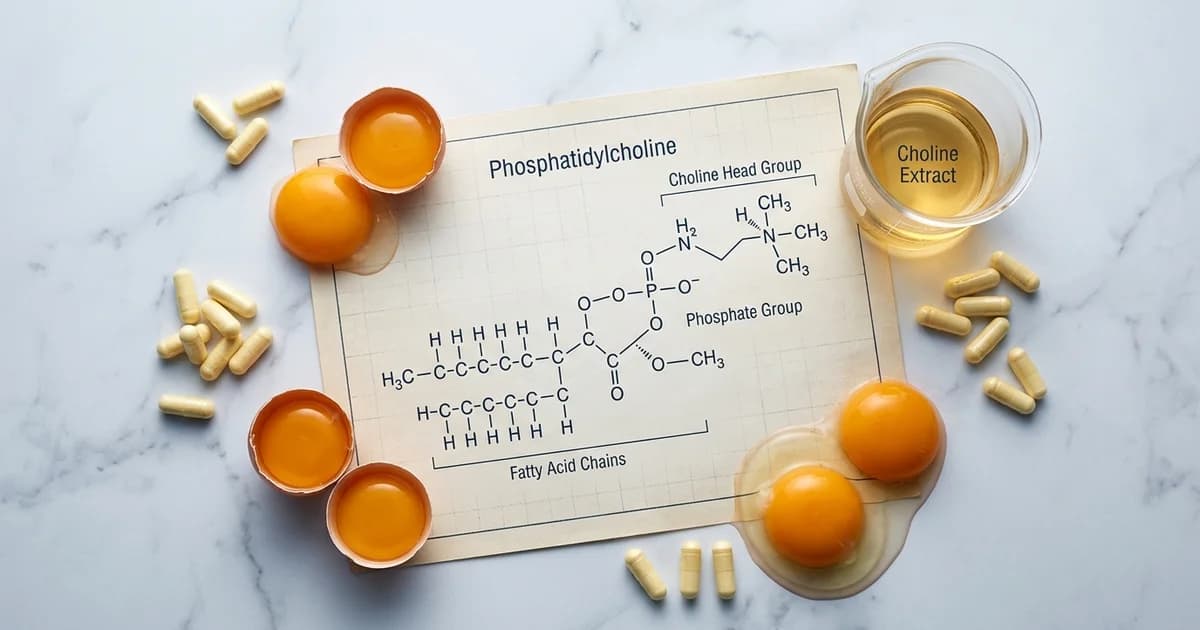
It is a building block for phosphatidylcholine, a major component of cell membranes. It feeds the production of acetylcholine, a neurotransmitter tied to memory and attention. It also serves as a methyl donor, influencing how genes switch on and off in developing tissue. The hippocampus, a brain region central to memory, is especially sensitive to choline supply early in life.
Decades of animal work set the stage. Rodent studies have repeatedly shown that boosting maternal choline produces offspring with lasting cognitive advantages, while restricting it causes lasting deficits. The Cornell trial is one of the first human studies to follow children to school age and find a result that lines up with that animal literature.
How Much Choline Are Pregnant Women Actually Getting?
Here is the uncomfortable part. Most pregnant women don't come close to even the lower 480 mg used in this trial, let alone the choline 930 mg arm.
According to the UNC Nutrition Research Institute, only a small fraction of pregnant women meet daily choline recommendations, and standard prenatal multivitamins have historically left choline out. National survey data cited by the InfantRisk Center put average choline intake among pregnant people below the 450 mg/day target.
Food is the most reliable lever. Per the USDA-based figures compiled here, some of the densest sources are concentrated in a few familiar foods.
| Food | Serving | Choline (approx.) |
|---|---|---|
| Chicken liver | 3 oz | 247 mg |
| Salmon | 3 oz | 187 mg |
| Egg (with yolk) | 1 large | 125 mg |
| Shiitake mushrooms | 1/2 cup | 58 mg |
| Chicken | 3 oz | 56 mg |
Two eggs alone cover a big share of the gap. The yolk is where nearly all of it lives, which is one reason yolk-skipping habits quietly cut choline intake.
This is a conversation to have with an OB or a registered dietitian, not a do-it-yourself dosing project. The 930 mg figure came from a controlled research setting, not a general recommendation, and pregnancy nutrition needs individual guidance.
Conclusion
The Cornell trial earns its place among the more durable findings in developmental nutrition for one reason: it followed the same children for years and kept finding the same thing. Higher third-trimester choline tracked with faster infant processing speed, then with steadier attention at age seven.
The practical signal is simpler than the science. Choline is a nutrient many pregnant women under-consume, it sits in a handful of common foods, and the developing brain appears to use every bit of it during a window that doesn't reopen. That is a strong case for paying attention to it, under medical guidance, rather than leaving it to chance.
Frequently Asked Questions
What was the main finding of the Cornell choline pregnancy study?
Children whose mothers consumed 930 mg of choline per day in the third trimester showed better sustained attention at age seven than children whose mothers consumed 480 mg per day. The 930 mg group held their focus better across a demanding 12-minute signal detection task, especially on the briefest, faintest signals, where the lower-dose group's accuracy dropped off over time.
How much choline did mothers take in the trial?
Two doses were compared in a controlled feeding design. One group consumed 480 mg of choline per day, near the adequate intake for pregnancy, and the other consumed 930 mg per day, roughly double that amount. Because meals were provided, researchers could verify intake precisely, which strengthens the trial's conclusions.
Is 930 mg of choline a recommended dose during pregnancy?
No. The 930 mg figure came from a controlled research setting designed to test the effect of higher intake, not from official guidance. The adequate intake for pregnancy is set near 450 mg/day. Any choline supplementation during pregnancy should be discussed with an OB-GYN or registered dietitian, since needs vary by individual.
What foods are highest in choline?
Animal foods lead the list. Chicken liver, salmon, and eggs are among the densest sources, with a single large egg supplying around 125 mg, almost all of it in the yolk. Shiitake mushrooms, chicken, and beef also contribute. For people who skip yolks or eat little animal protein, choline intake tends to run low.
Why is choline important for fetal brain development?
Choline builds cell membranes, feeds production of the neurotransmitter acetylcholine, and acts as a methyl donor that influences gene activity. The third trimester is a period of rapid neuron growth and connection, and brain regions tied to memory and attention appear especially sensitive to choline supply during that window.
Did the benefit show up only at age seven?
No. An earlier readout of the same trial found that infants of the 930 mg group had faster information processing speed, measured by reaction time, across four ages in the first year. The age-seven attention result lined up with that infancy finding, which is part of why the trial is taken seriously.
Do prenatal vitamins contain enough choline?
Often not. Choline has historically been left out of many standard prenatal multivitamins, even as recommendations call for it. Anyone relying on a prenatal supplement should check the label for choline content and talk with a clinician about closing any gap through food or supplementation.
Choline's Reach Goes Beyond the Crib
This trial sits in a bigger story we keep coming back to at Roon: specific nutrients, at the right dose and the right moment, can shape how the brain pays attention. In the womb, that nutrient is choline, and the window is the third trimester. The people steering it are doctors and dietitians, not us.
To be clear, Roon has nothing to do with pregnancy. It is a sublingual cognitive performance pouch built for adults who want focus on demand, with a four-ingredient stack of 80 mg caffeine, 60 mg L-theanine, 25 mg methylliberine (Dynamine), and 5 mg theacrine (TeaCrine), tuned for a 5 to 10 minute onset and 6 to 8 hours of steady focus with no jitters, no crash, and no tolerance buildup. It is not a prenatal supplement and not a replacement for anything your doctor recommends during pregnancy.
We follow research like the Cornell trial because the same question runs through all of it: what actually helps a brain hold its focus? If you want more breakdowns like this one, the Roon newsletter is where we dig into the science.
Written by Roon Team