Is Caffeine Allowed for CDL Drivers? What 49 CFR 392.4 Actually Says
Is Caffeine Allowed for CDL Drivers? What 49 CFR 392.4 Actually Says
Yes. Caffeine is allowed for CDL drivers under federal law. 49 CFR 392.4, the FMCSA rule titled "Drugs and other substances," does not name caffeine anywhere in its text. Caffeine also does not appear on the DOT urine drug panel defined in 49 CFR 40.85. No federal regulation sets a caffeine limit for commercial motor vehicle operators. That is a legal answer, not a safety answer, and the distinction matters. The rest of this page walks through the actual regulatory text, the drug-test analyte list, the hours-of-service rules, and what the science says about caffeine and fatigue so you can read the citations yourself.
What 49 CFR 392.4 Actually Says
The section is titled "Drugs and other substances." Here is what it prohibits, verbatim from the eCFR:
(a) "No driver shall be on duty and possess, be under the influence of, or use, any of the following drugs or other substances:"
- (a)(1) "Any 21 CFR 1308.11 Schedule I substance;"
- (a)(2) "An amphetamine or any formulation thereof (including, but not limited, to 'pep pills,' and 'bennies');"
- (a)(3) "A narcotic drug or any derivative thereof; or"
- (a)(4) "Any other substance, to a degree which renders the driver incapable of safely operating a motor vehicle."
(b) "No motor carrier shall require or permit a driver to violate paragraph (a) of this section."
(c) "Paragraphs (a)(2), (3), and (4) do not apply to the possession or use of a substance administered to a driver by or under the instructions of a licensed medical practitioner, as defined in § 382.107 of this subchapter, who has advised the driver that the substance will not affect the driver's ability to safely operate a motor vehicle."
(d) "As used in this section, 'possession' does not include possession of a substance which is manifested and transported as part of a shipment."
The word "caffeine" does not appear. Neither do "coffee," "energy drink," or "tea."
Why (a)(4) Is the Clause People Worry About
Subsections (a)(1) through (a)(3) are substance-specific: Schedule I drugs, amphetamines, narcotics. Subsection (a)(4) is different. It is a catch-all keyed to impairment, not to a specific chemical. The standard is a degree of effect "which renders the driver incapable of safely operating a motor vehicle."
FMCSA's own CSA Safety Planner paraphrases (a)(4) in plainer language but likewise never mentions caffeine. The Safety Planner is a summary, not the regulation itself. The binding text is (a)(4) as quoted above.
What this page will not do is speculate about how a roadside officer or inspector would apply (a)(4) to caffeine in a specific situation. The rule turns on incapacity to operate safely, and that is a factual determination made case by case.
What the DOT Drug Test Actually Screens For
The DOT urine panel is defined in 49 CFR 40.85. Here is the full analyte list with initial-test cutoff concentrations:
| Analyte | Initial-test cutoff (ng/mL) |
|---|---|
| Marijuana metabolite (THCA) | 50 |
| Cocaine metabolite (benzoylecgonine) | 150 |
| Codeine / morphine | 2,000 |
| Hydrocodone / hydromorphone | 300 |
| Oxycodone / oxymorphone | 100 |
| 6-acetylmorphine | 10 |
| Phencyclidine (PCP) | 25 |
| Amphetamine / methamphetamine | 500 |
| MDMA / MDA | 500 |
Caffeine is not among these analytes. A caffeine product, by itself, cannot produce a positive result for any substance on this panel.
The Amphetamine Question
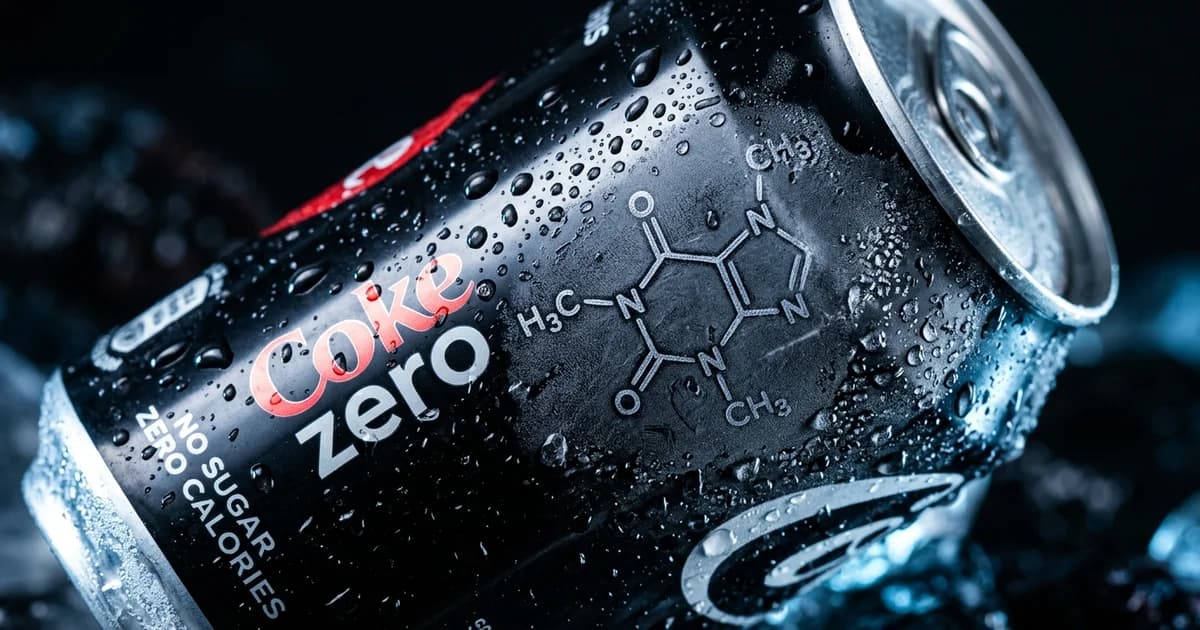
392.4(a)(2) bans "an amphetamine or any formulation thereof." Caffeine is not an amphetamine. They are different molecules with different mechanisms. Caffeine is a methylxanthine that blocks adenosine receptors. Amphetamines act on dopamine and norepinephrine transporters. The regulation draws a clear line, and caffeine falls outside it.
Section (c) provides an exemption for substances prescribed by a licensed medical practitioner per § 382.107. That exemption concerns prescriptions, not caffeine.
What the Science Says About Caffeine and Fatigue
Here is the honest counterweight to the compliance answer above. The FAA's 2024 Scientific Expert Panel report on air traffic controller fatigue describes the core problem with caffeine as a fatigue fix: caffeine blocks adenosine, the neuromodulator that builds up during extended wakefulness, temporarily making you feel more alert and improving performance, but without reducing sleep debt. Sleep pressure keeps accumulating while caffeine is active, and when it clears, sleepiness comes back stronger.
The same FAA panel cited a counterintuitive finding from an NTSB safety study (NTSB/SS-90/01): caffeine levels were highest among fatal fatigue-related truck crashes. The likely explanation is not that caffeine caused the crashes but that the most fatigued drivers consumed the most caffeine to compensate, and it was not enough.
A 2010 Cochrane review (Ker et al., 13 trials, 6 to 68 participants per trial) found that caffeine may improve performance in shift workers. But none of the included trials collected outcome data on actual injuries, and no participant had a confirmed diagnosis of shift work disorder. The review concluded that caffeine's effect on injuries simply has not been measured.
Hours of Service: The Rule That Actually Governs Fatigue
The federal fatigue framework for property-carrying CMV drivers is 49 CFR 395.3, not 392.4. The numbers:
| Rule | Limit |
|---|---|
| Off-duty before driving | 10 consecutive hours |
| On-duty window | 14 consecutive hours after coming on-duty |
| Driving within the window | 11 hours maximum |
| Mandatory driving interruption | 30 minutes after 8 hours of driving time |
| Weekly limit (carrier does not operate every day) | 60 hours in 7 consecutive days |
| Weekly limit (carrier operates every day) | 70 hours in 8 consecutive days |
| Restart provision | 34 or more consecutive hours off-duty |
No amount of caffeine changes any of these numbers. The HOS rules exist to guarantee rest.
Caffeine Timing on an 11-and-14 Day
NIOSH data puts caffeine's onset at 15 to 45 minutes after consumption, with a half-life of 5 to 6 hours. A 2023 meta-analysis by Gardiner et al. (24 studies, published in Sleep Medicine Reviews) found that a standard cup of coffee (107 mg per 250 mL) should be consumed at least 8.8 hours before bedtime to avoid reductions in total sleep time.
Run the arithmetic for a common scenario. Your 14-hour window ends at 8:00 PM and you plan to sleep in the cab by 10:00 PM. Counting back 8.8 hours from 10:00 PM puts your last 107 mg coffee at about 1:10 PM. That is roughly mid-shift, not the end. For the driver who wants to understand how long caffeine stays in their system, the math is straightforward but the variables (dose, body weight, liver enzyme speed) are personal. An online caffeine half-life calculator can help you estimate your own clearance window.
Caffeine Formats: Milligrams and Hands Required
For drivers who want alertness options beyond energy drinks, here is a quick comparison by format. All caffeine figures come from FDA consumer data unless otherwise noted.
| Format | Typical caffeine | Container | Hands needed |
|---|---|---|---|
| Brewed coffee, 8 oz | 80 to 100 mg | Open cup or travel mug | One (lid) to two (no lid) |
| Energy drink, 8 oz | 40 to 250 mg | Can | One |
| Caffeine gum (military issue) | 100 mg per piece | Foil pack | Zero after placement |
| Caffeine pouch (sublingual) | 80 mg | Tin | Zero after placement |
The FDA has cited 400 mg per day as an amount not generally associated with negative effects for most healthy adults. Every serving from any format counts toward that number.
Conclusion
Federal regulations set a floor. Your carrier may set its own workplace policy on caffeine products, energy drinks, or any consumable. Carrier-level rules can be stricter than federal rules.
Your DOT physical requires honest disclosure of medications and substances you use. This page is not legal advice, and it does not replace the judgment of your medical examiner, your carrier's safety department, or your own assessment of whether you are rested enough to drive.
No product substitutes for the sleep that the HOS rules exist to protect. That applies to coffee, energy drinks, gum, pouches, and anything else containing caffeine. Drivers who work non-CDL rideshare and delivery shifts face the same biological constraint without the regulatory backstop.
Frequently Asked Questions
Will caffeine show up on a DOT drug test?
No. The DOT urine panel defined in 49 CFR 40.85 tests for nine analyte groups: marijuana metabolites, cocaine metabolites, opioids (codeine, morphine, hydrocodone, hydromorphone, oxycodone, oxymorphone, 6-acetylmorphine), PCP, amphetamines, and MDMA/MDA. Caffeine is not among them.
Can caffeine pills put me out of service?
392.4(a)(4) applies to "any other substance, to a degree which renders the driver incapable of safely operating a motor vehicle." It is an impairment standard, not a substance ban. This page will not speculate on how an officer would apply it in a specific case. The rule does not name caffeine.
Is caffeine banned under 49 CFR 392.4?
No. The word "caffeine" does not appear anywhere in the text of 392.4. The section bans Schedule I substances, amphetamines, narcotics, and any substance that renders a driver incapable of safe operation. Caffeine is none of these.
Do energy drinks violate any FMCSA rule?
No FMCSA rule bans energy drinks by name. The same (a)(4) impairment standard applies to all substances. The regulatory question is whether a substance renders you incapable of safely operating the vehicle, not whether it comes in a can.
Does the DOT physical ask about caffeine?
The DOT medical examination form asks about medications and substances. This page cannot verify whether individual medical examiners routinely ask about caffeine. If you are asked, answer honestly. Lying on a DOT physical form has its own consequences.
How long before bed should I stop caffeine if I sleep in the cab?
Gardiner et al. (2023) found that a standard cup of coffee (107 mg) should be consumed at least 8.8 hours before bedtime to avoid reducing total sleep time. Higher doses may require a longer buffer. NIOSH puts caffeine's half-life at 5 to 6 hours but notes it can remain in your system much longer.
This page is for informational purposes only and is not legal, medical, or safety advice. If you are looking for a nicotine-free caffeine pouch, Roon makes one at takeroon.com.
A Counted Dose for the 8.8-Hour Cutoff
The regulation is straightforward: 49 CFR 392.4 does not name caffeine, and FMCSA's own fatigue guidance calls coffee an alertness strategy. The operational problem is knowing how many milligrams you took and whether the tail will interfere with sleeper-berth rest. Truck-stop coffee varies wildly; a large can push past 300 mg with no label to confirm it.
Roon is a sublingual caffeine pouch with 80 mg caffeine, 60 mg L-theanine, 25 mg methylliberine (Dynamine), and 5 mg theacrine (TeaCrine), zero sugar, zero nicotine. Dynamine slows caffeine's clearance, extending the useful window to roughly 6 to 8 hours. A randomized double-blind crossover PK study (n=12) showed that 150 mg caffeine paired with 100 mg methylliberine cut oral clearance from 41.9 to 17.1 L/hr and extended half-life from 7.2 to 15 hours without raising the peak. That study used roughly 4x the methylliberine and 1.9x the caffeine in Roon, so the direction holds while the magnitude will differ. The longer tail makes the 8.8-hour bedtime cutoff from the Gardiner meta-analysis even more important: count backward from lights-out and do not push it.
Roon is not a substitute for required rest periods, and no caffeine product makes fatigued driving safe. But when you need a precise, trackable dose that fits inside a 400 mg daily budget and a strict sleep schedule, a labeled pouch beats an unlabeled cup. Pouches start at as little as $0.61 each. Try Roon for your next pre-drive window.
Related from Roon
- How Do Truckers Stay Awake? 11 Tactics, Ranked by DOT Rules
- Why Does Driving Make Me Sleepy? 5 Causes and the Fixes
Written by Roon Team