Brain Supplements: A Science-Based Guide to What Actually Works
Roon Team
Brain Supplements: A Science-Based Guide to What Actually Works
Short answer: Most brain supplements rely on a small set of compounds with replicated clinical evidence: caffeine and L-theanine together for acute focus, theacrine and methylliberine to extend that window, and omega-3s, vitamin B12, and vitamin D for long-term brain health. The strongest acute evidence is for the caffeine plus L-theanine pairing, which a systematic review in Cureus describes as "a safe and effective cognitive enhancer." Dose, label transparency, and delivery method matter as much as the ingredient list. Roon packs the evidence-backed stack (80mg caffeine, 60mg L-theanine, 25mg methylliberine, 5mg theacrine, zero nicotine) into a single sublingual pouch at clinically informed doses.
Your brain uses a huge amount of energy each day despite making up only a small percentage of your body weight. That's one reason brain supplements have become such a fast-growing category in health and wellness. The idea that specific nutrients can affect brain function isn't just hype. There's real biology behind it.
The brain supplements market has exploded. Global Nootropic Supplement Market Insights valued it at over $2.3 billion in 2024, with projections showing nearly 8% annual growth through 2034. But most of what's sold under the "cognitive enhancement" banner, including popular nootropic brand claims, ranges from mildly useful to outright snake oil.
This guide breaks down which brain health supplements have real clinical evidence behind them, which ones are overhyped, and how to build a brain supplement stack that actually supports the way your brain works.
Key Takeaways:
- Only a handful of brain boosting supplements have strong, replicated clinical evidence.
- The best results come from specific ingredient combinations, not single compounds.
- Caffeine paired with L-theanine is one of the most well-studied cognitive stacks in existence.
- Newer compounds like theacrine and methylliberine address caffeine's biggest weaknesses: tolerance and crash.
The Problem With Most Brain Supplements
Walk into any supplement store and you'll find dozens of brain supplements promising sharper memory, laser focus, and "mental clarity." The labels sound impressive, but the evidence often falls short.
Here's why most brain supplements fail:
- Underdosed ingredients: Companies sprinkle in trace amounts of popular compounds so they can list them on the label. A product with only 10 mg of L-theanine is unlikely to do much. Clinical doses start at 100mg.
- Proprietary blends: When a label says "proprietary blend: 500mg," you have no idea how much of each ingredient you're actually getting. That's usually a red flag, not a benefit.
- Zero bioavailability consideration: Some compounds barely survive your digestive system. How a supplement is delivered matters as much as what's in it.
The brain supplements that work share a few things in common: clinically validated doses, ingredients with known mechanisms of action, and delivery methods that actually get the compounds where they need to go.
The Ingredients With Real Evidence: Brain Supplements That Work
Not every nootropic ingredient is created equal. Here's what the research actually supports for brain supplements, broken down by strength of evidence.
| Ingredient | Clinically studied dose | Strength of evidence | Roon (per pouch) |
|---|---|---|---|
| Caffeine | 40-100mg (acute focus) | Strong, replicated | 80mg |
| L-theanine | 100-200mg (paired with caffeine) | Strong, replicated | 60mg |
| Methylliberine (Dynamine) | 25-100mg | Emerging | 25mg |
| Theacrine (TeaCrine) | 100-300mg | Moderate | 5mg |
| Omega-3 (DHA/EPA) | 500-2,000mg daily | Strong (long-term) | Not included |
| Nicotine | Not a cognitive ingredient | None | 0mg (zero) |
Roon's stack centers on the caffeine plus L-theanine pairing, with methylliberine and theacrine in smaller supportive amounts, all delivered sublingually. It is a focus tool, not a replacement for omega-3s or B vitamins, and it contains zero nicotine.
Caffeine: The Baseline
You already know caffeine works. It blocks adenosine receptors, reducing the signal that tells your brain it's tired. The result is improved reaction time, alertness, and short-term focus. It's one of the most widely used stimulants in the world for a reason, and it forms the foundation of many brain supplements.
But caffeine alone has problems. It spikes cortisol. It creates jitters at higher doses. It disrupts sleep if taken after early afternoon. And your body builds tolerance fast, meaning you need more to get the same effect within just a few weeks of daily use. That cycle is part of why some people end up relying on more and more caffeine just to feel alert.
The dose matters too. Research consistently shows that 40 to 100mg of caffeine hits the sweet spot for cognitive performance without the anxiety and restlessness that come with higher doses. That's roughly half a cup of coffee. More isn't better. It's just more side effects.
L-Theanine: Caffeine's Missing Half
L-theanine is an amino acid found naturally in tea leaves. On its own, it promotes alpha brain wave activity, the same pattern associated with calm, focused attention. It's one of the most common ingredients in brain boosting supplements for good reason.
But L-theanine's real power shows up when you combine it with caffeine. A systematic review published in Cureus analyzed clinical trials on the caffeine and L-theanine combination and concluded it shows "favorable clinical significance in the domains of attention, memory, cognition, and hyperactivity." The combination improved short-term sustained attention and overall cognition across multiple study populations.
A 2025 double-blind, placebo-controlled crossover study went further, showing that a high-dose L-theanine and caffeine combination improved selective attention even in sleep-deprived young adults. That's meaningful, especially in situations involving fatigue and sleep loss, and it's a key reason this pairing appears in so many brain supplements.
In simple terms caffeine provides the stimulation. L-theanine smooths out the rough edges by promoting GABA activity and reducing the cortisol spike caffeine normally triggers. You get the focus without the jitters.
| Compound | Primary Effect | Onset | Duration |
|---|---|---|---|
| Caffeine (40-100mg) | Alertness, reaction time | 15-30 min | 2-3 hours |
| L-Theanine (100-200mg) | Calm focus, alpha waves | 30-45 min | 3-4 hours |
| Caffeine + L-Theanine | Sustained attention, cognition | 15-30 min | 3-5 hours |
Theacrine: A Promising Caffeine Alternative
Theacrine is structurally similar to caffeine but behaves differently in your body. It acts on both adenosine and dopamine receptors, providing energy and motivation without the same tolerance curve. This makes it one of the more promising ingredients in brain supplements that work over the long term.
A 2025 study published in the Journal of the International Society of Sports Nutrition tested a caffeine and theacrine combination (CTC) against caffeine alone in tactical personnel under physically fatiguing conditions. The CTC condition mitigated deficits in attention and inhibitory control, and the researchers noted it had "additional cognitive benefits beyond caffeine" used in isolation.
A separate dose-response study published in Scientific Reports found that theacrine improved cognitive performance without disrupting subsequent sleep, a problem that plagues caffeine users who take it after noon.
What makes theacrine interesting in long-term brain supplements: unlike caffeine, preliminary evidence suggests it doesn't produce the same rapid tolerance buildup. Your body doesn't seem to adapt to it the same way, which means the effects remain consistent over time.
Methylliberine: A Fast-Acting Addition
Methylliberine (sold under the brand name Dynamine) is the newest member of the purine alkaloid family. It crosses the blood-brain barrier rapidly, reaching peak plasma concentrations within 15 to 30 minutes.
A study published in PMC found that methylliberine ingestion improved multiple indices of affect, including energy, mood, and motivation. In a brain supplement stack, its role is usually supportive rather than central. It's to accelerate onset and amplify the effects of caffeine and theacrine.
A randomized crossover study published in Cureus tested a combination of caffeine, theacrine (TeaCrine), and methylliberine (Dynamine) in competitive egamers. The combination improved cognitive performance and reaction time without negatively affecting mood. The three compounds appeared to complement each other, with each contributing in a slightly different way. This kind of multi-compound approach is what separates brain supplements that work from those that don't.
Omega-3 Fatty Acids (DHA/EPA): The Long Game
If the compounds above are about acute performance, omega-3s are about structural maintenance. DHA makes up a large percentage of the fatty acids in your brain's cell membranes. Without adequate DHA, neuronal signaling slows down.
A narrative review in PMC examining nutritional supplements and cognitive function in aging found that omega-3 fatty acids may help improve memory and cognitive functions while helping maintain brain health in healthy adults.
For the best brain health supplements for seniors, omega-3s are arguably the most important single ingredient. A systematic review and meta-analysis in Scientific Reports confirmed the relationship between omega-3 supplementation and improved cognitive function, particularly in older adults with mild cognitive impairment.
Omega-3s won't make you feel sharper in the next 30 minutes. But consistent supplementation over months supports the biological infrastructure your brain needs to perform. You can think of it as supporting the brain's underlying structure over time.
B Vitamins and Vitamin D: Filling the Gaps
These aren't trendy nootropics. They're basic nutritional requirements that a surprising number of people fail to meet. Yet they belong in any serious conversation about brain supplements.
Vitamin B12 is essential for myelin production, the insulation that wraps your nerve fibers and determines how fast signals travel. Deficiency causes measurable cognitive impairment, and it's common in vegetarians, vegans, and adults over 50 whose absorption declines with age.
Vitamin D receptors exist throughout the brain, particularly in regions involved in memory and executive function. If you spend most of your day indoors (and statistically, you do), there's a strong chance your levels are suboptimal. Supplementing with 1,000 to 2,000 IU daily is a reasonable baseline for most adults.
Neither of these will give you a noticeable "boost." But if you're deficient, fixing the gap can feel like flipping a switch. The brain fog lifts. Recall speeds up. Energy stabilizes. Sometimes the most helpful brain boosting supplements are simply the basics you've been missing.
Best Brain Supplements for Brain Fog: What the Science Says
Brain fog isn't a clinical diagnosis. It's a cluster of symptoms: difficulty concentrating, mental fatigue, slow recall, and a general feeling that your thinking is "off." The best brain supplements for brain fog depend on what's causing it.
If the cause is nutritional deficiency:
Healthline's evidence-based review identifies several brain health supplements with clinical support for brain fog symptoms:
- Vitamin B12: Deficiency directly impairs cognitive function. People with low B12 levels often report dramatic improvement with supplementation.
- Vitamin D: Low levels are associated with cognitive impairment. If you work indoors and don't supplement, you're likely deficient.
- Omega-3s: As noted above, DHA supports neuronal membrane fluidity, which directly affects signal transmission speed.
If the cause is acute cognitive demand:
This is where stimulant-based brain supplements come in. Caffeine and L-theanine address the immediate symptoms of mental fatigue. Theacrine extends that window without the crash. These aren't fixing a deficiency. They may help temporarily when mental demand is high and you're feeling drained.
The smartest approach? Address both. Fix any underlying nutritional gaps with daily omega-3s, B vitamins, and vitamin D. Then use targeted brain supplements for the moments when you need peak cognitive output.
How Brain Supplements Are Delivered Matters
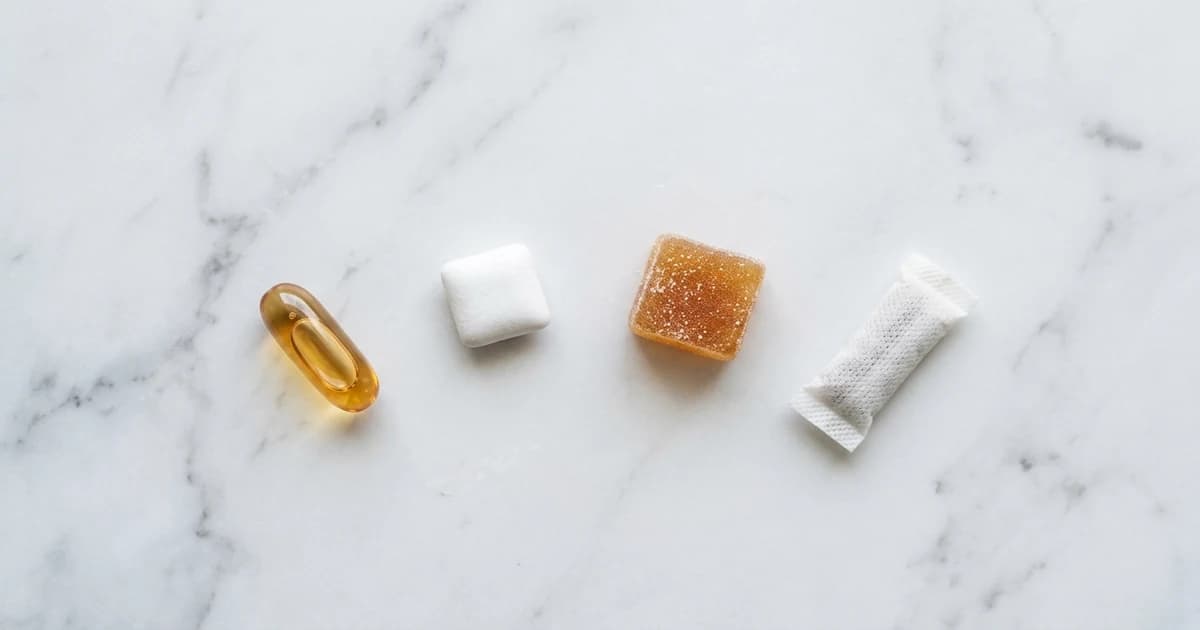
Most brain supplements come in capsules or pills. You swallow them, they pass through your stomach acid, get processed by your liver, and whatever survives eventually reaches your bloodstream. This process, known as first-pass metabolism, can reduce how much of an active compound ultimately reaches circulation. You're paying for 100mg on the label and absorbing a fraction of that.
Sublingual delivery bypasses this entirely. Compounds placed under the tongue absorb directly through the mucous membrane into the bloodstream. The result is faster onset and higher bioavailability.
This is why hospitals use sublingual delivery for medications that need to work quickly. Nitroglycerin for chest pain. Certain pain medications in emergency settings. The same pharmacological principle applies to brain supplements. In some cases, a sublingual delivery format may lead to faster onset than a capsule because absorption begins earlier, simply because more of the active compound actually arrives where it's needed.
Delivery method is one of the most overlooked factors in how brain supplements work. Two products with identical ingredient lists can produce wildly different results based on how those ingredients enter your bloodstream.
How to Evaluate Any Brain Health Supplement
Before you spend money on any brain supplements, run them through this checklist:
- Are the doses clinically validated? Look for specific milligram amounts that match what was used in published studies. If the label is vague, skip it.
- Can you see every ingredient and its dose? Proprietary blends hide underdosing. Transparent labels are non-negotiable for brain supplements that work.
- Is there a plausible mechanism of action? If a company can't clearly explain how an ingredient is thought to work, that's worth questioning.
- What's the delivery method? Capsules, powders, sublingual, or transdermal all have different bioavailability profiles. This affects whether you're actually getting what the label promises.
- Does it address tolerance? Any stimulant-based brain supplement that doesn't account for tolerance will stop working within weeks. Look for ingredients like theacrine that resist habituation.
Frequently Asked Questions
What brain supplements actually work?
The brain supplements with the strongest evidence are caffeine and L-theanine (for acute focus), theacrine and methylliberine (to extend that window), and omega-3 fatty acids, vitamin B12, and vitamin D (for long-term brain health). A systematic review in Cureus found the caffeine plus L-theanine pairing improved attention, memory, and cognition. Dose and delivery matter as much as the ingredient itself; trace amounts buried in proprietary blends rarely do much.
Are caffeine and L-theanine more effective together than alone?
Yes. Caffeine supplies the alertness while L-theanine smooths the rough edges, promoting calm, focused attention without the jitters caffeine alone can produce. L-theanine also promotes GABA activity and dampens the cortisol spike caffeine normally triggers. This pairing is one of the most studied cognitive stacks in existence, which is why it anchors most evidence-based formulas, including Roon's 80mg caffeine and 60mg L-theanine.
Does theacrine cause tolerance the way caffeine does?
Current evidence suggests not to the same degree. In an 8-week daily-use study, researchers reported "no evidence of habituation" for energy, focus, and concentration, with no negative changes to heart rate or blood pressure. That non-habituating profile is what makes theacrine interesting alongside caffeine, which builds tolerance within weeks. Theacrine acts on both adenosine and dopamine pathways, supporting energy and motivation on a flatter curve.
How much caffeine is best for focus without the jitters?
Roughly 40 to 100mg, about half a cup of coffee, is the range research links to improved alertness and reaction time without the anxiety that higher doses bring. More caffeine mostly buys more side effects: cortisol spikes, jitters, and disrupted sleep if taken after early afternoon. Pairing caffeine with L-theanine widens that comfortable window. Roon uses 80mg per pouch, inside this evidence-backed range.
Is sublingual delivery actually better than pills?
For speed of onset, often yes. Capsules pass through the stomach and liver first, where first-pass metabolism reduces how much active compound reaches your blood. Sublingual compounds absorb directly through the mucous membrane under the tongue. StatPearls notes this route "bypasses the hepatic portal vein" and allows rapid onset, which is why hospitals use it for drugs like nitroglycerin. Two products with identical labels can perform differently based on delivery.
What is the best brain supplement for brain fog?
It depends on the cause. If brain fog stems from a nutritional gap, correcting vitamin B12, vitamin D, or omega-3 levels tends to help most. If it stems from acute mental fatigue, caffeine with L-theanine supports short-term focus, and theacrine helps extend that window. The smartest approach addresses both: fix deficiencies daily, then use a targeted stack for high-demand moments. Supplements support focus; they do not replace sleep.
Can a focus pouch replace omega-3s, B vitamins, or sleep?
No. A focus stack like Roon supports acute attention for a few hours; it is not a substitute for the basics that maintain brain health over time. Omega-3 fatty acids, vitamin B12, and vitamin D fill structural and nutritional gaps that no stimulant addresses. Sleep is non-negotiable. Use fast-acting compounds for peak-output windows, and the foundational nutrients, taken consistently, for the long game.
The Nootropic Stack, Simplified: Brain Supplements Done Right
Building an effective brain supplement protocol used to mean buying four or five separate bottles, measuring doses, and hoping the timing worked out. Most people gave up before they got it right.
That's the idea behind products like Roon. Roon's nootropic pouches combine caffeine (80mg), L-theanine, theacrine, and methylliberine into a single sublingual pouch. The dose of each ingredient is based on clinical research. The sublingual format may allow for faster absorption than a standard capsule. It also includes theacrine, which may help the formula feel more consistent over time compared with caffeine alone.
No pills to stack. No guesswork on doses. Just the brain supplements that the evidence actually supports, delivered in a way that makes biochemical sense. If you've read this far and want to skip the trial-and-error phase, Roon is worth a look.
By Roon Team