Brain Fog After Eating: The Foods That Sharpen Your Mind
Roon Team
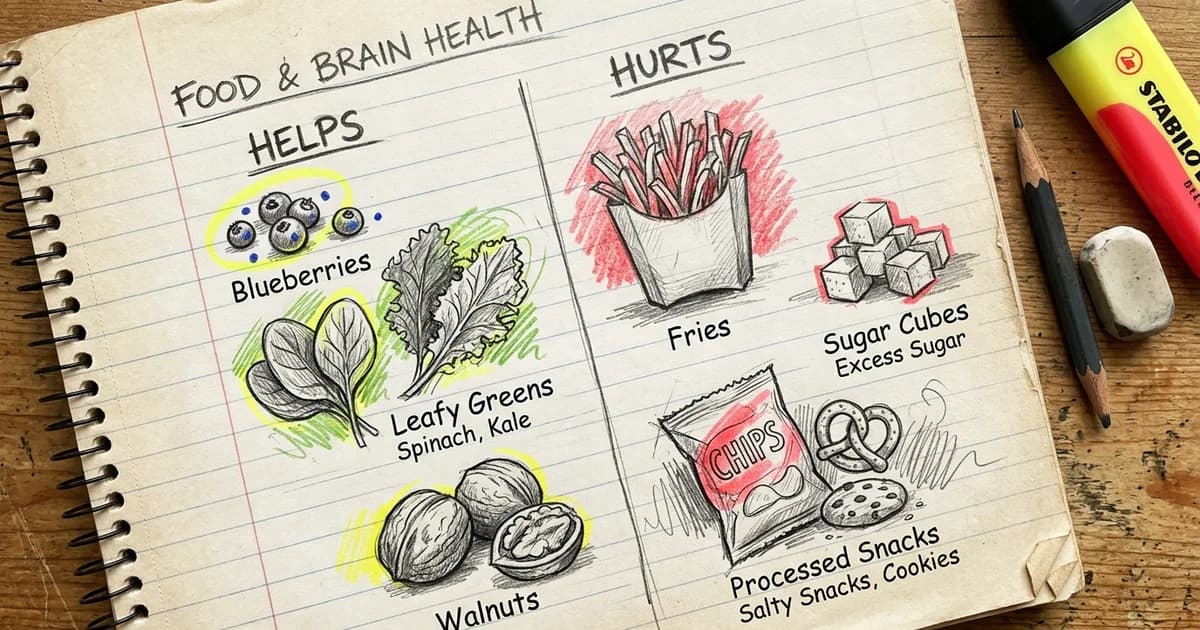
Brain Fog After Eating: The Foods That Sharpen Your Mind (and the Ones Wrecking It)
You crushed a big lunch, sat back down at your desk, and now you can't remember what you were working on. Brain fog after eating is so common that most people assume it's normal. It isn't. That heavy, unfocused haze rolling in after meals is your brain telling you something specific about what you just put in your body.
The connection between food and cognitive function is direct and measurable. What you eat determines how well your neurons fire, how efficiently your brain uses energy, and whether inflammation quietly degrades your ability to think. The good news: once you understand the mechanisms, fixing brain fog after eating becomes straightforward, and there are neuroscience-backed steps for how to clear mental haze fast.
Key Takeaways
- Blood sugar spikes from refined carbs and added sugars are the most common trigger for brain fog after eating.
- Gluten can cause cognitive impairment even in people without celiac disease.
- Keto brain fog is real but temporary, typically lasting days to weeks during metabolic adaptation.
- Omega-3 fatty acids, leafy greens, and berries are among the strongest dietary supports for mental clarity.
Why You Get Brain Fog After Eating
The technical term is postprandial cognitive impairment, and it traces back to a few overlapping mechanisms.
The Blood Sugar Roller Coaster
Your brain runs on glucose. But it needs a steady supply, not a flood. When you eat a meal heavy in refined carbohydrates or added sugar, your blood glucose spikes rapidly. Your pancreas responds by dumping insulin into the bloodstream to pull that sugar into cells. The result is a sharp crash that leaves your brain starved for fuel just 30 to 60 minutes after eating.
Research published in the journal Nutrients found that added sugar consumption triggers measurable mental fog, with effects peaking within that 30-to-60-minute window. A 2025 study published in Medicina confirmed that gastrointestinal symptom severity was positively correlated with brain fog scores, linking what happens in your gut directly to brain fog after eating.
This isn't just about candy bars. White bread, pasta, fruit juice, and most breakfast cereals all produce the same rapid glucose spike followed by the same cognitive crash.
Inflammation: The Slow Burn
Some brain fog after eating triggers work on a longer timeline. Chronic low-grade inflammation, often driven by processed foods, seed oils, and excess sugar, crosses the blood-brain barrier and disrupts neurotransmitter signaling.
Your gut and brain communicate constantly through the vagus nerve and shared chemical messengers. When your gut lining becomes irritated by inflammatory foods, the immune response doesn't stay local. Research from Food for the Brain Foundation has shown that specific food intolerances create a cascade of inflammation and immune reactivity that causes both gut issues like IBS and cognitive symptoms like brain fog after eating.
Food Sensitivities You Don't Know About
Here's where it gets personal. You might tolerate dairy perfectly while your coworker gets foggy from a single latte. Individual food sensitivities trigger immune responses that produce cytokines, inflammatory molecules that impair concentration, memory, and processing speed. The tricky part: these reactions can be delayed by hours, making the offending food hard to identify without an elimination protocol.
Brain Fog After Eating Gluten: Not Just a Celiac Problem
The relationship between brain fog after eating gluten extends well beyond celiac disease.
A nationwide study published in the Journal of Clinical Gastroenterology investigated gluten-induced neurocognitive impairment in both celiac disease patients and those with non-celiac gluten sensitivity (NCGS). The findings were striking: cognitive symptoms, including difficulty concentrating, forgetfulness, and mental sluggishness, were commonly reported across both groups after gluten exposure.
A separate pilot study using brain MRI found measurable neurological changes in NCGS patients exposed to gluten, providing early imaging evidence that brain fog after eating gluten has a real, observable basis in brain function.
The mechanism likely involves a combination of intestinal permeability ("leaky gut"), systemic inflammation, and direct effects of gluten-derived peptides on the nervous system. If you consistently experience brain fog after eating meals containing wheat, rye, or barley, a two-to-four-week elimination trial is the simplest way to test whether gluten is your problem.
Brain Fog on Keto: Why Low-Carb Diets Fog You Out (Temporarily)
If you've tried a ketogenic diet, you probably hit a wall in the first week. Brain fog on keto is one of the most common complaints during the transition period, and it has a clear physiological explanation.
Your brain has been running on glucose for your entire life. When you suddenly cut carbohydrates to under 20-50 grams per day, your body needs time to ramp up ketone production and teach your neurons to use this alternative fuel source efficiently. During that adaptation window, which typically lasts anywhere from three days to two weeks, your brain is caught between fuel sources. Not enough glucose coming in, not enough ketones being produced yet.
According to research compiled by LMNT, the most common and easily fixable cause of brain fog keto symptoms is sodium deficiency. When insulin drops on a low-carb diet, your kidneys excrete more sodium. Without replacing it, you get headaches, fatigue, and that familiar mental haze.
A case report published in Neurology also documented reversible memory loss associated with prolonged ketogenic diet use, hypothesizing that decreased glucose availability and altered synaptic function may play a role.
How to Fix Keto Brain Fog
| Strategy | Why It Works |
|---|---|
| Increase sodium intake (add 1-2g daily) | Replaces electrolytes lost through increased urination |
| Transition gradually (reduce carbs over 1-2 weeks) | Gives your metabolism time to upregulate ketone production |
| Eat enough fat | Provides raw material for ketone body synthesis |
| Stay hydrated | Dehydration compounds cognitive symptoms |
| Be patient (give it 2 weeks) | Full keto-adaptation takes time |
For most people, keto brain fog resolves completely once adaptation is finished. If it persists beyond three to four weeks, the diet may not be the right fit for your neurochemistry.
The Foods That Fight Brain Fog After Eating
Now for the other side of the equation. Certain foods actively support the neurochemical environment your brain needs to stay sharp.
Fatty Fish and Omega-3s
Your brain is roughly 60% fat by dry weight, and DHA (docosahexaenoic acid) is the dominant structural omega-3 in neural tissue. Mass General Brigham recommends fatty fish like salmon, cod, and pollock as top choices for brain health, noting that omega-3 fatty acids are "excellent for brain function." Two to three servings per week provides a meaningful dose.
Leafy Greens
Spinach, kale, collard greens. They're rich in folate, lutein, and vitamin K, all of which support neurotransmitter production and protect against cognitive decline. One study found that just one serving of leafy greens per day slowed the cognitive decline associated with aging.
Berries
Blueberries, strawberries, and blackberries are loaded with anthocyanins, a class of antioxidants that cross the blood-brain barrier and reduce oxidative stress in brain tissue. They're one of the few "superfoods" that actually earn the label for cognitive performance.
Eggs
Eggs are one of the best dietary sources of choline, a precursor to acetylcholine, the neurotransmitter most directly involved in memory and attention. Dr. Rudolph Tanzi of Mass General Brigham recommends eating eggs at least once or twice a week for brain health.
Avocados and Nuts
Healthy monounsaturated fats support blood flow to the brain and help maintain the integrity of cell membranes. Walnuts pull double duty here because they also contain ALA, a plant-based omega-3.
The Brain Fog After Eating Diet Cheat Sheet
Here's a simple comparison of what to prioritize and what to minimize:
| Eat More | Eat Less |
|---|---|
| Wild-caught fatty fish (salmon, sardines) | Refined sugar and high-fructose corn syrup |
| Leafy greens (spinach, kale) | White bread, pasta, and processed grains |
| Berries (blueberries, strawberries) | Fried foods and industrial seed oils |
| Eggs | Artificial sweeteners (may disrupt gut bacteria) |
| Avocados and walnuts | Alcohol (even moderate amounts impair cognition) |
| Fermented foods (kimchi, yogurt) | Highly processed packaged snacks |
The pattern is clear. Whole foods with healthy fats, antioxidants, and stable energy profiles prevent brain fog after eating. Processed foods with sugar, refined flour, and inflammatory oils gum up the works.
Meal Timing and Structure Matter for Brain Fog After Eating
What you eat matters. So does when and how you eat it.
Large meals force your body to divert blood flow to your digestive system, leaving less for your brain. Eating smaller, more frequent meals, or simply keeping lunch moderate in size, reduces the postprandial dip that triggers brain fog after eating in the afternoon.
Pairing carbohydrates with protein and fat slows glucose absorption and prevents the spike-crash cycle. A chicken salad with olive oil keeps you sharp. A plate of plain pasta does not.
Research from Levels Health suggests that time-restricted eating may also help by improving insulin sensitivity and metabolic flexibility, both of which support steadier energy delivery to the brain throughout the day.
When Fixing Brain Fog After Eating Through Diet Alone Isn't Enough
Optimizing your diet to prevent brain fog after eating handles the foundation. But some days, the foundation isn't enough. You slept poorly, your schedule is packed, and you need to be sharp right now.
That's the gap Roon was designed to fill. Roon is a zero-nicotine sublingual pouch built around four ingredients that directly support cognitive performance: Caffeine (80 mg), comparable to a cup of coffee, but smoothed by L-Theanine so you get alertness without the jitters; L-Theanine, which promotes calm focus and alpha brain wave activity; Theacrine and Methylliberine, which extend the duration of mental clarity to 6-8 hours without the crash or tolerance buildup you get from coffee alone.
You can eat perfectly and still have days where brain fog after eating lingers. Roon gives you that boost without sugar, without nicotine, and without the two-hour expiration date of your average espresso. Try it here.