Beta-Alanine for the Brain: Carnosine, Resilience
Roon Team
Beta-Alanine for the Brain: Carnosine, Resilience, and the Focus Question
Beta-alanine built its reputation in the squat rack. It is the tingly amino acid in your pre-workout, the one that lets you grind out two extra reps before your muscles quit. But the beta-alanine brain benefits story is quieter, stranger, and more interesting than the gym chatter suggests.
Here is the short version. Beta-alanine is the raw material your body uses to build carnosine, and carnosine does not just live in muscle. It concentrates in your brain too, where it behaves less like a fuel and more like a bodyguard.
The catch is that the evidence in muscle is rock solid, while the evidence above the neck is early. This article separates what we actually know from what we are still guessing.
Key Takeaways
- Beta-alanine is the rate-limiting building block for carnosine, a dipeptide found in both muscle and brain tissue.
- In the brain, carnosine acts as an antioxidant, an anti-glycation agent, and a pH buffer, which is why researchers study it for resilience and aging.
- Human data on beta-alanine cognition is preliminary. One soldier study hinted at a resilience effect; the focus evidence is thin.
- The dose that works for muscle is large (often 4 to 6 grams daily) and comes with harmless skin tingling.
- If you want fast, reliable focus, beta-alanine is not the tool. It plays a slower, structural role.
What Beta-Alanine Actually Does
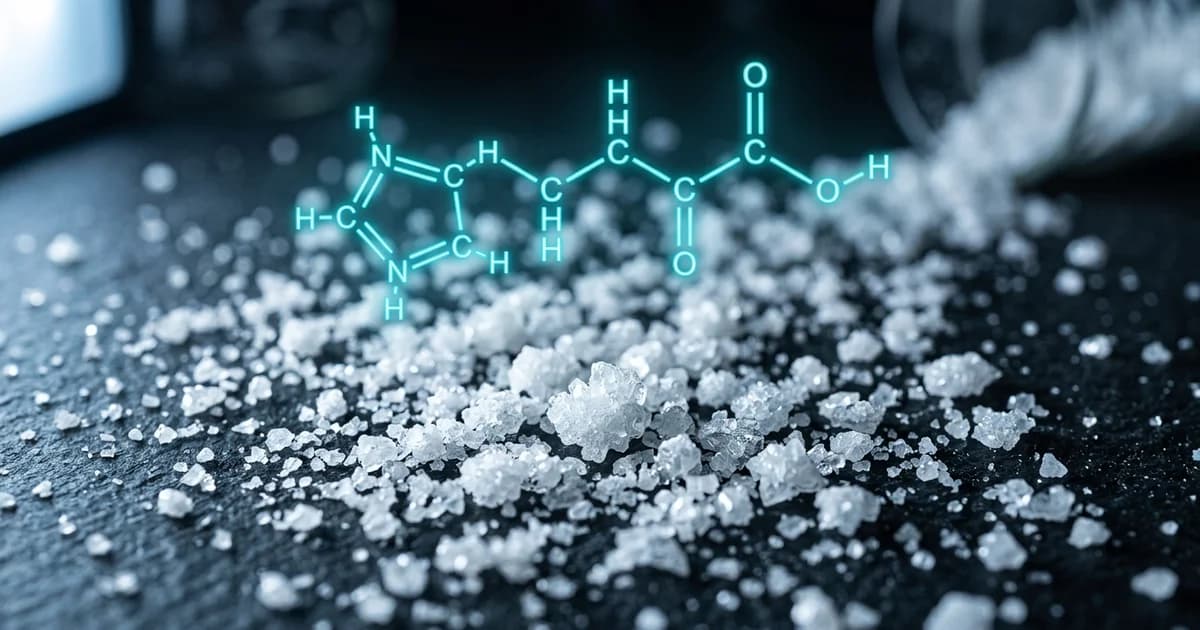
Beta-alanine is a building block, not an active driver. You swallow beta-alanine, your body combines it with the amino acid histidine, and the result is carnosine.
Carnosine is the molecule that does the work. Beta-alanine is the bottleneck, the ingredient your body runs short of, so taking more of it raises carnosine stores over weeks. This is well established in skeletal muscle, where higher carnosine buffers acid and delays fatigue.
The brain question starts here. If beta-alanine reliably raises carnosine in muscle, does it do the same in neural tissue? And if it does, would that change anything you could feel?
Beta-Alanine, Carnosine, and the Brain
Carnosine is present in the brain, and it is not just sitting there. A 2019 review in the journal Nutrients catalogued carnosine's potential roles across brain-related disorders, pointing to its antioxidant and protective activity in neural tissue.
The mechanisms are the interesting part. According to a 2025 review summarized on Spandidos Publications, carnosine clears free radicals in neurons, reduces damage from oxidative stress, and blunts the formation of advanced glycation end products, the sticky byproducts of sugar metabolism that accumulate as we age.
That last point matters for the beta-alanine carnosine brain conversation. Glycation and oxidative stress are two of the processes most linked to age-related cognitive decline, and carnosine pushes back on both.
There is even hard preclinical data on protection. In an American Heart Association study published in Stroke, carnosine reduced brain injury in a mouse model of focal cerebral ischemia. That is a long way from a focus pouch, but it tells you the molecule is biologically active in neural tissue, not inert.
The Focus Question: What the Human Data Says
Here is the honest answer: the evidence that beta-alanine sharpens focus in healthy people is preliminary and mixed.
The most cited human work is an exploratory study published in PLOS One that measured the brain's homocarnosine and carnosine signal alongside cognitive testing after beta-alanine supplementation. The researchers framed it as exploratory for a reason. They were probing whether the muscle effect translates to the brain, not declaring a verdict.
So when you see a supplement label promising beta-alanine focus, treat it skeptically. The data does not support a clean claim that beta-alanine makes you concentrate better on a Tuesday afternoon. What it supports is a slower hypothesis about brain carnosine and long-term resilience.
This is the difference between a fast-acting nootropic and a structural nutrient. Beta-alanine, if it does anything for the brain, works on the timescale of weeks of loading, not minutes.
Beta-Alanine and Resilience
The resilience angle is where the beta-alanine resilience research gets genuinely intriguing. Resilience here means the brain's ability to hold performance together under physical and psychological stress.
A study in Nutrients on soldiers looked at beta-alanine's effect on performance, cognitive function, and resiliency during intense military training. The premise is that under extreme stress, when the body is depleted and the nervous system is hammered, raising carnosine reserves might help protect cognitive function.
This is a smarter way to think about beta-alanine mental effects than the focus framing. The pitch is not "feel sharper now." It is "degrade less when conditions get brutal."
It also fits the biology. If carnosine buffers pH, scavenges free radicals, and protects neurons, those properties would matter most precisely when stress floods the system, not during a calm desk session.
How Beta-Alanine Compares to Fast-Acting Focus Ingredients
Beta-alanine is a poor fit if your goal is acute, same-day focus. It is a structural nutrient, not an alertness driver. Here is how it stacks up against ingredients built for speed.
| Ingredient | Primary Brain Role | Onset | Best Use Case |
|---|---|---|---|
| Beta-alanine | Raises brain carnosine; antioxidant, anti-glycation, resilience | Weeks of loading | Long-term neural protection, stress resilience |
| Caffeine | Blocks adenosine; raises alertness | 5 to 45 min | Acute energy and focus |
| L-theanine | Smooths caffeine's edge; calm focus | 30 to 60 min | Reducing jitters, steady attention |
| Methylliberine (Dynamine) | Fast, caffeine-like signaling without long half-life | Minutes | Quick lift, low crash |
| Theacrine (TeaCrine) | Sustained energy, slow to build tolerance | 30 to 60 min | Long, even focus window |
| Roon pouch (all four above, sublingual) | Combined fast onset plus sustained focus | 5 to 10 min | On-demand focus, 6 to 8 hr window, no crash |
The takeaway is simple. If you want focus in the next ten minutes, you reach for the bottom rows. Beta-alanine lives in the top row, doing slow, protective work you do not feel in real time.
Should You Take Beta-Alanine for Your Brain?
If you train hard, beta-alanine is a reasonable supplement with a real, proven payoff in the gym, and any brain carnosine effect is a bonus you cannot yet count on.
If your only goal is mental performance, the case is weaker. You would be loading several grams a day, tolerating the tingling, and betting on preliminary brain data. There are faster, better-studied tools for daytime focus.
The most defensible reason to care about brain carnosine is the long game: aging, oxidative stress, and resilience under pressure. That is a real area of science, and it is worth watching as more human trials arrive.
Conclusion
Beta-alanine is one molecule wearing two hats. In muscle, it is a proven performance tool. In the brain, it is a promising but unfinished story, built on carnosine's antioxidant, anti-glycation, and protective behavior.
The resilience research is the part to take seriously, because it matches the biology. The focus claims are the part to hold loosely, because the human data is still preliminary. Use beta-alanine for what it has earned, and do not expect it to be the thing that locks in your attention before a deadline.
Frequently Asked Questions
Does beta-alanine actually reach the brain?
Carnosine, the molecule beta-alanine builds, is present in brain tissue and active there. Research has documented its antioxidant and protective roles in neurons. Whether oral beta-alanine raises brain carnosine as reliably as it raises muscle carnosine is still being studied, and the human data on this specific question remains exploratory rather than settled.
Will beta-alanine improve my focus today?
No. Beta-alanine is a slow-loading structural nutrient, not a fast-acting focus ingredient. It works over weeks by raising carnosine stores, so there is no same-day alertness effect. For acute focus, ingredients like caffeine, L-theanine, methylliberine, and theacrine act in minutes to an hour, which beta-alanine does not.
What is the link between beta-alanine and carnosine?
Beta-alanine is the rate-limiting building block of carnosine, a dipeptide your body assembles from beta-alanine and histidine. Because beta-alanine is the ingredient you run short of, supplementing it raises carnosine levels over time. Carnosine is the molecule that does the real work in both muscle and brain tissue, acting as a buffer and antioxidant.
What does beta-alanine resilience mean?
Resilience refers to the brain and body holding performance together under heavy stress. Research on soldiers has explored whether raising carnosine reserves helps protect cognitive function during intense training. The idea is not that you feel sharper day to day, but that you degrade less when physical and psychological stress spikes. This evidence is early and not yet conclusive.
Why does beta-alanine cause tingling?
The tingling, called paresthesia, comes from beta-alanine activating sensory nerves in the skin. It usually starts 10 to 20 minutes after a dose and fades within an hour. It is harmless and not a sign the supplement is working. Splitting the daily total into smaller doses of 2 grams or less reduces it, which is why divided dosing is common.
How much beta-alanine do studies use?
Performance research commonly uses 4 to 6 grams per day, taken in divided doses to limit tingling, over several weeks to load muscle carnosine. The brain studies follow similar loading logic. These are large daily amounts compared to typical focus ingredients, which is one reason beta-alanine fits a long-term protocol rather than an on-demand focus routine.
Where Beta-Alanine Fits, and Where It Doesn't
Beta-alanine is a long-game nutrient. It builds carnosine, it protects neural tissue over weeks, and the resilience science is worth respecting. What it is not is a tool you reach for when you need to focus in the next ten minutes. The human focus evidence is preliminary, and pretending otherwise would be dishonest.
That gap is where Roon lives. Roon does not contain beta-alanine, and it is not trying to replace a long-term carnosine protocol or a smart training diet. It solves the other problem: fast, reliable, same-day focus. Each sublingual pouch pairs 80 mg caffeine, 60 mg L-theanine, 25 mg methylliberine (Dynamine), and 5 mg theacrine (TeaCrine), with a 5 to 10 minute onset and a 6 to 8 hour window of focus with no jitters, no crash, and no tolerance buildup.
Think of them as different layers. Beta-alanine is structural and slow. If you want acute focus on demand, try Roon and let the slow stuff stay slow.
Written by Roon Team