The Best Supplements for Sleep and Recovery in 2026
Roon Team
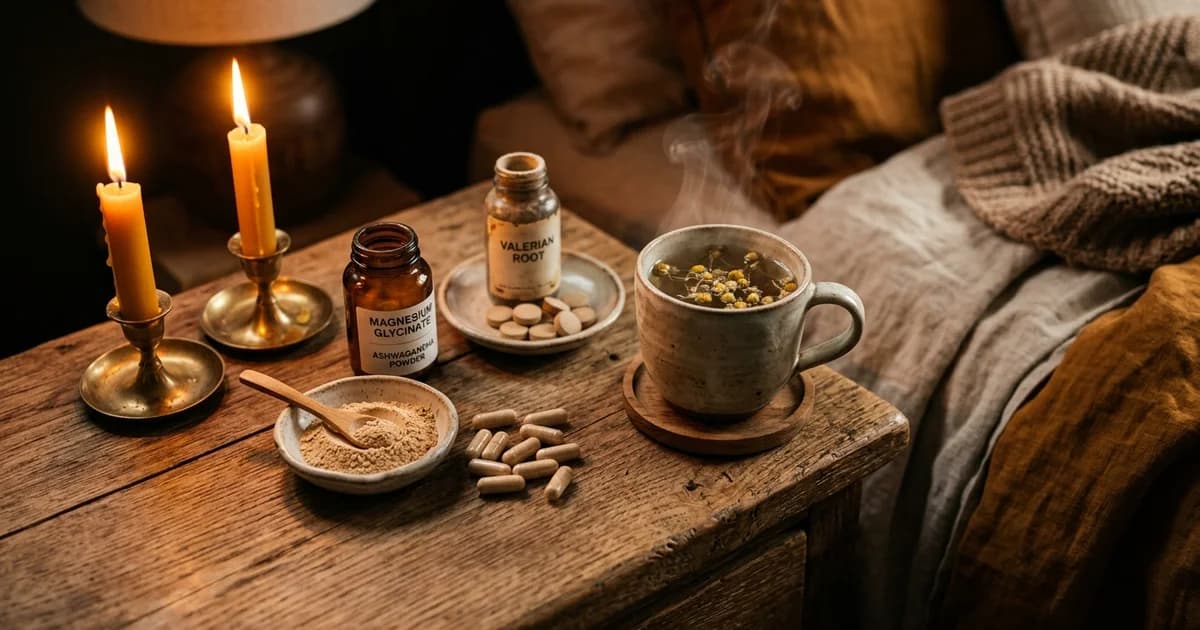
The Best Supplements for Sleep and Recovery in 2026
About one in three American adults don't get enough sleep. You already know this because you're probably one of them. And if you've started searching for the best supplements for sleep and recovery, you're past the "just try melatonin" phase and looking for something that actually works.
Good. Because the supplement aisle is crowded with pixie-dusted formulas and proprietary blends that hide behind vague promises. This guide to the best supplements for sleep and recovery cuts through the noise. Every supplement on this list has clinical data behind it, a clear mechanism of action, and a dosage that's been tested on real humans.
Key Takeaways:
- Magnesium glycinate is the single most broadly useful sleep supplement for most people.
- Glycine (3g before bed) is underrated and has strong evidence for improving subjective sleep quality.
- L-Theanine promotes relaxation without sedation, making it useful for people whose racing thoughts keep them up.
- Melatonin works, but only for specific use cases. It's not a nightly sleep aid.
1. Magnesium Glycinate (Bisglycinate): The Best Supplements for Sleep and Recovery Start Here
If you only take one supplement for sleep, make it magnesium.
A randomized, placebo-controlled trial published in Nature and Science of Sleep enrolled 155 adults with self-reported poor sleep and found that magnesium bisglycinate supplementation improved insomnia symptoms compared to placebo. A separate randomized controlled trial on magnesium L-threonate found improvements in both sleep quality and daytime functioning.
The reason magnesium ranks so highly among the best supplements for sleep and recovery is straightforward. It activates the parasympathetic nervous system (your "rest and digest" mode) and helps regulate GABA, the neurotransmitter responsible for calming neural activity. Most adults are mildly deficient in magnesium, which makes supplementation a low-risk, high-reward move.
Dose: 200-400mg of elemental magnesium, taken 30-60 minutes before bed. Look for the glycinate or bisglycinate form specifically. Magnesium oxide is cheap but poorly absorbed.
| Magnesium Form | Absorption | Best For |
|---|---|---|
| Glycinate/Bisglycinate | High | Sleep, relaxation |
| L-Threonate | High | Sleep + cognitive function |
| Citrate | Moderate | General use, digestion |
| Oxide | Low | Budget option (less effective) |
2. Glycine: The Sleeper Pick (Literally)
Glycine is an amino acid your body already produces. But supplementing with it before bed does something interesting: it lowers your core body temperature, which is one of the key physiological triggers for sleep onset. That temperature-lowering effect is why glycine appears on nearly every list of the best supplements for sleep and recovery.
A study published in Sleep and Biological Rhythms found that 3g of glycine before bedtime improved subjective sleep quality in volunteers who had been experiencing unsatisfactory sleep. A follow-up study in Frontiers in Neurology confirmed that 3g of glycine also improved daytime performance in partially sleep-restricted subjects, reducing fatigue and improving cognitive clarity the next day.
The recovery angle here is real. Glycine is a precursor to glutathione (your body's primary antioxidant) and plays a direct role in collagen synthesis. So you're getting sleep support and tissue repair from the same molecule, which is exactly what the best supplements for sleep and recovery should deliver.
Dose: 3g, taken 30-60 minutes before bed. It has a mildly sweet taste and mixes easily into water.
3. L-Theanine: The Calm-Down Switch
L-Theanine is an amino acid found naturally in green tea. It doesn't sedate you. Instead, it promotes alpha brain wave activity, which is the same relaxed-but-alert state you experience during meditation. For people who can't quiet their minds at night, L-Theanine earns its spot among the best supplements for sleep and recovery.
A 2025 systematic review published in Nutritional Neuroscience examined multiple randomized controlled trials and found that 200-450mg per day of L-theanine improved markers of sleep quality, including sleep latency, sleep maintenance, and overall perceived restfulness. A separate meta-analysis in Sleep Medicine Reviews covering 19 articles and 897 participants found that L-theanine supplementation improved overall sleep quality.
What makes L-Theanine particularly useful is its versatility. Take it at night and it helps you wind down. Take it during the day (paired with caffeine) and it smooths out the stimulant's edge without dulling your focus.
Dose: 200-400mg before bed for sleep. 100-200mg with caffeine during the day for calm focus.
4. Ashwagandha: The Stress-Sleep Connection
If your sleep problems are driven by stress and an overactive mind at 11pm, ashwagandha addresses the root cause rather than the symptom. That stress-targeting mechanism is what makes ashwagandha one of the best supplements for sleep and recovery in people with high cortisol.
A meta-analysis in PLOS ONE analyzing five randomized controlled trials found that ashwagandha extract had a small but statistically meaningful effect on overall sleep quality. The effect was more pronounced in people with insomnia compared to healthy sleepers. A double-blind trial published in the Journal of Sleep Research found that 120mg of standardized ashwagandha extract (Shoden) improved sleep quality in 150 healthy subjects with non-restorative sleep.
Ashwagandha works by modulating cortisol, your primary stress hormone. Lower evening cortisol means a quieter nervous system, which means faster sleep onset and fewer middle-of-the-night wake-ups.
Dose: 120-600mg of a standardized extract (KSM-66 or Shoden are the two most studied forms). Take it in the evening.
5. Tart Cherry Extract: Nature's Melatonin Source
Tart cherry is one of the few whole-food sources of naturally occurring melatonin. But unlike synthetic melatonin supplements (which often come in absurdly high doses of 5-10mg), tart cherry delivers melatonin in small, physiologically appropriate amounts alongside anti-inflammatory compounds. For athletes looking for the best supplements for sleep and recovery, tart cherry pulls double duty.
A pilot study published in the Journal of Medicinal Food found that tart cherry juice increased sleep time and sleep efficiency in adults with insomnia. Research from the European Journal of Nutrition found that tart cherry juice concentrate elevated urinary melatonin levels and improved sleep quality in healthy adults.
The recovery benefit comes from tart cherry's anthocyanin content, which has strong anti-inflammatory properties. This is why you see endurance athletes drinking tart cherry juice after hard training sessions.
Dose: 8oz of tart cherry juice or 500mg of tart cherry extract, taken in the evening.
6. Melatonin: Useful, But Misunderstood
Melatonin is the most popular sleep supplement on the planet. It's also the most misused.
Here's what most people searching for natural alternatives to melatonin get wrong: melatonin is a timing signal, not a sedative. Your body produces it naturally as light decreases in the evening. Supplementing with it is most effective for shifting your circadian rhythm (jet lag, shift work, delayed sleep phase) rather than for general insomnia. If you're building a stack of the best supplements for sleep and recovery, melatonin has a role, but a narrow one.
According to the Mayo Clinic, melatonin may help reduce the time it takes to fall asleep, but the effect is typically mild. The real problem is dosing. Most commercial melatonin products contain 5-10mg, which is far more than your body naturally produces (about 0.1-0.3mg). High doses can cause grogginess, vivid dreams, and even disrupt your natural production over time.
Dose: 0.3-1mg, taken 30-60 minutes before your target bedtime. Less is more. If you're taking 10mg, you're taking too much.
The Best Supplements for Sleep and Recovery: A Quick Comparison
| Supplement | Primary Benefit | Best For | Dose | Onset |
|---|---|---|---|---|
| Magnesium Glycinate | Nervous system relaxation | Most people | 200-400mg | 1-2 weeks |
| Glycine | Core temp reduction, tissue repair | Recovery-focused | 3g | Same night |
| L-Theanine | Alpha wave promotion | Racing thoughts | 200-400mg | 30-60 min |
| Ashwagandha | Cortisol regulation | Stress-driven insomnia | 120-600mg | 2-4 weeks |
| Tart Cherry | Natural melatonin + anti-inflammatory | Athletes, recovery | 500mg extract | 1-2 weeks |
| Melatonin | Circadian rhythm reset | Jet lag, shift work | 0.3-1mg | 30-60 min |
Choosing the best supplements for sleep and recovery depends on your specific bottleneck. Stress-driven insomnia calls for ashwagandha. Poor recovery after training points to glycine or tart cherry. General sleep trouble? Start with magnesium.
Sleep Is Half the Equation
Every supplement on this list is worth considering. But here's the part that doesn't get said enough: even the best supplements for sleep and recovery only address half of cognitive performance. You can sleep nine hours and still feel foggy if your waking neurochemistry isn't optimized.
That's the thinking behind Roon. It's a zero-nicotine sublingual pouch built around caffeine (80mg), L-Theanine, theacrine, and methylliberine, designed to deliver 6-8 hours of clean, sustained focus without the jitters or crash. No tolerance buildup. No afternoon collapse.
Fix your nights with the best supplements for sleep and recovery. Optimize your waking hours with Roon.