Best Nootropic for Gamers: Why Competitive Players Switch to Pouches
Roon Team
5 Reasons Competitive Gamers Are Switching to Nootropic Pouches (And Ditching Energy Drinks)
You're in hour three of a ranked session. Your crosshair drifts. Your reaction time slows. You reach for another energy drink, knowing the crash is coming but hoping you can outrun it. Sound familiar? If you're searching for the best nootropic for gamers, you're not alone. A growing number of esports competitors and streamers are replacing cans and capsules with something smaller, faster, and backed by actual research: sublingual nootropic pouches.
The shift isn't about branding or hype. It's about pharmacology. The same ingredients studied in peer-reviewed esports research are now available in a gamer focus pouch that absorbs through your gum tissue in minutes, not your gut in 45. Here are five reasons the switch is happening, and why it matters for your performance.
Key Takeaways:
- A combination of caffeine, theacrine, and methylliberine improved cognitive performance and reaction time in male esports players without increasing anxiety, according to a peer-reviewed study in Cureus.
- L-theanine paired with caffeine reduces jitter-related side effects while preserving (and even improving) focus and attention task scores.
- Sublingual delivery skips digestion entirely, meaning faster onset with no 16 oz liquid load.
- Theacrine shows no habituation effect even after eight weeks of daily use, unlike caffeine alone.
1. The Best Nootropic for Gamers Has Peer-Reviewed Data Behind It
Most gaming supplements lean on marketing. Big sponsorship deals, flashy tubs, influencer codes. The actual science? Often thin. If you're evaluating any nootropic for esports use, the first question should be simple: where's the data? MADMONQ, for example, lists ingredients like Cereboost and Brainberry on its product page but positions itself primarily through brand partnerships and gamer-lifestyle messaging. As The Skeptic noted, the nutritional supplement industry is aggressively targeting gamers, and many products rely more on claims than clinical evidence.
The ingredient stack that actually has esports-specific research is the caffeine + theacrine + methylliberine combination. A randomized crossover study published in Cureus tested this exact trio in 50 young male esports players and found it improved cognitive performance and reaction time without negatively affecting mood. That's not a marketing claim. That's a controlled, repeated-measure study with a placebo arm.
A second Cureus study in 2023 extended this work, evaluating the same caffeine + TeaCrine + Dynamine combination on neurophysiological measures and first-person shooter performance in esports players. The pattern held: the combination outperformed both placebo and caffeine alone.
Best for: Competitive players who want ingredients validated in esports-specific trials, not borrowed from general wellness research.
2. No Shaky Hands: L-Theanine Cancels the Jitter Problem
High-caffeine energy drinks are a double-edged sword. Yes, caffeine improves reaction time. A 2024 dose-response study in Frontiers in Sports and Active Living confirmed that caffeine supplementation enhances shooting performance and reaction time in FPS esports players. But there's a ceiling. Push past it, and you get tremors, anxiety, and the kind of micro-movements that turn a headshot into a whiff.
Any serious gaming reaction time supplement needs to solve this tradeoff. This is where L-theanine changes the equation. A study in PMC found that L-theanine can mitigate caffeine's side effects, including anxiety, jitters, and elevated blood pressure, by counteracting excessive central nervous system excitation. Another double-blind study showed that the caffeine and L-theanine combination improved Stroop task performance and mood ratings while keeping the calming benefits intact.
For gaming, this translates directly: you get the speed benefit without the hand shake. G Fuel's Energy Formula 2.0 lists 140 mg of caffeine per serving alongside L-theanine, but it publishes no milligram figure for the L-theanine, so there is no way to tell whether the pairing lands anywhere near the studied ratio.
Typical dose: 100-200 mg L-theanine paired with moderate caffeine (50-150 mg) is the range most studied for the jitter-free focus effect.
3. Zero Bathroom Breaks: The Liquid Volume Problem
A standard energy drink can is 16 fl oz. G Fuel's mixing instructions call for 12-16 oz of water per scoop. During a tournament set or a long ranked grind, that's a lot of liquid moving through your system.
Caffeine is a mild diuretic. As 1HP's gaming hydration guide puts it, caffeine causes relaxation of the bladder muscles, creating urgent bathroom breaks, especially noticeable with high-caffeine beverages like Reign or Bang. Even if the net hydration effect is debatable (the Mayo Clinic notes caffeinated drinks usually won't dehydrate you), the sheer volume of liquid creates a practical problem during competition.
A sublingual pouch eliminates this entirely. No liquid. No mixing. No shaker bottle on your desk. You place it under your lip, and the active compounds absorb through the oral mucosa. The entire delivery system weighs a few grams, not 16 ounces.
Best for: Tournament players, streamers on long broadcasts, and anyone who doesn't want to pause mid-match. If you've ever lost a round because you had to step away, this is the fix.
Why Sublingual Beats Swallowing
When you swallow a capsule or drink a shake, the active ingredients pass through your stomach, into the small intestine, and then through the liver before reaching your bloodstream. This is called first-pass metabolism, and it degrades a portion of the compounds before they ever reach your brain. Sublingual delivery bypasses all of that. The thin tissue under your lip is rich in capillaries, so compounds enter circulation directly. The practical result: faster onset and more of each dose actually reaching its target.
4. Six to Eight Hours of Coverage Without Tolerance Buildup
Esports tournaments run long. A professional League of Legends tournament day can stretch 7-8 hours. Individual Valorant matches last 30-45 minutes in competitive mode, and a bracket day stacks several of those back to back. You need sustained cognitive performance, not a 90-minute spike.
This is the core problem with caffeine alone: tolerance. Drink it daily, and you need more to get the same effect. Theacrine (branded as TeaCrine) works differently. An 8-week safety study published in the Journal of the International Society of Sports Nutrition found that theacrine supplementation showed non-habituating effects, meaning subjects didn't develop tolerance even with continuous daily use. The study also confirmed it didn't alter hemodynamic measures or clinical safety markers at lower and higher doses.
Methylliberine (Dynamine) adds another layer. It kicks in fast and acts as an allosteric modulator on adenosine receptors rather than a direct antagonist like caffeine. According to Nootropics Depot, this mechanism should lessen tolerance buildup compared to caffeine. The combination of all three creates a sustained window of effect that outlasts any single-ingredient approach.
Best for: Players who need consistent focus across a full tournament day or extended streaming sessions.
5. No Sugar Crash Mid-Stream
G Fuel markets itself as sugar-free, and that's accurate. Their FAQ confirms zero sugar across their product line, using sucralose and acesulfame potassium instead. But many gamers still reach for traditional energy drinks. Monster, Red Bull, and Rockstar all sell high-sugar variants that dominate convenience store coolers.
The cognitive cost of sugar spikes is real. A 2024 study published in npj Digital Medicine found that large glucose fluctuations were associated with slower and less accurate cognitive processing speed. A systematic review in Nutrients examining 77 studies found that all cohort studies and eight of nine cross-sectional studies showed positive correlations between added sugar consumption and risk of cognitive impairment.
For a gamer streaming four to six hours, the pattern is predictable: sugar drink, spike, crash, reach for another. A nootropic pouch sidesteps this cycle entirely. No sugar. No liquid calories. No glucose roller coaster.
A nootropic pouch with zero sugar and zero liquid volume removes the variable entirely. Your blood glucose stays flat. Your focus stays consistent. And your audience doesn't watch you fade at the three-hour mark.
Best for: Streamers and content creators who need stable energy across long sessions without on-camera energy dips.
Quick Comparison: Gaming Supplement Formats
| Feature | Energy Drink (16 oz can) | G Fuel Powder | MADMONQ Tablet | Nootropic Pouch (Roon) |
|---|---|---|---|---|
| Caffeine | 140-300 mg | 140 mg | Organic caffeine (undisclosed dose) | 80 mg |
| L-Theanine | Rarely included | Included (dose undisclosed) | Included | 60 mg |
| Theacrine + Methylliberine | No | No | No | 5 mg + 25 mg |
| Sugar | Often 30-50g+ | Zero | Zero | Zero |
| Liquid Volume | 16 oz | 12-16 oz mixed | None (tablet) | None (sublingual) |
| Onset Time | 20-45 min | 20-45 min | 20-45 min (oral) | 5-10 min (sublingual) |
| Approx. Cost/Serving | $2.50-3.50 | ~$0.89 | ~€0.89/tablet | ~$0.60/pouch |
| Esports-Specific Clinical Data | Limited | Limited | Limited | Yes (ingredient stack) |
How to Pick the Right Esports Focus Aid
Start with what you actually need. If your sessions are under two hours and you just want a quick pick-me-up, coffee works fine. If you're competing or streaming for four-plus hours, you need a stack that sustains without building tolerance.
Look at the ingredient label, not the branding. The caffeine + L-theanine + theacrine + methylliberine combination is the most studied stack in esports-adjacent research. Confirm the doses are disclosed (proprietary blends hide underdosed ingredients). Avoid anything over 200 mg of caffeine per serving unless you have a specific reason and high tolerance; the Frontiers study found no significant difference in gaming performance between higher and lower caffeine doses.
And consider the format. Sublingual absorption bypasses first-pass metabolism in the liver, delivering compounds to your bloodstream faster and with less degradation. If speed of onset matters to you (and in a competitive context, it should), pouches have a pharmacological advantage over anything you swallow.
Finally, track your own data. Reaction time tests are free online. Run a baseline, try a product for a week, and retest. If the numbers don't move, the product isn't working. Performance claims without measurement are just marketing.
The Quantifiable Edge
Roon built its pouch around exactly this research. Each pouch contains 80 mg caffeine, 60 mg L-theanine, 25 mg methylliberine (Dynamine), and 5 mg theacrine (TeaCrine), the same ingredient classes studied in the Cureus esports trials. According to Roon's science page, internal testing showed an 11.5% improvement in reaction time and complete elimination of attention lapses.
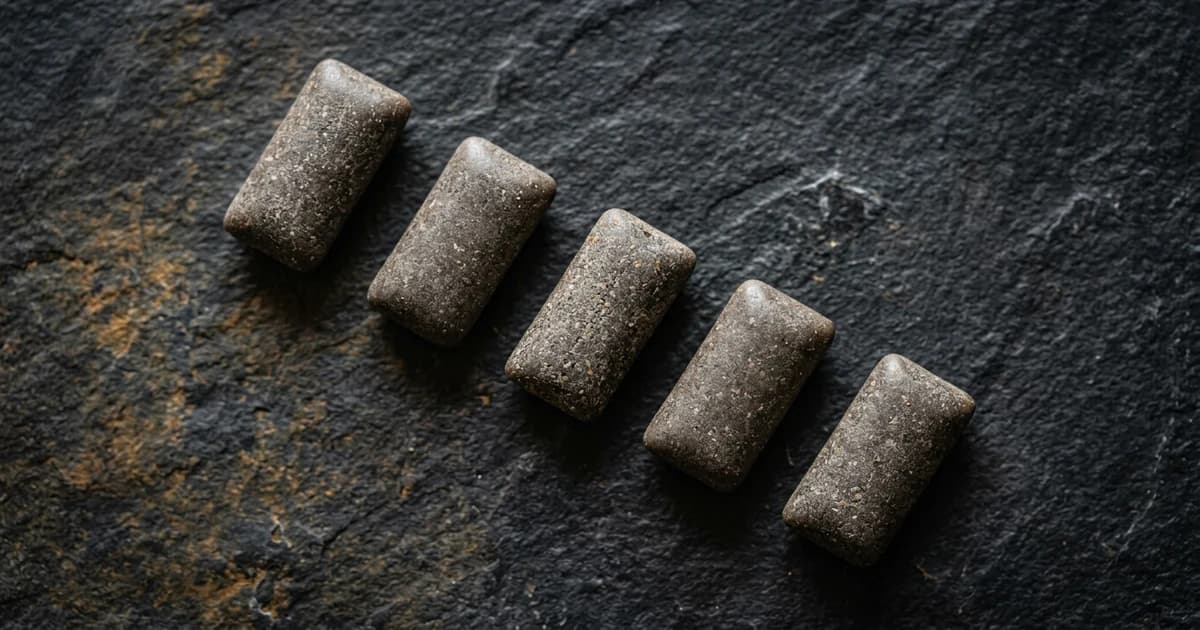
No 16 oz can. No shaker bottle. No sugar. No tolerance buildup. Just a mint pouch under your lip and a measurable difference in how fast you process what's on screen.
If you're serious about competitive performance and tired of guessing whether your supplement actually works, give it a try.