Alternatives to Gum: The Complete Guide
Roon Team
Alternatives to Gum: The Complete Guide
You chew gum for one of three reasons: fresh breath, something to do with your mouth, or a mild focus boost. And for years, gum worked fine. But now your jaw clicks when you yawn. Your stomach bloats after a pack of sugar-free Trident. Or maybe you just got tired of fishing a wet wad of synthetic rubber out of your mouth during a meeting. Whatever brought you here, you're looking for alternatives to gum, and there are more good options than you'd expect.
This guide breaks down every category worth considering, from the obvious (mints) to the overlooked (sublingual pouches), with a clear-eyed look at what actually works and what's just marketing.
Key Takeaways
- Chewing gum causes real problems for many people, including TMJ pain, digestive issues from sugar alcohols, and unnecessary plastic waste.
- The best alternatives to gum depend on your reason for chewing. Fresh breath, oral fixation, and cognitive focus each have different optimal solutions.
- Sublingual pouches and functional mints represent a newer category that combines oral satisfaction with active ingredients like caffeine and L-theanine.
- You don't have to pick just one. Most people rotate between two or three alternatives to gum depending on the situation.
Why People Are Seeking Alternatives to Gum
Gum isn't harmless. That's not a controversial statement. It's just one that the $32 billion global chewing gum industry would prefer you didn't think about too hard.
Jaw Pain and TMJ Issues
The repetitive motion of chewing gum stresses your temporomandibular joint, the hinge connecting your jaw to your skull. A study indexed on PubMed found that longer duration of gum chewing may increase the prevalence of temporomandibular disorders (TMD). If you already have jaw tension, headaches, or clicking sounds when you chew, gum is making it worse. The Atlanta Center for TMJ Pain notes that TMJ dysfunction is a common side effect of habitual gum chewing, especially during periods of high stress.
Digestive Problems from Sugar Alcohols
Most sugar-free gums use sorbitol, xylitol, or other sugar alcohols as sweeteners. These are technically safe. They're also technically laxatives if you consume enough of them. According to UC Davis Health, sorbitol can cause bloating, cramps, and diarrhea, and some people experience digestive upset even at small amounts. A case report published in PMC documented severe weight loss in patients whose chronic diarrhea was traced back to excessive sugar-free gum consumption containing around 30g of sorbitol daily.
You don't need to chew a whole pack to feel the effects. A few sticks throughout the day can be enough to trigger gas and bloating, especially if you're already sensitive to FODMAPs.
The Plastic Problem
Here's something most people don't realize: the "gum base" listed on your Orbit wrapper is a polite way of saying synthetic polymer. Most commercial gum is made with polyvinyl acetate and other plastics. You're chewing plastic. Gum doesn't biodegrade. Every piece spit onto a sidewalk stays there for years.
The Best Alternatives to Gum (By Use Case)
Not every gum alternative solves the same problem. A mint handles bad breath but won't give you something to fidget with during a long call. A toothpick satisfies the oral fixation but won't freshen anything. Here's how to match the solution to the actual need.
Fresh Breath Alternatives to Gum
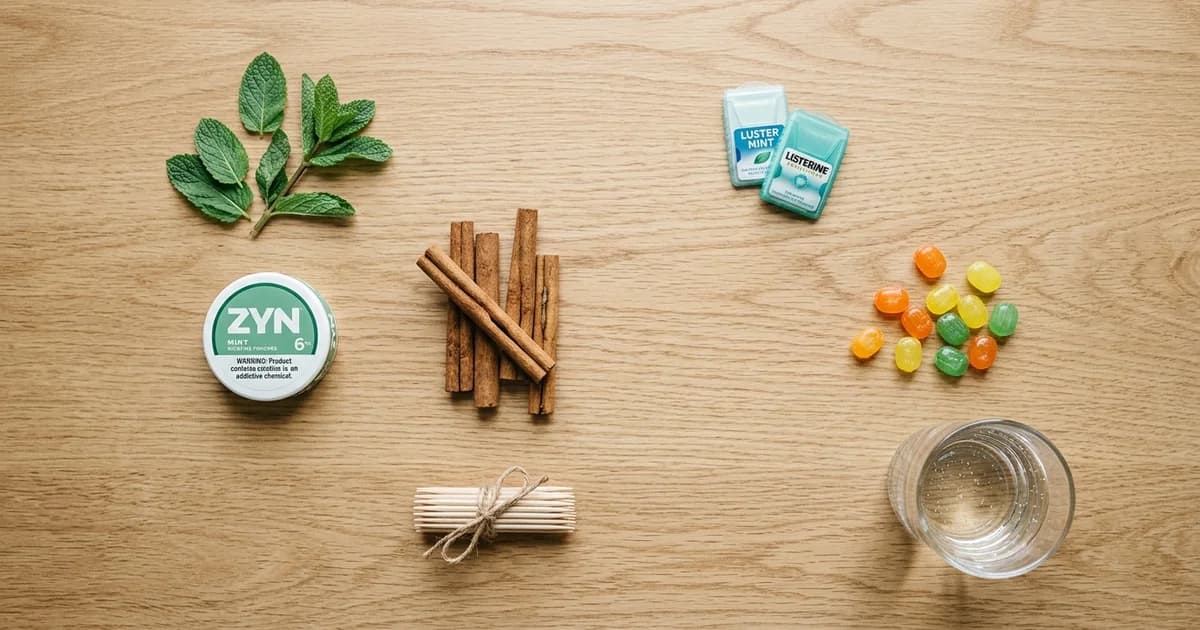
Sugar-free mints are the most direct swap. They dissolve instead of requiring sustained chewing, which means zero jaw strain. Cleveland Clinic recommends sugar-free mints as a better choice for anyone with a history of TMJ problems. Look for mints sweetened with xylitol, which actually inhibits the bacteria that cause bad breath rather than just masking the smell.
Breath strips dissolve on your tongue in seconds. They're discreet, portable, and effective for short-term freshening. The downside: the effect fades fast, usually within 10 to 15 minutes.
Mouth sprays work similarly to strips but in liquid form. A quick spritz covers you for a meeting or a date. They won't replace proper oral hygiene, but no alternatives to gum on this list will.
Oil pulling (swishing coconut or sesame oil for 10-20 minutes) has a following in the wellness community. The evidence for breath-freshening effects is limited, but some people swear by oil pulling as a morning routine.
| Alternative | Breath Freshening | Duration | Jaw-Friendly | Portable |
|---|---|---|---|---|
| Sugar-free mints | ★★★★ | 20-30 min | Yes | Yes |
| Breath strips | ★★★ | 10-15 min | Yes | Yes |
| Mouth spray | ★★★ | 15-20 min | Yes | Yes |
| Oil pulling | ★★ | Variable | Yes | No |
Alternatives to Gum for Oral Fixation
Some people chew gum because their mouth needs something to do. This is real, not a character flaw. Oral fixation is especially common in people who've quit smoking, cut back on snacking, or just have restless energy.
Toothpicks and flavored toothpicks are the classic solution. Tea tree or cinnamon-flavored picks give you something to work with and a mild taste. They're cheap, disposable, and socially acceptable in most settings.
Sunflower seeds keep your mouth busy with the added benefit of actual nutrition. The shell-cracking ritual is satisfying in a way that gum never quite matches. Obviously, context matters. Seeds are great on a road trip. Less great in a boardroom.
Chewable supplements and soft lozenges split the difference. They give you something to work on without the repetitive jaw motion that causes TMJ problems. Many functional lozenges now include active ingredients like vitamins or adaptogens.
Sublingual pouches sit between your lip and gum, providing a sustained oral sensation without any chewing at all. This category has exploded over the past few years, driven partly by the nicotine pouch trend. According to Grand View Research, nicotine pouch sales in the U.S. increased by roughly 250% between January 2023 and August 2025. But the more interesting development is the rise of zero-nicotine pouches designed for focus and energy rather than nicotine delivery.
Alternatives to Gum for Focus and Cognitive Performance
This is where most alternatives to gum fall short. People reach for gum during work because the act of chewing mildly increases alertness. But the effect is small and temporary. If focus is what you're really after, the right alternative should contain ingredients that actually support cognition.
Caffeine mints and energy gums deliver a small dose of caffeine (usually 40-100mg per piece) through the oral mucosa. Brands like Neuro Gum combine caffeine with L-theanine and B vitamins. The caffeine mint market is growing rapidly, with new entrants launching sublingual formats that report faster absorption rates than traditional oral ingestion.
L-theanine and caffeine together are one of the most well-studied nootropic combinations in existence. A study published on PubMed found that 97mg of L-theanine combined with 40mg of caffeine helped participants focus attention during demanding cognitive tasks. A separate study showed the combination improved both speed and accuracy on attention-switching tasks while reducing susceptibility to distracting information.
This is the science behind most functional pouches and mints on the market today. The combination works because L-theanine promotes alpha-wave activity and improves attention-switching accuracy, enhancing caffeine's focus-boosting effects with calm alertness.
Theacrine and methylliberine are newer compounds showing up in advanced formulations. A study referenced on Wholistic Research found that a combination of caffeine, theacrine, and methylliberine improved cognitive performance and reaction time in adult male esports players without interfering with mood.
| Alternative | Focus Boost | Duration | Jitter-Free | No Chewing Required |
|---|---|---|---|---|
| Regular gum | ★ | 15-20 min | Yes | No |
| Caffeine mints | ★★★ | 1-3 hours | Varies | Yes |
| Functional pouches | ★★★★ | 6-8 hours | Yes (with L-theanine) | Yes |
| Coffee | ★★★ | 2-4 hours | No | Yes |
Alternatives to Gum for Habit Replacement (Quitting Smoking or Nicotine)
If you chewed gum specifically to manage nicotine cravings, alternatives to gum look different. Nicotine replacement gums exist for a reason, and quitting nicotine is a medical decision best made with a healthcare provider.
That said, many people who've successfully quit nicotine still want something in their mouth. Nicotine-free alternatives to vaping, like zero-nicotine pouches, herbal chew products, and flavored toothpicks, all serve this purpose without reintroducing nicotine into the equation.
What to Look for in Alternatives to Gum
Whatever you choose, run it through this quick filter:
- Does it solve your actual problem? Don't buy caffeine mints if all you need is fresh breath.
- What's in it? Read the ingredient list. Avoid unnecessary artificial sweeteners if you're sensitive to them. Look for clean, functional ingredients.
- How long does it last? A breath strip that fades in 10 minutes isn't a real replacement for gum if you need something that lasts through a two-hour meeting.
- Is it discreet? Cracking sunflower seeds during a Zoom call sends a message, and it's not the one you want.
- Does it deliver on the format? Sublingual delivery (under the tongue or between the lip and gum) bypasses the digestive system entirely. Research from ScienceDirect confirms that drugs absorbed through the sublingual mucosa can reach the bloodstream up to 10 times faster than the oral route.
Making the Switch from Gum
Dropping gum doesn't require a dramatic lifestyle change. Start by identifying why you chew in the first place. Then pick the alternatives to gum that directly address that reason.
If you're after sustained focus without the jaw strain, jitters, or crash, a sublingual performance pouch is worth trying. Roon was built for exactly this use case: 80mg of caffeine paired with L-theanine, theacrine, and methylliberine in a zero-nicotine pouch that sits between your lip and gum. No chewing. No plastic. No tolerance buildup. Just 6-8 hours of clean, sustained focus.
Roon is one of the better alternatives to gum for people finally asking: why am I still chewing gum?