Alpha BRAIN Review 2026: Ingredients, Doses, Evidence
Roon Team
Alpha Brain Review: An Honest Assessment for 2026
Is Alpha Brain worth it? For most buyers, the answer is probably not. Onnit's flagship nootropic contains real ingredients with real research behind them, but it hides individual doses inside proprietary blends, likely underdoses several key compounds, and costs $79.95 for a 45-day supply ($1.78/day). One published clinical trial with 63 participants showed modest improvements in delayed verbal recall. A second study on 43 active-duty soldiers found no statistically significant effects on cognitive performance. Joe Rogan's long-running endorsement made Alpha Brain famous, but fame and efficacy are two different things. This alpha brain review breaks down the formula, the science, the price, and what actually works.
Key Takeaways:
- Alpha Brain has one positive clinical trial (n=63, funded by Onnit) and one negative trial (n=43, U.S. military).
- Proprietary blends hide individual ingredient doses; several are likely below clinically studied amounts.
- At $1.78/day, it's a premium price for a formula whose three blends are disclosed only as blend totals.
- About one in three users report no noticeable effect, per aggregated review data from Innerbody's 2026 analysis.
- Transparent-label alternatives exist at equal or lower cost.
Alpha Brain vs. Competitors: Quick Comparison
| Feature | Alpha Brain | Roon | Mind Lab Pro | Qualia Mind |
|---|---|---|---|---|
| Format | Capsule (2/day) | Sublingual pouch | Capsule (2/day) | Capsule (7/day) |
| Caffeine | 0 mg | 80 mg | 0 mg | 90 mg |
| L-Theanine | Undisclosed (in 650 mg blend) | 60 mg | 100 mg | 200 mg |
| Proprietary Blends | Yes (3 blends) | No | No | No |
| Published Clinical Trial | Yes (1 positive, 1 negative) | Ingredient-level studies | Yes (1) | Yes (1) |
| Price (30-day equiv.) | ~$53 | ~$30 (15 pouches/tin) | ~$69 | ~$69 (subscription) |
| Onset Time | 45-60 min (capsule) | 5-10 min (sublingual) | 45-60 min (capsule) | 45-60 min (capsule) |
| Transparent Dosing | No | Yes | Yes | Yes |
Alpha Brain's main differentiator is its caffeine-free formula and brand recognition. Its main weakness is the proprietary blend structure that makes independent dose verification impossible.
What Is Alpha Brain?
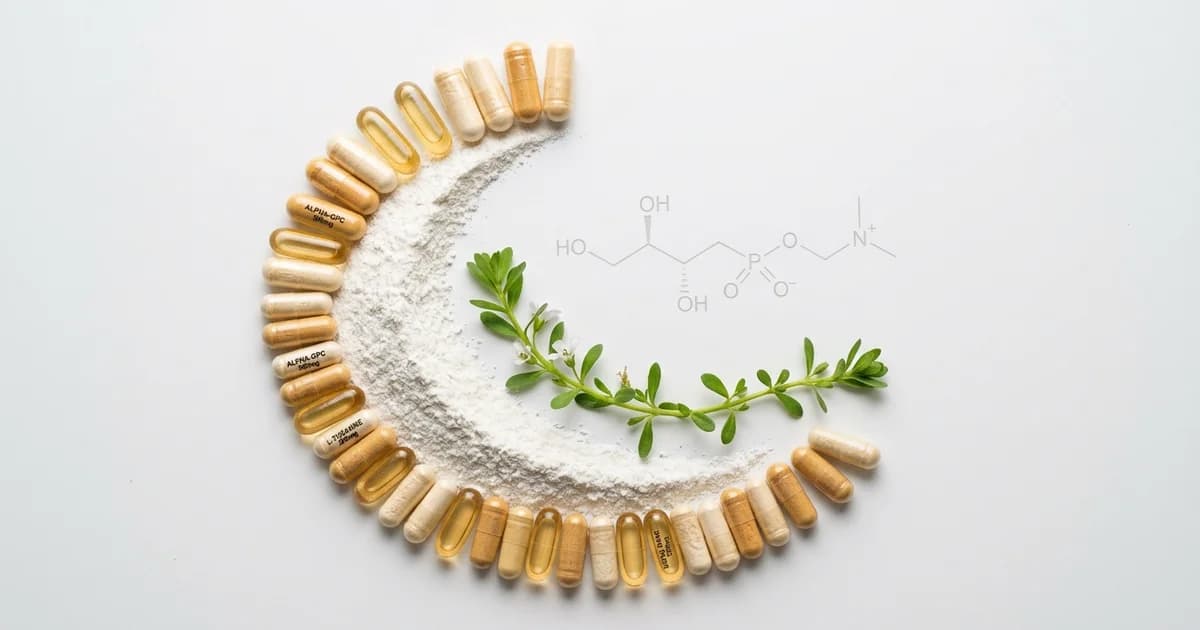
Alpha Brain is a capsule-based nootropic supplement made by Onnit, an Austin, Texas-based wellness company. It contains a mix of amino acids, herbal extracts, and compounds split across three proprietary blends: the Onnit Flow Blend, Focus Blend, and Fuel Blend.
The product is caffeine-free and marketed as a way to improve memory, focus, and mental processing speed. It's been on the market since Onnit launched in 2010, and it remains their best-seller. Among nootropic supplements, Alpha Brain holds the most name recognition by far.
The Joe Rogan Connection
You can't write an alpha brain review without addressing Joe Rogan. His endorsement turned this supplement from a niche product into a household name. Rogan has promoted Alpha Brain on his podcast for over a decade, and he holds an ownership stake in Onnit.
That relationship matters when you're evaluating the product. Celebrity endorsements drive sales, but they don't settle the question of whether brain supplements work beyond clinical evidence. Rogan's personal experience is anecdotal, and anecdotes aren't data.
Among all the supplements Rogan has promoted over the years, Alpha Brain has gotten the most attention and the most scrutiny. Any honest alpha brain review has to weigh that promotional history against the actual science.
Alpha Brain Ingredients: What's Inside
Here's where things get complicated. Alpha Brain uses three proprietary blends, which means you can see the total weight of each blend but not the exact amount of each individual ingredient.
| Blend | Total Weight | Key Ingredients |
|---|---|---|
| Onnit Flow Blend | 650 mg | L-Tyrosine, L-Theanine, Oat Straw Extract, Phosphatidylserine |
| Onnit Focus Blend | 240 mg | Alpha GPC, Bacopa Monnieri (100 mg), Huperzia Serrata |
| Onnit Fuel Blend | Not reliably reported | L-Leucine, Pterostilbene |
Onnit publishes no Supplement Facts panel for Alpha BRAIN on its own product pages, so those blend totals come from third-party transcriptions of the bottle rather than from the brand, and the corpus of published transcriptions does not agree on the smallest of the three. What is not in dispute is the structure: several of these ingredients require specific doses to be effective, and a blend total does not tell you whether they get there.
The Dosing Problem
L-Theanine typically requires 100-200 mg to produce measurable effects on focus and relaxation, based on a 2008 study published in Nutritional Neuroscience showing improved attention when combined with caffeine. The entire Flow Blend totals 650 mg and contains four ingredients. If L-Theanine gets its minimum effective dose of 100 mg, the remaining three ingredients split just 550 mg between them. L-Tyrosine alone is typically dosed at 500-2,000 mg in clinical settings, per Examine's dosage database.
Bacopa Monnieri is the one ingredient with a disclosed dose: 100 mg. But most clinical studies showing cognitive benefits use 300 mg of Bacopa standardized to 50% bacosides. Alpha Brain's 100 mg is a third of that. This dosing gap is a recurring theme in any alpha brain review.
The Focus Blend totals just 240 mg and includes Alpha GPC, which is typically studied at 300-600 mg doses. With Bacopa taking 100 mg and Huperzia Serrata taking some share, Alpha GPC is almost certainly underdosed. This is a consistent finding across nootropics that rely on proprietary blends. By contrast, the best-dosed nootropics in 2026 print each ingredient amount so you can check it against the research.
The Clinical Evidence
Alpha Brain does have something most nootropic supplements don't: a published clinical trial. A 2016 randomized, double-blind, placebo-controlled study (Solomon et al., Human Psychopharmacology) involving 63 participants found that Alpha Brain showed improvements in delayed verbal recall and executive functioning compared to placebo after six weeks.
That sounds promising. But context matters.
The study was funded by Onnit. One of the study authors listed their affiliation as Onnit Labs LLC. The sample size of 63 people is small by clinical standards. And while the results reached statistical significance (p < 0.05), both groups showed overall improvement on neuropsychological tests between time points, suggesting a practice effect.
Then there's the second study. A 2018 double-blind, placebo-controlled trial conducted on 43 active-duty U.S. soldiers over 30 days found that Alpha Brain "did not have any statistically significant effects on marksmanship performance" or measures of mood and stress.
So the scorecard reads: one small, self-funded positive trial and one negative trial. That's better than zero evidence. It's also not the kind of evidence that should make you fully confident.
Alpha Brain Memory and Focus: Real-World Results
User reviews of Alpha Brain are genuinely mixed. Some people report sharper focus and better word recall. Others report nothing at all. According to Innerbody's 2026 review, roughly one in three users report no noticeable effect.
On retail review pages, you'll find five-star reviews claiming sharp focus alongside one-star reviews from users who took it for months and noticed zero difference. That kind of split is common with supplements containing potentially underdosed ingredients. Some people respond to lower doses. Others need the full clinical amount to feel anything.
Reported side effects include headaches, nausea, and in some cases, vivid or disturbing dreams. The inclusion of Huperzia Serrata is worth noting here. It contains Huperzine A, an acetylcholinesterase inhibitor with a half-life of approximately 10-14 hours that isn't recommended for sustained daily use due to its potential for accumulation.
The Price Question
Alpha Brain costs $79.95 for a 90-capsule bottle. At the recommended two-capsule serving, that's a 45-day supply, working out to roughly $1.78 per day. Onnit offers a subscribe-and-save option that drops the price to about $59.96 per bottle (~$1.33/day).
For a supplement with proprietary blends and likely underdosed ingredients, that's a steep price. You could buy L-Theanine, Bacopa, and Alpha GPC separately at their clinically studied doses for less money and know exactly what you're getting. The same goes for the nootropic pouches compared in our buyer's guide, where every dose is printed on the label.
The Lawsuit History
Alpha Brain has faced legal scrutiny. A class action lawsuit filed in 2024 alleged that Onnit's marketing was "designed to mislead a reasonable consumer" by overstating the supplement's cognitive benefits. According to court records reported by ClassAction.org, the case was voluntarily dismissed on April 29, 2025, with the parties reporting they "reached a settlement in principle." The plaintiff's individual claims were dismissed with prejudice, but class claims were dismissed without prejudice, meaning similar allegations could be pursued again.
A previous lawsuit making similar claims was dismissed in October 2023 after the court granted Onnit's motion to dismiss, finding the plaintiff failed to plausibly allege that Onnit's marketing violated California's Consumers Legal Remedies Act.
Dismissed lawsuits don't prove wrongdoing. But two separate legal challenges in two years reflect a pattern of consumer skepticism about whether Alpha Brain lives up to its marketing.
The Verdict on Alpha Brain
Alpha Brain isn't a bad product. It contains real nootropic ingredients with real scientific backing. The 2016 clinical trial, despite its limitations, puts it ahead of most nootropic supplements that have zero published research.
But the proprietary blends are a problem. You're paying premium prices without knowing whether you're getting effective doses of the ingredients that matter most. The blend totals that third parties report are low relative to the doses the research behind those ingredients uses. This alpha brain review keeps coming back to the same issue: transparency.
If you're looking for a nootropic that actually tells you what's in it, at doses that match the research, there are better options than Alpha Brain worth exploring.
Related from Roon
- Do Brain Supplements Work?
- Best Nootropics in 2026
- Best Alpha Brain Substitutes in 2026
- Best Nootropic Pouches: A Buyer's Guide
- Best Nootropic Stack in 2026
Frequently Asked Questions
Does Alpha Brain actually work?
The evidence is mixed. One 2016 clinical trial with 63 participants found modest improvements in delayed verbal recall after six weeks. A separate 2018 military study with 43 soldiers found no statistically significant cognitive effects. About one in three users report no noticeable benefit. The formula contains real nootropic ingredients, but proprietary blends make it impossible to verify whether doses reach clinically effective levels.
Is Alpha Brain safe?
For most healthy adults, Alpha Brain appears safe for short-term use. Commonly reported side effects include headaches, nausea, and vivid dreams. The Huperzine A from Huperzia Serrata has a half-life of 10-14 hours and may accumulate with daily use, which is why some experts recommend cycling rather than continuous supplementation.
Why does Joe Rogan promote Alpha Brain?
Joe Rogan holds an ownership stake in Onnit, the company that makes Alpha Brain. He has promoted the product on his podcast since the early 2010s. His endorsement is a business relationship, not an independent review. That doesn't mean the product is bad, but it means his testimonial carries a financial incentive.
How much does Alpha Brain cost?
A 90-capsule bottle (45-day supply at 2 capsules/day) costs $79.95 at full retail, or about $1.78 per day. Onnit's subscribe-and-save option brings it to approximately $59.96 per bottle (~$1.33/day). That puts it in the mid-to-upper range for nootropic supplements.
Is Alpha Brain better than coffee?
They serve different purposes. Alpha Brain is caffeine-free and targets memory and verbal recall through compounds like Bacopa and Alpha GPC. Coffee delivers caffeine for alertness and energy. If you want focus and energy, Alpha Brain alone won't provide it. If you want memory support without stimulation, Alpha Brain's approach makes more sense, though the underdosed ingredients remain a concern.
What are the best Alpha Brain alternatives in 2026?
Transparent-label nootropics like Mind Lab Pro, Qualia Mind, and Roon all disclose exact ingredient doses. Roon takes a different approach with a sublingual pouch format (80 mg caffeine, 60 mg L-theanine, 25 mg methylliberine, 5 mg theacrine) designed for fast onset and sustained focus. For a full breakdown, see our best Alpha Brain substitutes guide.
Can you take Alpha Brain every day?
Onnit recommends daily use (2 capsules with a light meal). However, the Huperzine A content raises questions about long-term daily supplementation due to its long half-life and potential for accumulation. Some users cycle Alpha Brain (5 days on, 2 days off) to mitigate this concern.
Does Alpha Brain have side effects?
Yes. Reported side effects include headaches, nausea, jaw tension, and vivid or disturbing dreams. The vivid dreams are commonly attributed to Huperzine A's effect on acetylcholine levels. Most users tolerate it well, but if you experience persistent side effects, discontinue use and consult a healthcare provider.
Where Transparent Dosing Beats Proprietary Blends
The core problem this alpha brain review keeps surfacing is simple: you can't verify what you're paying for. Proprietary blends let manufacturers list impressive ingredient names while potentially delivering sub-clinical doses. That's the opposite of how evidence-based supplementation should work.
Roon was built around the principle that every milligram should be accounted for. Each sublingual pouch contains 80 mg caffeine, 60 mg L-theanine, 25 mg methylliberine (Dynamine), and 5 mg theacrine (TeaCrine). A 2021 randomized crossover study (Tartar et al., published in Cureus) found that the combination of caffeine, theacrine, and methylliberine improved cognitive performance and reaction time in 50 participants without increasing anxiety. Every dose is printed on the label. You can check the full formula on Roon's product page before you buy.
Roon isn't a replacement for a full nootropic stack targeting memory via Bacopa or Alpha GPC. It's designed for a different job: 6-8 hours of sustained focus with no jitters, no crash, and no tolerance buildup, delivered through sublingual absorption in 5-10 minutes instead of waiting 45-60 minutes for a capsule to break down. If that's the problem you're solving, try Roon.
Written by Roon Team
What Are the Full Alpha BRAIN Ingredients and Doses?
Onnit publishes no Supplement Facts panel for Alpha BRAIN on its own product pages, so every amount below is a third-party transcription of the bottle rather than a figure from the brand. As reported by Innerbody, a two-capsule serving carries vitamin B6 at 10 mg, Cat's Claw extract (AC-11) at 350 mg, and three proprietary blends listed by total weight only: the Onnit Flow Blend at 650 mg, the Onnit Focus Blend at 240 mg, and the Onnit Fuel Blend, whose total is reported inconsistently and is best treated as unknown. Inside those blends exactly two ingredients carry individual amounts: Bacopa monnieri extract at 100 mg and huperzine A at 400 mcg, from toothed clubmoss standardized to 1%. Everything else is named but not quantified.
| Line on the label | Disclosed amount (2 capsules) | Individually quantified? |
|---|---|---|
| Vitamin B6 (pyridoxine HCl) | 10 mg | Yes |
| Cat's Claw extract (AC-11, Uncaria tomentosa) | 350 mg | Yes |
| Onnit Flow Blend (total) | 650 mg | Blend total only |
| L-Tyrosine | not disclosed | No |
| L-Theanine | not disclosed | No |
| Oat straw extract | not disclosed | No |
| Phosphatidylserine | not disclosed | No |
| Onnit Focus Blend (total) | 240 mg | Blend total only |
| Alpha GPC | not disclosed | No |
| Bacopa monnieri extract | 100 mg | Yes |
| Toothed clubmoss extract (std. 1% huperzine A) | 400 mcg huperzine A | Yes |
| Onnit Fuel Blend (total) | not reliably reported | Blend total only |
| L-Leucine | not disclosed | No |
| Pterostilbene | not disclosed | No |
A total for the whole serving is harder to pin down than it looks, because every blend figure is a transcription and the smallest of the three is not reported consistently. One number does come from a source that had the product in hand: the 2018 U.S. Army trial dosed three capsules per day and reported 1,925 mg of supplement, which works out to roughly 1,283 mg per two capsules.
Two blend totals are smaller than the doses used in the trials most often cited for the ingredients inside them. The entire Focus Blend is 240 mg, while the Bacopa literature commonly uses 300 mg per day of standardized extract, and a meta-analysis of nine randomized trials built its cognition finding on that dose range. Alpha BRAIN's disclosed Bacopa amount is 100 mg. For L-theanine, a randomized crossover trial in Nutrients used 200 mg per day, and the Flow Blend that contains it is 650 mg split four ways.
None of that tells you Alpha BRAIN does not work. It tells you the label does not let you check, which is the actual thing behind most searches for the ingredient list. Amounts as reported by Innerbody's panel breakdown, checked September 2026. Onnit's own Alpha BRAIN product page carries no Supplement Facts panel to check them against.
How Many Clinical Trials Has Alpha BRAIN Actually Had?
Two. As of August 2026, a Europe PMC search returns exactly two published human trials of the finished Alpha BRAIN product, plus a 2015 conference abstract reporting the same data as one of them. Both trials were funded by Onnit. One found a narrow positive result and the other found nothing.
| Study | Year | n | Design | Result |
|---|---|---|---|---|
| Solomon et al., Human Psychopharmacology | 2016 | 63 | Randomized, double-blind, placebo-controlled; 2-week placebo run-in then 6 weeks | Significant improvement in delayed verbal recall and executive functioning versus placebo |
| Barringer et al., J Int Soc Sports Nutr | 2018 | 43 | Randomized, double-blind, placebo-controlled; 31 days; U.S. active duty soldiers; 3 capsules/day | No statistically significant effects on marksmanship performance, and none on mood or stress measures |
Two details matter when you read those rows. The 2016 trial lists an author affiliated with Onnit Labs LLC. And the 2018 paper states in its own funding section that the work "was supported by a grant from Onnit LLC," so the null result also came from manufacturer-funded research rather than from a hostile source. That cuts both ways, and it is worth saying in both directions.
The honest summary: Alpha BRAIN has more published evidence than most nootropic supplements, which typically have none at all on the finished formula, and less than a decade of marketing implies. One small positive trial on one memory measure, plus one null trial in a different population on a different task, is a thin base for a confident claim either way.
Is Alpha BRAIN Safe to Take Every Day?
Alpha BRAIN is a dietary supplement, not a drug, so it has not been evaluated for long-term daily safety the way a medicine would be. The specific ingredient that raises the daily-use question is huperzine A, disclosed on the label at 400 mcg per two-capsule serving. Huperzine A is an acetylcholinesterase inhibitor, and a human pharmacokinetics study in the European Journal of Drug Metabolism and Pharmacokinetics measured a beta elimination half-life of 716 minutes after oral dosing, roughly 12 hours.
A terminal half-life near 12 hours is long relative to a once-daily schedule, which is why cycling protocols get discussed for huperzine-containing products. That is a pharmacokinetic observation, not a finding of harm. Neither published Alpha BRAIN trial reported a safety signal, and neither ran long enough to speak to months or years of continuous use.
Beyond that, what is documented is limited. The 2016 trial and the 2018 trial did not report serious adverse events. The headaches, nausea and vivid dreams that come up repeatedly in user reviews are self-reported and aggregated from retail pages, not collected under controlled safety monitoring, so treat them as signals worth knowing rather than measured incidence rates.
Anyone already taking a prescription cholinesterase inhibitor, anyone pregnant or nursing, and anyone managing a neurological or cardiac condition should speak to a clinician before starting Alpha BRAIN or any nootropic. This section is general information about the product, not medical advice.
How Much Does Alpha BRAIN Cost Per Serving in 2026?
As of September 2026, Onnit lists Alpha BRAIN in three bottle sizes on its own store, all in stock: 30 count at $34.95, 60 count at $57.95, and 90 count at $79.95. At the label serving of two capsules per day, the 30 count is 15 servings and the 90 count is 45, so the per-serving cost moves from about $2.33 down to about $1.78 as the bottle gets bigger.
| Bottle | Servings (2 caps/day) | One-time price | Approx. per serving |
|---|---|---|---|
| 30 count | 15 | $34.95 | $2.33 |
| 60 count | 30 | $57.95 | $1.93 |
| 90 count | 45 | $79.95 | $1.78 |
Onnit also runs a subscription price. An independent 2026 pricing check recorded the 30 count at $29.71 and the 90 count at $67.96 on subscription, which brings the 90 count to roughly $1.51 per serving.
Supplement pricing and pack availability change often. Treat every number here as a snapshot taken in September 2026 from Onnit's product page, and check the current cart price before you buy.
Standard, Black Label or Instant: Which Alpha BRAIN Are You Looking At?
Onnit sells more than one product with Alpha BRAIN on the box, and the doses do not carry over between them. If you arrived here pricing a different SKU, this is the short version and where to go next.
- Alpha BRAIN (standard) is the caffeine-free capsule reviewed on this page: two capsules per serving, three proprietary blends, 30 to 90 count bottles, roughly $1.78 to $2.33 per serving.
- Alpha BRAIN Black Label is a separate and more expensive product, not a stronger version of the same one. It uses a four-capsule serving, itemizes its doses instead of hiding them in blends, and adds 25 mg of caffeine. If that is what you are evaluating, read our Alpha BRAIN Black Label review instead, because almost nothing on this page's label applies to it.
- Onnit the company is a different question from Alpha BRAIN the product. For who owns Onnit and how the wider line is structured, see our Onnit brand review.
- The Joe Rogan question has its own page. The co-founder relationship, what is actually on the record about it, and what it does and does not tell you are covered in our piece on Joe Rogan's brain supplement.
If you are cross-shopping rather than researching Alpha BRAIN specifically, our Onnit alternatives roundup puts seven transparently dosed stacks side by side.