How to Improve Photographic Memory
Roon Team

How to Improve Photographic Memory (and Why You Don't Actually Have One)
If you've ever searched for how to improve photographic memory, you're not alone. Before a final exam, during a presentation, or just trying to remember where you left your keys, the idea is seductive: look at something once, store it like a screenshot, recall it forever.
Here's the problem. Learning how to improve photographic memory means chasing something that science has never actually confirmed exists. But that's good news, not bad. Because the real techniques for building a sharper, more reliable visual memory are well-documented, trainable, and far more useful than any mythical instant-recall ability.
Key Takeaways:
- True photographic memory has never been scientifically proven in adults
- Your visual long-term memory is already powerful, storing details from thousands of images after a single viewing
- Specific, trainable techniques like the method of loci can produce dramatic recall improvements
- Sleep, exercise, and the right neurochemical support all play a role in how well memories stick
Photographic Memory Is a Myth. Your Real Memory Is Better.
Let's get the uncomfortable truth out of the way. According to Scientific American, "a true photographic memory in this sense has never been proved to exist." The concept of looking at a page and recalling every word like a mental camera is a Hollywood invention, not a neurological reality.
What does exist is eidetic memory, a related but different phenomenon. As described in the Wikipedia entry on eidetic memory, it is typically found only in young children and is virtually nonexistent in adults. Eidetic images are brief, vivid afterimages that fade within minutes. They're not permanent recordings.
So if nobody actually has photographic memory, what are memory champions doing? And what should you really focus on if you want to know how to improve photographic memory skills in a practical sense?
They're using techniques. Learnable, repeatable systems that anyone can practice. And the science behind those systems is solid.
How to Improve Photographic Memory: 7 Techniques That Actually Work
Since true photographic recall isn't on the table, the real question becomes: how do you train your brain to remember visual and factual information with high accuracy? These seven methods represent the best answers for improving recall for adults through evidence-based practice, and they're used by competitive memorists worldwide.
1. The Method of Loci (Memory Palace)
This is the single most effective memory technique ever studied, and the top recommendation for anyone exploring how to improve photographic memory. The method of loci, sometimes called the memory palace technique, works by associating the information you want to remember with specific locations in a familiar space, like rooms in your house or landmarks on your commute.
A meta-analysis published in PMC found strong evidence for a large effect on immediate serial recall compared with rehearsal, with an effect size of d = 0.88. That's not a marginal improvement. That's a dramatic one.
How dramatic? Research from Eleanor Maguire and colleagues found that 9 out of 10 superior memorists in their study used the method of loci. These weren't people born with special brains. They were people who practiced a specific technique.
How to do it:
- Pick a location you know well (your apartment, your office, your childhood home)
- Mentally walk through it in a fixed order, identifying 10-20 specific spots (the front door, the kitchen counter, the bathroom mirror)
- Place each piece of information you want to remember at one of those spots, using vivid, exaggerated imagery
- To recall, mentally walk the route again and "see" what you placed at each location
The weirder and more vivid you make the images, the better they stick. Your brain is wired to remember spatial information and novel visual scenes. This technique uses both, which is why it's the cornerstone of how to improve photographic memory through training.
2. Spaced Repetition
Cramming doesn't work, and studying and memory consolidation both depend on your brain processing information over time, not in a single marathon session. If you're serious about how to improve photographic memory recall, spaced repetition is essential.
Spaced repetition is the practice of reviewing information at gradually increasing intervals. You study something today, review it tomorrow, then three days later, then a week later. Each review strengthens the neural pathway, making retrieval faster and more reliable.
Tools like Anki and RemNote automate the scheduling for you. But even a simple system of index cards sorted by "how well do I know this" works. The key is the spacing, not the software.
3. Active Observation Training
Most people don't have bad memories. They have bad attention. You can't remember what you never encoded in the first place. This is one of the most overlooked aspects of how to improve photographic memory performance.
Active observation means deliberately focusing on details when you look at something. Instead of passively glancing at a person's face, notice the specific shape of their jawline, the color of their eyes, any asymmetry. Instead of skimming a page, pause on key sentences and visualize what they describe.
This is a skill, and it improves with practice. Try this daily exercise: look at a complex image for 30 seconds, close your eyes, and describe every detail you can. Do this for two weeks and you'll notice a measurable difference in how much visual information you retain.
4. Chunking
Working memory capacity limits mean your brain can hold roughly 3 to 4 items at once. Research published in PLOS ONE estimates visual working memory capacity at around 3 to 4 items, but performance improves with practice and feedback.
Chunking is the strategy of grouping individual pieces of information into larger, meaningful units. A phone number isn't ten random digits; it's three chunks (area code, prefix, line number). A chess grandmaster doesn't see 32 individual pieces; they see familiar patterns of 5-6 pieces they've encountered thousands of times.
Apply this to anything you want to remember visually. Group related items. Find patterns. Create categories. Each chunk takes up one "slot" in working memory, but the chunk itself can contain multiple pieces of information. Chunking is a practical answer to how to improve photographic memory capacity within your brain's natural limits.
5. Dual Coding (Words + Images)
Your brain processes visual and verbal information through separate channels. When you encode something using both channels simultaneously, you create two independent retrieval paths instead of one.
This is called dual coding theory, and it's one of the most reliable findings in memory research. According to the University of South Alabama's health sciences blog, using visual tools such as concept maps, graphs, illustrations, and photos benefits learning and recall.
In practice: don't just read your notes. Draw diagrams. Sketch relationships between concepts. Turn abstract ideas into concrete images. When you pair a word with a picture, you roughly double your chances of remembering it later. For anyone studying how to improve photographic memory, dual coding is one of the simplest techniques to start with.
6. Sleep (Non-Negotiable)
This isn't optional. Sleep is when your brain moves information from temporary storage in the hippocampus to long-term storage in the cortex. No guide on how to improve photographic memory is complete without addressing sleep.
A review published in Emerging Topics in Life Sciences confirmed that sleep improves prospective memory consolidation and aids in complex associative memory tasks. Slow-wave sleep and sleep spindles are specifically implicated in this process.
As noted in a PMC review on sleep and memory, there is strong evidence that at least one function of sleep is to consolidate fragile new memory traces into more permanent forms of long-term storage.
You can practice the method of loci for hours, but if you sleep five hours a night, you're undoing most of that work. Seven to nine hours. Every night. This is the foundation everything else builds on.
7. Aerobic Exercise
Physical exercise, particularly sustained aerobic activity like running, cycling, or swimming, increases blood flow to the hippocampus, the brain region most responsible for forming new memories. Research has consistently shown that regular aerobic exercise increases hippocampal volume and improves performance on memory tasks.
You don't need to train for a marathon. Thirty minutes of moderate-intensity cardio, three to five times per week, is enough to see measurable benefits. Walking counts, as long as you're moving briskly enough to elevate your heart rate. Exercise supports every other strategy for how to improve photographic memory by keeping the brain's hardware in peak condition.
What About "Visual Memory" Specifically?
A study from PMC on visual long-term memory found that observers could successfully remember details about thousands of images after only a single viewing. Your visual memory system is already remarkably capable. The bottleneck isn't storage. It's encoding.
That means the biggest gains in how to improve photographic memory come from encoding visual information deeply at the moment of seeing, not from trying to expand some internal hard drive. Active observation (technique #3 above) and dual coding (technique #5) are the two most direct ways to improve visual memory specifically.
If you want to remember faces better, study them deliberately. If you want to remember locations, narrate what you see as you look around. If you want to remember charts and graphs, redraw them from memory immediately after viewing.
The pattern is always the same: encode deeply, review strategically, sleep well.
The Role of Neurochemistry in How to Improve Photographic Memory
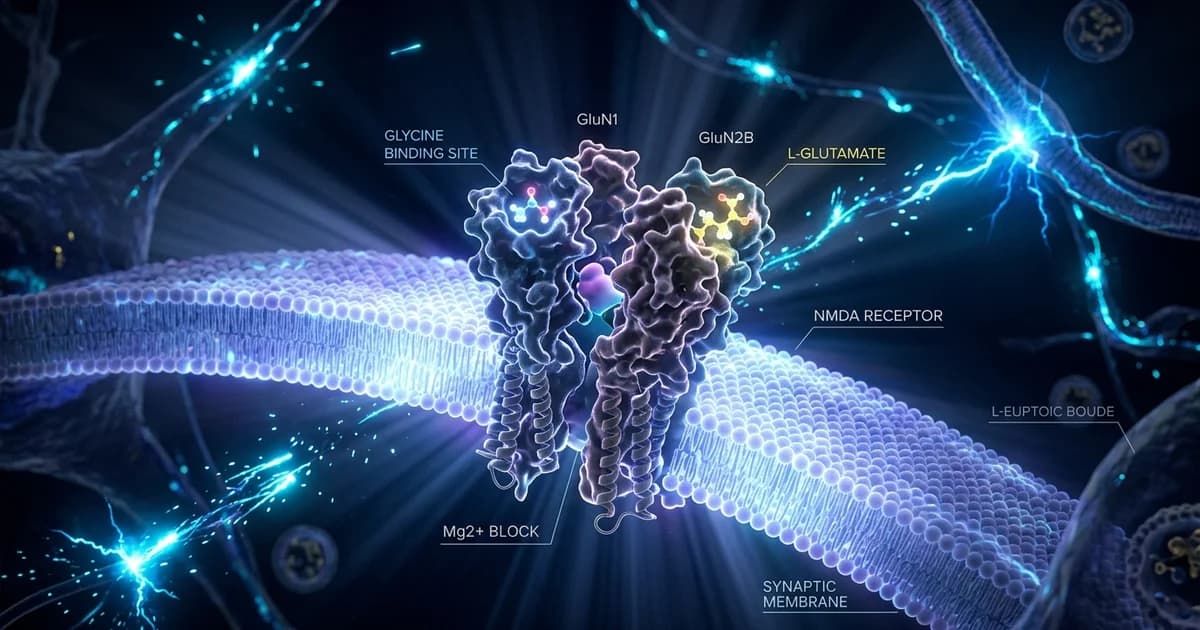
Techniques and habits matter. But they operate on top of your brain's chemistry. Neurotransmitters like acetylcholine, dopamine, and norepinephrine all play direct roles in attention, encoding, and consolidation. Understanding this neurochemistry is part of learning how to improve photographic memory at a deeper level.
Caffeine improves alertness and attention, which directly affects encoding quality. But too much caffeine creates jitters, anxiety, and a crash that disrupts the sustained focus memory work requires.
L-Theanine, an amino acid found naturally in tea, promotes calm focus by modulating alpha brain wave activity. When paired with caffeine, it smooths out the stimulant's rough edges, keeping you alert without the spike-and-crash pattern.
Theacrine and Methylliberine are purine alkaloids structurally related to caffeine that support sustained energy and focus without the tolerance buildup that makes caffeine less effective over time.
The combination matters more than any single ingredient. A well-designed stack keeps your brain in the optimal neurochemical state for encoding and recall over a sustained period, not just for the 45 minutes before your coffee wears off. This is the chemical side of how to improve photographic memory that most guides overlook.
Invest in Your Brain
You can't develop photographic memory. Nobody can. But now that you know how to improve photographic memory skills through proven methods, you can build recall that's sharper, faster, and more reliable than most people think possible. The method of loci, spaced repetition, active observation, proper sleep, regular exercise, and the right neurochemical support are the tools.
Roon was designed around this last piece. Roon's nootropic pouches are zero-nicotine sublingual pouches that combine 80 mg of caffeine with L-Theanine, Theacrine, and Methylliberine for 6 to 8 hours of sustained cognitive performance without jitters, crashes, or tolerance buildup. The kind of clean, sustained focus that makes every memory technique in this article work better.
Your memory isn't fixed. It's trainable. Give it the right inputs, apply these strategies for how to improve photographic memory, and it will perform.