You felt it again yesterday. The 2 p.m. wall, the screen blurring, the thought that one more coffee would fix everything. So you made one. And twenty minutes later, you were still waiting. Forty minutes later, you felt a faint lift that faded before the end of the meeting. By 11 p.m., you were staring at the ceiling. That is the afternoon slump, and it is not a discipline problem.
The real issue is not that you need more caffeine. It is that a hot drink swallowed at 2 p.m. is the wrong tool for the job. The delivery is too slow, the tail is too long, and the dose often lands after the worst of the dip has already passed. This article explains why, mechanistically, and what actually works better.
If you have already tried "just push through it," you know willpower is not the bottleneck. Biology is.
Key takeaways
- The early-afternoon energy dip is a real feature of your circadian rhythm, not a food coma. It happens even if you skip lunch.
- Coffee swallowed at 2 p.m. does not peak in your blood for 30 to 60 minutes, so the relief arrives after the worst of the dip. And with a 5-to-7-hour half-life, that dose is still active at bedtime, costing you sleep and deepening tomorrow's crash.
- Caffeine tolerance is real: habitual intake causes your brain to grow more adenosine receptors, which blunts the effect of each cup. Drinking more just accelerates the cycle.
- A faster delivery route (absorbed through the mouth lining in 5 to 10 minutes, not the gut in 30 to 60) paired with ingredients that extend duration without raising the peak can break the loop.
What actually causes the afternoon slump
The tired-after-lunch feeling has two layers, and neither one is about willpower.
Adenosine builds up all day
Every hour you are awake, your brain accumulates adenosine, a byproduct of cellular energy use. Adenosine binds to receptors in the brain that promote drowsiness, creating what sleep researchers call "sleep pressure." This process, known as Process S in the two-process model of sleep regulation, is cumulative: the longer you have been awake, the more adenosine is sitting on those receptors, and the harder it is to feel alert.
Caffeine works by temporarily blocking adenosine receptors. But it does not remove adenosine. It just prevents you from feeling it for a while. The adenosine is still accumulating behind the blockade.
The circadian dip is hardwired
On top of that rising adenosine tide, your circadian rhythm has a built-in alertness dip between roughly 1 p.m. and 3 p.m. This is sometimes called the "post-lunch dip," but the name is misleading. Research shows this dip occurs even without a lunch break. It is a feature of your internal clock, not a consequence of what you ate. BBC Science Focus describes it as a "circasemidian rhythm" that repeats roughly every 12 hours alongside your main circadian cycle.
A heavy meal can deepen the dip, but it does not cause it. So "eating a lighter lunch" helps at the margin. It does not solve the underlying timing problem.
Tolerance quietly raises the floor
If you drink coffee every day, your brain adapts. Chronic caffeine exposure triggers upregulation of adenosine receptors: your brain literally grows more of them to compensate for the ones caffeine keeps blocking. The result is that each cup does less than it used to. A Healthline review of the tolerance literature notes that high caffeine doses can block up to 50% of adenosine receptors, but habitual consumers develop partial tolerance to alertness effects within days.
The instinct is to drink more. That works briefly, then the receptor count adjusts again. You are now running a higher baseline dose for the same effect, and the extra caffeine carries a longer tail into the evening.
Why afternoon coffee specifically fails
The problem is not coffee itself. Coffee is a fine tool at 7 a.m. The problem is what happens when you deploy it at 2 p.m.
The delay: 30 to 60 minutes through the gut
A swallowed drink has to pass through the stomach and small intestine before caffeine reaches the bloodstream. According to the NCBI Pharmacology of Caffeine chapter, peak plasma caffeine concentration occurs between 15 and 120 minutes after oral ingestion, with 30 to 60 minutes being the typical range for coffee. The Coffee & Health research summary confirms that absorption is virtually complete about 45 minutes after ingestion.
That means the coffee you drink at 2 p.m. does not fully arrive until 2:30 or 2:45. The worst of the circadian dip may already be passing by then. You waited through the hardest part, and the caffeine shows up for the recovery your body was going to make anyway.
The tail: still active at bedtime
Caffeine's half-life in healthy adults averages 5 to 7 hours. If you drink a 200 mg cup at 2 p.m., roughly 100 mg is still circulating at 7 p.m., and about 50 mg at midnight. That is enough to reduce deep sleep even if you fall asleep on time. The PCNA (Preventive Cardiovascular Nurses Association) states that caffeine's 5-to-6-hour half-life means afternoon consumption directly competes with restorative sleep.
Poor sleep means higher adenosine the next morning, which means a harder crash the next afternoon, which means another late coffee. This is the feedback loop, and it is the single most useful idea on this page: afternoon coffee does not just fail to fix today's slump; it actively deepens tomorrow's.
Delivery route and duration: a comparison
| Factor | Coffee (swallowed) | Oral-lining absorption |
|---|---|---|
| Route | Stomach and gut | Buccal mucosa (mouth lining) |
| Time to peak effect | 30 to 60 minutes | 5 to 10 minutes |
| First-pass metabolism | Yes (liver processes some caffeine before it reaches circulation) | Largely bypassed |
| Sugar/calories | Often added (lattes, energy drinks) | Zero (in a pouch format) |
| Portability | Requires brewing or buying | Pocket-sized, no liquid |
The speed difference matters specifically in the afternoon, because the circadian dip is a narrow window. A delivery method that arrives in 5 to 10 minutes actually lands during the dip. One that arrives in 30 to 60 minutes often misses it.
What Roon does differently
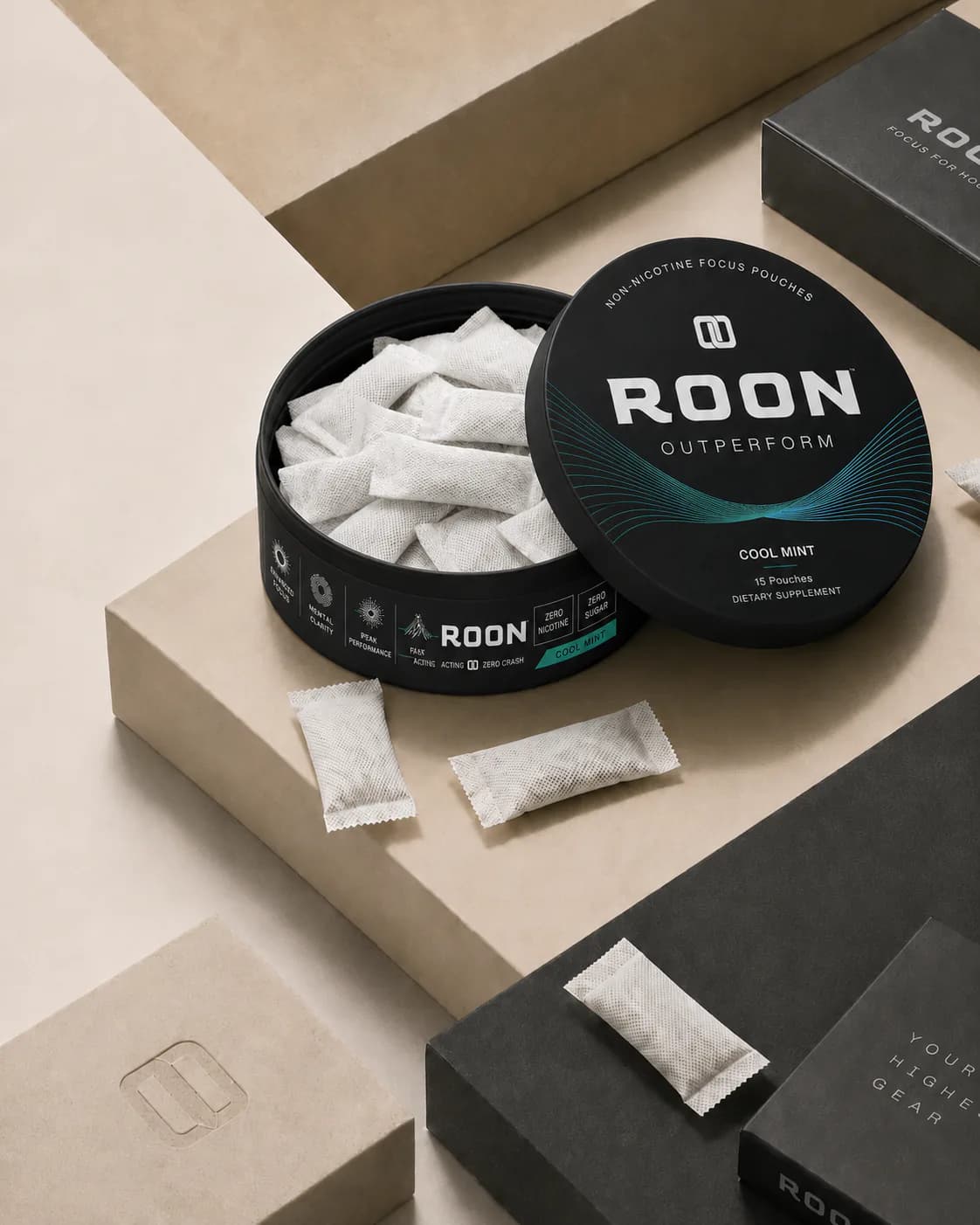
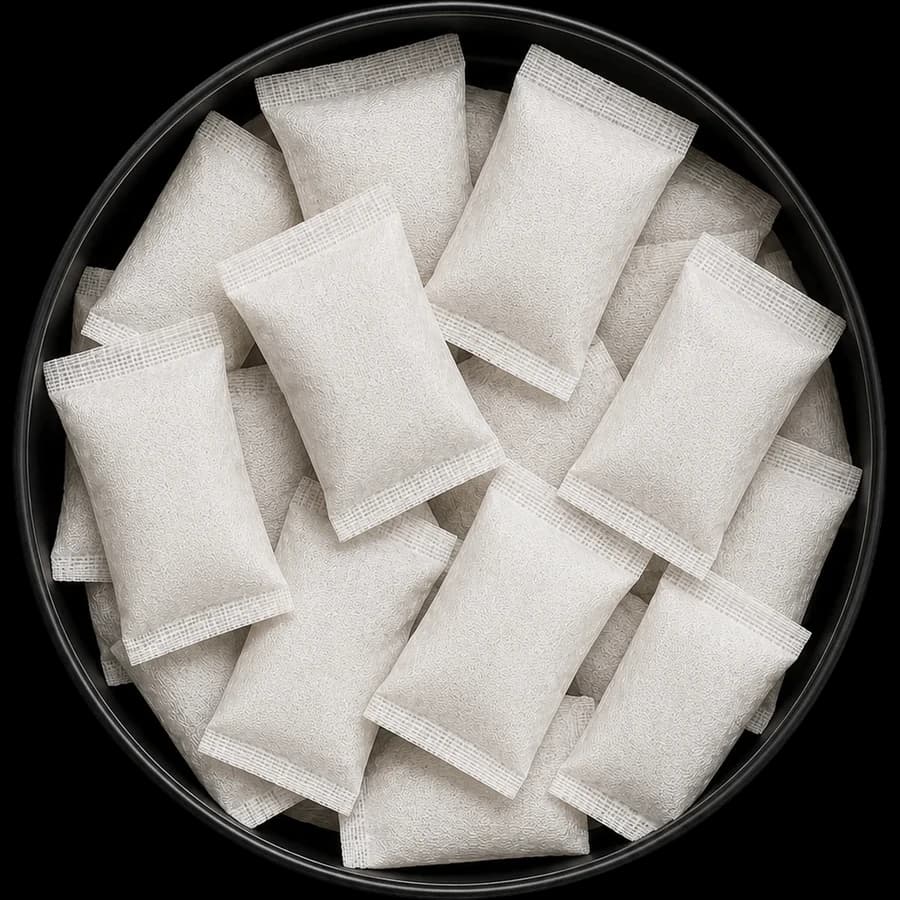
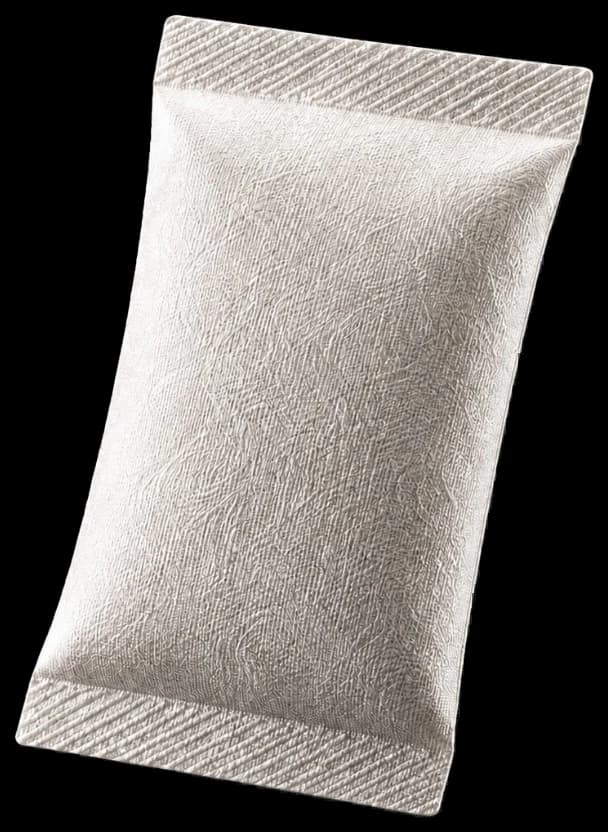
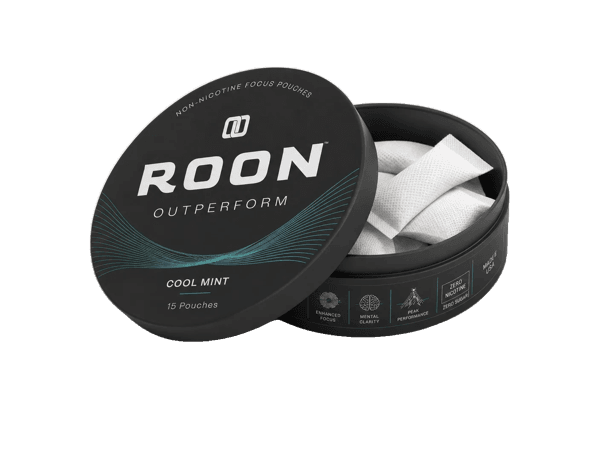
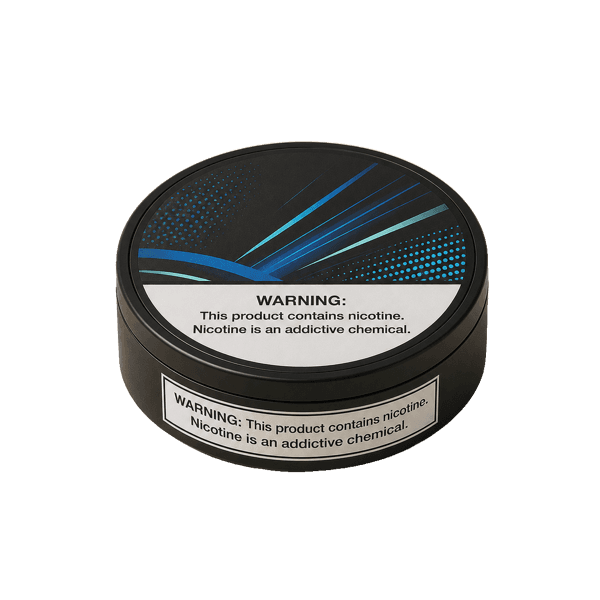
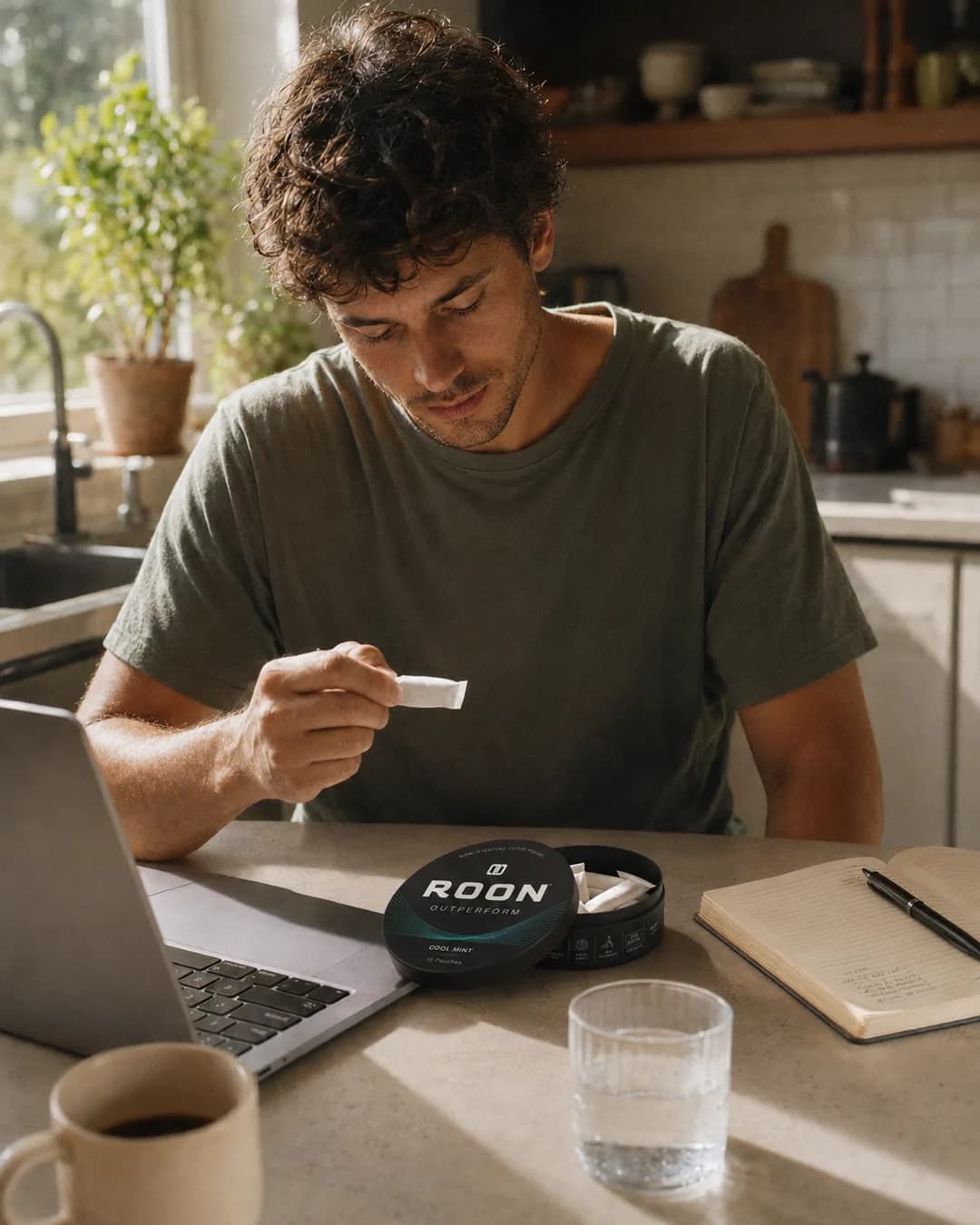
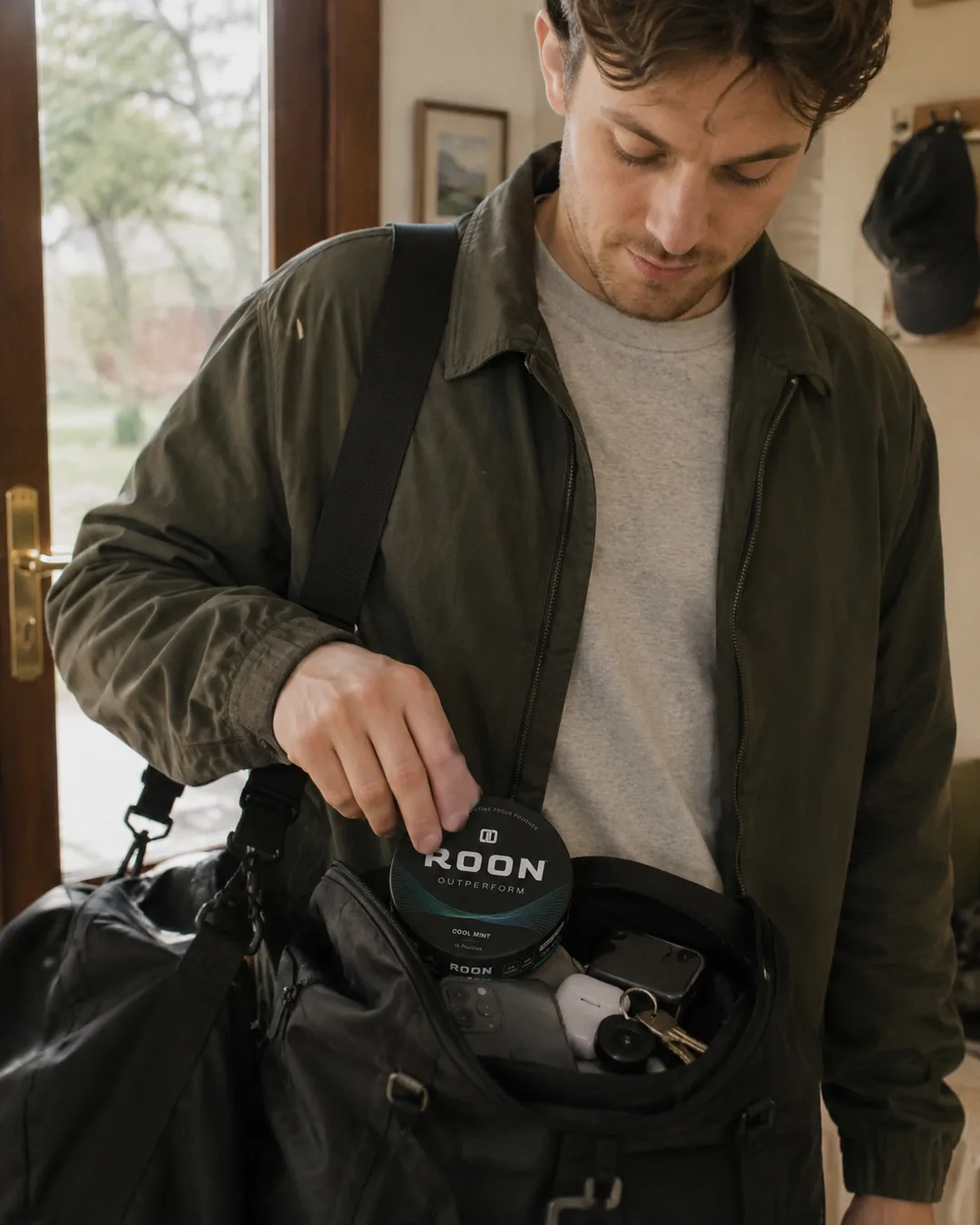
Roon is a zero-nicotine, zero-tobacco oral pouch designed for exactly this timing problem. You place it between your lip and gum. Caffeine absorbs through the lining of the mouth, not the gut, which is why the felt onset is 5 to 10 minutes instead of 30 to 60.
Each pouch contains four active ingredients:
- 80 mg caffeine, roughly one small cup of coffee. This is not a megadose. It is a modest amount paired with ingredients that make it go further.
- 60 mg L-theanine, the amino acid found naturally in tea. L-theanine does not cancel caffeine's alertness. It refines it: smoothing the jittery, scattered edge while leaving the focus intact. A 2008 study in the Journal of Nutrition found that L-theanine combined with caffeine increased alpha-band brain activity, a neurological marker of alert relaxation, and improved attention task performance.
- 25 mg Dynamine®, the ingredient that addresses the duration problem. A randomized, double-blind crossover PK study (n=12) found that co-administering 100 mg Dynamine® with 150 mg caffeine cut caffeine's oral clearance from 41.9 to 17.1 L/hr and extended its half-life from 7.2 to 15 hours, with no increase in peak concentration. Roon's pouch contains a quarter of that Dynamine® dose (25 mg) and roughly half the caffeine (80 mg), so the effect is proportionally smaller, but the same mechanism is at work: Dynamine® slows caffeine clearance, extending its useful window. Roon reports a felt duration of 6 to 8 hours per pouch, compared to coffee's typical 3 to 4.
- 5 mg TeaCrine®, from material standardized to 40%. TeaCrine®'s specific value is that, unlike caffeine, early research at much higher doses suggests it may not habituate the way caffeine does; the 80 mg caffeine in Roon still produces normal caffeine tolerance.
Roon calls this combination a "2.5x caffeine effect." That is Roon's own characterization of the four-ingredient stack, not an independent lab claim.
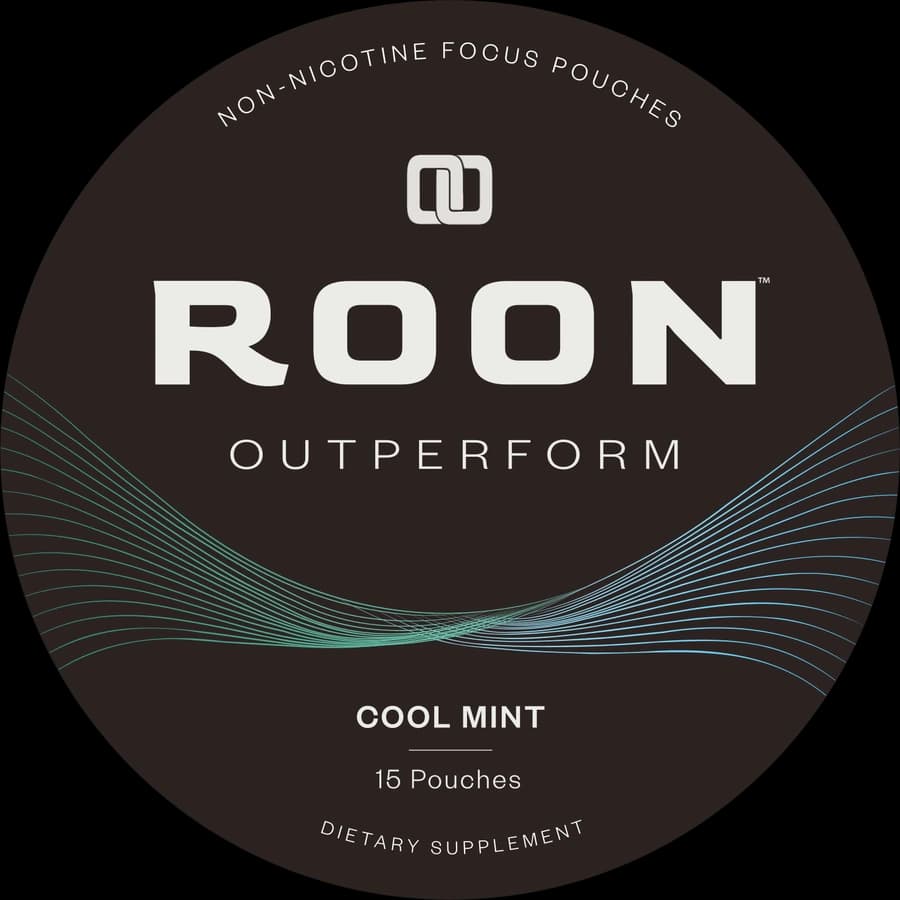
The format is Cool Mint, 15 pouches per tin. No liquid, no sugar, no brewing. You can use it in a meeting, on a commute, or at a desk without anyone noticing.
One honest trade-off to carry: a longer effective window means you should not use it late. Roon's own guidance is to stop at least 8 hours before bed. That is the same principle behind the feedback loop described above, just applied to a longer-acting product.
Roon is not a substitute for sleep, food, or medical care. It is a better-timed, better-delivered caffeine tool for the specific moment where coffee fails. About 6,000 people have switched to Roon across all sales channels. Pricing starts at as little as $0.61 per pouch ($9.16 per tin) with a 12-tin subscription, or $1.00 per pouch ($15.00 per tin) for the one-time 4-tin bundle. A single tin is $19.99. The full buy box and ingredient breakdown are directly below this article.
For a broader set of non-coffee energy tactics, see 8 Instant Energy Boosters That Aren't Coffee. For workplace-specific strategies to pair with better timing, see How to Beat the 3 PM Crash at Work.