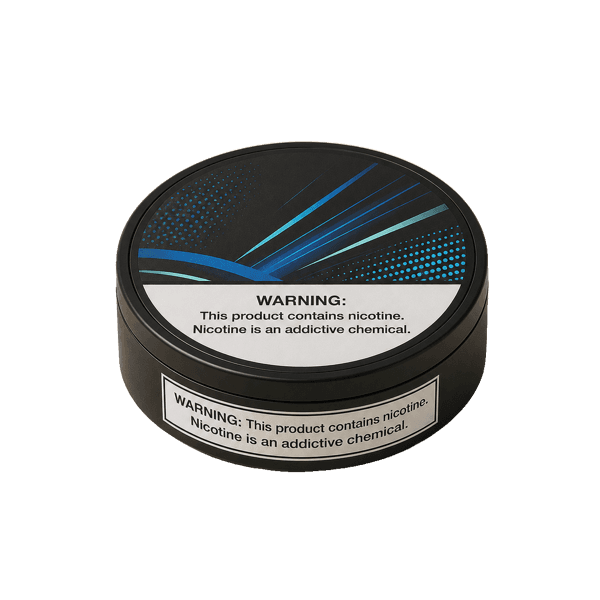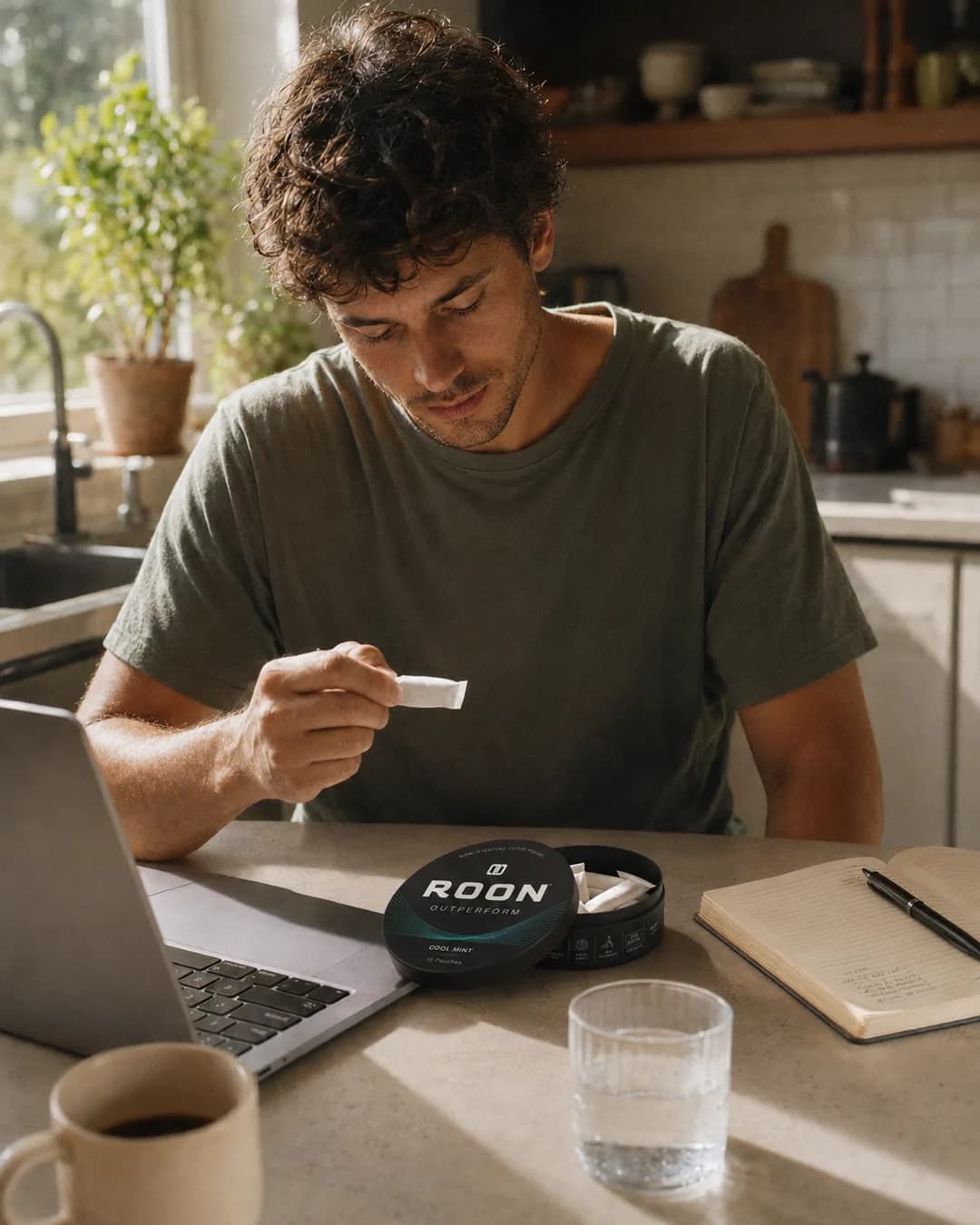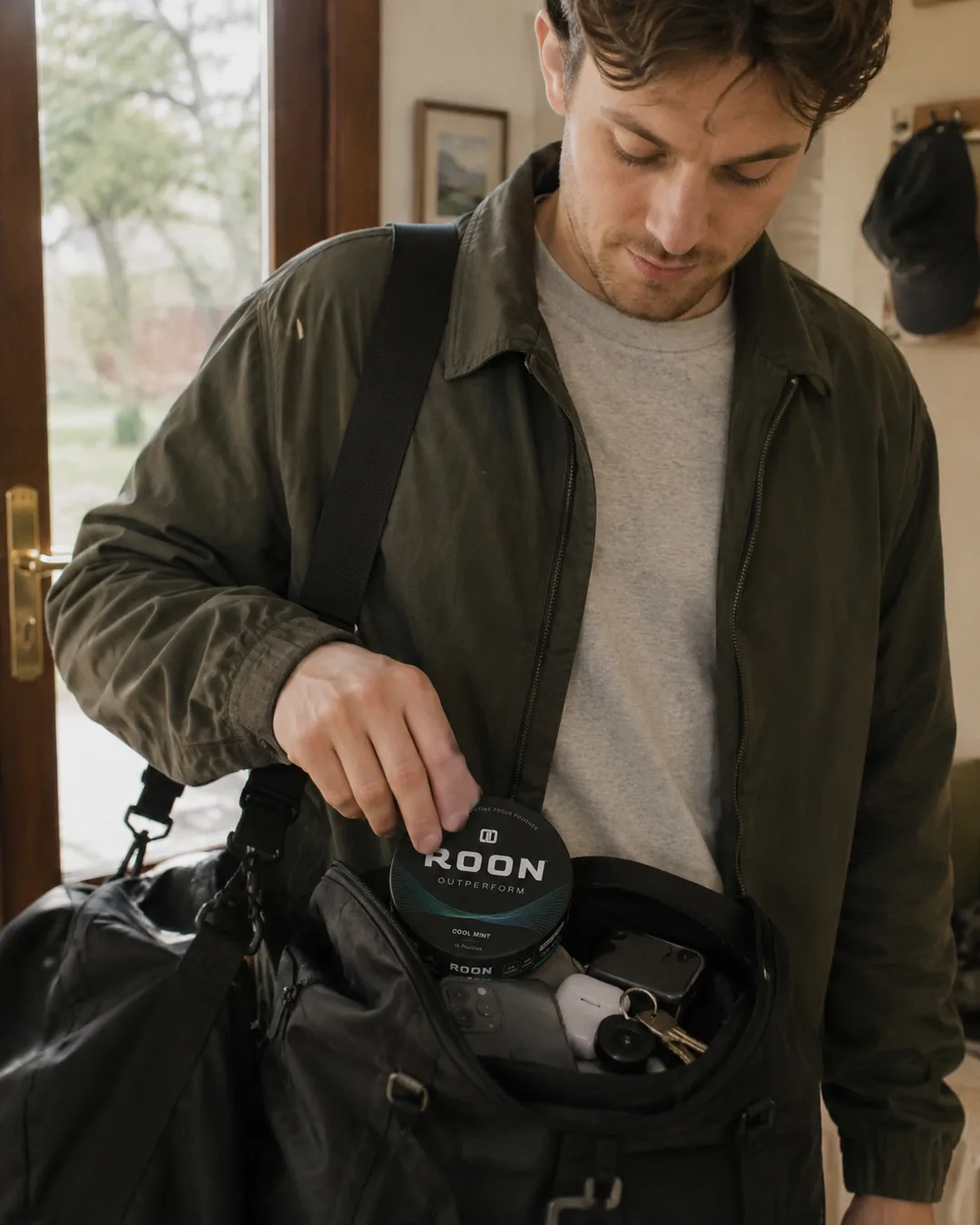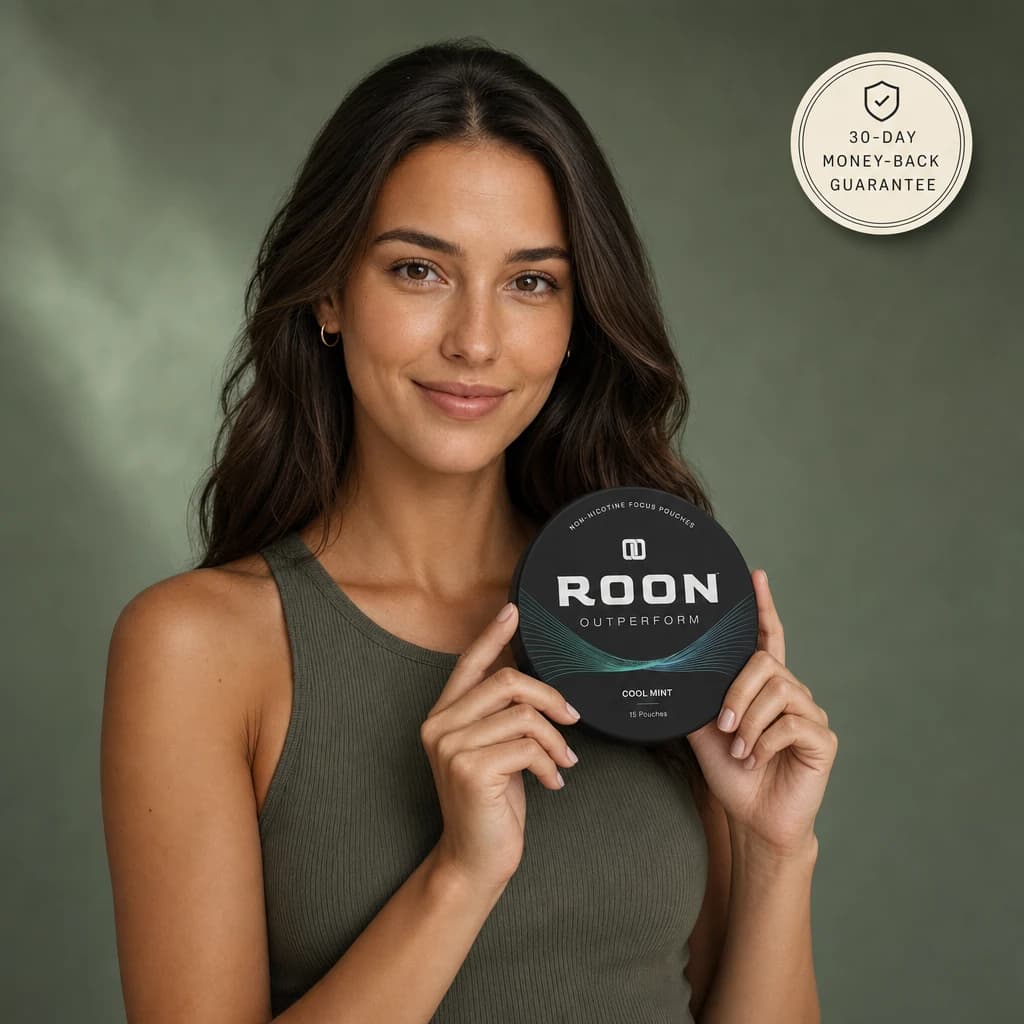
You like the format. A small pouch between your lip and gum, no liquid, no smoke, no smell, nothing to hold. You just don't want nicotine in it. Nicotine free pouches exist for exactly that preference, and the category has grown fast enough that the options are worth sorting through carefully.
The short version: nicotine-free pouches use the same oral-pouch format as their nicotine counterparts but swap in different active ingredients, most commonly caffeine, sometimes paired with amino acids or other compounds. They are a separate product category with a different purpose, not a modified version of the same thing.
This guide covers what nicotine-free pouches actually contain, how the pouch format affects delivery speed, what to look for on a label, and where the category is headed in 2026.
Key takeaways
- Nicotine-free pouches deliver active ingredients through the lining of your mouth, bypassing the stomach entirely. This means faster onset (typically 5 to 10 minutes) compared to drinks or pills that have to clear the digestive tract first.
- The most common active ingredient is caffeine, often paired with L-theanine, Dynamine®, TeaCrine®, or B vitamins depending on the brand and formula.
- The format is the shared feature; the contents are not. Nicotine pouches and nicotine-free pouches look alike and sit in the same spot, but they contain entirely different active compounds with different effects.
- Label literacy matters. Check for the dose per pouch in milligrams, the full ingredient list (including sweeteners and flavorings), and whether the brand names its sources.
Why the pouch format keeps growing
The appeal of the pouch has nothing to do with what is inside it. It is a delivery format, and the format solves a set of practical problems that beverages do not.
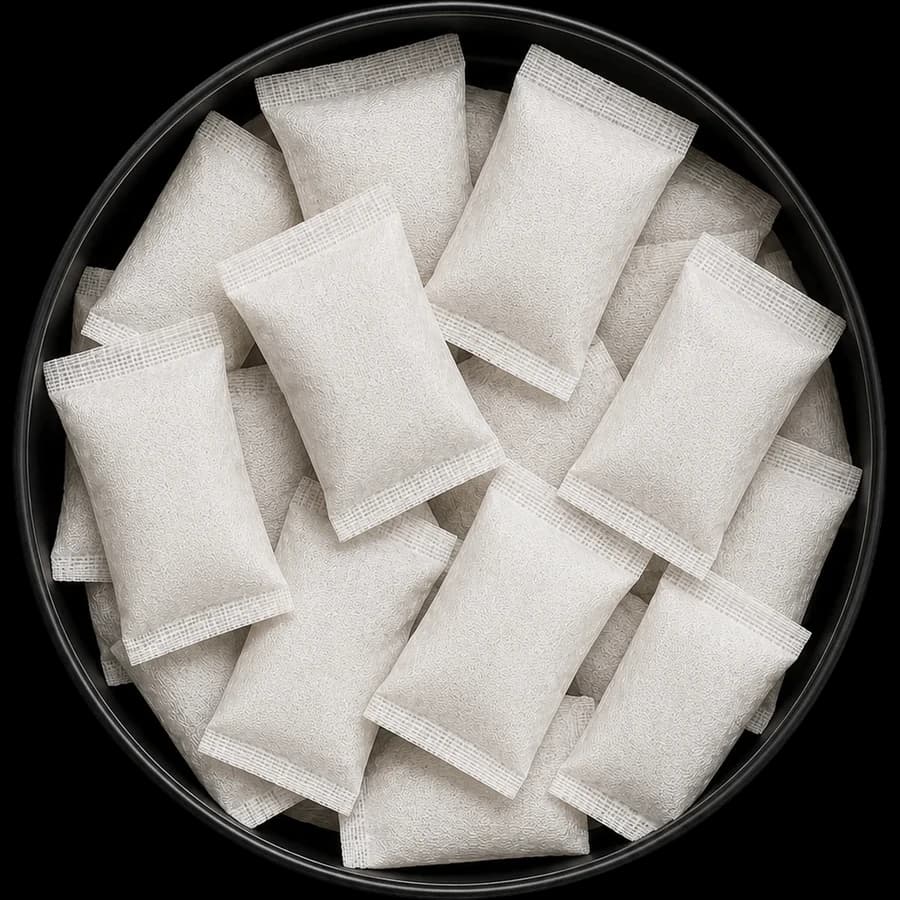
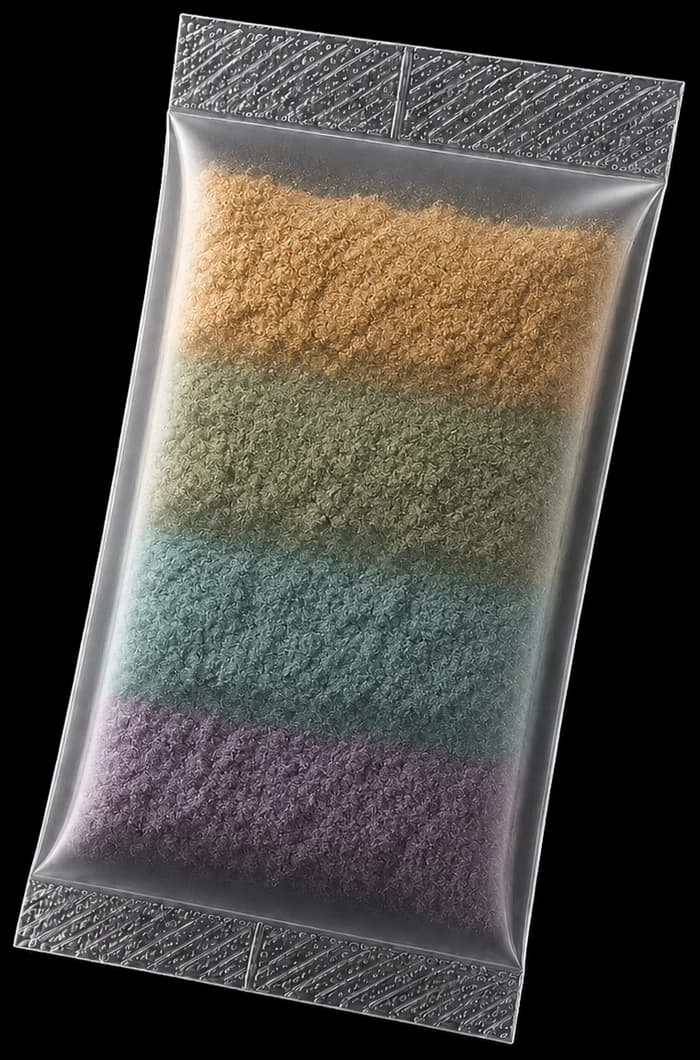
A pouch is hands-free. You can use one during a meeting, on a video call, in a car, at a desk, or on a job site where an open container is impractical. There is no brewing, no bottle, no can, no spill risk, no trip to the microwave for a reheat. You do not need to find a trash can for 12 ounces of liquid. The pouch goes in, sits between lip and gum for 20 to 40 minutes, and comes out.
It is also discreet in a way that drinks are not. Nobody across a conference table knows you are using one. There is no smell, no visible vapor, no stained teeth, no coffee breath. For the same reason, it works in any dress code and any setting.
That practical argument explains why the pouch format itself has expanded beyond nicotine. Once people get used to the convenience of a pouch, the question becomes straightforward: can I get something useful from this format that is not nicotine? The answer, as of 2026, is yes.
Nicotine pouches vs. nicotine-free pouches: a category comparison
These two product categories share a format and almost nothing else. Understanding the difference starts with what is inside each one.
What nicotine pouches contain
Nicotine pouches contain pharmaceutical-grade or tobacco-derived nicotine as their active ingredient, typically in doses ranging from 2mg to 12mg per pouch. The nicotine is the point. They are designed to deliver nicotine without combustion or tobacco leaf. Additional ingredients usually include pH adjusters (to improve nicotine absorption), fillers, flavorings, and sweeteners.
What nicotine-free pouches contain
Nicotine-free pouches contain zero nicotine and zero tobacco. Their active ingredients vary by brand, but the most common functional compounds are:
| Ingredient | Role | Typical dose per pouch |
|---|---|---|
| Caffeine | Stimulant, supports alertness and energy | 30 to 150mg |
| L-theanine | Amino acid, smooths caffeine's response | 30 to 100mg |
| Dynamine® | Purine alkaloid, extends caffeine's duration | 25 to 100mg |
| TeaCrine® | Purine alkaloid, supports sustained energy | 5 to 50mg |
| B vitamins | Cofactors in energy metabolism | Varies |
The inactive ingredients typically include plant-based fibers (the pouch material itself), flavorings, sweeteners (including artificial sweeteners like sucralose), salt, and pH adjusters. A good label names every one of these. A vague label is a red flag.
The key differences at a glance
| Feature | Nicotine pouches | Nicotine-free pouches |
|---|---|---|
| Active ingredient | Nicotine | Caffeine, amino acids, or other compounds |
| Primary effect | Nicotine delivery | Varies by formula (energy, focus) |
| Nicotine content | 2 to 12mg per pouch | 0mg |
| Tobacco content | None (synthetic or extracted nicotine) | None |
| Format | Oral pouch, lip/gum placement | Oral pouch, lip/gum placement |
| Onset | Fast (oral absorption) | Fast (oral absorption) |
The format is identical. The contents, effects, and purpose are not. They are different products that happen to share a shape.
How a pouch delivers faster than a drink
This is the part most people do not think about, and it is the strongest functional argument for the pouch format regardless of what is inside it.
The gut route vs. the mouth route
A cup of coffee or an energy drink delivers caffeine through your gastrointestinal tract. You swallow it. It hits your stomach, moves to your small intestine, gets absorbed through the intestinal wall into the bloodstream, and passes through the liver before reaching systemic circulation. Caffeine is 99 percent absorbed within 45 minutes of ingestion, but peak plasma concentration can take anywhere from 15 to 120 minutes depending on gastric emptying and what else you have eaten. For most people drinking coffee on a semi-full stomach, the felt onset is roughly 20 to 45 minutes.
An oral pouch delivers caffeine through the mucous membrane lining of your mouth. This route bypasses the digestive system entirely, avoiding the stomach, intestines, and first-pass metabolism in the liver. The compound crosses directly into the capillary network under the oral mucosa and enters systemic circulation. That is why sublingual and buccal delivery can produce felt effects within minutes rather than the 30 to 60 minute delay typical of swallowed pills or drinks.
The practical difference: a pouch typically produces a felt onset in 5 to 10 minutes. A coffee produces a felt onset in 20 to 45 minutes. Same compound, different route, different speed.
Why the combination matters more than caffeine alone
Caffeine by itself is well understood. It blocks adenosine receptors, reducing the perception of fatigue and increasing alertness. But caffeine alone has two well-known limitations: the jittery, overstimulated feeling at higher doses, and the relatively short window before it wears off. In healthy adults, caffeine's half-life averages about 5 hours, which translates to roughly 3 to 4 hours of noticeable effect before the decline starts.
The better nicotine-free pouches pair caffeine with compounds that address both limitations.
L-theanine is an amino acid found naturally in tea leaves. It does not cancel caffeine's effects. It refines them. A study published in Nutritional Neuroscience (Giesbrecht et al., 2010) found that combining 97mg L-theanine with 40mg caffeine improved accuracy during task switching and self-reported alertness while reducing self-reported tiredness. The combination kept the focus and energy of caffeine while smoothing out the scattered, jittery edge.
Dynamine® addresses the duration problem. In a randomized, double-blind, crossover pharmacokinetic study (n=12), co-administering 100mg Dynamine® with 150mg caffeine cut caffeine's oral clearance from 41.9 to 17.1 L/hr and extended its half-life from 7.2 to 15 hours, with no increase in peak concentration. In plain terms: Dynamine® slows the rate at which your body clears caffeine, so the same dose lasts longer without a higher spike. That mechanism is the basis for pairing the two ingredients in a pouch formula, though the magnitude of the effect at any given dose depends on the amounts used.
TeaCrine® is a purine alkaloid structurally related to caffeine. Its distinct property is that, unlike caffeine, repeated dosing of TeaCrine® at up to 300mg daily over 8 weeks showed no habituation or attenuation of its effects (Taylor et al. 2016, JISSN). That does not mean a product containing TeaCrine® is free from tolerance (caffeine still builds tolerance normally), but it does mean the TeaCrine® component of a stack holds its own over time.
What Roon puts in the pouch
Everything above describes the category. Roon is a specific product within it, and it is where the mechanism described above is built into a single pouch.
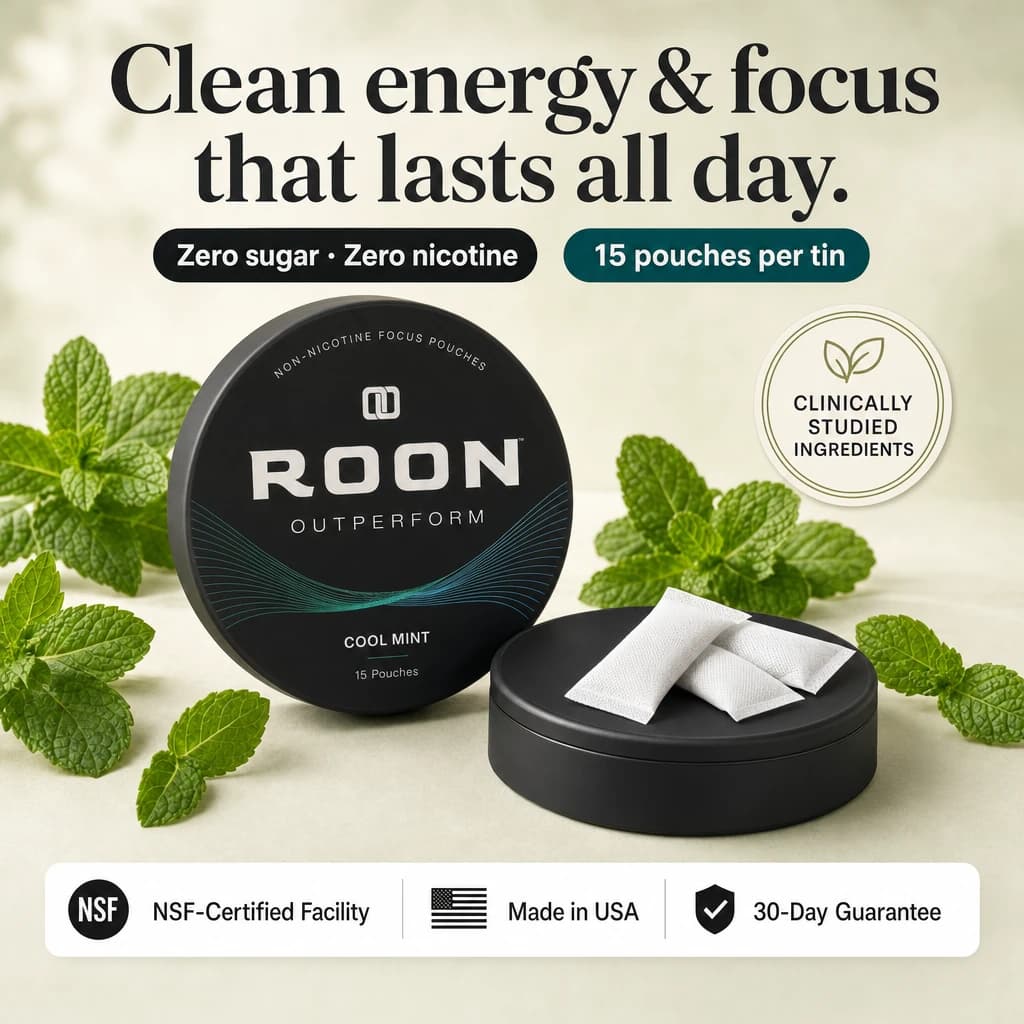
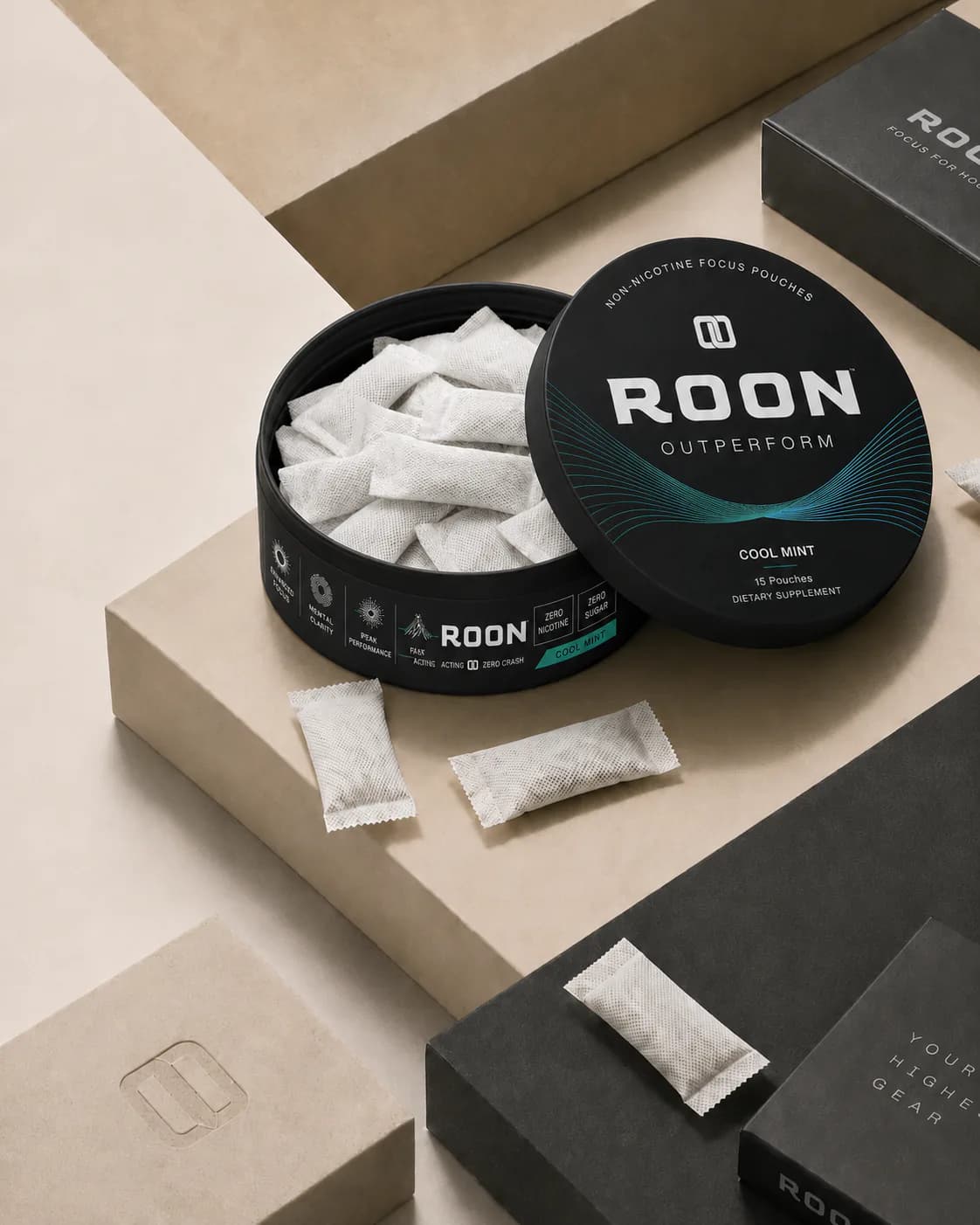
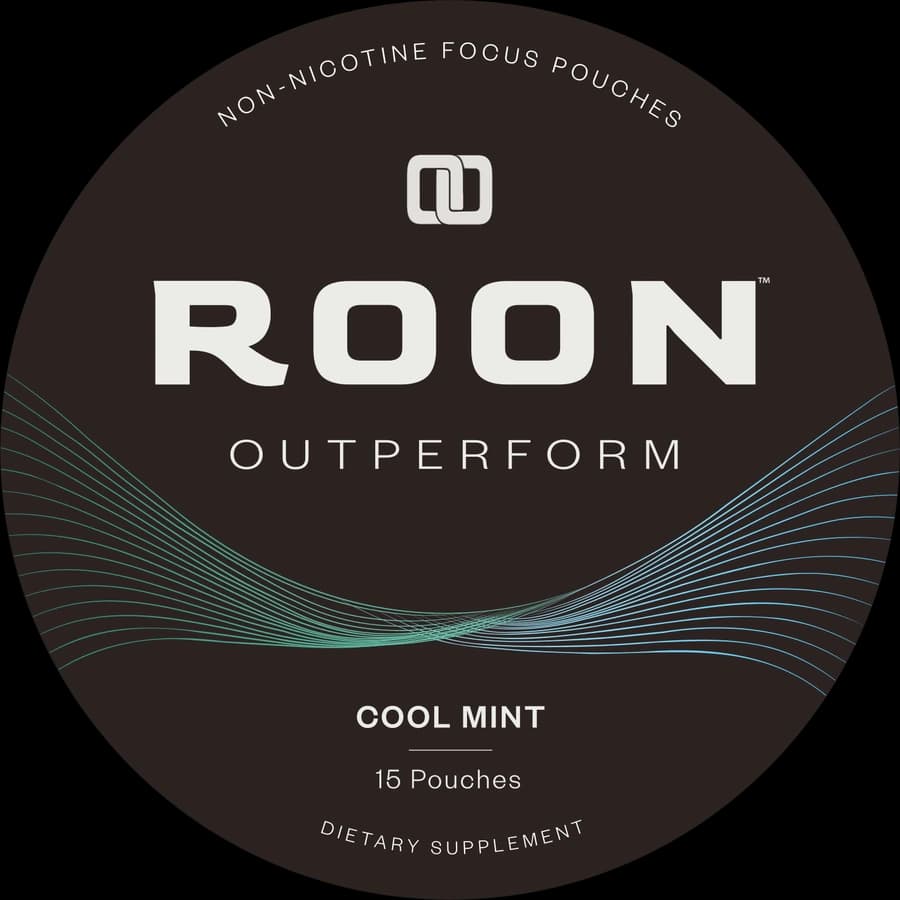
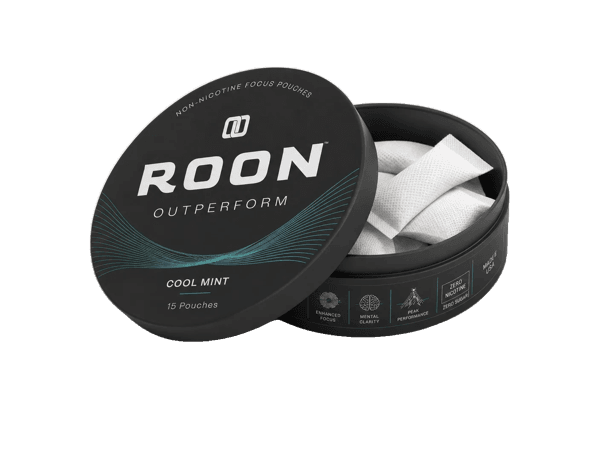
Each Roon pouch contains 80mg caffeine, 60mg L-theanine, 25mg Dynamine®, and 5 mg TeaCrine® from material standardized to 40%. The tin holds 15 pouches in one flavor: Cool Mint. It is zero-nicotine, zero-tobacco, and zero-sugar. The sweetener is sucralose, and the pouch contains artificial flavoring. Those details are on the label because they should be.
The 80mg caffeine dose is roughly one small cup of coffee. That is deliberately moderate. The point is not to hit you with a massive caffeine load. The point is that Dynamine® extends the work that 80mg does. The pharmacokinetic study cited above demonstrated that Dynamine® slows caffeine clearance, but that study used 100mg Dynamine® and 150mg caffeine, roughly four times more Dynamine® and nearly twice the caffeine in a Roon pouch. The effect at Roon's lower doses (25mg Dynamine®, 80mg caffeine) has not been independently measured, so the company's reported felt duration of 6 to 8 hours is its own figure based on user experience rather than a study endpoint. Roon's characterization of the four-ingredient stack is a 2.5x caffeine effect, meaning you get more duration and more smoothness from less actual caffeine. That is the brand's framing, not an independent lab result, but the underlying mechanism of Dynamine® slowing caffeine clearance is supported by published pharmacokinetic data.
Onset is 5 to 10 minutes. Peak is 30 to 60 minutes. The taper is gradual, not a cliff. No liquid, no brewing, no sugar, nothing to carry beyond a pocket-sized tin.
About 6,000 people have switched to Roon across all sales channels. Roon is sold in 4-tin bundles, starting from $9.16 per tin ($0.61 per pouch) on subscription. The one-time 4-tin bundle is $15.00 per tin ($1.00 per pouch). A single tin is $19.99.
The honest trade-off: because Dynamine® extends caffeine's half-life, you should not use Roon late in the day. Roon's own guidance is to stop at least 8 hours before bed. And Roon is not a substitute for sleep, proper nutrition, or medical care. It is a tool for sustained focus with less of caffeine's jittery edge during your waking hours.
For a deeper look at how nicotine-free and tobacco-free pouches work as a category, the tobacco and nicotine free pouches guide covers the full picture. If you are specifically looking at what is available on Amazon, the nicotine-free pouches on Amazon guide breaks down what to watch for when buying through third-party marketplaces.