The best energy drink alternative depends on what is actually draining you, but the short answer is: you probably do not need 160mg of caffeine and 54g of sugar to get through an afternoon. A short walk, a cup of matcha, a caffeine pouch, or even fixing the meal you skipped can outperform the can in your hand, often at a fraction of the cost and without the crash that sent you looking for an alternative in the first place.
This is not a ranking. It is six genuinely different approaches to the same problem, each with real tradeoffs and real numbers. One of them is our product. We will tell you which one, and we will tell you exactly why it costs more than a caffeine pill.
If you have been spending $3 to $5 a day on energy drinks and feeling worse by 4 p.m., the list below is built for you.
Key takeaways
- Fix the basics first. Sleep, hydration, and food have the largest effect on energy and are the least exciting interventions. If any of those three is broken, no supplement or drink will fully compensate.
- Most energy drinks deliver far more caffeine and sugar than you need. A standard 16oz Monster contains 160mg of caffeine and around 54g of sugar. You can get a comparable energy boost from 80mg of caffeine, roughly one small cup of coffee, if the delivery is right.
- How caffeine enters your body matters as much as how much you take. Oral absorption through the mouth lining reaches the bloodstream in 5 to 10 minutes; a drink passing through your stomach and gut takes 20 to 45 minutes.
- Cost per serving varies wildly. A daily energy drink habit runs $90 to $150 per month. Most of the alternatives below cost less than half that.
Why your energy drink stops working by mid-afternoon
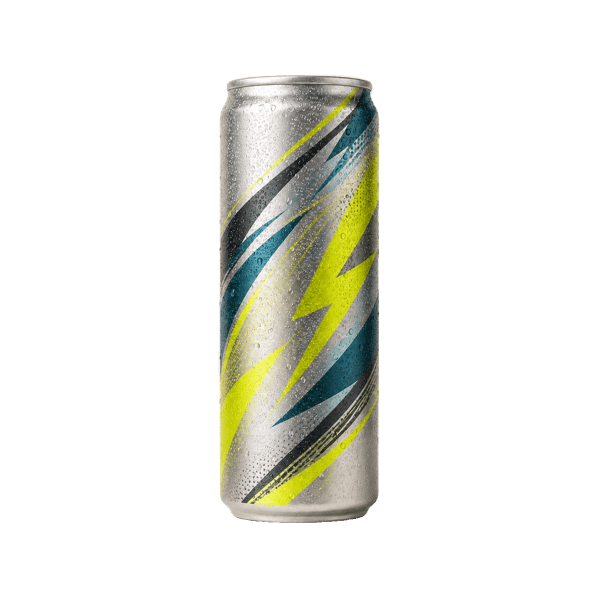
Energy drinks are engineered for a spike, not a sustained effect. A 16oz can of Monster delivers 160mg of caffeine in liquid form, absorbed through the gastrointestinal tract. Peak blood concentration hits about 30 to 45 minutes after you drink it, and caffeine's average half-life in a healthy adult is roughly 5 hours. By hour three or four, you are already on the downslope, which is exactly when the urge for a second can kicks in.
Sugar accelerates the crash. That same 16oz Monster contains about 54g of sugar, more than the American Heart Association's recommended daily limit for men (36g) and nearly double the limit for women (25g). The sugar creates a rapid glucose spike followed by a reactive dip that tends to land right around the time the caffeine fades. The 3 p.m. wall is not a mystery. It is two declining curves colliding on the same schedule.
There is also a dose problem most people do not think about. A 16oz can is almost always consumed in one sitting, but the nutrition label often lists two servings per container. So the person who thinks they are getting a moderate caffeine boost is actually consuming 160 to 300mg at once, well above what most people need for sustained focus. The body responds to that large bolus with a proportionally steep drop once metabolism catches up. You do not just come down. You come down fast.
Then there is the price. A single can runs $3 to $5 at a convenience store. At one per day, that is $90 to $150 per month for a product that gives you three to four hours of useful energy, a sugar crash, and a daily decision about whether to buy a second one. Over a year, that is $1,100 to $1,800 on what is, pharmacologically, just caffeine and sugar in carbonated water with some B vitamins.
The alternatives below are not all better than an energy drink in every dimension. Some are free. Some last longer. Some taste worse. But each one solves at least one of those three problems: too much sugar, too short a window, or too high a price.
How caffeine delivery actually shapes your energy
Most people think the dose is the only variable that matters. It is not. The route caffeine takes into your bloodstream determines how fast you feel it, how sharp the peak is, and how steep the crash.
Gut absorption vs. oral absorption
A drink or a pill passes through the stomach and small intestine before caffeine reaches the blood. That digestive process takes 20 to 45 minutes, and it is influenced by stomach contents, hydration, and individual metabolism. This is why coffee on an empty stomach feels different than coffee after lunch.
Oral mucosa absorption, the route used by pouches placed against the gum, bypasses the gut entirely. The lining of the mouth is thin and highly vascular. Caffeine crosses it directly into the bloodstream, which is why felt onset is 5 to 10 minutes. Faster in, and without the first-pass liver metabolism that slows the oral-ingestion route.
Why L-theanine refines caffeine instead of canceling it
L-theanine does not reduce alertness. It refines the caffeine response by promoting alpha brain wave activity, which is associated with relaxed focus. A randomized, placebo-controlled study (n=44) found that the combination of 97mg L-theanine and 40mg caffeine improved cognitive performance and subjective alertness compared to placebo. The jitter goes down. The focus stays.
Green tea and matcha deliver this combination naturally: a cup of matcha contains up to 45mg of L-theanine alongside 35 to 70mg of caffeine. Higher-dose supplemental L-theanine (60mg or more) intensifies the smoothing effect.
The duration problem: why 80mg can outperform 160mg
The reason a small dose can outlast a large one comes down to clearance rate. Dynamine®, a purine alkaloid related to caffeine, slows caffeine's metabolism. A randomized, double-blind, crossover PK study (n=12) found that co-administration of 100mg Dynamine® with 150mg caffeine cut oral clearance from 41.9 to 17.1 L/hr and extended caffeine's half-life from 7.2 to 15 hours, with no increase in peak concentration.
Same peak, longer tail. That pharmacokinetic mechanism, slowed clearance without a higher spike, is why combining caffeine with Dynamine® extends the useful window. The study used doses roughly four times the Dynamine® and nearly twice the caffeine found in a typical pouch stack, so the magnitude of the effect at lower doses will differ, but the direction of the mechanism is the same. A longer half-life also means timing matters: you should not take a Dynamine®-caffeine combination late in the day.
| Factor | Energy Drink (16oz) | Coffee | Caffeine Tablet | Oral Pouch |
|---|---|---|---|---|
| Typical caffeine | 140-300mg | 80-120mg | 100-200mg | 50-100mg |
| Delivery route | Gut | Gut | Gut | Oral mucosa |
| Onset | 20-45 min | 20-45 min | 20-45 min | 5-10 min |
| Typical felt duration | 3-4 hrs | 3-4 hrs | 3-4 hrs | 4-8 hrs* |
| Sugar | 27-54g | 0g (black) | 0g | 0g |
*Duration depends on companion ingredients. A plain caffeine pouch lasts 3 to 4 hours, similar to coffee. A pouch with Dynamine® or TeaCrine® extends the window.
6 healthy energy drink alternatives, compared
1. Fix the input that is actually broken
This is the least satisfying answer and the most effective one. If you slept six hours, skipped breakfast, or have not had water since your morning coffee, no caffeine source will make up the gap. You are not under-stimulated. You are under-resourced.
Dehydration as small as 1 to 2% of body weight impairs concentration and increases fatigue perception. And chronic sleep restriction below seven hours compounds every night; research from the University of Pennsylvania found that subjects restricted to six hours per night for two weeks performed cognitively as poorly as subjects who had been awake for 48 hours straight.
Duration: Permanent, if you fix the habit. Cost: Free.
2. Green tea or matcha
Green tea contains roughly 25 to 45mg of caffeine and 5 to 10mg of L-theanine per cup. Matcha does better on both: 35 to 70mg of caffeine and up to 45mg of L-theanine, because you consume the whole leaf. The natural caffeine-L-theanine combination is why matcha's energy feels smoother than coffee, though the lower dose means a shorter window.
Duration: 2 to 4 hours. Cost: $0.50 to $3.00 per cup depending on quality.
3. A 10-minute walk or daylight exposure
A study in Physiology and Behavior found that 10 minutes of low-to-moderate intensity stair walking increased subjective energy more than 50mg of caffeine in sleep-deprived young women. Daylight exposure adds a separate mechanism: bright light suppresses melatonin and helps calibrate circadian alertness, especially in the morning.
The honest caveat: both effects are real but short-lived. Expect 30 to 60 minutes of noticeable benefit. Think of it as a reset button, not a replacement.
Duration: 30 to 60 minutes. Cost: Free.
4. Plain caffeine tablets
A 200mg caffeine tablet costs roughly $0.05 to $0.10. Split it in half and you have a 100mg dose for less than a dime. For pure cost efficiency, nothing on this list competes.
The tradeoff: no L-theanine to smooth the response, no compounds to extend the window. You get a clean spike and a clean drop-off in three to four hours. Tablets also make it easy to take too much. The FDA has cited 400mg per day as an upper boundary for healthy adults; two full tablets put you there before accounting for any other caffeine in your day.
Duration: 3 to 4 hours. Cost: Under $0.10 per dose.
5. A caffeine pouch with a multi-ingredient stack
This is where our product sits, so we will be transparent about what is in it and what it costs.
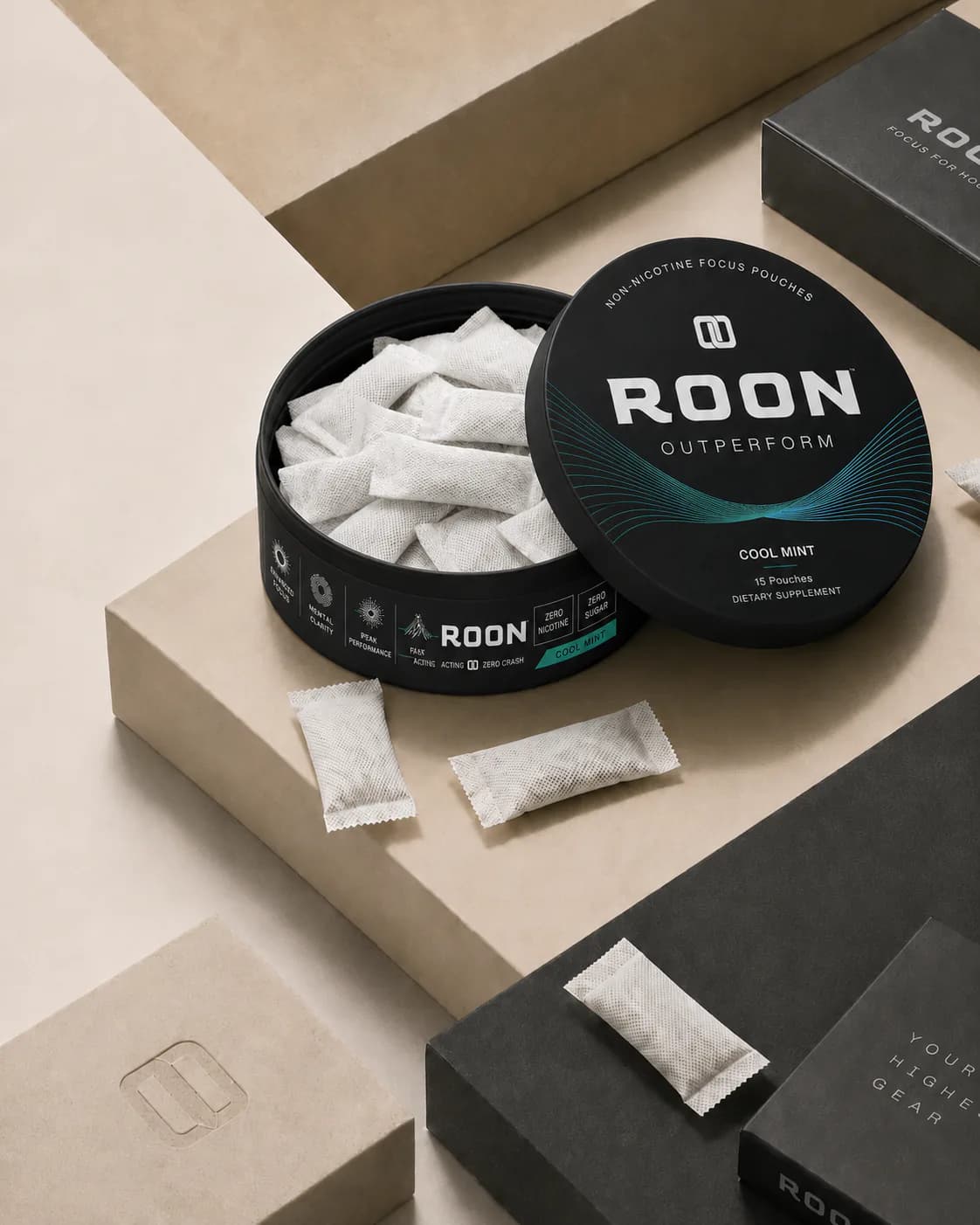
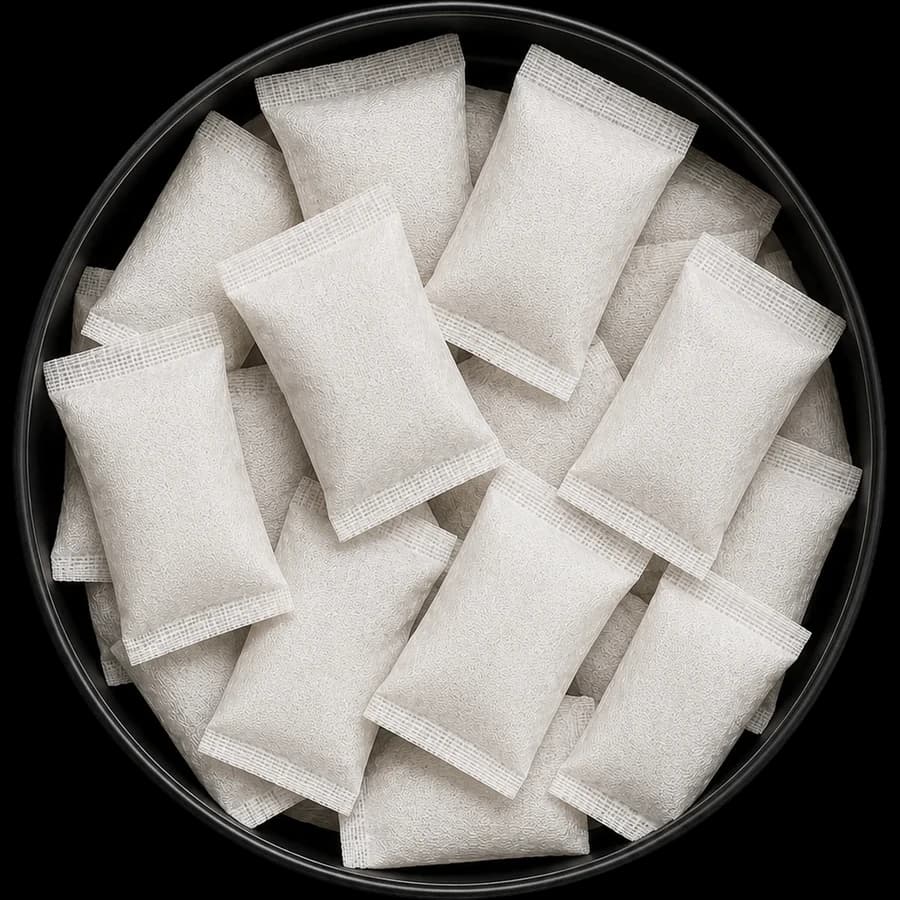
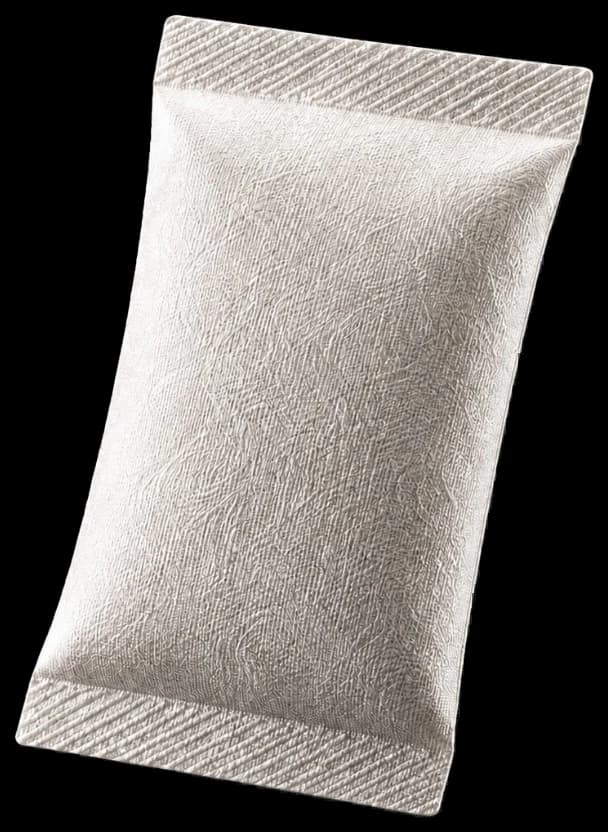
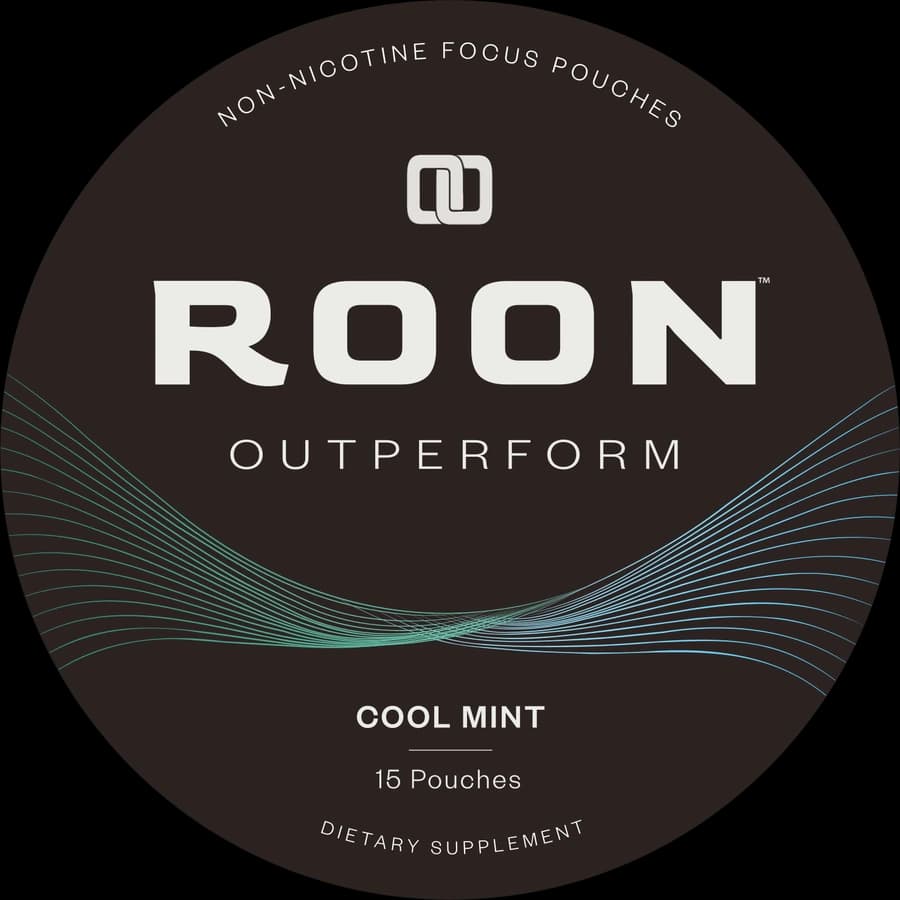
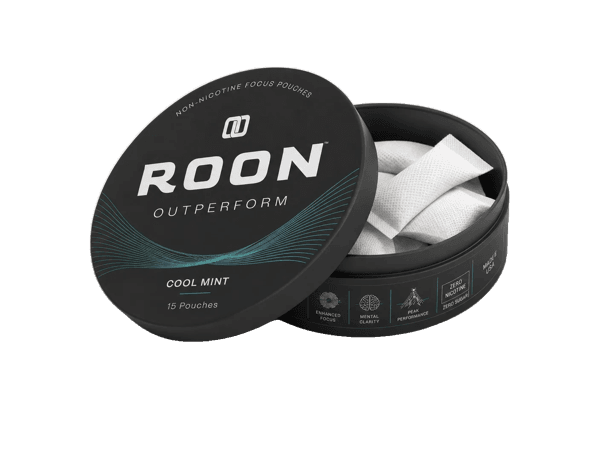
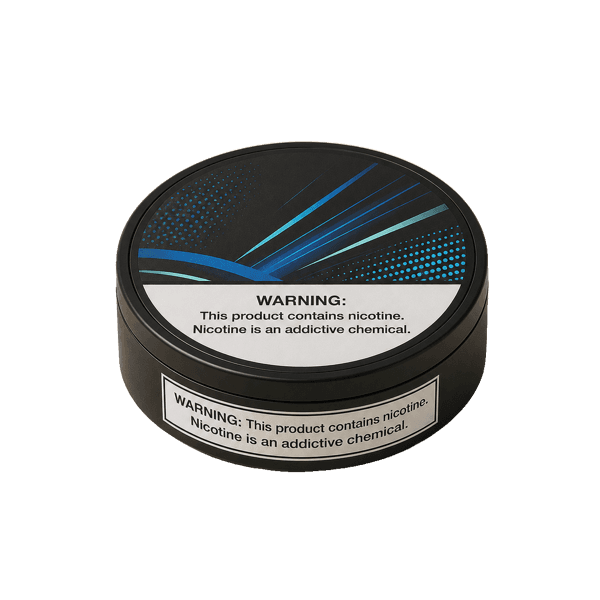
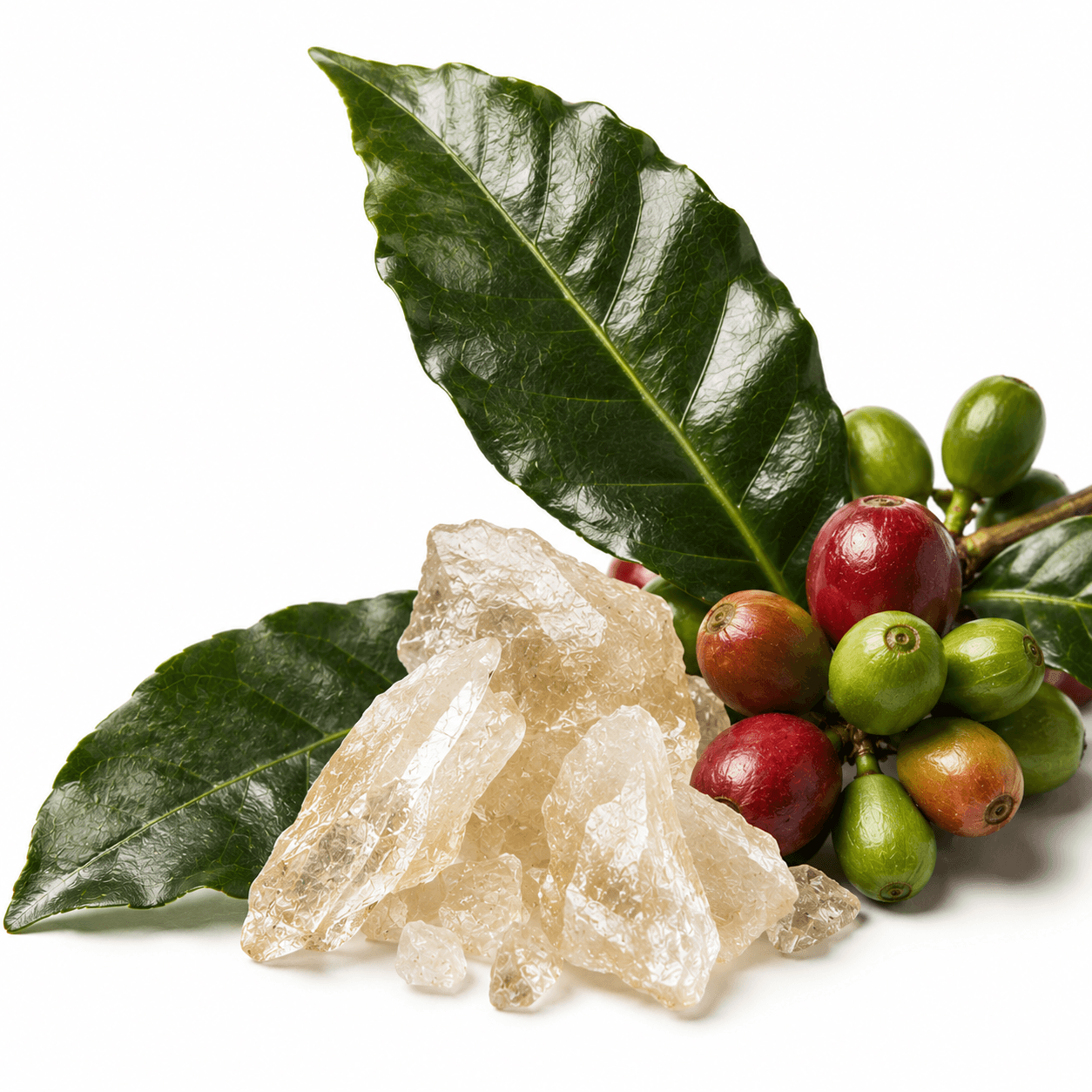
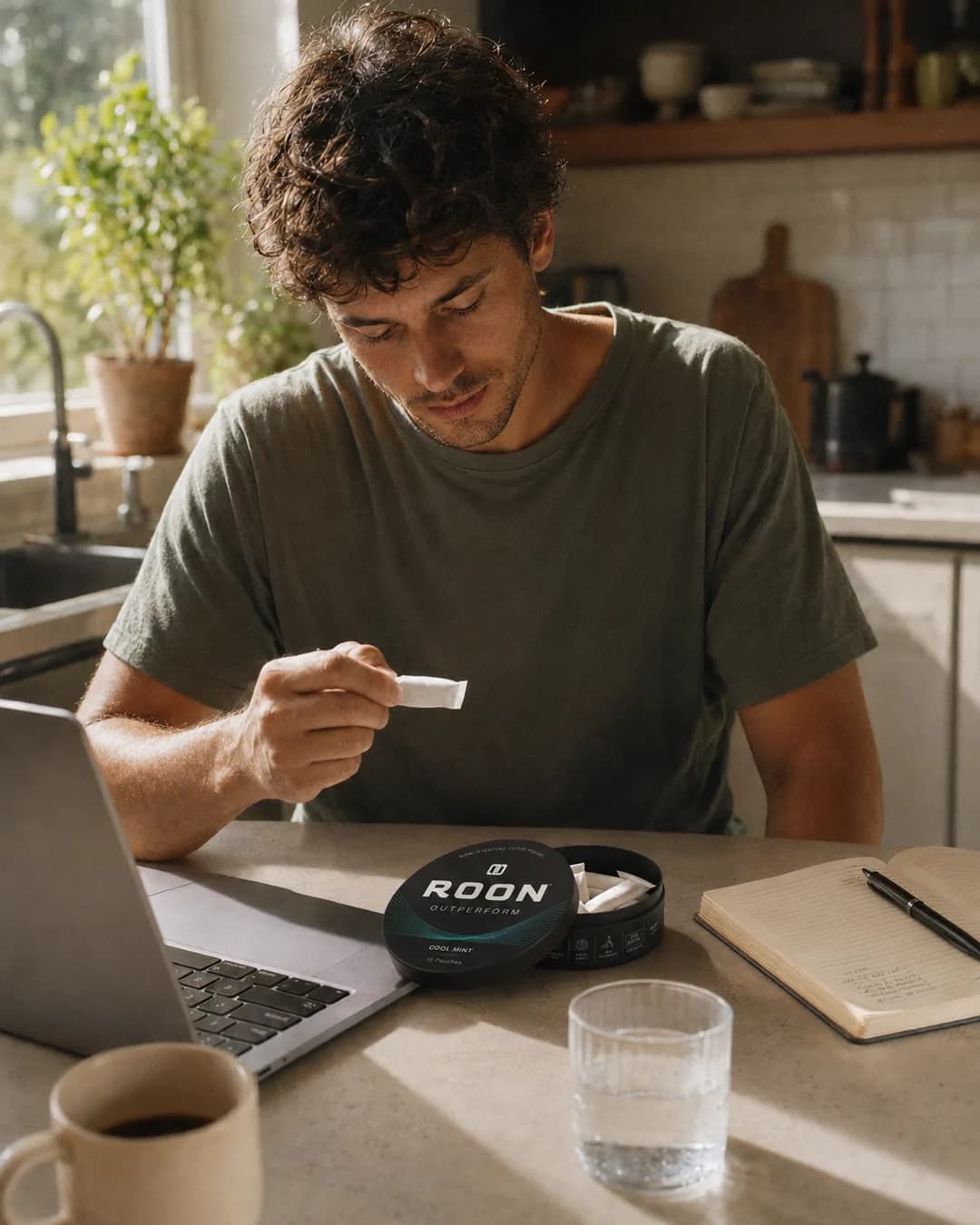
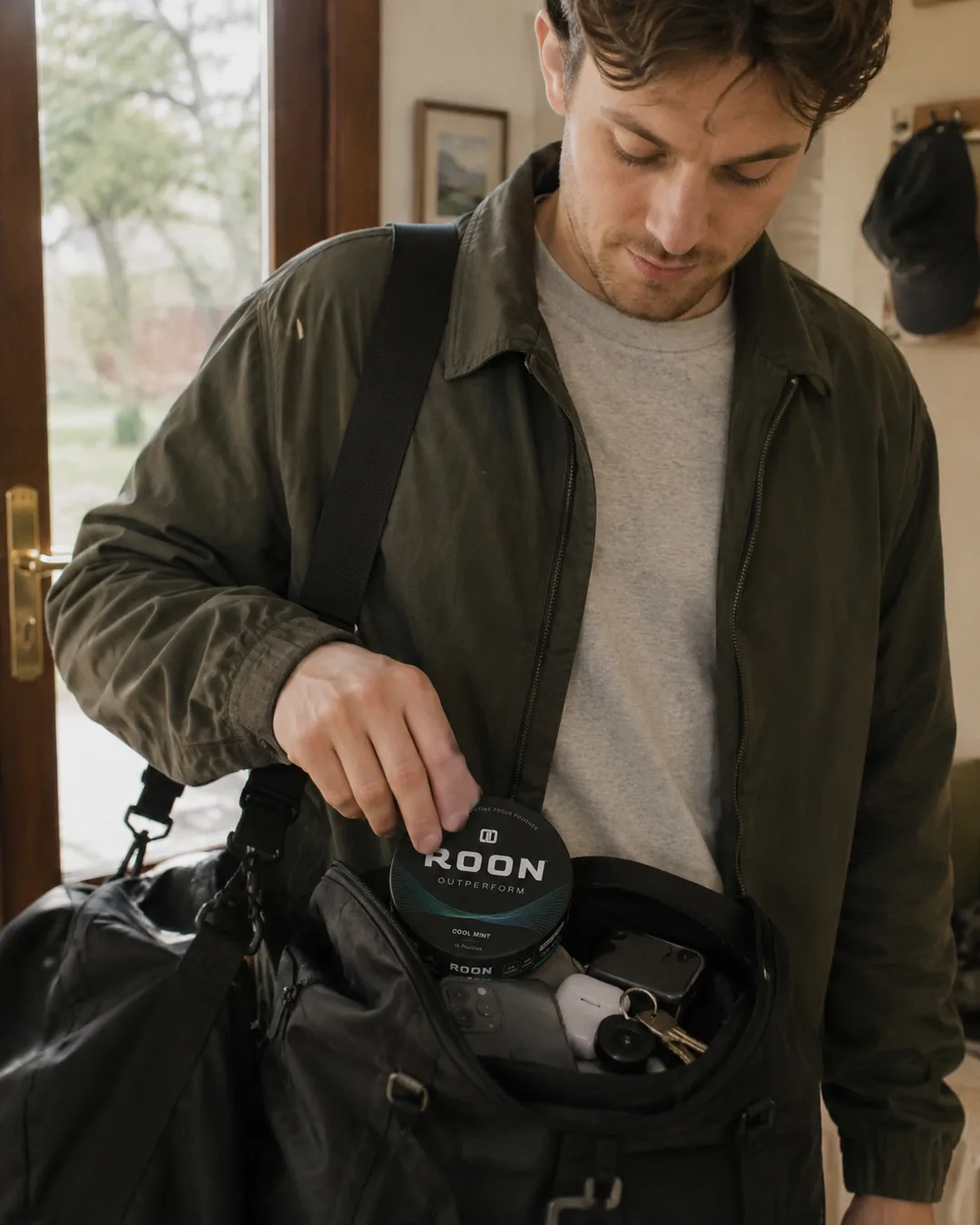
Roon is a zero-nicotine, zero-tobacco oral pouch in Cool Mint, 15 pouches per tin. Each pouch contains 80mg caffeine, 60mg L-theanine, 25mg Dynamine®, and 5 mg TeaCrine® from material standardized to 40%.
The 80mg caffeine is roughly one small cup of coffee. L-theanine refines the response, removing the jitter while preserving alertness. Dynamine® extends caffeine's effective window by slowing clearance (the PK study cited above demonstrated the mechanism at higher doses; Roon uses roughly one-quarter the Dynamine® and about half the caffeine tested in that study, so the effect is directionally the same but smaller in magnitude). TeaCrine® contributes a distinct property: unlike caffeine, it does not build tolerance in the same pattern, based on existing research.
The practical result, based on Roon's own testing, is 6 to 8 hours of felt energy from a small-coffee dose. Onset is 5 to 10 minutes because the pouch absorbs through the mouth lining, not the gut. Zero sugar. The pouch does contain sucralose and artificial flavoring.
Roon is not a substitute for sleep, food, or medical care. The tradeoff with the extended window: do not use it late in the day. Roon's own guidance is to stop at least 8 hours before bed.
Roon is available as a single tin ($19.99) or in multi-tin bundles. Pricing starts as low as $0.61 per pouch on the 12-tin subscription, or $1.00 per pouch for a one-time 4-tin bundle.
For a brand-by-brand breakdown of how this compares to Celsius, Red Bull, and Monster, see Energy Drink Alternatives Without the Sugar Crash.
Duration: 6 to 8 hours. Cost: From $0.61 per pouch (subscription) to $1.00 per pouch (one-time 4-tin bundle). Compare that to $3 to $5 for a can that lasts half as long.
6. Cold water or a cold shower
Cold exposure triggers a significant norepinephrine response. A one-hour immersion study at 14°C (57°F) found norepinephrine increased by roughly 530%, and a related measurement found dopamine rose about 250% over baseline. Even a brief 20-second dip in colder water (around 4°C) has been shown to increase norepinephrine by 200 to 300%. Those are large neurochemical shifts from a non-pharmacological intervention.
The catch: most studies used full-body immersion, not a quick shower. A cold shower produces a smaller but directionally similar response. You feel sharply awake, your heart rate rises, the fog clears. And then, within 30 to 60 minutes, the effect fades. Cold exposure is a morning primer, not a sustained energy source.
Duration: 30 to 60 minutes. Cost: Free.