Zyn vs Cigarettes: How Much Safer, and What the Studies Don't Tell You
Zyn vs Cigarettes: How Much Safer, and What the Studies Don't Tell You
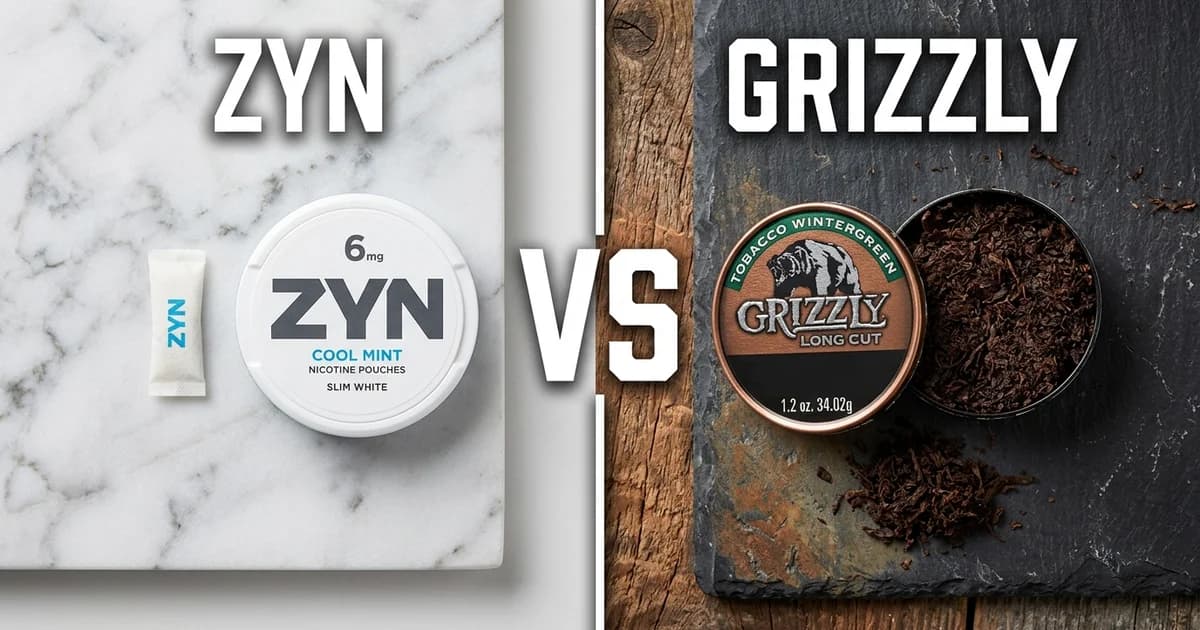
Zyn and other nicotine pouches are substantially lower-risk than cigarettes, and the reason is mechanical: pouches deliver nicotine through the gum without burning anything. No combustion means no smoke, no tar, and almost none of the carcinogens that make cigarettes lethal. That said, the nicotine in a pouch is still addictive and still carries cardiovascular risk. Lower-risk is not the same as safe, and "Zyn vs cigarettes" is the wrong frame if your real goal is using neither.
The honest version of the comparison is narrower than the marketing. Pouches remove the deadliest part of smoking. They do not remove nicotine, and they have almost no long-term human data behind them.
This article is for informational purposes only and is not medical advice. If you have health concerns, are pregnant or breastfeeding, or are trying to cut down on caffeine or quit nicotine, talk to a healthcare provider.
Key Takeaways
- The big win is combustion. Cigarettes burn tobacco and produce thousands of chemicals; pouches do not burn anything, which removes tar and the bulk of cancer-causing compounds.
- Nicotine still does damage. A pouch delivers a drug that is addictive and constricts blood vessels, raising cardiovascular risk in people who were not already using nicotine.
- The dose is comparable, the speed is not. Studies show pouches reach roughly two-thirds of a cigarette's peak nicotine level and reach it more slowly.
- Long-term data is thin. Pouches are too new for decades-long outcome studies, so "safer" rests on chemistry, not on long-run human evidence.
- Safer is not a cessation endorsement. If you do not currently use nicotine, the lowest-risk number of pouches is zero.
Zyn vs Cigarettes: The Real Difference Is Fire
The single variable that separates these two products is combustion. A lit cigarette burns at high heat, and that fire is what creates the smoke, the tar, and the chemical soup linked to lung cancer, COPD, and heart disease. A nicotine pouch sits between your lip and gum and dissolves. Nothing combusts, so the smoke-borne toxicants are simply absent.
Harvard's tobacco-control researchers make this point directly. In coverage from the Harvard T.H. Chan School of Public Health, Vaughan Rees, director of the Center for Global Tobacco Control, stated that Zyn presents lower health risks than smoking because it does not contain the cancer-causing chemicals and other toxic substances found in cigarette smoke. He framed pouches as a way for adult smokers who cannot quit to reduce their exposure to the chemicals that cause disease.
That is the case for harm reduction, and it is a real one. It is also where the good news stops.
What Pouches Remove, and What They Keep
Pouches remove the delivery system; they keep the drug. Cigarette smoke is the problem, not nicotine alone, so pouches strip out the smoke while leaving the addictive compound intact. The safety gap is large on cancer and lung disease and much smaller on dependence and blood vessels.
The same Harvard reporting is blunt about the catch: the nicotine in pouches is highly addictive, and it may increase cardiovascular disease risk in people who are not already using nicotine products. Rees was explicit that teens and young adults who do not smoke or vape should avoid the product entirely. A "safer cigarette alternative" is only safer relative to a cigarette. Relative to nothing, it is a new exposure. Nicotine is a vasoconstrictor: it narrows blood vessels and raises heart rate and blood pressure during use, which is the mechanism behind its cardiovascular risk regardless of how it enters your body.
The Comparison Table Harvard Left Out
Here is the side-by-side that most coverage of zyn vs cigarettes skips. It includes a zero-nicotine row for context, because the cleanest comparison is against a product that carries none of nicotine's risk at all.
| Product | Combustion / tar? | Carcinogens | Nicotine delivery | Cardiovascular risk | Addiction | Long-term data? | Zero-nicotine option? |
|---|---|---|---|---|---|---|---|
| Cigarettes | Yes (burns tobacco) | High (smoke-borne) | Fast, high peak | High | High | Extensive | No |
| Zyn / nicotine pouches | No | Low (no smoke) | Slower, lower peak | Present (nicotine) | High | Limited / new | No |
| Roon (zero-nicotine focus pouch) | No | None added | No nicotine; caffeine + L-theanine via gum | No nicotine pathway | No nicotine dependence | N/A (not a nicotine product) | Yes |
Roon belongs in that last row for one reason only: it is a sublingual pouch with no tobacco and no nicotine. It is not a quit-smoking product and makes no such claim. It is included here as the honest reference point for what "zero nicotine" actually means.
How Much Nicotine, and How Fast: The Pharmacokinetics
A pouch gives you most of a cigarette's nicotine, but it gives it to you more slowly. That difference matters, because the speed of the nicotine hit drives much of the addictive punch. A 2025 meta-analysis in Drug and Alcohol Dependence Reports found that 4 mg nicotine pouches reached a pooled mean peak concentration of about 69% of a cigarette's, meaning roughly two-thirds of the peak blood level.
Earlier controlled work shows the same pattern in raw numbers. A pharmacokinetic study in PMC recorded a cigarette peak plasma nicotine of 11.6 ng/ml versus 5.2 and 7.9 ng/ml for two pouch variants, and the time to that peak was 8.6 minutes for the cigarette compared with 22 to 26 minutes for the pouches. Lower peak, slower climb. The pouches still satisfied users' urge to smoke, which is exactly why they work as a substitute and also why they hook people. We collect more of these head-to-head studies in our roundup of what the research says about nicotine pouches.
"How Many Pouches Equal a Pack?" Is the Wrong Math
There is no clean conversion, and anyone selling you one is guessing. Nicotine yield depends on pouch strength, how much your gum absorbs, and how long you keep it in. A 3 mg pouch is not "one cigarette" and a 6 mg pouch is not "two," because a cigarette delivers nicotine in a fast spike while a pouch trickles it in over 20 to 30 minutes.
The data supports a direction, not a ratio: a single pouch tends to produce a lower peak nicotine level than a single cigarette while still delivering a satisfying dose. The practical risk is not per-pouch math. It is total daily nicotine and how many pouches you use, which for many people climbs because pouches are discreet, indoor-friendly, and easy to chain.
Safer Does Not Mean Safe
A lower-risk product is still a risk product. Cleveland Clinic puts it plainly: nicotine pouches may not carry the same risks as smoking, but they are not harmless, they are addictive, and they can cause gastrointestinal and oral health problems. In their guidance, Cleveland Clinic flags gum irritation, mouth sores, and the dependence that follows any efficient nicotine delivery system.
The other honest gap is time. Cigarettes have a century of epidemiology behind them. Pouches in their current form are recent, so the "safer" verdict is built on chemistry and short-term pharmacology, not on decades of outcome data. That does not make the harm-reduction case wrong. It makes it incomplete, and you should treat any confident long-term safety claim with suspicion.
None of this is a cessation endorsement. The evidence supports pouches as a lower-exposure option for an adult smoker who would otherwise keep smoking. It does not support starting nicotine if you do not already use it.
The Honest Bottom Line on Smoke Versus Pouches
Strip away the noise and the conclusion is simple. Removing combustion removes the part of smoking that kills the most people, which is why a nicotine pouch sits well below a cigarette on the risk scale. The nicotine that remains is still addictive and still works on your heart and blood vessels, and the long-term human data does not yet exist to close the question.
If you smoke and cannot stop, switching completely to a non-combusted product is a recognized way to cut your exposure to the worst toxicants. If you do not use nicotine at all, the math is easier: the lowest-risk dose is none.
Frequently Asked Questions
Are nicotine pouches safer than cigarettes?
Yes, on the dimensions that cause most smoking deaths. Pouches do not burn tobacco, so they avoid the smoke, tar, and carcinogens that drive lung cancer and COPD. Harvard tobacco researchers describe them as lower-risk than smoking for that reason. They are not harmless, though, because they still deliver addictive nicotine and carry cardiovascular risk, and long-term human data is limited.
How many Zyn pouches equal a pack of cigarettes?
There is no reliable conversion. Pouch strength, gum absorption, and how long you hold a pouch all change the actual nicotine delivered. A pouch also releases nicotine slowly over 20 to 30 minutes rather than in a fast spike, so it does not map cleanly onto cigarette counts. Track your total daily nicotine instead of trying to calculate a pack equivalent.
Do nicotine pouches cause cancer like cigarettes?
The cancer risk profile is much lower because there is no combustion and therefore no smoke-borne carcinogens. Harvard researchers note pouches lack the cancer-causing chemicals found in cigarette smoke. That said, "much lower" is not "zero," and pouches are too new for long-term cancer outcome data. The clearer documented harms so far involve gum irritation, mouth sores, and addiction.
Is the nicotine in pouches less addictive than in cigarettes?
Slightly, because of speed. A pharmacokinetic study found pouches reach a lower peak nicotine level and reach it more slowly than cigarettes, and faster spikes tend to be more addictive. But pouches still satisfy nicotine cravings and still create dependence. Many users also increase how many pouches they use per day, which can raise total nicotine intake over time.
Can nicotine pouches help you quit smoking?
They may help an adult smoker reduce exposure by switching completely away from combustion, and Harvard researchers acknowledge that potential. They are not an FDA-approved cessation medication like a patch or prescribed gum. If your goal is quitting nicotine entirely, talk to a clinician about approved cessation options rather than a product designed to keep delivering nicotine.
Are zero-nicotine pouches a thing?
Yes. Some sublingual pouches contain no tobacco and no nicotine at all, using other active ingredients instead. These are not nicotine products and are not cessation aids; they sidestep nicotine's addiction and cardiovascular risks entirely because the drug simply is not present. They serve a different purpose than a harm-reduction nicotine pouch, so do not confuse the two categories.
If You Want the Pouch Format Without the Nicotine
This entire comparison hinges on one thing: nicotine is the part of a pouch that keeps the addiction and cardiovascular risk in play, even after you remove the smoke. That is the variable worth questioning if you like the discreet, hands-free pouch format but never wanted the nicotine in the first place.
Roon is built for exactly that gap. It is a sublingual pouch with zero tobacco, zero nicotine, and zero combustion. Each pouch delivers 80 mg caffeine, 60 mg L-theanine, 25 mg methylliberine (Dynamine), and 5 mg theacrine (TeaCrine), absorbed through the gum to support 6 to 8 hours of steady focus without the jitters or crash of a fast caffeine spike.
To be clear about what it is not: Roon is not a nicotine product, not a smoking-cessation aid, and not a way to "quit Zyn." It is a focus pouch for people who want the format and none of the nicotine. If that is you, it is worth a look.
By Roon Team