7 Signs You're Hooked on Cheap Dopamine
Roon Team
7 Signs You're Hooked on Cheap Dopamine (And How to Reset Your Brain in 10 Minutes)
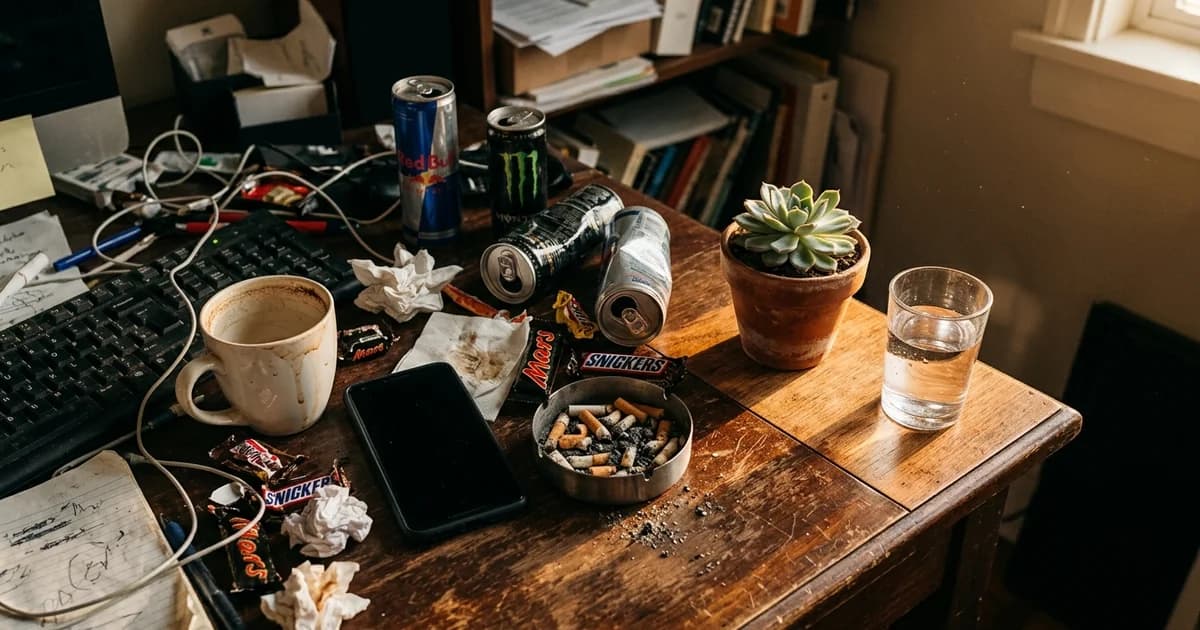
Your alarm goes off. Before your feet hit the floor, your thumb is already scrolling. Instagram, email, news notifications. Each tap fires a tiny burst of dopamine, just enough to keep you reaching for the next one. By the time you pour your third coffee, you're running on fumes and micro-rewards, and the day hasn't even started yet.
These are classic signs of cheap dopamine addiction, the pattern that emerges when your brain's reward system gets hijacked by low-effort, high-frequency stimulation. Psychiatrist Dr. Anna Lembke, author of Dopamine Nation, describes the mechanism in clinical terms: repeated exposure to easy pleasure raises your threshold for satisfaction while lowering your tolerance for discomfort. The result is a brain that needs more stimulation to feel the same baseline level of "okay."
The good news? Your neurochemistry isn't broken. It's plastic. And resetting it takes less time than you think.
Key Takeaways
- Cheap dopamine comes from low-effort, high-frequency rewards (scrolling, vaping, sugar, constant notifications) that desensitize your brain's reward circuitry over time.
- Seven behavioral patterns, from phone-first mornings to chronic context-switching, signal that your dopamine baseline has shifted.
- A fast dopamine reset doesn't require a 30-day detox. Short, intentional breaks paired with the right inputs can recalibrate your reward system in minutes.
- Replacing cheap stimulation with cleaner cognitive inputs (like a nootropic stack built for sustained focus) helps your brain stay productive without the crash.
1. Your Phone Is the First Thing You Touch Every Morning
Nearly 90% of Americans check their phone within the first 10 minutes of waking up, according to a 2023 survey reported by CNBC. That early-morning scroll floods your brain with dopamine before you've done anything that actually matters. The problem isn't the phone itself. It's what it trains your brain to expect: instant reward, zero effort.
When you start the day with passive consumption, you set your neurochemical baseline high. Everything after that, the meeting, the deep work session, the conversation with a colleague, feels flat by comparison. Dr. Lembke's research on the pleasure-pain balance explains why: each hit of easy dopamine is followed by a compensatory dip below baseline, a neuroadaptation that pushes you toward a dopamine deficit state.
Try this: Leave your phone in another room for the first 30 minutes after waking. The discomfort you feel is the reset starting.
2. You Need Three Coffees Just to Feel Normal
One cup of coffee is a tool. Three cups before noon is a dependency signal. When caffeine stops giving you a boost and just gets you to "not terrible," your adenosine receptors have adapted. A study published in Psychoneuroendocrinology found that even moderate caffeine intake (300 mg/day) produced incomplete tolerance, meaning you need more to get the same cortisol and alertness response over time.
This is the caffeine treadmill. You drink more, your receptors downregulate, and you crash harder when it wears off. That 2 p.m. wall? It's not a mystery. It's the predictable result of spiking and crashing your way through the morning.
Typical pattern: 300-400 mg caffeine by noon, diminishing returns by early afternoon, irritability and brain fog by 3 p.m.
3. You Can't Focus on One Thing for More Than a Minute
Gloria Mark, a professor of informatics at UC Irvine, has tracked attention spans for nearly two decades. Her research shows that the average time a person spends on any single screen before switching has dropped to just 47 seconds, down from two and a half minutes in 2004. A 2026 update from the Nielsen Norman Group put the number even lower, at 43 seconds.
This isn't a willpower problem. It's a dopamine problem. Your brain has been conditioned to expect novelty every few seconds, and when it doesn't get it, the discomfort drives you to switch tasks, open a new tab, or pick up your phone. The reward isn't in finishing something. It's in starting something new.
Best for recognizing this sign: Track how many times you switch apps or tabs in an hour. If the number is above 30, your reward circuitry is running the show.
4. The 2 P.M. Crash Hits Like Clockwork
That post-lunch energy collapse isn't just about food. It's a convergence of two forces: natural cortisol decline in the early afternoon and the adenosine buildup that accumulates throughout the day. When you've been running on cheap dopamine hits all morning, scrolling, snacking, vaping, your brain has already burned through its easy-reward budget.
The crash feels physical, but it's neurochemical. Your dopamine system has been overstimulated, and now it's compensating by pulling you below baseline. Most people respond by reaching for more caffeine or sugar, which only deepens the cycle.
What actually helps: A 10-20 minute break from all screens, combined with a short walk or controlled breathing, gives your prefrontal cortex a chance to recover without adding more stimulation debt.
5. Nicotine Is Your Stress Crutch (One of the Biggest Signs of Cheap Dopamine Addiction)
Nicotine is one of the most efficient dopamine delivery systems ever discovered. Research published in Frontiers in Neuroscience shows that when nicotine binds to alpha4beta2 receptors, it directly enhances the firing rate of dopamine neurons in the mesolimbic pathway, the brain's primary reward circuit.
The problem is tolerance. Nicotine builds it fast. Within weeks, you're not vaping to feel good. You're vaping to avoid feeling bad. That's the textbook definition of dependence, and it's also one of the clearest signs of cheap dopamine addiction in action. The relief you feel after a hit isn't pleasure. It's the temporary removal of withdrawal.
Key distinction: Clean cognitive inputs (caffeine paired with L-theanine, for example) support dopamine function without triggering the rapid tolerance cycle that nicotine creates.
6. You're Constantly Context-Switching and Calling It "Multitasking"
Every time you toggle between Slack, your inbox, a spreadsheet, and a text thread, your brain pays a tax. According to a joint study by Qatalog and Cornell University, it takes an average of 9.5 minutes to regain a productive workflow after switching to a different digital app. Gloria Mark's research puts the full recovery time for deep focus at roughly 25 minutes after an interruption.
Context-switching feels productive because each switch delivers a small dopamine hit: new information, new stimulus, new tab. But the net effect is that you spend your entire day in a shallow cognitive state, never reaching the depth where real work happens.
The math: If you switch tasks 40 times in an 8-hour day (a conservative estimate), you're losing over 6 hours to recovery time alone.
7. Nothing Feels Satisfying Anymore
This is the final sign, and the most telling. When you've been running on cheap dopamine for months or years, your hedonic set point shifts. Dr. Lembke describes this as the pleasure-pain balance tipping permanently toward the pain side: your capacity for pleasure decreases while your vulnerability to discomfort increases.
You finish a project and feel nothing. You eat a great meal and immediately reach for your phone. You scroll through content that used to entertain you and feel bored. This isn't depression in the clinical sense (though it can mimic it). It's a dopamine system that has been overdrawn.
A 2024 review published in PMC on dopamine fasting found evidence that abstaining from high-stimulation activities, even briefly, can help the brain recalibrate its reward response. You don't need a 30-day silent retreat. You need intentional, repeated micro-resets.
Quick Comparison: Cheap Dopamine vs. Clean Cognitive Input
| Factor | Cheap Dopamine (Scrolling, Vaping, Sugar) | Clean Cognitive Input (Nootropic Stack) |
|---|---|---|
| Onset | Instant (seconds) | 5-10 minutes (sublingual absorption) |
| Duration | Minutes, then crash | 4-8 hours sustained |
| Tolerance | Builds rapidly | Minimal with compounds like theacrine |
| Crash | Yes, often worse than baseline | No crash when properly formulated |
| Net cognitive effect | Negative (fragmented attention) | Positive (sustained focus, working memory) |
| Dependency risk | High (nicotine, sugar, social media) | Low (non-addictive nootropic compounds) |
How to Reset Your Dopamine in 10 Minutes
You don't need a dopamine detox. The term itself is scientifically misleading, as Harvard Health has pointed out. You can't drain dopamine from your brain, and you wouldn't want to.
What you can do is interrupt the cheap-dopamine cycle and replace it with inputs that support sustained neurochemical balance. Here's a practical 10-minute reset:
- Minutes 0-2: Close all tabs. Put your phone face-down in another room.
- Minutes 2-5: Controlled breathing (4 seconds in, 6 seconds out). This activates your parasympathetic nervous system and reduces the cortisol spike that drives compulsive stimulation-seeking.
- Minutes 5-10: Replace the cheap input with a clean one. This is where a properly dosed nootropic stack outperforms another cup of coffee.
The research supports this approach. A study published in Cureus found that combining caffeine with theacrine (TeaCrine) and methylliberine (Dynamine) improved cognitive performance and reaction time without negatively affecting mood. A systematic review in PMC confirmed that caffeine and L-theanine together enhance cognition more effectively than either compound alone.
The key is pairing moderate caffeine with compounds that smooth out its edges and extend its duration, rather than just stacking more stimulant on top of stimulant.
Frequently Asked Questions
What exactly is "cheap dopamine" and why is it harmful?
Cheap dopamine refers to rewards that arrive with minimal effort: scrolling social media, vaping, eating sugar, or responding to notifications. These triggers fire dopamine in rapid, frequent bursts that your brain quickly adapts to. The result is a higher threshold for satisfaction and a lower tolerance for anything that requires sustained effort. Over time, activities that require patience or concentration stop feeling rewarding at all.
How long does it take to reset your dopamine baseline?
Research on dopamine fasting suggests that even brief periods of abstinence from high-stimulation inputs can produce measurable changes in reward sensitivity. A 2024 PMC review found that short, repeated breaks from overstimulation are more practical than extended detoxes. Most people notice a shift in their baseline mood and motivation within one to two weeks of consistent low-stimulation intervals.
Can you rewire your brain without a full dopamine detox?
Yes. The popular idea of a "dopamine detox" is scientifically misleading, as Harvard Health notes. You don't deplete dopamine by abstaining. What you do is give your receptor sensitivity time to normalize. Short, intentional interruptions to the cheap-dopamine cycle achieve the same recalibration without requiring you to sit in a blank room for 30 days.
Is context-switching really that damaging to focus?
The cognitive cost is documented and meaningful. Gloria Mark's research at UC Irvine found it takes an average of 25 minutes to return to deep focus after an interruption. A joint study from Qatalog and Cornell University put the workflow recovery time at 9.5 minutes per app switch. If you're switching tasks 40 times per day, you're losing the majority of your productive capacity to recovery overhead alone.
What's the difference between nicotine dependence and caffeine dependence?
Both involve adenosine and dopamine pathways, but the mechanisms differ in important ways. Nicotine directly enhances dopamine neuron firing in the mesolimbic reward circuit, building tolerance within weeks. Caffeine primarily works by blocking adenosine receptors, which promotes alertness but doesn't trigger the same reward-circuit activation. Caffeine tolerance is real and worth managing, but the withdrawal profile and dependency risk are considerably lower than with nicotine.
Why does nothing feel satisfying when you're stuck in cheap dopamine patterns?
Dr. Anna Lembke's work on the pleasure-pain balance explains the mechanism. Every dopamine spike is followed by a compensatory dip below baseline. Repeat that cycle often enough, and your hedonic set point shifts. Your baseline mood moves lower, your capacity for pleasure decreases, and your sensitivity to discomfort increases. The anhedonia (inability to feel satisfaction) you experience isn't permanent, but it does require a deliberate break from the stimulus loop to reverse.
Skip the Scroll. Try a Cleaner Signal.
If any of the seven signs above hit close to home, you're not broken. You're just running on the wrong inputs.
Roon was built for exactly this scenario. It's a zero-nicotine sublingual pouch with four nootropic compounds: 80 mg caffeine, 60 mg L-theanine, 25 mg methylliberine (Dynamine), and 5 mg theacrine (TeaCrine). The combination is designed for sustained focus without the jitter-crash cycle that cheap stimulants create. Sublingual delivery means it absorbs in minutes, not the 30-45 minutes you'd wait for a pill or drink to kick in.
No nicotine. No sugar. No tolerance spiral. Just clean, sustained cognitive input that works with your neurochemistry instead of against it.
The next time you catch yourself reaching for your phone, your vape, or your fourth coffee, try replacing that impulse with something your brain can actually use. Give Roon a try and see what focus feels like when it's not borrowed from tomorrow's energy.
By Roon Team