How Roon Compares to Every Nootropic Pouch Brand
Roon Team

Nootropic Pouch Brands Compared: The Complete 2026 Ranking
By Roon Team
Which nootropic pouch brand is best? That depends on whether you need sustained duration, raw caffeine, a caffeine-free option, or the lowest cost per pouch. After benchmarking every major nootropic and energy pouch across five categories, the top three for most buyers are Roon (best for 6-to-8-hour sustained focus), Ultra (best caffeine-free option), and Nectr Focus+ (best nootropic depth per pouch). Below is the full nootropic pouch brand comparison, with real doses, real prices, and honest trade-offs.
The nootropic pouch category doubled in search interest between early 2025 and mid-2026, according to Cyclone Pods. That growth brought a flood of new brands, new formulas, and a lot of marketing noise. If you have six browser tabs open trying to decode label claims, this article will save you the headache.
We scored every brand on five axes: duration of effect, ingredient stack, dose transparency, budget value, and caffeine-free options. No listicle fluff. Just the specs, the science, and where each brand wins or falls short.
Key Takeaways
- Most energy pouches rely on caffeine alone; only Roon, Ultra, and Nectr Focus+ use multi-compound nootropic stacks with disclosed doses.
- Duration ranges from 1-2 hours (Ultra) to 6-8 hours (Roon), depending on the formula.
- Price per pouch spans $0.25 (Nectr Focus) to $1.33 (Roon one-time), so value depends on what each serving actually delivers.
- The best nootropic pouch for you depends on whether you prioritize duration, ingredient depth, caffeine-free delivery, or pure cost efficiency.
Quick Comparison: How Do Nootropic Pouch Brands Compare on Specs?
Every cell below contains a verified number. Where a brand does not disclose a dose, that cell says "undisclosed."
| Brand | Best For | Caffeine (mg) | Key Nootropic Compounds | Dose Transparency | Price/Pouch (approx.) | Duration Claim |
|---|---|---|---|---|---|---|
| Roon | Sustained all-day focus | 80 | 60 mg L-theanine, 25 mg Dynamine, 5 mg TeaCrine | Full disclosure | $1.33 one-time; $0.61 subscription | 6-8 hours |
| Ultra | Caffeine-free focus | 0 (100 mg paraxanthine) | L-theanine, Alpha GPC, Ginseng (doses undisclosed) | Paraxanthine only | ~$0.33-$0.47 | 1-2 hours |
| Nectr Focus+ | Deepest nootropic stack | 50 | 100 mg L-theanine, 85 mg Alpha GPC, 85 mg L-tyrosine, 30 mcg Huperzine A | Full disclosure | ~$0.25-$0.33 | 1-3 hours |
| Mojo | Adaptogen variety | 50 | L-theanine, NALT, Ginseng, Rhodiola, Yerba Mate (doses undisclosed) | Caffeine only | ~$0.40 | Not specified |
| Grinds | Budget caffeine | 25-100 | None (taurine, B vitamins) | Caffeine varies by flavor | ~$0.33 | Not specified |
| Wip | High-caffeine energy | 100 or 200 | L-theanine, B vitamins, chromium | Full disclosure | ~$0.40-$0.60 | Not specified |
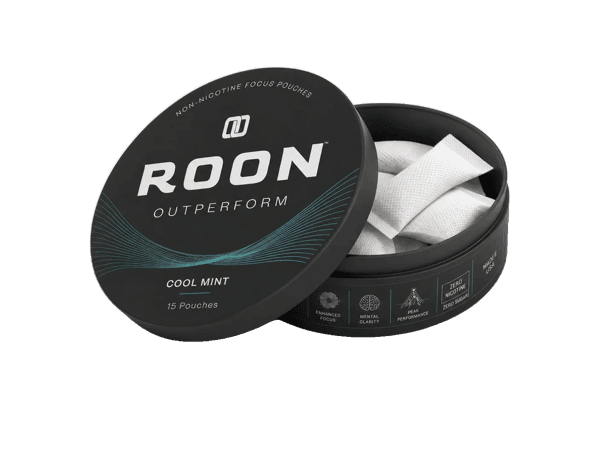 RoonOne pouch RoonOne pouch | 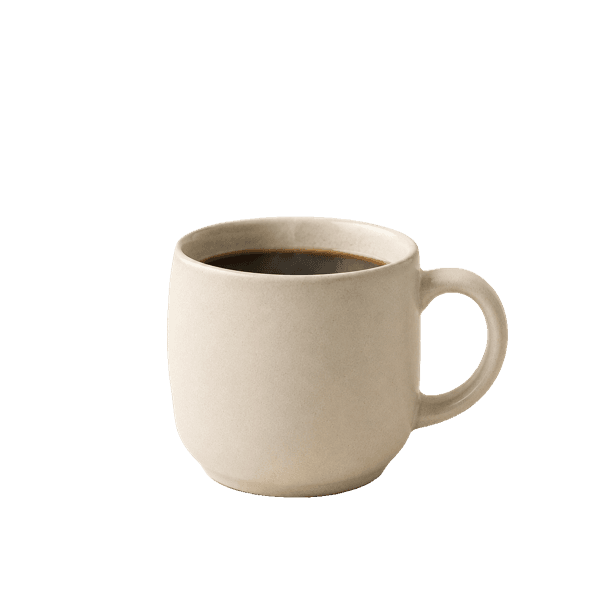 Coffee8 fl oz Coffee8 fl oz | 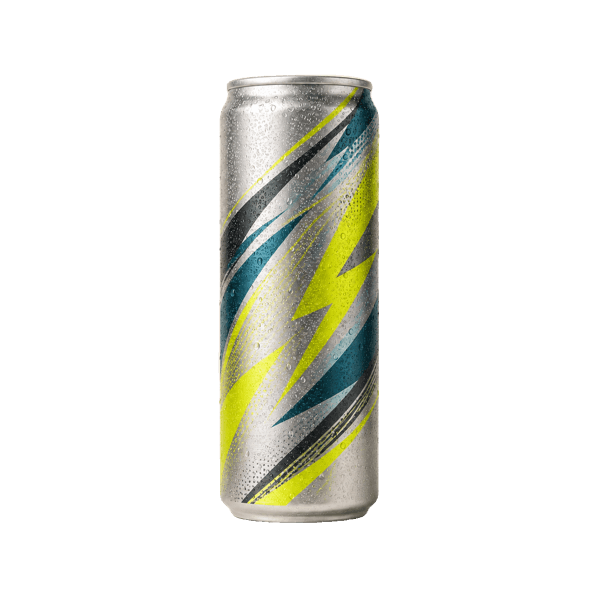 Energy drink8.4 fl oz can Energy drink8.4 fl oz can | 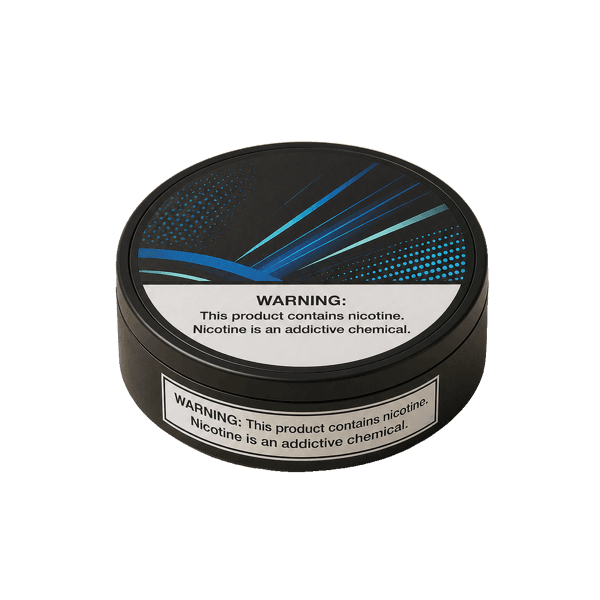 Nicotine pouchOne pouch Nicotine pouchOne pouch |  Other pouchesNon-nicotine Other pouchesNon-nicotine | |
|---|---|---|---|---|---|
| CaffeineCaffeine | 80 mg | ~95 mg | 200–300 mg | 0 mg | 100–200 mg |
| SynergistsSynergists (L-theanine, Dynamine®, TeaCrine®) | Yes | No | No | No | No |
| Fast onsetFast onset (5 to 10 min) | Yes | No | Sometimes | Yes | Yes |
| Lasts 6-8hLasts 6 to 8 hours | Yes | No | No | No | No |
| No crashNo crash or jitters | Yes | No | No | Sometimes | Sometimes |
| No nicotineNo nicotine | Yes | Yes | Yes | No | Yes |
| No sugarNo sugar | Yes | Yes | No | Yes | Yes |
What Is the Best Nootropic Pouch for All-Day Focus?
Roon is the best nootropic pouch for sustained, all-day focus. Its four-compound stack delivers a claimed 6-to-8-hour window from a single pouch, the longest duration in this comparison, because the formula staggers onset and offset across compounds with different half-lives.
Most caffeine pouches give you a spike and a dropoff. That tracks with caffeine's pharmacokinetics: peak plasma concentration hits around 45 minutes, then declines steadily. A single-ingredient caffeine pouch mirrors that curve almost exactly.
Roon's stack works differently. Each pouch contains 80 mg caffeine, 60 mg L-theanine, 25 mg methylliberine (Dynamine), and 5 mg theacrine (TeaCrine). Methylliberine hits fast (onset within minutes). Caffeine builds to peak around 45 minutes. Theacrine extends the tail. A randomized crossover study published in Cureus found that combining caffeine, TeaCrine, and Dynamine improved cognitive performance and reaction time in young male esports players compared to caffeine alone.
Theacrine is the duration play. A placebo-controlled study of 60 healthy adults demonstrated non-habituating effects over 8 weeks of daily use at doses up to 300 mg per day, with no evidence of the rapid tolerance buildup typical of caffeine. That's why Roon claims a 6-to-8-hour window, and why daily users don't report needing to increase their dose.
The honest limitation: Roon is the most expensive pouch in this comparison at $1.33 per pouch one-time ($0.61 on subscription). If duration and tolerance resistance aren't priorities for you, cheaper options below deliver solid value.
Best for: All-day workers, long study sessions, anyone tired of re-dosing every two hours.
Which Nootropic Pouch Has the Best Ingredient Stack?
Nectr Focus+ has the deepest ingredient stack in the category: 7 active compounds per pouch totaling 320+ mg of nootropics. Roon has the best-researched multi-methylxanthine stack for sustained energy. Ultra bets on a single novel compound (paraxanthine). The right choice depends on which mechanism you want.
Here's what each brand actually puts in the pouch:
Nectr Focus+ launched in July 2026 with a 320 mg nootropic stack per pouch: 50 mg caffeine, 100 mg L-theanine, 85 mg Alpha GPC, 85 mg L-tyrosine, 30 mcg Huperzine A, plus B6 and B12. Full dose disclosure on every compound. The Alpha GPC + Huperzine A combination targets acetylcholine synthesis from two directions. At roughly $0.25-$0.33 per pouch, the ingredient-per-dollar ratio is strong. The trade-off: the focus window is 1-3 hours, and 50 mg of caffeine won't move the needle for heavy caffeine users.
Mojo runs a broad formula: 50 mg caffeine from green tea, L-theanine, N-Acetyl-L-Tyrosine, Panax Ginseng, Yerba Mate, Rhodiola, and Eleuthero Root. It reads like an adaptogen sampler. The problem: Mojo doesn't disclose individual doses for anything beyond caffeine. You can't evaluate whether the ginseng or rhodiola is at a clinically relevant amount or just label decoration.
Ultra uses a different active entirely: 100 mg of enfinity paraxanthine, a synthetic caffeine metabolite, plus L-theanine, Alpha GPC, Ginseng, and vitamins B6 and B12. The paraxanthine angle is interesting; it has a shorter half-life than caffeine and a potentially cleaner stimulant profile. But Ultra doesn't disclose individual nootropic doses beyond paraxanthine.
Roon discloses every dose: 80 mg caffeine, 60 mg L-theanine, 25 mg Dynamine, 5 mg TeaCrine. Four compounds, all on the label. The caffeine-to-L-theanine pairing is backed by a systematic review published in Cureus showing the combination improves attention and reduces distractibility. What Roon lacks compared to Nectr Focus+ is cholinergic support (no Alpha GPC, no Huperzine A). Roon's formula is built for duration and energy modulation, not acetylcholine-pathway focus.
Best for label readers: Roon and Nectr Focus+ both offer full dose disclosure. Ultra and Mojo do not.
Which Nootropic Pouch Is the Cheapest?
Nectr Focus pouches cost roughly $0.25 per pouch, making them the cheapest nootropic option. For caffeine-only pouches, Grinds runs about $0.33 per pouch with 30+ flavors and availability at 50,000+ retail stores.
If your priority is cost per pouch and you don't need a multi-methylxanthine stack, Grinds is hard to beat. The brand has been around over 15 years, originally designed as a tobacco-free alternative for baseball players. Their pouches contain actual ground coffee, chicory, and an energy blend of caffeine, taurine, and B vitamins.
Caffeine content varies by flavor, ranging from 25 mg to 100 mg per pouch. Red Eye Espresso tops out at 100 mg. At roughly $0.33 per pouch, Grinds is among the cheapest options in this comparison.
The catch: Grinds is a caffeine pouch, not a nootropic pouch, and the difference between a caffeine pouch vs nootropic pouch comes down to what the formula is built to do. There's no L-theanine, no adaptogens, no focus-specific compounds. You're getting a caffeine delivery mechanism with good flavor variety and a low price tag. That's a fair trade for some people.
Best for: Budget-conscious users who just want caffeine in pouch form.
What Is the Best Caffeine-Free Nootropic Pouch?
Ultra is the best caffeine-free nootropic pouch. Its active ingredient, enfinity paraxanthine at 100 mg per pouch, delivers a stimulant-like cognitive effect without any caffeine. If you already drink two cups of coffee or you're sensitive to stimulants, Ultra fills a gap no other pouch in this comparison covers.
Paraxanthine is what your liver converts caffeine into. It's the metabolite responsible for most of caffeine's alertness benefits but with a shorter half-life. Ultra's formula also includes L-theanine, Alpha GPC, and Panax Ginseng, though individual doses for those compounds are not disclosed.
Ultra's subscription pricing runs around $31/month for 3 cans (45 pouches), working out to roughly $0.33-$0.47 per pouch depending on purchase configuration. The reported duration is shorter than caffeine-based options: Ultra's own site describes sustained focus lasting 1-2 hours after a peak at about one hour. That's a meaningful limitation if you need longer coverage, and it means re-dosing 3-4 times across a full workday.
Best for: Caffeine-sensitive users, late-afternoon dosing, people who already consume plenty of coffee.
Which Nootropic Pouch Has the Most Caffeine?
Wip offers the highest single-pouch caffeine dose in this comparison: 200 mg from green coffee bean extract, roughly equivalent to two cups of coffee. Wip also offers a 100 mg option for users who want less.
The formula includes 200 mg caffeine, B vitamins (Niacin, B6, B12), chromium, and L-theanine. At roughly $0.40-$0.60 per pouch depending on flavor and quantity, the price-per-milligram of caffeine is excellent. The formula is straightforward: big caffeine dose plus basic vitamin support. Wip doesn't pretend to be a cognitive performance product. It's an energy product, and it does that job efficiently.
Wip's suggested retail price is $5.99 per can of 10 pouches, though multi-packs on Amazon bring the per-pouch cost down.
The downside is the same as any high-caffeine, single-compound product. You get the spike, you get the crash, and you build tolerance. There's nothing in the formula to modulate the caffeine curve or extend the effect beyond caffeine's standard half-life of about 5 hours.
Best for: Heavy caffeine users, pre-workout, anyone who needs raw energy and doesn't mind the crash.
Is Nectr Focus+ Worth It for Nootropic Depth?
Nectr Focus+ deserves its own section because it takes a genuinely different approach. Rather than stacking methylxanthines, Nectr Focus+ leads with a 320 mg nootropic stack per pouch: 50 mg caffeine, 100 mg L-theanine, 85 mg Alpha GPC, 85 mg L-tyrosine, and 30 mcg Huperzine A. Full dose disclosure on every ingredient.
The Alpha GPC + Huperzine A pairing targets acetylcholine from two angles: Alpha GPC supplies the choline precursor, and Huperzine A inhibits the enzyme that breaks acetylcholine down. That's a pharmacologically coherent combination for attention and memory support.
Nectr also offers separate Energy pouches (50 mg caffeine) and Zero pouches (no caffeine, no nootropics) for people who just want the oral habit. Pricing for the original Focus pouches starts at roughly $0.25 per pouch for a 20-pouch tin, with the Focus+ line at a slight premium.
The trade-off vs. Roon: Nectr Focus+ has more ingredients per pouch, but a shorter focus window (1-3 hours vs. Roon's 6-8 hours) and lower caffeine (50 mg vs. 80 mg). If you need deep focus for a 90-minute sprint, Nectr Focus+ is well-suited. If you need sustained coverage across a full workday, the shorter duration means re-dosing.
Best for: Users who want a cholinergic-first approach with full dose transparency.
What's Missing Across the Nootropic Pouch Category?
After pulling apart every formula in this focus pouch comparison, a few structural gaps stand out.
Most brands rely on a single active compound. Grinds and Wip are caffeine-only. Ultra bets everything on paraxanthine. Single-compound formulas are simpler to manufacture and market, but they limit what the product can do. Caffeine alone doesn't address the crash. Paraxanthine alone doesn't extend duration past 1-2 hours.
Dose transparency is inconsistent. Mojo lists seven or eight functional ingredients but only discloses the caffeine dose. Ultra discloses paraxanthine but not its nootropic blend amounts. If you can't verify the dose, you can't evaluate whether the ingredient is doing anything. Only Roon, Nectr Focus+, and Wip provide full dose disclosure across all active ingredients.
Duration is the biggest unaddressed problem. Most pouches in this comparison deliver effects that last 1-3 hours. That's fine for a quick pick-me-up, but it means re-dosing 3-4 times throughout a workday. Only formulas that include compounds with longer half-lives or staggered onset profiles can realistically deliver multi-hour coverage without stacking pouches.
Tolerance gets ignored. Caffeine tolerance is well-documented: your body adapts to a consistent dose within 7-12 days of regular consumption. Almost none of these brands include ingredients specifically chosen to counteract that effect. Theacrine is one of the few compounds with published data showing non-habituating properties over 8 weeks of continuous use in 60 subjects, and only Roon includes it.
The Best Nootropic Pouch Depends on Your Use Case
There is no single "best" nootropic pouch. There is the best one for how you actually use it.
Need the cheapest caffeine per pouch? Grinds at $0.33. Want caffeine-free stimulation? Ultra at 100 mg paraxanthine. Looking for the deepest nootropic stack? Nectr Focus+ with 320 mg of active compounds. Need raw energy and don't mind the crash? Wip at 200 mg caffeine.
But if duration, dose transparency, and tolerance resistance are the variables that matter most to you, those three criteria narrow the field fast. The pouch that performs on Day 30 the same as Day 1, without needing to re-dose every two hours, is the one built around staggered methylxanthine pharmacokinetics. And that formula exists in exactly one product in this comparison.
Related from Roon
- What Are Nootropic Pouches?
- Caffeine Pouches vs Nootropic Pouches
- Ultra Focus Pouches Review
- Ultra Pouches Review
Frequently Asked Questions
Are nootropic pouches safe?
Nootropic pouches are dietary supplements, and the ingredients used in most brands (caffeine, L-theanine, B vitamins) have strong safety profiles at standard doses. The FDA considers up to 400 mg of caffeine per day generally safe for most adults. That said, individual tolerance varies. If you're pregnant, nursing, or on medication, check with your doctor before using any caffeinated or stimulant product.
How long do nootropic pouches last?
Duration varies widely by brand. Ultra claims 1-2 hours of focus per pouch. Nectr Focus+ reports 1-3 hours. Roon claims 6-8 hours per pouch due to its staggered methylxanthine stack (caffeine + Dynamine + TeaCrine). Most caffeine-only pouches follow caffeine's standard half-life of about 5 hours, but perceived focus tends to taper well before that.
What is the difference between a caffeine pouch and a nootropic pouch?
A caffeine pouch delivers caffeine and sometimes B vitamins. A nootropic pouch includes additional cognitive-support compounds like L-theanine, Alpha GPC, citicoline, or methylxanthine analogues (Dynamine, TeaCrine). The distinction matters because multi-compound formulas can modulate the caffeine curve, reduce jitters, and extend duration in ways that caffeine alone cannot.
Do nootropic pouches contain nicotine?
None of the brands in this comparison contain nicotine or tobacco. Roon, Ultra, Mojo, Nectr, Grinds, and Wip are all zero-nicotine. The nootropic pouch category exists partly as an alternative to nicotine pouches, offering an oral habit with functional ingredients instead of an addictive substance.
Can you build a tolerance to nootropic pouches?
You can build tolerance to caffeine, the primary active in most pouches. Your body adapts to a consistent caffeine dose within about 7-12 days of daily use. Theacrine (TeaCrine) is one of the few compounds studied for non-habituating effects: a placebo-controlled trial of 60 subjects showed no tolerance buildup over 8 weeks at doses up to 300 mg/day. Roon is the only brand in this comparison that includes theacrine.
Which nootropic pouch has the most caffeine?
Wip tops the category at 200 mg of caffeine per pouch. Grinds' Red Eye Espresso hits 100 mg. Roon delivers 80 mg. Nectr Focus+ has 50 mg. Mojo has 50 mg. Ultra contains zero caffeine (using 100 mg paraxanthine instead).
How much do nootropic pouches cost?
Prices range from $0.25 per pouch (Nectr Focus) to $1.33 per pouch (Roon one-time purchase). Roon's subscription price drops to $0.61 per pouch. Grinds runs about $0.33. Ultra lands at $0.33-$0.47. Mojo is roughly $0.40. Wip ranges from $0.40-$0.60. The lowest sticker price doesn't always equal the best value; what you get per pouch (number of active ingredients, duration of effect, dose transparency) matters.
Are nootropic pouches better than energy drinks?
Nootropic pouches deliver active ingredients sublingually (through the cheek lining), bypassing first-pass liver metabolism for faster onset, typically 5-10 minutes vs. 30-45 minutes for a drink. They also contain zero sugar, zero calories, and no liquid. The trade-off: energy drinks can carry higher total caffeine doses (some exceed 300 mg) and additional amino acids. For portability and controlled dosing, pouches win. For hydration and very high caffeine loads, drinks still have a role.
Why Roon's Focus Window Outlasts Every Other Pouch in This Comparison
Most pouches in this mega-comparison deliver caffeine and let your body clear it on the standard 3-to-4-hour timeline. Roon changes the shape of that curve.
The key is Dynamine (methylliberine, 25mg). In a human pharmacokinetic study, co-administering methylliberine with caffeine reduced caffeine's oral clearance by more than half and extended its half-life from roughly 7 to 15 hours, with no increase in peak concentration. Same peak, longer tail. That is why Roon's 80mg caffeine, a small-coffee dose, produces a felt window of 6 to 8 hours instead of 3 to 4. L-theanine (60mg) smooths the response. TeaCrine (theacrine, 5mg) resists the tolerance buildup that degrades caffeine within weeks of daily use.
The honest trade-off: a longer half-life means you should stop at least 8 hours before bed. And Roon is not the cheapest option at $1.33/pouch ($0.61 subscribed). It contains no adaptogens, no mushroom extracts, no paraxanthine. What it does is hold one pouch's worth of focus across a full workday, Day 1 and Day 30 alike. If duration is the variable you have been underweighting, try Roon.
Written by Roon Team