Roon vs Neuro Mints: Mints vs Pouches for Focus
Roon Team
Roon vs Neuro Mints: Why Pouches Beat Mints for Sustained Focus
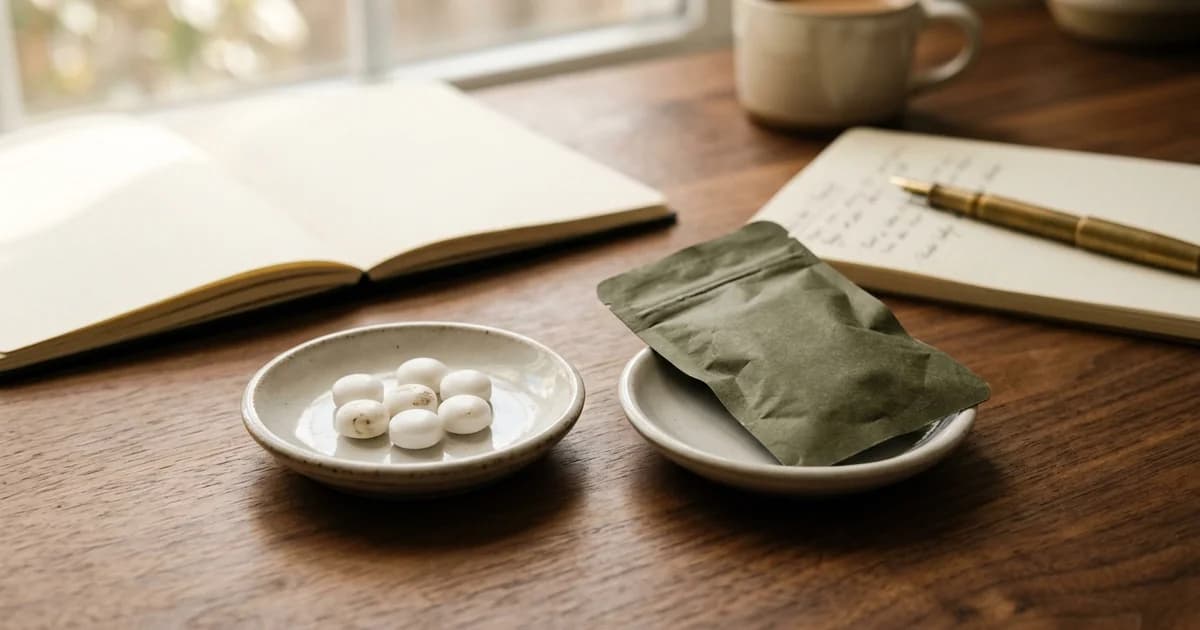
You pop a Neuro Mint, feel a quick buzz, and 45 minutes later you're reaching for another one. Sound familiar? If you've been shopping for caffeine mints to sharpen your focus, you've probably noticed that the effect fades fast and the per-day cost adds up. The Roon vs Neuro Mints comparison comes down to a simple question: do you want a short spike from a dissolving mint, or hours of steady cognitive support from a sublingual pouch?
Neuro Mints are a solid product. They use real ingredients at disclosed doses, and they've earned their shelf space at retailers like CVS, Walmart, and Whole Foods. But the mint format has hard limits that no amount of good formulation can fix. The active compounds dissolve, get swallowed, and hit your gut before they hit your brain. A pouch sits against your gum tissue, delivering ingredients directly into your bloodstream for a longer, smoother ride.
This article breaks down three specific areas where the formats diverge, then identifies what's missing from the caffeine mint category overall.
Key Takeaways:
- Sublingual pouches deliver caffeine through buccal tissue, bypassing the digestive system for faster, more sustained absorption than a dissolving mint.
- A single Roon pouch contains a four-compound nootropic stack; matching that profile with Neuro Mints would require multiple servings plus separate supplements.
- Neuro Mints cost roughly $0.31–$0.35 per mint, and a two-mint serving plus frequent re-dosing can push daily costs higher than a single pouch.
- Theacrine and methylliberine, two compounds absent from Neuro Mints, address the tolerance and crash problems that caffeine alone can't solve.
1. Delivery Method: Why Buccal Absorption Outperforms a Dissolving Mint
This is the core difference in the Roon vs Neuro Mints debate, and it's rooted in pharmacokinetics, not marketing.
When you chew or dissolve a Neuro Mint, some active ingredients absorb through your oral mucosa. But most of the caffeine and L-theanine gets swallowed with your saliva and processed through your GI tract. A 2002 study published in the International Journal of Pharmaceutics found that caffeine delivered via buccal absorption (through gum) reached peak blood levels faster than capsules, with absorption rate constants nearly double those of swallowed formats.
A sublingual pouch works differently. It sits between your lip and gum for 20–30 minutes, keeping the active compounds in constant contact with the buccal membrane. According to Nectr Energy's review of the clinical literature, small molecules like caffeine (molecular weight 194) absorb well through oral mucosa, bypassing first-pass liver metabolism entirely.
The practical result: a pouch delivers a steadier plasma curve. A mint gives you a brief oral absorption window followed by a gut-processed tail. That's why mint users often re-dose every hour or two.
Best for: People who want one dose to carry them through a full work block, not a series of small hits.
2. Duration and Stack Depth: One Pouch vs. 4–6 Mints Per Session
Neuro Mints contain two active nootropic compounds per mint: 40 mg natural caffeine and 60 mg L-theanine (two mints work out to 80 mg caffeine and 120 mg L-theanine). They also include B6 and B12. That's a clean, simple formula, and the caffeine plus L-theanine combination has real science behind it. A systematic review in Cureus confirmed that this pairing supports alertness and attention better than either compound alone.
But caffeine and L-theanine is a two-note stack. Caffeine's half-life runs about 5 hours, but its effective focus window is shorter, typically 1–3 hours before the decline becomes noticeable. That's why Neuro recommends taking no more than 12 mints per day, and many users report consuming 4–6 mints across a workday to stay in the zone.
Roon's pouch adds two more compounds to the mix: Methylliberine (Dynamine™) at 25 mg and Theacrine (TeaCrine™) at 5 mg. A randomized crossover study published in Cureus found that combining caffeine with TeaCrine and Dynamine improved cognitive performance and reaction time in a cohort of 50 young adults, without increasing self-reported anxiety. Methylliberine provides fast onset; theacrine extends the tail. Together with caffeine and L-theanine, they create a layered effect: quick activation, sustained middle, clean finish.
Typical dose: One Roon pouch. One Neuro Mints serving (2 mints) plus re-dosing.
3. Cost Over Time: The Hidden Math of Caffeine Mints vs Pouches
Neuro Mints look affordable at first glance. A 72-piece pack lists at $24.99 on Neuro's own store, which works out to roughly $0.35 per mint. The 12-pack of 144 pieces is $43.98, or about $0.31 a mint, so the range across the catalogue is $0.31 to $0.35. Neuro's store starts at the 72-piece pack; smaller tins turn up in physical retail at prices that vary by store and that we did not verify.
Here's where the math shifts. Two mints match one Roon pouch on caffeine, so a comparable dose costs about double the per-mint price. If you're re-dosing 2–3 times during a focused work session (a common pattern based on the 1–2 hour effective window), you are buying four to six mints a day.
A single Roon pouch is designed to deliver 6–8 hours of sustained cognitive support. Even if you use one pouch per day, you're comparing one unit of cost against 4–6 mints. The best mint pouch for focus isn't always the cheapest per unit; it's the one that keeps you from reaching for another dose an hour later.
| Neuro Mints (Energy & Focus) | Roon | |
|---|---|---|
| Format | Dissolving mint (chew/suck) | Sublingual pouch |
| Caffeine per serving | 80 mg (2 mints) | 80 mg (1 pouch) |
| L-Theanine per serving | 120 mg (2 mints) | 60 mg |
| Additional nootropics | B6, B12 | Methylliberine (Dynamine™) 25 mg, Theacrine (TeaCrine™) 5 mg |
| Designed duration | 1–2 hours per serving | 6–8 hours per pouch |
| Typical daily usage | 4–6 mints (2–3 servings) | 1 pouch |
| Approximate daily cost | $1.24–$2.10 (4–6 mints at $0.31–$0.35) | Cost of 1 pouch |
| Delivery route | Mostly GI (swallowed) | Buccal/sublingual |
| Tolerance compounds | None | Theacrine (non-habituating) |
| Nicotine | None | None |
| Availability | CVS, Walmart, Whole Foods, Amazon | takeroon.com |
4. What's Missing From the Caffeine Mint Category
Neuro Mints do several things right. The ingredients are transparent. The doses are disclosed. The caffeine-plus-L-theanine foundation is backed by multiple controlled trials showing improvements in attention and alertness. If you just want a quick hit of clean energy with a mint you can buy at a gas station, they work.
But the mint format has structural gaps that better ingredients can't fix:
No tolerance solution. Caffeine builds tolerance. After a few weeks of daily use, the same dose produces a weaker effect. That's well-documented pharmacology. Theacrine, by contrast, has shown non-habituating effects over 8 weeks of daily use at doses up to 300 mg in human studies. Neuro Mints don't contain theacrine or any other compound that addresses the tolerance problem.
No layered onset. Caffeine and L-theanine work on similar timelines. There's no fast-onset compound to bridge the gap between "I took it" and "I feel it," and no extended-release compound to stretch the tail. Methylliberine fills the first role; theacrine fills the second. Neither is present in Neuro Mints.
Limited absorption window. A mint dissolves in 2–5 minutes. Once it's gone, absorption shifts to the GI tract. A pouch maintains buccal contact for 20–30 minutes, giving the mucosa more time to absorb active compounds directly. Research from PMC on alternate caffeine delivery confirms that longer buccal contact time correlates with faster and more complete absorption.
These aren't flaws in Neuro's execution, they're limits of the format itself, which is why sustained focus pouch alternatives have gained traction with people who need longer cognitive windows.
5. How Roon Addresses Those Gaps
Roon was built as a nootropic pouch, not a caffeinated candy, and a full nootropic pouch comparison shows how that distinction plays out across brands. The four-ingredient stack targets the specific problems outlined above:
Caffeine (80 mg) provides the baseline stimulant effect, roughly equivalent to one cup of coffee or one Neuro Mints two-mint serving.
L-Theanine (60 mg) smooths caffeine's edges. The combination of L-theanine and caffeine has been shown to improve cognitive performance and subjective alertness in a study using 97 mg L-theanine with 40 mg caffeine in 44 young adults.
Methylliberine/Dynamine™ (25 mg) activates dopamine receptors for a fast-onset boost in perceived energy and motivation. It functions as an adenosine antagonist and dopamine reuptake inhibitor, giving you a noticeable "kick-in" within minutes.
Theacrine/TeaCrine™ (5 mg) extends the duration window and, based on available research, does not build tolerance the way caffeine does. A pharmacokinetic study found that theacrine co-administered with caffeine actually increased caffeine's bioavailability.
The sublingual pouch format keeps these compounds in contact with buccal tissue for the full 20–30 minute session, maximizing the absorption advantage that mints can only partially capture.
Roon isn't perfect. It's only available online (no CVS shelf), it comes in one flavor (Cool Mint), and the taste profile leans more functional than candy. If you want variety and instant retail access, Neuro Mints still win on convenience.
Bottom Line: Choosing Between Mints and Pouches for Focus
If you've been using Neuro Mints and finding yourself re-dosing every couple of hours, the issue probably isn't willpower or caffeine tolerance (though that's part of it). It's the delivery format. A mint dissolves fast, gets swallowed, and processes through your gut. A sublingual pouch sits and delivers, steadily, for 20–30 minutes.
For quick, occasional energy with wide retail availability, Neuro Mints are a reasonable choice. For sustained cognitive work where you need one dose to carry you through a deep focus session, the caffeine mints vs pouches comparison tilts toward pouches.
Try Roon
Roon combines caffeine, L-theanine, methylliberine, and theacrine in a single sublingual pouch designed for 6–8 hours of clean, sustained focus. No nicotine. No cycling required. No re-dosing every hour.
If you're a Neuro Mints alternative shopper looking for something that lasts longer and addresses tolerance, give it a try.
Roon Team