Roon vs Grinds Pouches
Roon Team
Roon vs Grinds Pouches: 5 Reasons Nootropic Pouches Beat Coffee Pouches
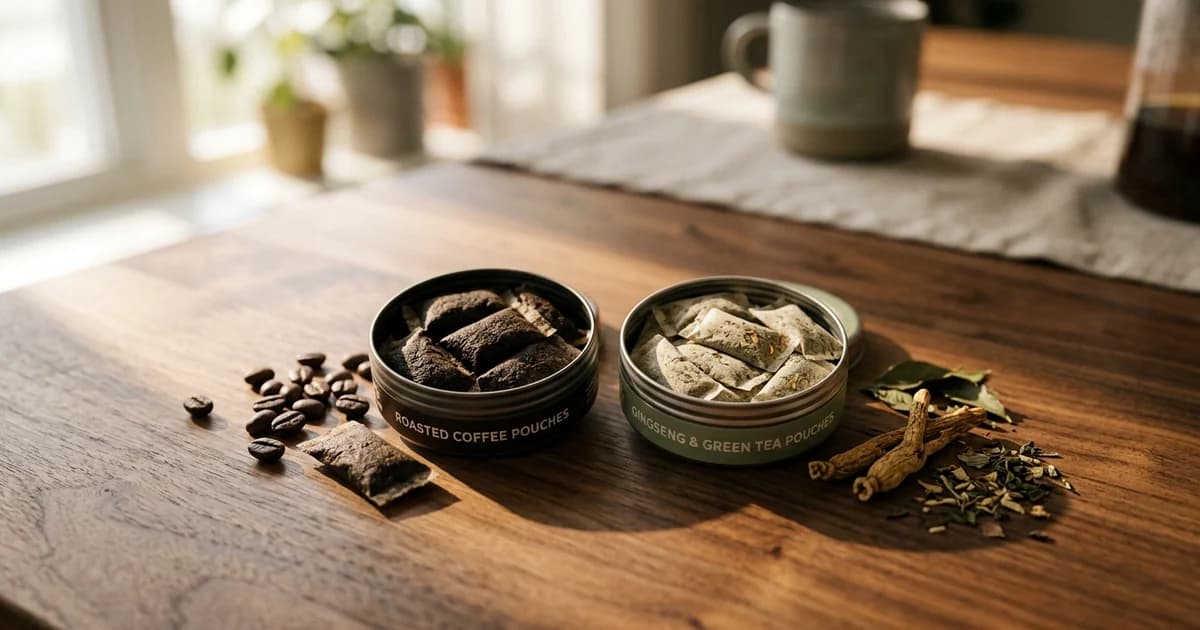
Grinds built the coffee pouch category. They gave dip users a nicotine-free alternative that actually felt familiar in the lip, and they've been doing it for over 15 years. If you're comparing Roon vs Grinds pouches, you're probably already sold on the pouch format itself. The question is whether a coffee pouch or a nootropic pouch is a better tool for focus and energy.
That distinction matters more than most people realize, much like the difference in mints vs pouches for focus that shapes how long any active ingredient actually works. A coffee pouch delivers caffeine through ground coffee. A nootropic pouch delivers caffeine alongside compounds specifically chosen to shape how that caffeine hits, how long it lasts, and whether you crash afterward. Same format, very different engineering.
Here's what the science and the spec sheets actually say.
Key Takeaways:
- Grinds coffee pouches contain 20-100 mg of caffeine per pouch depending on the product line, but no ingredients to smooth the stimulation curve or extend its duration.
- Nootropic pouches pair caffeine with compounds like L-theanine, theacrine, and methylliberine, each backed by peer-reviewed research on cognitive performance.
- Coffee pouches last about 60 minutes per use; a well-designed nootropic stack can sustain focus for hours on a single pouch.
- The grinds vs roon comparison comes down to what you want from a pouch: a dip replacement with a caffeine kick, or a precision cognitive tool.
1. Precision Dosing: 80 mg vs "25-100 mg"
Grinds lists its caffeine content as 25-100 mg per pouch depending on the product. Their standard coffee pouches deliver 25 mg each (about a quarter cup of coffee), while their 4X Charged flavors hit 100 mg. That's a fivefold range across the product line.
The problem isn't that any single number is wrong. It's that caffeine derived from ground coffee is inherently variable. Extraction depends on grind size, moisture, how long the pouch sits in your lip, and your individual saliva production. You're estimating your dose, not controlling it.
Roon's nootropic pouches deliver exactly 80 mg of caffeine per pouch, every time. When you're stacking caffeine with other active compounds, knowing your exact dose isn't a nice-to-have. It's the whole point. A 2021 crossover study on caffeine, TeaCrine, and Dynamine tested precise doses to measure cognitive outcomes. The researchers didn't use "approximately" anything, because dose precision determines whether a stack works or doesn't.
Typical dose: Roon = 80 mg caffeine (fixed). Grinds = 20-100 mg caffeine (varies by flavor and product line).
2. L-Theanine Smooths the Caffeine Curve
Caffeine alone is a blunt instrument. It blocks adenosine receptors, which makes you feel more alert, but it also raises cortisol and can trigger jitteriness at moderate doses. That's the trade-off most coffee pouches accept by default.
L-theanine changes the equation. A systematic review published in Cureus found that the combination of caffeine and L-theanine improved performance on cognitive tasks, including attention and inhibitory control, where caffeine alone actually worsened response times. The combination outperformed either compound in isolation.
Grinds contains no L-theanine. Its energy blend includes B-vitamins, taurine, and glucuronolactone, which are standard energy drink ingredients. Taurine has some evidence for exercise performance, but it doesn't address the jitteriness problem the way L-theanine does.
Roon includes 60 mg of L-theanine per pouch, paired with its 80 mg of caffeine. That ratio is close to what the research consistently uses in cognitive performance trials.
Best for: Anyone who's sensitive to caffeine's anxiogenic effects or who needs calm, sustained attention rather than a raw energy spike.
3. The Tolerance Problem: Theacrine and Methylliberine vs Caffeine Alone
Here's the part most coffee pouch vs nootropic pouch comparisons skip entirely. Caffeine tolerance is real, well-documented, and fast. Regular users need more caffeine over time to get the same effect. If your pouch only contains caffeine, you're on that treadmill whether you like it or not.
Theacrine (TeaCrine) is structurally similar to caffeine but behaves differently at the receptor level. An eight-week safety study found no evidence of tolerance development or habituation in 60 healthy adults taking theacrine daily. That's a meaningful difference for anyone using pouches daily.
Methylliberine (Dynamine) adds another dimension. A randomized crossover trial found that methylliberine improved multiple indices of mood and affect without raising heart rate or blood pressure. And when combined with caffeine and theacrine, a separate study on esports athletes found the three-compound stack improved both cognitive performance and reaction time compared to caffeine alone.
Roon includes 25 mg of Dynamine and 5 mg of TeaCrine (from material standardized to 40% theacrine) alongside its caffeine. Grinds includes neither.
Best for: Daily users who don't want to keep increasing their dose to feel the same effect.
4. Duration: One Pouch, Hours of Focus vs Minutes of Flavor
Grinds states on its product pages that flavor lasts for up to 60 minutes. The caffeine effect from a 25 mg standard pouch is modest, roughly equivalent to a quarter cup of coffee. You'll feel a brief lift, then it fades. Grinds says you can use more than one pouch at a time if you want a stronger kick.
Nootropic pouches are designed around a different model. When caffeine is combined with theacrine and methylliberine, the compounds interact to extend caffeine's effective duration. Theacrine has a longer half-life than caffeine and acts on similar adenosine pathways, which means the cognitive effects taper gradually rather than dropping off a cliff. Roon is designed for sustained focus from a single pouch rather than repeated dosing.
This is the core difference in the caffeine vs nootropic pouches debate. Coffee pouches are built for quick hits. Nootropic pouches are built for sustained performance windows.
5. Clean Format: White Pouch vs Coffee Grounds
This one is straightforward but worth addressing. Grinds coffee pouches contain actual ground coffee and chicory. That's part of their appeal for dip users who want the texture and mouthfeel of tobacco. But it also means a brown pouch, coffee-stained saliva, and visible residue if you spit.
Grinds has addressed this partially with their white energy pouch line, which uses microcrystalline cellulose instead of coffee grounds. These are cleaner, but they also remove the coffee-flavor identity that made Grinds distinctive in the first place.
Roon uses a clean white sublingual pouch. No coffee grounds, no brown residue, no staining. You can use it in a meeting, on a call, or anywhere else without anyone noticing. For professionals who want the cognitive benefits without the visual side effects, the format matters.
Roon vs Grinds: Quick Comparison
| Feature | Grinds Coffee Pouches | Grinds Energy (White) Pouches | Roon |
|---|---|---|---|
| Caffeine per pouch | 25 mg (standard); up to 100 mg (4X) | 25-100 mg | 80 mg (fixed) |
| L-Theanine | No | No | 60 mg |
| Theacrine (TeaCrine) | No | No | 5 mg |
| Methylliberine (Dynamine) | No | No | 25 mg |
| Other active ingredients | B-vitamins, Taurine, Glucuronolactone | B-vitamins, Taurine, Glucuronolactone | None needed |
| Pouches per can/tin | ~18 | 15-18 | 15 |
| Pouch material | Coffee grounds | White (cellulose) | White (sublingual) |
| Flavor duration | Up to 60 min | Up to 60 min | Designed for extended use |
| Nicotine | Zero | Zero | Zero |
| Primary use case | Dip alternative, quick caffeine | Quick caffeine, energy | Sustained cognitive focus |
What's Missing From Coffee Pouches
Grinds does what it set out to do well. It gives former dip users a familiar format with a caffeine kick and zero nicotine. The flavor variety is enormous (30+ options), the price per pouch is low, and the brand has earned trust over 15 years in the market.
But the category has evolved, with paraxanthine-based oral pouches entering a market that once belonged to coffee and nicotine alternatives. If you're shopping for a grinds pouches alternative because you want more than a caffeine delivery vehicle, here are the specific gaps:
No jitter management. Caffeine without L-theanine means you get the full sympathetic nervous system response: elevated heart rate, potential anxiety, restlessness. The research on caffeine-theanine combinations consistently shows the pair outperforms caffeine alone on attention tasks. Grinds doesn't include L-theanine in any product line.
No tolerance solution. Daily caffeine users build tolerance within days. Neither Grinds' coffee pouches nor their white energy pouches contain theacrine or any other compound shown to resist habituation. If you use them every day, you'll need more over time to feel the same effect.
No extended duration design. A single Grinds pouch provides about a quarter-cup-of-coffee's worth of caffeine for roughly an hour. That's fine for a quick pick-me-up, but it's not a sustained focus tool. You'd need to cycle through multiple pouches to cover a full work session.
Variable dosing. When caffeine content ranges from 20 mg to 100 mg across the product line, you're making a flavor choice and a dose choice simultaneously. That makes it harder to find and maintain a consistent daily protocol.
How Roon Fills Those Gaps
Roon was built specifically around the problems that coffee pouches leave unaddressed. The four-ingredient stack, 80 mg caffeine, 60 mg L-theanine, 25 mg methylliberine, and 5 mg theacrine, targets each gap directly.
The L-theanine smooths caffeine's stimulatory effects, promoting calm focus instead of jittery alertness. The theacrine provides cognitive support without building tolerance, so the pouch works as well on day 60 as it does on day one. The methylliberine supports mood and motivation while working together with caffeine and theacrine to extend the performance window beyond what caffeine achieves alone.
Is Roon more expensive per pouch than Grinds? Yes. At $15.00 per tin of 15 pouches (one-time 4-tin bundle) or from $9.16 per tin on subscription, you're paying $1.00 per pouch one-time, or as low as $0.61 per pouch subscribed, compared to Grinds' lower per-pouch cost. But you're also using one pouch where you might otherwise use three or four Grinds pouches across a work session. The cost comparison shifts when you factor in usage frequency.
Roon isn't a dip replacement. It's not trying to replicate the mouthfeel of chewing tobacco or offer 30 flavors. It's a single-flavor (Cool Mint), precision-dosed cognitive tool designed to do one thing well: support sustained focus without the crash, the jitters, or the tolerance buildup.
Bottom Line
If you're quitting dip and want something that feels like what you're used to, Grinds is a solid choice. It's affordable, widely available, and the flavor selection is unmatched.
If you've moved past the dip-replacement phase and want a pouch that's engineered for cognitive performance, a sustained focus pouch comparison covers exactly what to look for in a formula that pairs caffeine with other active compounds. That's the gap Roon was designed to fill.
Try a tin and see how it compares to what you're using now. Give it a try.