Rogue Nicotine Lozenges: What You Need to Know Before You Buy
Rogue Nicotine Lozenges: What You Need to Know Before You Buy
Rogue nicotine lozenges have carved out a loyal following among people looking for a discreet, tobacco-leaf-free way to get their nicotine fix. They're small, they dissolve in your mouth, and they don't require spitting. Simple enough. Start with the awkward part, though: Rogue no longer lists a lozenge on roguenicotine.com. Its own catalogue now runs to pouches, Rogue Max and gum, so every flavor and strength below comes from third-party reviews and retailers rather than from the brand.
But "simple" doesn't mean there aren't things worth understanding before you crack open that metal tin. This is a full breakdown of what rogue nicotine lozenges actually are, how they work, what's inside them, and whether they're the right choice for what you're actually trying to accomplish.
Key Takeaways:
- Rogue publishes no lozenge page on its own site, so the flavor, strength and tin-count figures below come from third-party reviews rather than from the brand.
- They contain nicotine polacrilex, not tobacco leaf, and are marketed as a recreational nicotine product, not a cessation aid.
- Nicotine, regardless of the delivery method, carries real dependency risks and side effects.
- If your goal is cognitive performance rather than nicotine consumption, there are zero-nicotine alternatives designed specifically for that purpose.
What Are Rogue Nicotine Lozenges?
Rogue is an American brand owned by Rogue Holdings, LLC, a joint venture between Swisher International and PLD Acquisitions (operating as Avema Pharma Solutions). The brand launched in 2018 and has since expanded into pouches, Rogue Max and Rogue nicotine gum, which is what its site sells today. Neither tablets nor lozenges appear in its current catalogue.
According to Vaping360's product review, rogue nicotine lozenges come in three flavors: peppermint, wintergreen, and citrus, with nicotine concentrations of 2mg and 4mg, and each tin holds 20 sugar-free lozenges. That is a reviewer's account, not a current label claim, because Rogue publishes no lozenge page to check it against.
Unlike NRT (nicotine replacement therapy) products like Nicorette, Rogue is not marketed as a quitting aid, but rather an alternative to combustible tobacco products. Rogue nicotine lozenges are a recreational nicotine product. That distinction matters, because it shapes who the product is for and how it's positioned.
How Rogue Nicotine Lozenges Work
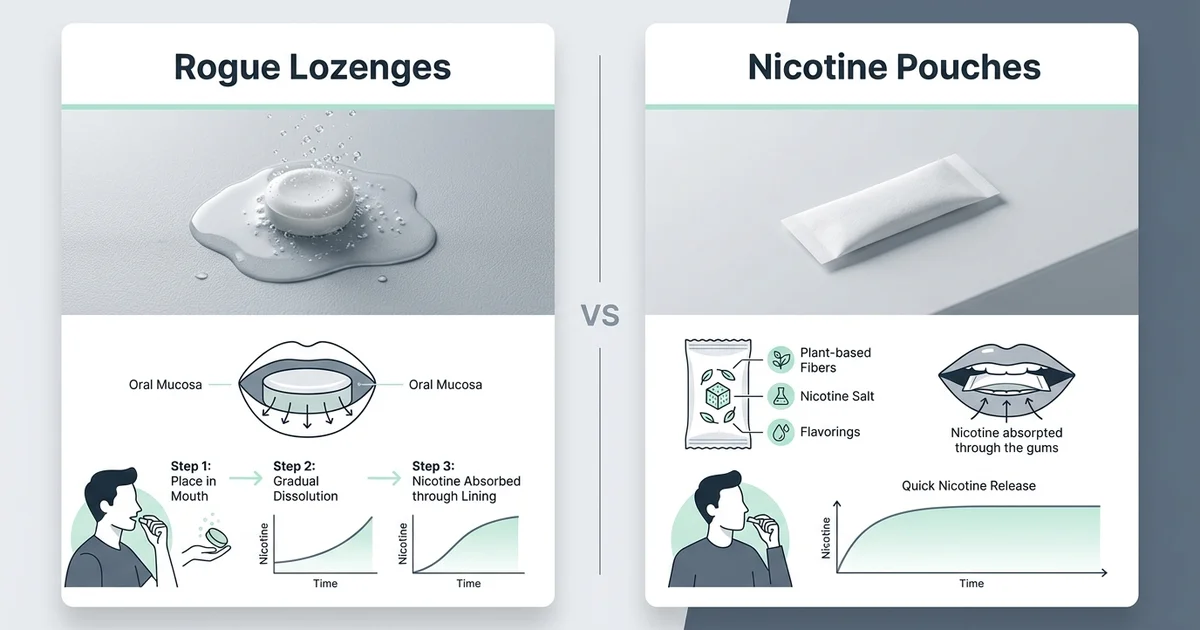
The active ingredient in rogue nicotine lozenges is nicotine polacrilex, an ion-exchange resin that binds nicotine and releases it slowly when it contacts the moist tissue inside your mouth. You don't chew or swallow the lozenge. Instead, you place it between your gum and cheek and let it dissolve.
Each lozenge dissolves in around 20 to 30 minutes. During that window, nicotine absorbs through the oral mucosa and enters your bloodstream. The onset is slower than smoking or vaping but faster than a nicotine patch.
Rogue nicotine lozenges are spit-free, stain-free, and sugar-free. They use acesulfame potassium (Ace-K) as an artificial sweetener, along with food-grade flavorings and texture agents. No tobacco leaf is involved at any stage.
One practical note: don't eat or drink for 15 minutes before using rogue nicotine lozenges. Acidic beverages like coffee or soda can reduce nicotine absorption through the oral lining, which means you'd get less effect from the same dose.
Rogue Nicotine Lozenges: Flavors and Strengths
Here is the lineup as that third-party review describes it:
| Flavor | Available Strengths | Lozenges Per Tin |
|---|---|---|
| Peppermint | 2mg, 4mg | 20 |
| Wintergreen | 2mg, 4mg | 20 |
| Citrus | 2mg, 4mg | 20 |
According to Nicokick, the most popular option is the Rogue Citrus 4mg.
The flavor range for rogue nicotine lozenges is narrower than Rogue's pouch lineup, which offers 11 flavors according to Tobacco Insider. If you want more variety, the pouches are where Rogue puts most of its attention. But for a lozenge, three solid flavors covers the basics: cool mint, sharper mint, and something different.
The 2mg option works for lighter nicotine users or people stepping down from a higher strength. The 4mg is the more popular choice and delivers a noticeable buzz, especially if you're not a heavy nicotine user already.
Who Uses Rogue Nicotine Lozenges (And Why)
The typical rogue nicotine lozenges user falls into one of a few camps:
- Former smokers or vapers looking for a cleaner nicotine delivery method without the combustion or vapor.
- Current nicotine pouch users who want a different format that doesn't sit between the lip and gum.
- People who want a discreet nicotine option for situations where pouches or gum might feel conspicuous.
A study published in Tobacco Control found that manufacturer marketing heavily emphasizes the discreet nature of these products. Rogue nicotine lozenges lean into the same positioning.
Here's the thing: a growing number of people have started using oral nicotine products not to quit smoking, but as standalone stimulants for focus or energy. That's a different use case entirely, and it comes with a different set of trade-offs.
The Side Effects You Should Know About
Nicotine is nicotine, regardless of the packaging. According to MedicineNet, common side effects of nicotine lozenges include palpitations, irregular heart rhythm, rapid heart rate, dizziness, increased blood pressure, oral irritation, sore throat, hiccups, heartburn, nausea, and sleep disturbance.
The Cleveland Clinic lists more serious reactions to watch for, including allergic responses (skin rash, swelling of the face or throat) and heart palpitations.
The CDC's guidance on nicotine lozenges recommends not using more than 5 lozenges in a 6-hour window. As MedlinePlus notes, using too many lozenges at a time or one after another can cause hiccups, heartburn, and nausea.
These guidelines were written for NRT lozenges, but the active compound in rogue nicotine lozenges, nicotine polacrilex, is the same. The pharmacology doesn't change because the branding is different.
Dependency Is the Bigger Conversation
Side effects are one thing. Dependency is another.
Nicotine is one of the most addictive substances in common use. Research published on PubMed found that chronic nicotine exposure produces tolerance, shown by reduced responsivity to acute nicotine over time. In plain terms: the more you use, the less you feel, and the more you need to feel the same thing.
A 2023 review on oral nicotine pouches found that these products can deliver nicotine at levels sufficient to cause dependence.
This isn't a scare tactic. It's pharmacology. If you're using rogue nicotine lozenges recreationally for a mental boost, you're signing up for a dependency curve that will eventually require more nicotine to produce the same effect.
Rogue Nicotine Lozenges vs. Rogue Pouches: What's the Difference?
People often confuse rogue nicotine lozenges with their pouches, but how Rogue pouches differ is worth understanding on its own terms.
| Feature | Rogue Lozenges | Rogue Pouches |
|---|---|---|
| Format | Small tablet that dissolves | Soft pouch placed under the lip |
| Nicotine Strengths | 2mg, 4mg | 3mg, 6mg |
| Flavors | 3 (Peppermint, Wintergreen, Citrus) | 11 |
| Duration | 20-30 minutes | Up to 60 minutes |
| Pieces Per Container | 20 | 20 |
The pouches deliver more nicotine per unit and last longer. Rogue nicotine lozenges are more discreet and leave no residue in the mouth after they dissolve. Your choice depends on whether you want a longer, stronger experience or a quicker, lighter one.
There's also a texture difference. Pouches sit against the gum and can cause irritation at the contact point, especially with regular use. Rogue nicotine lozenges dissolve completely, so there's no sustained pressure on one spot in your mouth. If gum sensitivity is an issue for you, the lozenge format may be easier to tolerate.
Availability is the bigger split now. Rogue pouches are stocked widely and listed on Rogue's own site. The lozenges are not, so what you find is whatever third-party retailers still have on hand. That makes this less a budget decision than a question of what is actually on the shelf.
The Real Question: What Are You Actually After?
This is where it's worth stepping back from the product specs.
If you're a current nicotine user looking for a tobacco-free format, rogue nicotine lozenges do what they promise. They deliver nicotine cleanly and discreetly. No complaints there.
But if you landed on this page because you're searching for something to sharpen your focus during a long workday, help you lock in during a study session, or give you a mental edge without the baggage of nicotine dependency, then the question isn't really about rogue nicotine lozenges. It's about whether nicotine is the right tool for the job.
Nicotine does produce short-term cognitive effects. It can temporarily improve attention and reaction time. But those benefits come packaged with tolerance buildup, withdrawal symptoms, and a dependency cycle that gets harder to break the longer it continues. For a productivity tool, that's a bad trade.
The math is straightforward. Week one, a single 4mg lozenge gives you a noticeable lift. By month three, you might need two or three to feel the same thing. By month six, you're not using nicotine for performance anymore. You're using it to feel normal. That's the dependency curve in action, and no amount of clever branding changes the underlying chemistry.
A Different Approach to Cognitive Performance
Roon was built for the people asking that second question. It's a sublingual pouch, similar in format to nicotine pouches, but it contains zero nicotine. Instead, it uses a stack of caffeine (80 mg), L-theanine, theacrine, and methylliberine, four compounds chosen specifically for sustained cognitive performance.
The caffeine (~80 mg, comparable to a cup of coffee) provides alertness. L-theanine smooths out the jittery edges that caffeine alone can cause. Theacrine and methylliberine extend the duration of focus without the tolerance buildup that nicotine creates. The result is 6 to 8 hours of clean, sustained focus, no crash, and no nicotine.
If you've been reaching for rogue nicotine lozenges because you want to think more clearly, Roon addresses that goal directly, without the side effects or the exit strategy you'll eventually need.