Oral Fixation: What It Really Is, Why Your Brain Does It, and What to Do About It
Roon Team
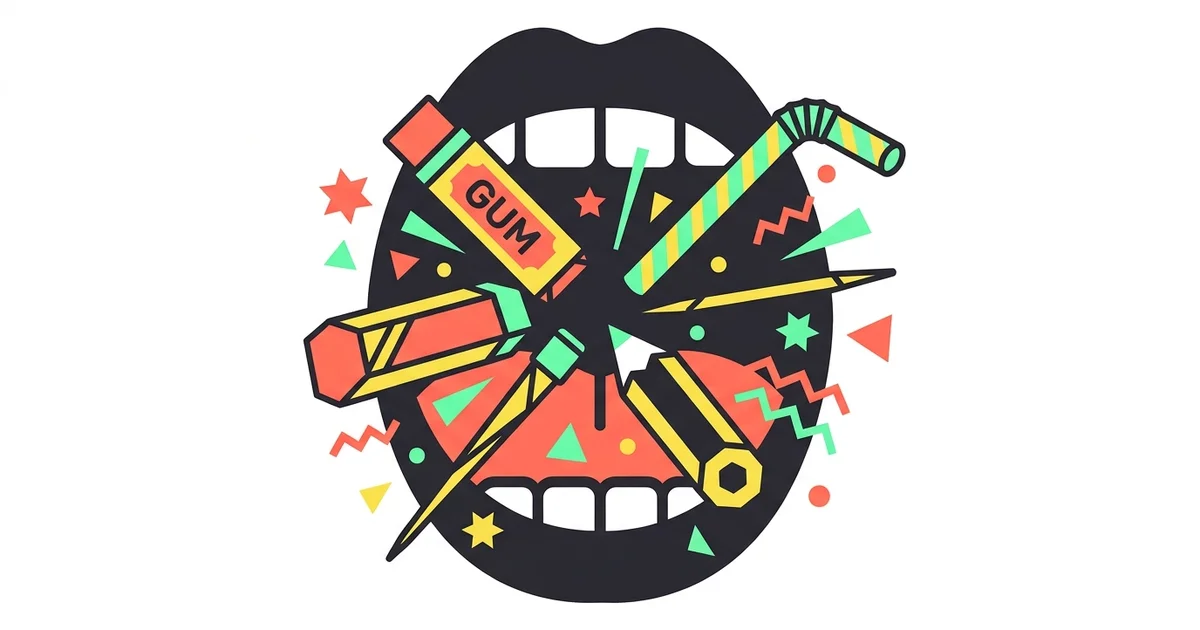
Oral Fixation: What It Really Is, Why Your Brain Does It, and What to Do About It
You're clicking a pen cap between your teeth during a meeting. Chewing the inside of your cheek while reading an email you do not want to answer. Reaching for a snack you are not even hungry for because your mouth just needs something to do. That's oral fixation, and it is far more common than most people realize.
The term gets thrown around casually, usually as a joke about someone who cannot stop snacking or biting their nails. But oral fixation has real roots in psychology, real neuroscience behind it, and real consequences when it goes unchecked. It also has real solutions --- ones that go beyond "just stop doing that."
Key Takeaways
-
Oral fixation comes from Freud's theory of psychosexual development, but modern neuroscience helps explain why oral habits can persist into adulthood.
-
Common oral fixation behaviors include nail biting, pen chewing, smoking, snacking, and lip biting, often triggered by stress or boredom.
-
The brain's reward system can reinforce oral behaviors through dopamine release, which is part of what makes them hard to quit.
-
Redirecting the fixation toward something functional, rather than simply trying to suppress it, is often the more effective strategy.
What Is Oral Fixation? The Definition Beyond the Buzzword
The meaning of oral fixation traces back to Sigmund Freud's theory of psychosexual development. Freud proposed that the first stage of personality development --- the oral stage --- lasts from birth to roughly 18 months. During this period, an infant's main source of comfort and stimulation comes through the mouth: nursing, sucking, tasting, and chewing.
According to Freud, if a child's oral needs were either not fully met or overly indulged during this stage, that unresolved tension could carry into adulthood. That carryover is what he called an oral fixation.
Here's the formal oral fixation definition: a persistent, often unconscious preoccupation with oral stimulation that manifests as repetitive mouth-related behaviors in adulthood. Think nail biting, smoking, excessive snacking, pen chewing, gum chewing, or lip biting.
Now, Freud's broader psychosexual theory has its critics. Large parts of it haven't held up under modern scientific scrutiny. But the core observation --- that many adults develop persistent oral habits tied to comfort and stress regulation --- is well-documented. The why has just gotten a significant update.
Oral Fixation Psychology: What Modern Neuroscience Actually Says
Freud didn't have access to brain imaging. We do.
The reason oral habits feel so satisfying isn't just psychological. It's neurochemical. Researchers at Neuroscience News reported on a study that found sensory input from teeth and jaw connects directly to the brain's reward center, triggering dopamine release during repetitive oral behaviors. That's the same neurotransmitter involved in everything from eating chocolate to checking your phone.
This means your pen-chewing habit isn't a character flaw. It's your brain running a well-worn loop: stress signal in, oral behavior out, dopamine reward delivered. Over time, that loop becomes automatic.
A study published in BioMed Research International found that chewing can activate the dopaminergic system in the hippocampus, helping to suppress stress-induced anxiety. Chewing literally changes the chemical environment of your brain in a way that reduces the stress response.
Research published in Frontiers in Neuroscience showed that oral activity sends flavor and sensory information to the brain's reward system, including the nucleus accumbens, midbrain dopamine areas, and the amygdala. These are the same regions that light up during other pleasurable, reinforcing behaviors.
So the modern oral fixation psychology framework looks something like this: early comfort patterns wire the brain to associate oral stimulation with safety and reward. Stress and anxiety reactivate those circuits. The behavior persists because it works --- at least in the short term.
Common Oral Fixation Habits (And How Prevalent They Are)
If you've ever wondered what is an oral fixation in practical terms, here's what it looks like in everyday life:
| Habit | Trigger | Prevalence |
|---|---|---|
| Nail biting | Stress, boredom, concentration | 20-30% of the general population |
| Pen/pencil chewing | Focus, anxiety | Common but understudied |
| Lip/cheek biting | Stress, nervousness | Classified as a body-focused repetitive behavior |
| Smoking/vaping | Stress, social cues, addiction | ~11.6% of U.S. adults (CDC) |
| Excessive snacking | Boredom, emotional regulation | Widespread |
| Gum chewing | Focus, oral stimulation | Widespread |
| Thumb sucking (adults) | Comfort, sleep | Rare but documented |
Nail biting alone affects a staggering number of people. According to data reviewed in a SAGE journal study, the prevalence of nail biting across various populations ranges from 3% to as high as 46.9%, with the highest rates found among medical students. Stress clearly plays a role.
These behaviors fall under what clinicians call body-focused repetitive behaviors (BFRBs). The TLC Foundation and clinical literature note that 62% of nail biters in one study reported the behavior occurring between ages 18 and 39, with the rate dropping to about 24% after age 40. It's not just a childhood thing. For many people, it's a decades-long pattern.
Why Oral Fixation Gets Worse Under Stress
This is where it starts to make more sense. Oral fixation isn't random. It usually shows up in certain moments, especially when stress is high.
As Tides Mental Health explains, the mouth is packed with nerve endings, so oral activity sends strong signals to the brain that can temporarily drown out feelings of worry. That quick sense of relief is what makes chewing, biting, or sucking feel so effective in the moment, even though it doesn't actually solve the anxiety underneath.
Basically, your brain learns fast, and for oral habits and ADHD brains this loop can run especially deep. When you're stressed, mouth-related habits offer relief that is immediate, familiar, and easy. So the brain takes note and keeps going back to it. After enough repetition, the behavior becomes automatic. You may not even realize you're doing it.
Think about a high-pressure workday. You start at 9 AM with perfectly fine nails. By lunch, a few of them are already torn up. It usually doesn't happen because you consciously decided to bite them. You didn't stop and think it through. It just happened, almost on autopilot, triggered by the same stress response that makes your jaw tighten or your leg shake under the table.
Mental Health Modesto notes that over time, the brain learns that actions like chewing or sucking bring relief, and eventually that pattern becomes automatic. The more stress builds, the more necessary those oral habits can start to feel. That's why this habit is not really about weakness. It's a learned self-soothing response that your nervous system may have been reinforcing for years, maybe even decades.
This is also why telling someone to "just stop biting your nails" usually doesn't work. It's about as helpful as telling someone to "just stop being stressed." What you're dealing with is not simply a bad choice. It's a deeply ingrained pattern your brain has learned to use for comfort.
What Is Oral Fixation Really Costing You?
Most oral fixation habits seem harmless. Some aren't.
Dental damage is the most obvious cost. Chronic nail biting can crack teeth, damage enamel, and introduce bacteria into the mouth. Pen chewing wears down tooth surfaces. Cheek biting can cause tissue damage and chronic irritation.
Smoking and nicotine pouches represent the most dangerous form of oral fixation. What starts as an oral comfort behavior gets hijacked by nicotine's addictive properties. Now you're dealing with two overlapping loops: the oral fixation loop and the nicotine dependency loop. Quitting becomes exponentially harder because you have to break both simultaneously, which is why so many ex-smokers turn to gum, toothpicks, or snacking. They've addressed the chemical dependency but not the oral one. The mouth still wants something to do, and that unaddressed need is what pulls people back.
Mindless snacking driven by oral fixation rather than hunger contributes to excess caloric intake. If your mouth wants stimulation and you give it chips, your waistline pays the price for a neurological itch.
Social and professional costs are real too. Nail biting in a client meeting, pen chewing during a presentation, constant snacking at your desk. These habits shape how others perceive you, even if they shouldn't.
How to Manage Oral Fixation (Strategies That Actually Work)
The worst advice for oral fixation is "just stop." The best advice is "redirect."
Your brain wants oral stimulation. Fighting that drive head-on usually fails. Working with it, by giving your mouth something better to do, succeeds far more often.
1. Recognize Your Triggers
Before you can redirect, you need to know when the behavior happens. Track it for a week. When do you reach for gum, start biting your nails, or chew on a pen? You'll almost certainly find patterns: specific meetings, certain times of day, particular emotional states.
2. Substitute, Don't Suppress
Research supports the substitution approach. Le Sueur Family Dental recommends replacing harmful oral fixation habits with healthier alternatives, such as sugar-free gum or crunchy vegetables, rather than trying to eliminate the oral behavior entirely.
The key is finding a substitute that satisfies the same neurological itch without the downsides.
3. Address the Underlying Stress
Since stress is the primary accelerant for oral fixation behaviors, managing stress directly reduces the intensity of the urge. Exercise, sleep quality, and structured breaks during the workday all lower baseline stress levels. As Dr. Michael's Dental Clinic notes, techniques such as deep breathing and physical activity can provide alternative pathways for managing the stress that fuels oral habits.
4. Use the "Upgrade" Framework
This is where the strategy gets interesting. Instead of replacing a harmful oral habit with a neutral one, such as oral fixation tools for focus like plain toothpicks, what if you replaced it with something actively beneficial?
A study on chewing gum and cognitive function found that gum chewing during the workday was associated with fewer self-reported cognitive problems. Research published in the journal Nutritional Neuroscience found that chewing gum produces benefits including improved aspects of cognitive function and mood, and that these effects were generally observed across contexts, not limited to specific situations.
A separate study published in Stress and Health went further, concluding that chewing gum is thought to increase focus through a reduction in stress and anxiety, and that it may contribute to improved short-term memory.
The principle: your mouth wants to do something. Give it something that gives back. The best oral fixation substitute isn't just harmless. It's useful.
The Oral Fixation Spectrum: When It's Normal vs. When to Get Help
Most oral fixation behaviors are harmless. Chewing gum or chew-based oral substitutes when you're on a deadline, biting on a pen while you think, popping a mint during a long drive, these are all pretty normal behaviors that just happen to involve the mouth.
But there's a point where it stops being harmless. If an oral habit is causing clear physical damage like bleeding cuticles, cracked teeth, or sores in your mouth, if it feels compulsive and hard to control, or if it's starting to affect your day-to-day life, it's worth talking to a mental health professional.
Healthline notes that in Freudian psychology, oral fixation has been linked to addiction and substance abuse patterns. While the Freudian framework is debated, the clinical observation holds: persistent oral behaviors can sometimes signal deeper anxiety, OCD-spectrum conditions, or other issues that benefit from professional support.
That distinction matters. Chewing gum while you focus is a habit. Chewing your lip until it bleeds every time you're anxious is something more serious.
For most people, though, oral fixation sits somewhere in the middle. Not severe enough to feel clinical, but not completely insignificant either. It may show up as a small source of embarrassment, an annoying habit, or a gateway to behaviors like nicotine use or stress eating that come with real long-term consequences. And for a lot of people in that gray area, the answer isn't therapy. It's finding a better outlet.
A Smarter Way to Satisfy the Fix
Here's the practical takeaway: oral fixation is real, it's neurologically driven, and it usually doesn't disappear just because you decide you want it gone. What tends to work better is redirection --- giving your brain the oral stimulation it's looking for, while being more intentional about what comes with it.
That's the thinking behind Roon. It's a zero-nicotine sublingual pouch built with a stack of caffeine (80 mg), L-theanine, theacrine, and methylliberine that delivers 6 to 8 hours of sustained focus without jitters, crashes, or tolerance buildup. It satisfies the oral fixation need, the physical act of having something in your mouth, while actively supporting cognitive performance instead of feeding a nicotine habit or empty calories.
If your mouth is going to demand something anyway, it might as well be something that works for you.