7 Reasons Nootropic Pouches Are Replacing Energy Drinks in 2026
Roon Team
7 Reasons Nootropic Pouches Are Replacing Energy Drinks in 2026
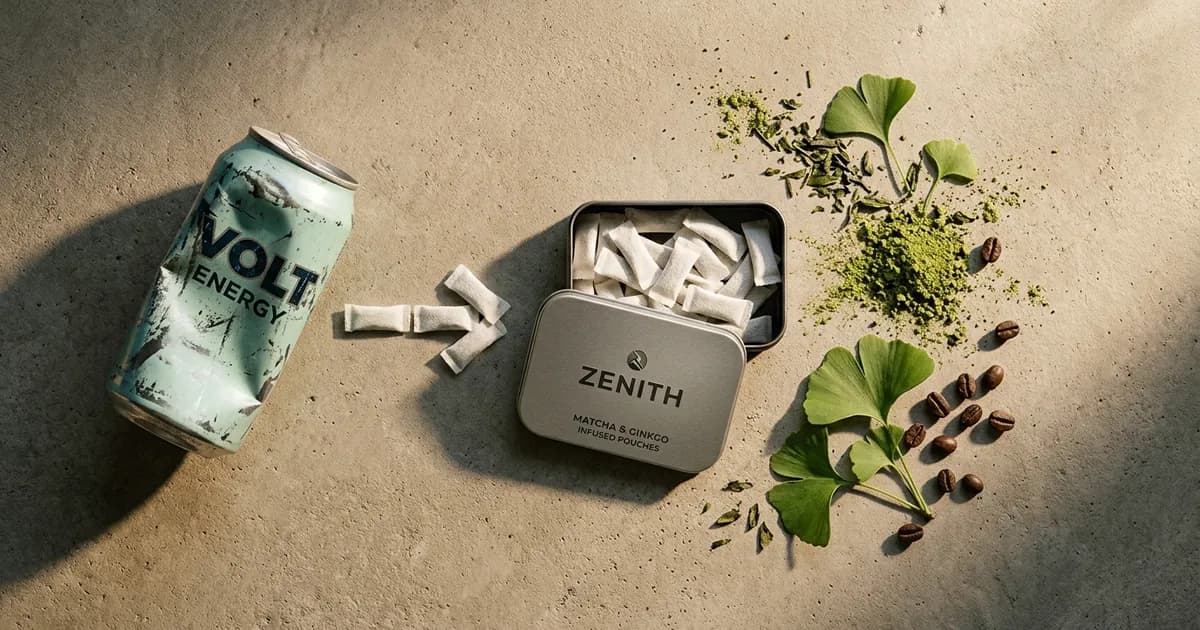
You're spending $4 on a 16-ounce can of liquid sugar that gives you two hours of focus and a headache by 3 PM. That's the pitch the energy drink industry has been selling for two decades. But a growing number of people are ditching the can entirely, and the shift from nootropic pouches vs energy drinks isn't theoretical anymore. It's already happening.
The concept is simple: a small, sublingual pouch packed with compounds like caffeine, L-theanine, and methylxanthine derivatives that absorb through your oral mucosa and into your bloodstream, no digestion required. No 16 ounces of carbonated liquid. No sugar crash. No waiting 45 minutes to feel anything.
Here are seven specific reasons this swap is picking up speed, and why the data backs it up.
Key Takeaways:
- A single Monster Energy can contains 54 grams of sugar, more than the American Heart Association recommends for an entire day.
- Sublingual pouches deliver caffeine to your bloodstream in 5 to 15 minutes, compared to 20 to 60 minutes for a swallowed drink.
- Theacrine, a compound found in advanced nootropic pouches, showed no tolerance buildup over eight weeks of daily use in a published clinical trial.
- The best nootropic pouches combine multiple compounds for sustained cognitive performance at a fraction of the cost per serving of canned energy drinks.
1. Zero Sugar vs. a Full Day's Worth in a Single Can
The sugar content in mainstream energy drinks is staggering when you actually read the label. A standard 8.4 fl oz Red Bull contains 27 grams of sugar. Scale up to a 16 oz Monster Energy, and you're looking at 54 grams of sugar per can, which exceeds the American Heart Association's recommended daily limit for both men and women.
That sugar isn't giving you focus. It's giving you a glucose spike followed by a crash. A study published in PMC found that young adults who consumed sugar-sweetened caffeinated drinks experienced a sharp increase in blood glucose and insulin levels within 20 to 30 minutes.
Nootropic pouches contain zero sugar. Zero. The energy comes from caffeine and supporting nootropic compounds, not from 14 teaspoons of sucrose. If you're looking for a real energy drink alternative in 2026, the sugar question alone should settle it.
2. Sublingual Absorption Gets Compounds to Your Brain Faster
Here's the mechanical problem with energy drinks: you swallow them. That means the caffeine has to survive your stomach acid, pass through your intestinal wall, get processed by your liver, and then reach your brain. That takes 20 to 60 minutes depending on what else you've eaten.
Sublingual delivery skips most of that pathway. A pouch placed under your lip or tongue releases compounds through the thin mucosal membrane directly into your bloodstream. According to a review on sublingual drug delivery, sublingual administration produces the highest peak plasma concentration and the most rapid time to peak compared to other oral routes. Most pouch users report onset within 5 to 15 minutes, with full effect by 20 to 30 minutes.
That speed difference matters when you need to lock in for a meeting, a workout, or a study session that starts in ten minutes, not an hour.
3. Sustained Cognitive Performance, Not a Two-Hour Spike
Energy drinks give you a sharp peak and a steep dropoff. The caffeine hits, the sugar amplifies it, and then both wear off at roughly the same time. You're left reaching for another can by early afternoon.
The best nootropic pouches are engineered differently. They combine caffeine with compounds like theacrine (TeaCrine™) and methylliberine (Dynamine™) that have different onset times and half-lives. Theacrine, in particular, has a longer duration profile than caffeine. A study published in the Journal of the International Society of Sports Nutrition confirmed that theacrine produces neuro-energetic effects without the rapid tolerance (tachyphylaxis) typical of caffeine alone.
This staggered pharmacokinetic profile means you get a quick onset from methylliberine, a sustained middle from caffeine and L-theanine, and a long tail from theacrine. The result is hours of steady cognitive output instead of a two-hour rollercoaster.
Best for: Deep work sessions, long study blocks, or any scenario where you need to replace energy drinks with pouches that actually last.
4. No Tolerance Buildup (Your Third Coffee Stopped Working Months Ago)
Regular caffeine users know the drill. Week one, a single cup of coffee feels electric. By month three, you need two cups just to feel normal. That's caffeine tolerance, and it's well-documented.
Theacrine doesn't appear to follow the same pattern. In a clinical trial with 60 healthy adults taking theacrine daily for eight weeks at doses up to 300 mg per day, researchers found no evidence of habituation or tolerance development. The effect on Day 56 was consistent with Day 1.
This is a meaningful difference for anyone who relies on a daily cognitive boost. Energy drinks are pure caffeine (plus sugar), which means you're on the tolerance treadmill from day one. Nootropic pouches that include theacrine offer a way off that treadmill. The compound you take on a Monday in March still works the same way on a Friday in June.
5. Precision Dosing vs. Chugging 16 Ounces and Hoping for the Best
An energy drink is a blunt instrument. A 16 oz Monster delivers 160 mg of caffeine in a flood. You can't take half. You can't titrate the dose based on how much sleep you got or how demanding your next task is. You either drink the whole thing or you don't.
A nootropic pouch gives you a fixed, known dose in each unit. You can use one pouch for a light boost or two for a heavier session. That kind of microdose precision matters because cognitive performance isn't one-size-fits-all. A study in Nutritional Neuroscience found that the combination of L-theanine and caffeine improved accuracy during task switching and increased subjective alertness, but the effect was dose-dependent. More isn't always better. The right amount, delivered cleanly, outperforms a larger dose delivered crudely.
Typical dose: Most quality nootropic pouches deliver 40 to 100 mg of caffeine per pouch, paired with complementary compounds.
6. Pocket Portability: No Bottle, No Fridge, No Recycling Bin
This one is practical, not pharmacological. An energy drink is a 16-ounce aluminum can that needs to be cold, opened, consumed within an hour, and then disposed of. You can't bring one into a meeting without looking like you're 19. You can't use one mid-flight without dealing with a tray table and turbulence.
A tin of nootropic pouches fits in your pocket. It weighs almost nothing. There's no liquid, no carbonation, no condensation ring on your desk. You use a pouch silently and discreetly, whether you're in a boardroom, on a plane, at a library, or mid-set at the gym.
The global energy drinks market was valued at over $85 billion in 2025 and continues to grow, but the format itself hasn't changed in 30 years. Pouches represent the first genuine form-factor shift in how people consume cognitive energy. No can. No crash. No recycling guilt.
7. Nootropic Pouches vs Energy Drinks: The Cost Math Works Out
Energy drinks aren't cheap. A single Red Bull runs $2.50 to $3.50 at a convenience store. A Monster is $3 to $4. Specialty drinks like Celsius or Alani Nu and niche gaming labels like Gamer Supps sit in the same band rather than above it. Alani Nu's own store sells a 12-pack at $29.99, which works out to $2.50 a can, and Celsius publishes no price on its own site at all. If you're a daily user, that is real money every month on canned sugar water.
Nootropic pouches typically come in tins of 10 to 20 units. Depending on the brand, per-pouch cost ranges from roughly $0.50 to $1.50. Even at the premium end, you're spending less per serving than a mid-tier energy drink, and you're getting a more targeted formula with zero sugar and faster absorption.
| Feature | Energy Drink (Monster/Red Bull) | Nootropic Pouch (Premium) |
|---|---|---|
| Sugar per serving | 27–54 g | 0 g |
| Caffeine per serving | 80–160 mg | 40–100 mg |
| Onset time | 20–60 min | 5–15 min |
| Duration | ~2 hours peak | 4–6+ hours sustained |
| Tolerance buildup | Yes (caffeine only) | Reduced (with theacrine) |
| Cost per serving | $2.50–$5.00 | $0.50–$1.50 |
| Portability | 16 oz can | Pocket-sized tin |
| Sugar crash | Yes | No |
The energy drink replacement for focus isn't about finding a "healthier" version of the same thing. It's about switching to a fundamentally different delivery system that's faster, cleaner, more precise, and cheaper.
How to Make the Switch
If you're used to energy drinks, the transition is straightforward:
- Use a pouch instead of your usual energy drink in the morning. Place it under your upper lip and leave it for 20 to 30 minutes.
- Notice the onset. You'll likely feel the effect within 10 minutes, faster than any drink.
- Track the duration. Pay attention to how long the focus lasts compared to your usual energy drink. Most people notice a smoother, longer curve.
- Drop the afternoon can. If your pouch carries you through to 3 or 4 PM without a dip, you've just eliminated your second daily energy drink and saved the price of a can.
- Assess after two weeks. Check whether you need to increase the dose (tolerance). With theacrine-containing pouches, most people find the effect stays consistent.
The goal isn't to demonize energy drinks. They served their purpose. But the science and the format have moved on.
Built for This Exact Switch
Roon was designed around the problems listed above. Roon's nootropic pouches deliver 80 mg of caffeine, 60 mg of L-theanine, 25 mg of methylliberine (Dynamine™), and 5 mg of theacrine (TeaCrine™) through sublingual absorption. No sugar. No liquid. No jitters.
The four-compound stack isn't random. Caffeine handles alertness. L-theanine smooths the stimulatory edge and supports accuracy. Methylliberine provides fast onset. Theacrine extends duration and resists tolerance. It's the same combination the research keeps pointing to, packed into a single Cool Mint pouch that fits in your pocket.
If you've been spending $4 a day on canned energy and wondering why you still crash at 2 PM, the math and the science both point in the same direction. Give it a try.