5 Reasons Everyone Is Talking About the Nootropic Pouches Trend in 2026
Roon Team
5 Reasons Everyone Is Talking About the Nootropic Pouches Trend in 2026
A year ago, nootropic pouches barely registered as a product category. Now they're selling out, showing up in competitor analyses from billion-dollar nicotine brands, and generating the kind of search volume that makes supplement marketers nervous. The nootropic pouches trend in 2026 isn't hype. It's the collision of three forces that were always going to meet: a massive oral pouch market looking for its next act, a supplement industry finally taking delivery format seriously, and a workforce that needs sustained focus more than it needs another energy drink.
Here's what's actually driving the shift, and why this category is moving faster than anyone predicted.
Key Takeaways:
- The nicotine pouch market topped $6.9 billion in 2025, and a growing segment of those consumers want the format without the addiction.
- Sublingual delivery bypasses the gut, offering up to 2x the bioavailability of swallowed capsules for certain compounds.
- Peer-reviewed research now supports specific multi-compound nootropic stacks (caffeine + L-theanine + theacrine + methylliberine) for cognitive performance gains.
- Knowledge workers lose an estimated $650 billion per year to workplace distractions, creating real demand for tools that protect focus.
1. The Nicotine Pouch Boom Created the Infrastructure (and the Appetite)
You can't understand why nootropic pouches are becoming mainstream without understanding the market they're drafting behind. The global nicotine pouch market was valued at approximately $6.96 billion in 2025, with projections reaching $42.5 billion by 2033. Zyn alone shipped 794 million cans in full-year 2025, a 37% increase year over year. The FDA even authorized 20 Zyn products through the PMTA pathway in January 2025, giving the entire pouch format a regulatory stamp of legitimacy.
That growth did something important: it normalized the pouch as a delivery mechanism. Millions of people now understand the ritual. Lip, gum, absorb, go. But a growing slice of those users want the format without the nicotine dependency, driving demand for a Zyn alternative for focus that delivers without addiction. Energy-focused, nicotine-free pouches represent the fastest-growing segment in the category in 2026, appealing to productivity-minded consumers who want clean stimulation without addiction risk.
The infrastructure is built. The habit loop exists. Nootropic pouches are simply the next logical product to fill it. And the consumer base isn't theoretical. These are real people already buying pouches weekly, already comfortable with the format, now actively searching for a version that doesn't come with withdrawal symptoms.
2. Sublingual Delivery Is No Longer a Niche Trick
The supplement industry spent decades defaulting to capsules and powders, even when the science pointed elsewhere. That's changing. Sublingual delivery, where compounds absorb through the tissue under your lip or tongue directly into the bloodstream, bypasses first-pass liver metabolism entirely. Research confirms that sublingual routes can deliver over 2x the bioavailability of an equivalent oral dose for certain compounds, with absorption occurring 3 to 10x faster than swallowed pills.
This matters for nootropics specifically. Caffeine in a capsule takes 30 to 45 minutes to hit. A sublingual pouch can deliver noticeable effects in 5 to 10 minutes, according to brands engineering for this delivery window. The global nootropic supplement market hit $6.5 billion in 2025, and the formats gaining share are the ones optimized for speed and absorption, not the ones sitting in gelatin capsules.
The reason nootropic pouches are becoming mainstream isn't just about ingredients. It's about the delivery system finally matching the science.
Best for: Anyone tired of waiting 45 minutes for their stack to kick in.
3. The Rise of Nootropic Pouches Built on "Measured, Not Marketed" Formulas
Most supplement brands lead with marketing. Bold claims, proprietary blends, influencer endorsements. The nootropic pouches gaining traction in 2026 are doing something different: they're leading with data.
A 2021 study published in Cureus found that a combination of caffeine, TeaCrine (theacrine), and Dynamine (methylliberine) improved cognitive performance and reaction time in adult males without negatively affecting mood. A follow-up study in 2023, also in Cureus, confirmed that the same combination improved neurophysiological and performance measures in e-gamers. Separately, a systematic review on PMC found that the caffeine and L-theanine combination improved cognition on composite measures, including attention switching and memory tasks.
These aren't obscure compounds. They're well-studied molecules with published dose-response data. The brands building around this research, rather than around celebrity endorsements, are the ones earning repeat customers. Consumers in 2026 are reading labels, checking PubMed, and asking for the study. The era of "trust us, it works" is ending.
4. The Focus Economy Made Cognitive Tools a Workplace Necessity
Here's the economic backdrop nobody can ignore. Workplace distractions cost U.S. companies an estimated $650 billion per year in lost productivity. According to RescueTime data cited by Speakwise, four out of every ten knowledge workers never achieve even a single 30-minute block of continuous, distraction-free work in an entire workday. Context switching alone consumes up to 40% of productive time.
This isn't a willpower problem. It's a neurochemical one. Sustained attention depends on stable dopamine and adenosine signaling, and modern work environments are designed to fragment both. The rise of nootropic pouches tracks directly with this reality. Workers aren't looking for a "productivity hack." They're looking for a tool that helps them hold focus for two or three uninterrupted hours, because their job literally depends on it.
This is why nicotine-free deep work tools like nootropic pouches are popular with knowledge workers, developers, traders, and anyone whose output depends on sustained mental clarity. The demand isn't aspirational. It's functional.
Typical use case: Deep work sessions, complex problem-solving, high-stakes meetings where you can't afford to drift.
5. Batch One Sold Out, and the Market Noticed
Trends are abstract until a product proves the demand is real. Roon, a zero-nicotine sublingual pouch built around a four-ingredient nootropic stack, launched its first production run and sold out entirely. The homepage now reads "BATCH ONE: SOLD OUT," with a waitlist for restocking.
That matters for the category, not just for one brand. It signals that consumers will pay for a pouch designed around cognitive performance rather than nicotine delivery. Roon's formula, 80 mg caffeine, 60 mg L-theanine, 25 mg methylliberine (Dynamine), and 5 mg theacrine (TeaCrine), maps directly to the peer-reviewed research on multi-compound nootropic stacks. Each ingredient has a specific job: caffeine for alertness, L-theanine for calm focus, theacrine and methylliberine for extended duration without tolerance buildup.
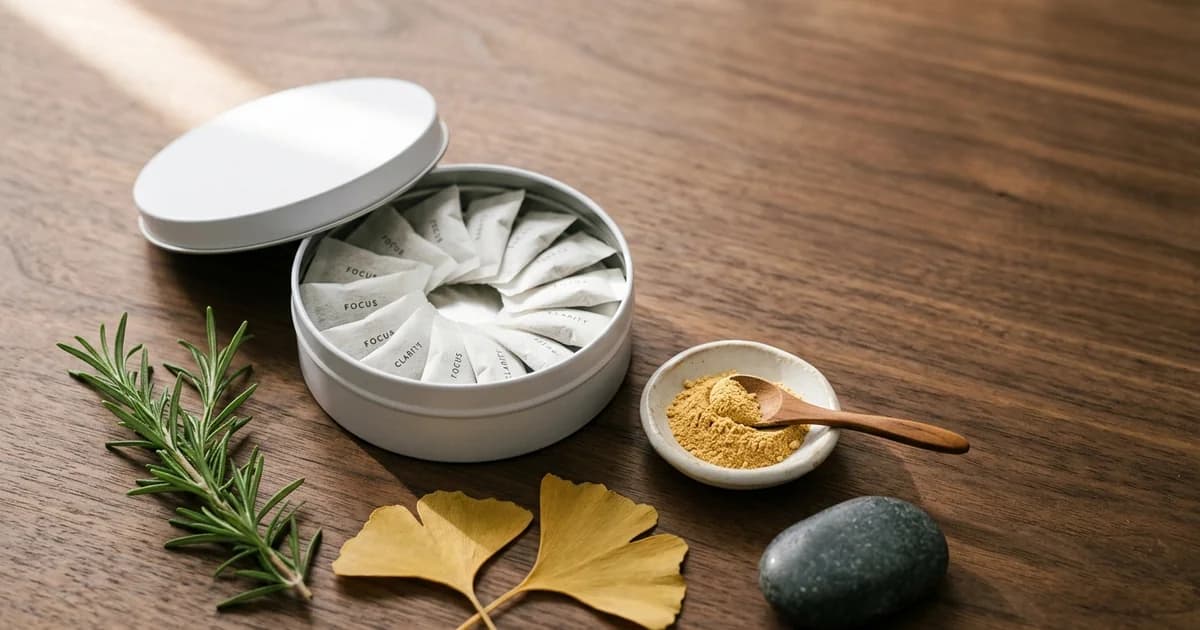
The sellout also confirmed something the supplement industry has been slow to accept: format matters as much as formula. People don't want another pill bottle on their desk. They want something fast, discreet, and built for the way they actually work. A tin that fits in a pocket. A pouch that works in five minutes. No water, no blender, no ritual beyond opening a lid.
Quick Comparison: Nootropic Pouches vs. Other Cognitive Formats
| Feature | Nootropic Pouches | Capsules/Pills | Energy Drinks | Nicotine Pouches |
|---|---|---|---|---|
| Onset time | 5-10 minutes | 30-45 minutes | 15-30 minutes | 5-10 minutes |
| Duration | 6-8 hours | 3-5 hours | 1-3 hours | 30-60 minutes |
| Delivery method | Sublingual (bypasses gut) | Oral (first-pass metabolism) | Oral (liquid) | Sublingual |
| Nicotine | Zero | Zero | Zero | Yes (addictive) |
| Tolerance buildup | Low (with theacrine/methylliberine) | Varies by compound | High (caffeine alone) | High |
| Portability | Pocket-sized tin | Bottle | Can/bottle | Pocket-sized tin |
| Discretion | High (no visible use) | Moderate | Low | High |
How to Evaluate a Nootropic Pouch Before You Buy
Not every pouch in this category is built the same. Here's what to look for:
- Full ingredient disclosure. If the label says "proprietary blend" without individual doses, move on. You should know exactly how much of each compound you're getting.
- Peer-reviewed ingredients. Look for compounds with published human trials, not just animal studies or in-vitro data. Caffeine, L-theanine, theacrine, and methylliberine all have human performance data behind them.
- Sublingual design. A pouch that's meant to be chewed or swallowed isn't using sublingual delivery. The pouch should sit between your lip and gum, allowing absorption through the oral mucosa.
- Realistic dose ranges. More isn't better. The research on caffeine + L-theanine combinations typically uses moderate doses (40-100 mg caffeine, 50-200 mg L-theanine), not megadoses.
- No nicotine. If the pouch contains nicotine, it's a nicotine product, not a nootropic. The nootropic pouch versus nicotine pouch distinction matters because the two categories serve fundamentally different purposes.
The Category Has Arrived. The Standard Is Being Set.
The nootropic pouches trend in 2026 isn't a fad built on marketing spend. It's the result of real market forces: a pouch format proven by billions in nicotine sales, delivery science that finally caught up to the research, and a workforce that can't afford to lose another hour to scattered attention.
Roon was built for exactly this moment. Four nootropic compounds, sublingual delivery, zero nicotine, and a formula grounded in published research. Batch One sold out for a reason.
If you've been watching this space and wondering whether the category is real, it is. And if you want to see what a performance pouch actually feels like, give it a try.
Roon Team