Neuro Gum Review: Ingredients, Nutrition Facts, and Our Honest Verdict
Roon Team
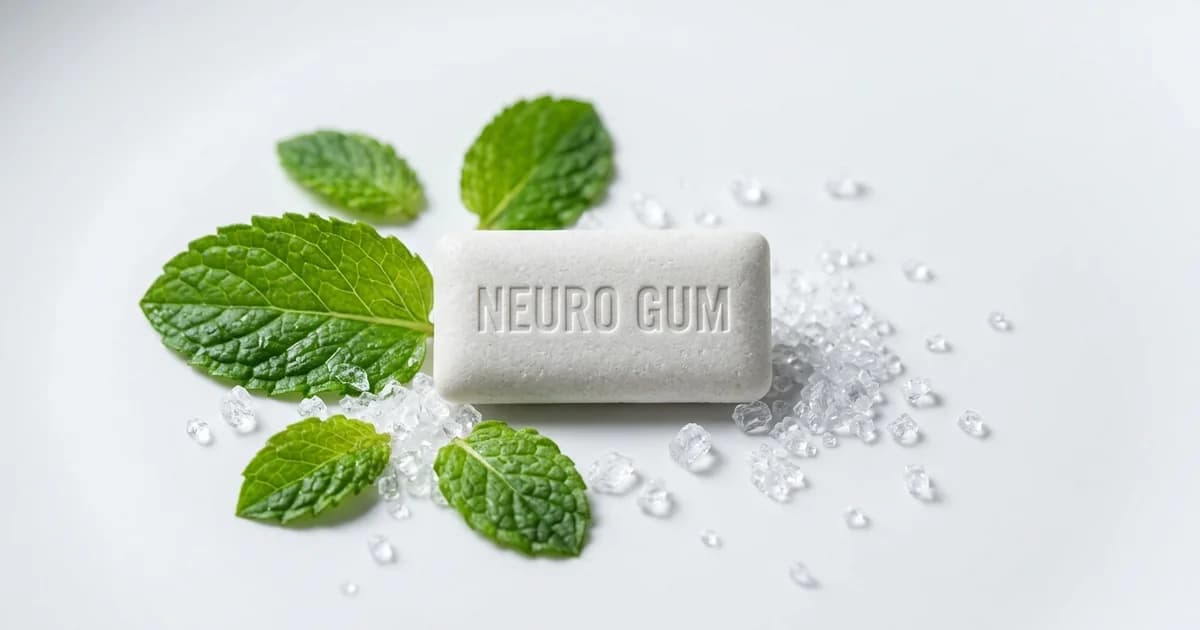
Neuro Gum Review: Ingredients, Nutrition Facts, and Our Honest Verdict
Short answer: Neuro Gum's Energy & Focus piece pairs 40mg of caffeine with 60mg of L-theanine, a well-researched combination for alertness and calm focus, plus small doses of vitamins B6 and B12. The formula is fast-acting and easy to dose, but the 60mg of L-theanine sits below the amounts used in most studies, Neuro publishes no inactive-ingredient list of its own, and it includes nothing to address caffeine tolerance. It is a solid, convenient option for an occasional lift, though daily users will likely want more L-theanine and longer-lasting focus support.
You grabbed a pack of Neuro Gum at CVS because the packaging looked clean and the promise was simple: focus without the coffee crash. Now you want to know if it actually works. This neuro gum review breaks down the ingredients, the nutrition facts, the science behind the formula, and the real trade-offs you should know about before making it a daily habit.
Neuro Gum has been around since 2015. It has built a loyal following, landed in over 7,000 retail stores, and earned a spot on Amazon's best-seller lists. But popularity and performance are two different things. Let's look at what's actually inside.
Key Takeaways:
- Neuro Gum's standard piece contains 40mg caffeine and 60mg L-theanine, a well-studied combination for focus.
- Neuro publishes no inactive-ingredient list on its own site. Its FAQ names only actives plus xylitol, so the sweetener panel comes from retail listings, not the brand.
- B6 and B12 are present, but at doses unlikely to produce noticeable cognitive effects on their own.
- The formula lacks newer compounds like theacrine and methylliberine that address caffeine tolerance and extend focus duration.
What Is Neuro Gum? A Product Overview
Neuro Gum is a sugar-free, functional chewing gum designed to deliver a quick mental boost through your mouth's sublingual membranes. The brand, simply called Neuro, makes several product lines including Energy & Focus, Calm & Clarity, Memory & Focus, and Sleep & Recharge. This neuro gum review focuses on the flagship: Energy & Focus.
Neuro Gum uses a patented cold-compression process that the company says preserves ingredient bioavailability better than traditional gum manufacturing. Neuro Gum is vegan, gluten-free, and contains no sugar or aspartame.
Available in peppermint, cinnamon, and spearmint flavors, you can find Neuro Gum on neurogum.com, Amazon, Walmart, and in brick-and-mortar stores like CVS and Target.
Neuro Gum Review: Nutrition Facts and Active Ingredients
Here's what you get in each piece of the standard Energy & Focus gum, per the brand's own labeling:
| Ingredient | Amount Per Piece | Role |
|---|---|---|
| Natural Caffeine (from green coffee beans) | 40 mg | Stimulant, alertness |
| L-Theanine | 60 mg | Calming amino acid, smooths caffeine |
| Vitamin B6 (Pyridoxine) | ~41% DV | Serotonin production |
| Vitamin B12 (Methylcobalamin) | ~100% DV | Energy metabolism |
| Calories | ~1 | Negligible |
| Sugar | 0 g | Sugar-free |
The neuro gum nutrition facts are straightforward. One piece is essentially calorie-free, with the active ingredients doing the heavy lifting. But how well do those actives actually perform?
Caffeine: 40mg Per Piece
Forty milligrams is roughly half a shot of espresso. It's a moderate, controllable dose, and that's genuinely one of Neuro Gum's strengths. You can titrate up by chewing two or three pieces without accidentally slamming 300mg at once.
Sublingual delivery (absorption through the tissues under your tongue and inside your cheeks) also means faster onset than a capsule or even coffee. Research on caffeine gum shows that buccal absorption can deliver caffeine to the bloodstream within minutes, compared to 30-45 minutes for a swallowed pill.
L-Theanine: 60mg Per Piece
L-theanine is the amino acid responsible for the calm focus you get from green tea. Paired with caffeine, it smooths out the jittery edge and supports sustained attention.
A study published in Nutritional Neuroscience found that 97mg of L-theanine combined with 40mg of caffeine helped participants focus attention during a demanding cognitive task. A separate study in The Journal of Nutrition found that the combination increased hit rate and target discriminability compared to placebo, while L-theanine alone showed no effects.
The science here is solid. Caffeine plus L-theanine is one of the most replicated nootropic stacks in the research literature. Neuro Gum gets this part right.
One note: the 60mg dose in Neuro Gum is on the lower end. Most studies showing clear benefits used 100mg or more of L-theanine. You'd need to chew two pieces to approach the doses used in clinical trials, which also doubles your caffeine intake to 80mg.
Vitamins B6 and B12
B6 supports serotonin synthesis. B12 plays a role in energy metabolism and red blood cell formation. Both are essential vitamins, and deficiencies can cause fatigue and cognitive fog.
But here's the thing: if you're not deficient, extra B vitamins won't sharpen your focus. An ingredient analysis by Illuminate Labs noted that there's limited evidence these vitamins produce nootropic effects at the doses found in Neuro Gum. They're a nice addition, not a performance driver.
Neuro Gum Review: Inactive Ingredients Breakdown
This is where our neuro gum review gets more nuanced. Neuro publishes no inactive-ingredient list on its own site, so the only version available comes from retail listings. Walmart's listing reads:
Sorbitol, Gum Base, Natural Flavors, Calcium Stearate, Spirulina Extract (for color), Sucralose, Monk Fruit Extract, Steviol Glycosides, Gum Arabic.
Most of this is standard for sugar-free gum. Sorbitol and xylitol are common sugar alcohols. Monk fruit and stevia are natural sweeteners. But one ingredient stands out.
The Sucralose Question
Sucralose is an artificial sweetener, and it's the one ingredient that draws the most criticism from reviewers and health-conscious users. The Nutrition Insider's review pointed out that the Energy & Focus gum contains sorbitol, xylitol, sucralose, monk fruit, and steviol glycosides, calling the combination unusual.
If that listing is accurate and you chew multiple pieces daily (which Neuro Gum encourages, since each piece is a low dose), your cumulative sucralose intake adds up. Neuro does not confirm the sweetener panel itself, so anyone who specifically avoids artificial sweeteners should ask the brand before buying.
Neuro Gum Extra Strength: The 100mg Option
Neuro also offers an Extra Strength version with 100mg of caffeine and 60mg of L-theanine per piece in a spearmint flavor. Same B vitamins.
This bumps the caffeine to roughly one cup of coffee per piece. It's a better option if you want a stronger hit without chewing three pieces, but the L-theanine dose stays the same at 60mg. That means the caffeine-to-theanine ratio shifts from roughly 1:1.5 (standard) to almost 2:1 (extra strength), which may reduce L-theanine's ability to fully smooth out the stimulant effects.
Neuro Gum Review: Pricing and Value
Neuro Gum pricing varies by retailer and pack size. Here's a rough breakdown based on current listings:
| Pack Size | Approximate Price | Cost Per Piece |
|---|---|---|
| 54-count bag | ~$20 | ~$0.37 |
| 90-count bag | ~$25-30 | ~$0.28-0.33 |
| 6-pack (9 pieces each, 54 total) | ~$25 | ~$0.46 |
Per The Silicon Review, most Neuro products run under $25 for standard sizes, with per-serving costs below $0.50. That's cheaper than a coffee shop latte, but it adds up if you're chewing 3-4 pieces a day (which many users report doing to get a meaningful effect).
What Users Actually Say in Their Neuro Gum Reviews
Reviews across Amazon, Trustpilot, and Thingtesting paint a consistent picture:
What people like:
- Fast-acting energy boost
- Portable and discreet
- Controllable dosing (one piece at a time)
- Peppermint flavor is the crowd favorite
What people don't like:
- Flavor fades quickly
- Texture can feel rubbery
- Some find the stevia/sucralose combo bitter or artificial-tasting
- Shipping and customer service complaints on Trustpilot
- Need to chew multiple pieces for a noticeable effect
The taste issue comes up repeatedly. Several Thingtesting reviewers described a "bitter, stevia-forward taste" and inconsistent flavor longevity. If you're particular about how your gum tastes, try a small pack first.
What's Missing from Neuro Gum
Neuro Gum does the basics well. Caffeine plus L-theanine is a proven combination, the delivery method is fast, and the portability is hard to beat. But after completing this neuro gum review, a few gaps stand out.
No solution for caffeine tolerance. If you use Neuro Gum daily, your body builds tolerance to caffeine the same way it does with coffee. Within a few weeks, you need more pieces to get the same effect. The formula doesn't include any compounds that address this.
Limited duration of effect. Caffeine's half-life is about 5 hours, but the perceived focus boost from 40mg typically fades within 1-2 hours. You're re-dosing throughout the day, which means more pieces, more cost, and more sweetener.
Low L-theanine relative to the research. At 60mg, the L-theanine dose falls short of the 97-250mg range used in most clinical trials showing clear cognitive benefits. The ratio works at the standard strength, but the absolute dose is modest.
No extended-release or stacking compounds. Newer nootropic ingredients like theacrine and methylliberine have shown promise in extending the duration and smoothness of caffeine's effects. A study published in the Journal of the International Society of Sports Nutrition found that a combination of caffeine, theacrine, and methylliberine improved cognitive performance and reaction time in a randomized crossover trial, without negatively affecting mood. Theacrine is also notable because research suggests it may not produce the same tolerance buildup that caffeine does, meaning consistent effects over time without needing to increase the dose.
Neuro Gum's formula hasn't evolved to include these compounds. It's still running the same caffeine-plus-theanine playbook from 2015.
Frequently Asked Questions
How much caffeine is in Neuro Gum?
Each standard Energy & Focus piece contains 40mg of natural caffeine from green coffee beans, roughly half a shot of espresso. The Extra Strength version steps up to 100mg per piece, close to a cup of coffee. Because the dose is split per piece, you can start with one and chew a second only if you want a stronger effect.
Is the caffeine and L-theanine combination in Neuro Gum backed by research?
Yes. Caffeine paired with L-theanine is one of the most replicated focus stacks in the research literature. A study in Nutritional Neuroscience found that 97mg of L-theanine with 40mg of caffeine helped participants sustain attention during a demanding task. Neuro Gum's 60mg sits below that, so chewing two pieces gets you closer to the studied range.
Does Neuro Gum contain sucralose or sugar?
Neuro Gum is sugar-free, with about one calorie per piece. Neuro's own pages list only the actives, and its FAQ mentions just "caffeine and xylitol" among the ingredients commonly found in functional products. Retail listings add sorbitol, monk fruit, steviol glycosides, and sucralose, but the brand does not publish that panel itself. If you avoid a specific sweetener, ask Neuro before buying.
How long does the focus from Neuro Gum last?
Caffeine has a half-life of roughly 5 hours, but the perceived focus boost from a 40mg piece usually fades within 1 to 2 hours. That means re-dosing through the day, which adds up in pieces, cost, and sweetener intake. The formula does not include extended-release compounds, so the duration per piece stays relatively short.
Does Neuro Gum help with caffeine tolerance?
No. Used daily, your body builds tolerance to caffeine just as it does with coffee, and Neuro Gum's formula includes nothing to counter that. Newer ingredients like theacrine and methylliberine are studied for extending caffeine's effects over time. Roon's zero-nicotine sublingual pouch combines 80mg of caffeine with L-theanine, theacrine, and methylliberine to support longer, steadier focus.
Is Neuro Gum worth it?
For an occasional, portable lift, yes. The caffeine and L-theanine pairing is well-founded, dosing is easy, and it costs less than a daily latte at roughly $0.28 to $0.46 per piece. The trade-offs are a modest 60mg L-theanine dose, a sweetener panel the brand does not publish, and short duration that pushes daily users toward multiple pieces. Heavy users may prefer a higher-L-theanine, longer-lasting option.
A Formula Designed to Fill Those Gaps
If the gaps above matter to you, it's worth looking at Roon. Roon is a zero-nicotine sublingual pouch (not a gum) that combines 80mg of caffeine with L-theanine, theacrine, and methylliberine in a single dose.
The addition of theacrine and methylliberine is the key difference. These two compounds work alongside caffeine to extend focus duration to roughly 6-8 hours per pouch, reduce the jittery overstimulation that caffeine alone can cause, and help maintain consistent effects without the tolerance escalation that daily caffeine users know too well.
No gum texture to deal with. And because the pouch sits between your lip and gum, the sublingual absorption is more consistent than chewing, which depends on how long and how vigorously you chew.
Roon isn't trying to replace your morning coffee. It's built for the specific problem this neuro gum review highlights, and if you want to understand why pouches beat gum for sustained cognitive performance, that case is laid out in full detail.
You can check it out at takeroon.com.
By Roon Team