Matcha vs. Coffee Caffeine Levels: A Head-to-Head Comparison
Roon Team
Matcha vs. Coffee Caffeine Levels: A Head-to-Head Comparison
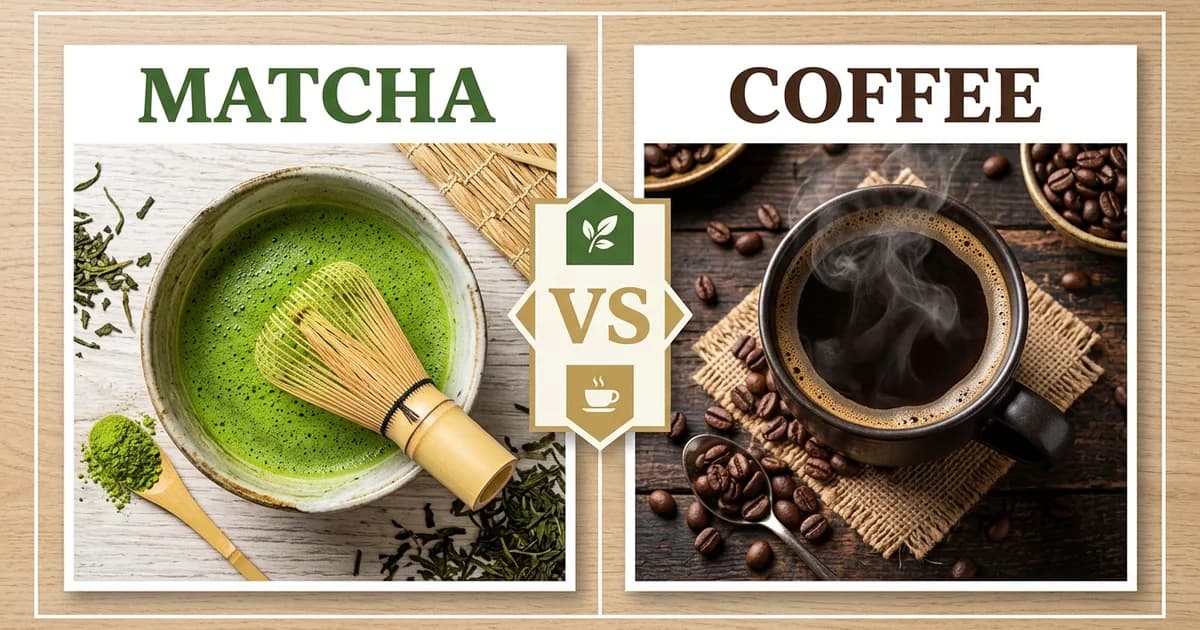
You've probably seen the claim a hundred times: matcha gives you "clean energy" while coffee leaves you wired and crashing. But what do the actual matcha vs coffee caffeine levels look like when you put them side by side? The answer is more nuanced than most wellness blogs want you to believe, and it has less to do with milligrams than you'd think.
Both drinks contain caffeine. Both can sharpen your focus. But they deliver that caffeine to your brain through very different mechanisms, and those differences in matcha vs coffee caffeine levels matter if you care about sustained performance over a full workday.
Key Takeaways:
- A standard cup of coffee contains 95–200 mg of caffeine, while matcha delivers roughly 38–176 mg depending on how much powder you use.
- Matcha's L-theanine content changes how your body processes caffeine, producing a smoother, more gradual effect.
- Coffee hits harder and faster but carries a higher risk of jitters, anxiety, and an afternoon crash.
- Neither option fully solves the tolerance problem that comes with daily caffeine use.
The Raw Numbers: Matcha vs Coffee Caffeine Levels
Let's start with the data.
An 8-ounce cup of brewed coffee contains approximately 95–200 mg of caffeine, though this range shifts based on the bean variety, roast level, and brewing method. A light roast drip coffee from a specialty shop can push well past 200 mg. Your average Starbucks grande (16 oz) lands around 310 mg.
Matcha is a different story. Because you're consuming the whole tea leaf ground into a fine powder, the caffeine content depends almost entirely on how much powder you use. According to Healthline, matcha contains roughly 19–44 mg of caffeine per gram of powder. A typical serving uses 2–4 grams (about half a teaspoon to one teaspoon), putting your cup somewhere between 38 and 176 mg.
That's a wide range. Here's a more practical breakdown of matcha vs coffee caffeine levels by serving:
| Drink | Serving Size | Caffeine (mg) | Onset Speed |
|---|---|---|---|
| Brewed Coffee | 8 oz | 95–200 | Fast (15–20 min) |
| Espresso (single shot) | 1 oz | 63 | Very fast |
| Matcha (1 tsp / ~2g) | 8 oz | 38–88 | Gradual (30–45 min) |
| Matcha (2 tsp / ~4g) | 8 oz | 76–176 | Gradual (30–45 min) |
The takeaway: a typical matcha serving has roughly half to two-thirds the caffeine of a standard cup of coffee. But comparing matcha vs coffee caffeine levels on milligrams alone doesn't tell you how alert you'll actually feel.
Why Matcha Feels Different (It's the L-Theanine)
If you've ever had a cup of matcha and noticed the energy felt smoother, less jagged, that wasn't placebo. Matcha contains L-theanine, an amino acid that modulates how caffeine affects your brain. This is the variable that makes matcha vs coffee caffeine levels so misleading on paper.
According to a systematic review published in the journal Nutritional Neuroscience, the combination of L-theanine and caffeine improved short-term sustained attention and overall cognition across multiple clinical trials. The combination also reduced mind-wandering and improved inhibitory control, meaning you stay locked on the task instead of drifting toward your phone.
A standard serving of matcha provides roughly 20–40 mg of L-theanine, though ceremonial-grade matcha can deliver more. Coffee contains zero L-theanine. That's the fundamental difference between the two drinks, and it explains why matcha drinkers often describe the experience as "focused calm" rather than the buzzy alertness coffee produces.
L-theanine promotes alpha brain wave activity, the same neural pattern associated with relaxed concentration. Think of the mental state you hit when you're reading something genuinely interesting: alert but not anxious. That's what L-theanine does alongside caffeine, and it's why matcha vs coffee caffeine levels only tell part of the story.
Where Coffee Wins
Coffee isn't the villain in this comparison. For raw, immediate stimulation, coffee is simply more efficient.
If you need to be sharp in 15 minutes for a meeting, a double espresso will get you there faster than matcha. The higher caffeine dose hits your adenosine receptors harder, and the lack of L-theanine means there's no buffering effect slowing the onset. For short bursts of high-intensity cognitive work, that rapid spike can be exactly what you need.
Coffee also has well-documented benefits beyond caffeine. It's rich in polyphenols and antioxidants, and long-term coffee consumption has been associated with reduced risk of several neurodegenerative conditions. If you're drinking one to two cups a day and tolerating it well, coffee is a perfectly solid choice. The matcha vs coffee caffeine levels gap matters less here than your personal response to each drink.
The problems show up when you start relying on it for all-day energy.
Where Coffee Falls Short
Three cups in and you know the feeling. Your heart rate is up. Your focus is scattered instead of sharp. And by 2 PM, the crash arrives like clockwork.
High-dose caffeine triggers a cortisol response, your body's primary stress hormone. That's why the third cup of coffee doesn't make you more productive; it makes you jittery and reactive. Your body also builds tolerance to caffeine fast. Within a week or two of daily use, you need more to get the same effect. That's the treadmill most coffee drinkers are on without realizing it.
Matcha's lower caffeine dose and L-theanine content reduce both of these problems. The energy curve is flatter. You don't spike as high, which means you don't crash as hard. And because you're consuming less caffeine per serving, tolerance builds more slowly. This is where the matcha vs coffee caffeine levels difference becomes a real practical advantage.
But matcha has its own limitations.
Where Matcha Falls Short
Matcha is inconvenient. Preparing it properly requires a bamboo whisk, hot (not boiling) water, and a bowl. Even the shortcut method of shaking it in a bottle takes more effort than pressing a button on a coffee machine. If you're in the middle of a workday, that friction matters.
The taste is also polarizing. Matcha is vegetal, slightly bitter, and earthy. Some people love it. Others can't get past the flavor, even with milk and sweetener added.
There's a quality problem too. Cheap matcha, the kind you find in most grocery stores, is often culinary grade. It's more bitter, lower in L-theanine, and sometimes cut with fillers. Getting the cognitive benefits described in the research means buying ceremonial-grade matcha, which can run $30–50 for a small tin.
And even with its gentler caffeine curve, matcha still delivers caffeine. You'll still build tolerance over time. You'll still experience withdrawal headaches if you quit abruptly. The L-theanine softens the experience, but it doesn't eliminate the underlying dependency cycle. So while matcha vs coffee caffeine levels favor matcha for smoother energy, neither drink escapes this fundamental limitation.
The Caffeine Tolerance Problem Neither Drink Solves
Here's what the matcha vs coffee caffeine levels debate usually ignores: both drinks rely on caffeine as their primary active compound, and caffeine has a well-documented tolerance curve.
Your adenosine receptors adapt. What gave you sharp focus on day one gives you baseline normalcy by week three. So you add another cup. Then another. This is the cycle that turns a morning ritual into a dependency, and it applies equally to coffee and matcha.
The real question isn't which drink has more caffeine. It's whether caffeine alone is the best tool for sustained cognitive performance. Obsessing over matcha vs coffee caffeine levels misses this bigger picture entirely.
A Third Option Worth Considering
This is where the conversation gets interesting. What if you could get the focused, calm alertness of the caffeine-plus-L-theanine combination without the tolerance treadmill?
Roon is a zero-nicotine sublingual pouch built around a four-compound nootropic stack: Caffeine (80 mg), L-Theanine (60 mg), Methylliberine (25 mg), and Theacrine (5 mg). The caffeine dose is comparable to a standard cup of coffee, but L-theanine smooths the onset while Theacrine and Methylliberine extend the effect to six to eight hours of sustained focus with no jitters, no crash, and no tolerance buildup. That's what changes the equation.
Theacrine is structurally similar to caffeine and acts on the same adenosine receptors, but research published in the Journal of the International Society of Sports Nutrition shows it supports consistent energy and focus without the development of tolerance at doses up to 300 mg per day over eight weeks. That's the problem caffeine can't solve on its own, and it's the problem that makes the whole matcha vs coffee caffeine levels comparison incomplete.
The sublingual delivery means it absorbs through the tissue under your lip, no brewing, no whisking, no waiting in line. And because there's no nicotine, you avoid the vasoconstriction, dependency, and cardiovascular strain that separate Roon vs Grinds coffee pouches in the first place.
If you've been comparing matcha vs coffee caffeine levels trying to find the right balance of focus without the crash, or exploring clean energy alternatives to coffee, it might be time to look beyond caffeine as a solo act. See how Roon compares.