Matcha vs. Coffee Caffeine: A Head-to-Head Comparison
Roon Team
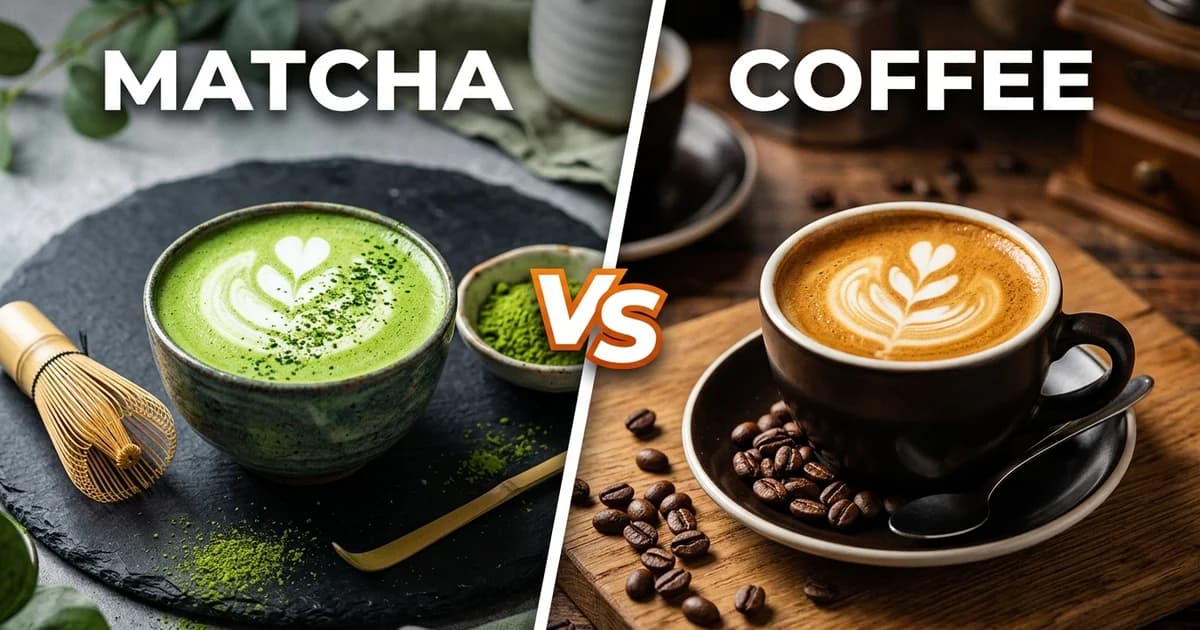
Matcha vs. Coffee Caffeine: A Head-to-Head Comparison
Short answer: A standard 8-ounce coffee delivers about 95 mg of caffeine, while an 8-ounce matcha made from 1–2 grams of powder lands around 38–70 mg. Coffee hits faster and harder; matcha pairs a lower caffeine dose with L-theanine, an amino acid linked to calm, steady focus. If you want strong, fast energy, coffee leads on dose. If you want a smoother, longer-lasting focus state, matcha's caffeine-plus-L-theanine pairing is the gentler choice.
The matcha vs coffee caffeine debate starts the moment you're standing in line at your local café, staring at the menu. The espresso calls to you, but so does that bright green matcha latte two spots over. Both promise energy. Both deliver caffeine. But the way matcha vs coffee caffeine hits your brain, your body, and your afternoon can feel very different.
This isn't a debate about taste. It's a comparison of how two of the world's most popular stimulants actually perform when you need to think clearly, stay sharp, and avoid the 2 p.m. wall.
Key Takeaways:
- A typical cup of coffee delivers around 95 mg, while a typical matcha serving contains about 38–70 mg.
- Matcha pairs its caffeine with L-theanine, an amino acid that smooths out the stimulant curve and promotes calm focus.
- Coffee generally hits faster and more intensely, but that spike often comes with jitters and a crash.
- Neither option solves the tolerance problem: drink enough of either, and you'll need more to feel the same effect.
The Caffeine Content of Matcha vs Coffee: The Numbers
Let's start with the raw data. An 8-ounce cup of brewed coffee contains approximately 95–100 mg of caffeine, though that number swings wildly depending on the bean, the roast, and the brew method. A strong pour-over can push past 140 mg. A double espresso shot packs around 120–130 mg into just two ounces.
The caffeine content of matcha vs coffee is more predictable on the matcha side. One gram of matcha powder contains roughly 19–44 mg of caffeine. A traditional serving uses 1–2 grams, putting a typical cup somewhere between 38 and 70 mg. Ceremonial-grade matcha from shade-grown plants tends to land on the higher end of that range.
Here's a quick side-by-side look at matcha vs coffee caffeine levels:
| Drink | Serving Size | Caffeine (mg) | Onset | Duration |
|---|---|---|---|---|
| Brewed Coffee | 8 oz | 95–100 | 15–20 min | 3–5 hours |
| Espresso | 2 oz | 63–80 | 10–15 min | 2–4 hours |
| Matcha | 8 oz (2g powder) | 38–70 | 30–45 min | 4–6 hours |
| Green Tea | 8 oz | ~29 | 30–45 min | 3–4 hours |
The caffeine in matcha tea vs coffee isn't just lower in dose. It behaves differently once it enters your system, which is what makes the matcha vs coffee caffeine comparison so interesting.
Why Matcha vs Coffee Caffeine Feels So Different
The secret isn't the caffeine itself. It's the L-theanine.
Matcha contains roughly 15–40 mg of L-theanine per serving, an amino acid that crosses the blood-brain barrier and has been associated with increased alpha brain wave activity. Alpha waves are associated with a state of relaxed alertness, the kind of focus you get during a good flow state.
Coffee doesn't contain L-theanine. It delivers caffeine in isolation, which means you get a stronger standalone stimulant effect without a built-in moderating compound like L-theanine. That's why the matcha vs coffee caffeine experience differs so sharply: coffee often produces a sharper spike in energy, which can be followed by a more noticeable drop for some people.
A systematic review published in Cureus found that the L-theanine and caffeine combination improved short-term sustained attention and overall cognition across multiple clinical trials. The combination also reduced task-related mind wandering, a finding that matters if your work involves deep concentration.
Harvard Health notes that L-theanine in matcha has been associated with improved concentration and alertness. This isn't just marketing from matcha brands. The amino acid has a measurable effect on how caffeine expresses itself in your nervous system, and it's a key reason the caffeine in matcha tea vs coffee produces such different subjective experiences.
The Coffee Advantage (And Its Downsides)
Coffee still wins on raw power in the matcha vs coffee caffeine matchup. If you need to go from asleep to alert in 15 minutes, nothing beats an espresso. The higher caffeine dose and faster absorption make coffee the superior choice for acute, short-term energy demands.
Coffee also carries its own antioxidant profile. Chlorogenic acids, the primary polyphenols in coffee, have been linked to reduced risk of type 2 diabetes and cardiovascular disease in long-term observational studies.
But coffee has real drawbacks for sustained cognitive work.
The jitters. Caffeine blocks adenosine receptors in the brain, which normally help calm the nervous system. In response, your body releases adrenaline and cortisol. At higher doses (and 95–200 mg per cup qualifies), this can increase the likelihood of anxiety, restlessness, and that shaky-hands feeling that makes precise work harder. This is one area where the caffeine content of matcha vs coffee really matters.
The crash. Once caffeine clears those adenosine receptors, the built-up adenosine activity rebounds once caffeine wears off. The result is that familiar wall of fatigue that hits 3–4 hours after your morning cup.
The tolerance. Regular coffee drinkers know this one well. Research from a study published in the Journal of the International Society of Sports Nutrition found a relative reduction in caffeine's performance benefits after 20 days of consecutive use. Your brain can upregulate adenosine receptors over time to compensate, which means you need more caffeine to feel the same effect.
The Matcha Advantage (And Its Downsides)
On the other side of the matcha vs coffee caffeine equation, matcha delivers a smoother energy curve. The combination of moderate caffeine and L-theanine produces what researchers describe as "alert calm," a state where you're focused but not wired.
The antioxidant profile is strong too. Matcha is rich in EGCG (epigallocatechin gallate), a catechin that tends to be higher than in most brewed green tea. Because you consume the entire ground leaf rather than steeping and discarding it, you get a higher density of these compounds per serving.
But matcha has limits.
Lower ceiling. If you need a serious caffeine hit for an early morning workout or an all-night deadline, matcha's 38–70 mg might not cut it. Understanding the caffeine content of matcha vs coffee helps here: you'd need two or three servings to match a single cup of coffee, and at that point, you're spending $10+ on matcha lattes.
Taste barrier. Good matcha is earthy, vegetal, and slightly bitter. It's an acquired taste. Bad matcha (the kind sold in most grocery stores) tastes like lawn clippings mixed with chalk.
Preparation friction. Traditional matcha requires a bamboo whisk, sifting, and specific water temperature. Even the shortcut versions take more effort than pressing a button on your coffee maker.
Matcha vs Coffee Caffeine: Which One Actually Wins?
The more accurate answer: the matcha vs coffee caffeine winner depends on what you're optimizing for.
| Factor | Coffee | Matcha |
|---|---|---|
| Caffeine per serving | Higher (95–200 mg) | Lower (38–70 mg) |
| Speed of onset | Faster (15–20 min) | Slower (30–45 min) |
| Jitters risk | Higher | Lower |
| Crash severity | More noticeable | Milder |
| L-theanine content | None | 15–40 mg |
| Cost per serving | $0.50–$5 | $2–$7 |
| Preparation ease | Easy | Moderate |
| Tolerance buildup | Yes | Yes (but slower) |
Choose coffee if you need fast, strong energy for a short burst of physical or mental effort.
Choose matcha if you want a gentler, longer-lasting focus state with fewer side effects. The caffeine in matcha tea vs coffee is lower per serving, but the L-theanine pairing may make the caffeine feel more sustained and balanced.
But here's the thing both options share: tolerance. Drink either one daily, and your brain adapts. The effect dims. You add another cup. Then another. It's the same treadmill, just at different speeds.
A Third Option Worth Considering
The matcha vs coffee caffeine debate, like the debate of matcha against other coffee alternatives, assumes those are your only two choices. They're not.
Roon takes a different approach. It's a zero-nicotine sublingual pouch built around a stack of Caffeine (80 mg), L-Theanine (60 mg), Methylliberine (25 mg), and Theacrine (5 mg). With 80 mg of caffeine, comparable to a cup of coffee, you get the same L-theanine smoothing effect that makes matcha appealing, plus methylliberine and theacrine that extend the energy curve to 6 to 8 hours of sustained focus with no jitters, no crash, and no tolerance buildup.
Theacrine, in particular, stands out. An eight-week clinical trial published in the Journal of the International Society of Sports Nutrition found that TeaCrine (a bioactive form of theacrine) showed no signs of habituation over the study period. That means no tolerance buildup, the exact problem that plagues both coffee and matcha over time.
A separate study on tactical personnel found that a combination of caffeine, methylliberine, and theacrine delivered similar vigilance and reaction-time improvements as double the dose of caffeine alone, without the unfavorable blood pressure changes.
No brewing, no blending, no waiting in line, and unlike nootropic pouches vs coffee pouches comparisons might suggest, no trade-off on focus duration.
Frequently Asked Questions
How much more caffeine is in coffee than matcha?
A standard 8-ounce cup of brewed coffee holds roughly 95 mg of caffeine, while an 8-ounce matcha made from 1–2 grams of powder sits between 38 and 70 mg. So coffee usually carries about 1.5 to 2.5 times the caffeine of a single matcha serving, though a strong pour-over and ceremonial-grade matcha can narrow that gap.
Why does matcha give calmer energy than coffee?
Matcha contains about 15–40 mg of L-theanine per serving, an amino acid that crosses the blood-brain barrier and has been associated with increased alpha brain wave activity, a state of relaxed alertness. Coffee delivers caffeine on its own, with no L-theanine to soften the curve, so it tends to produce a sharper spike and, for some people, a more noticeable drop afterward.
Does matcha or coffee cause more jitters and crashes?
Coffee's higher caffeine dose and faster absorption make jitters and an afternoon crash more likely, since caffeine blocks adenosine receptors and prompts the release of adrenaline and cortisol. Matcha's lower dose, paired with L-theanine, tends to produce a milder, steadier curve. Individual sensitivity, total daily intake, and how much you eat alongside each drink still shape how strong those effects feel.
How long does the energy from matcha vs coffee last?
Coffee usually comes on within 15–20 minutes and lasts about 3–5 hours. Matcha tends to take 30–45 minutes to build and can stretch across 4–6 hours, partly because the L-theanine pairing makes the lower caffeine dose feel more even. Neither timeline is fixed; metabolism, tolerance, and serving size all move the numbers in either direction.
Will I build a tolerance to matcha or coffee?
Both. Regular use lets the brain add adenosine receptors over time, so you need more caffeine to feel the same lift. One study published in the Journal of the International Society of Sports Nutrition tracked a relative drop in caffeine's performance benefit after 20 days of consecutive use. Matcha's lower dose may slow that buildup, but it does not remove it entirely.
Is there an option that avoids the downsides of both matcha and coffee?
One alternative skips brewing entirely. Roon is a zero-nicotine sublingual pouch that pairs 80 mg of caffeine with 60 mg of L-theanine, the same combination that makes matcha feel smooth, plus 25 mg of methylliberine and 5 mg of theacrine. The result is a steady focus window of roughly 6 to 8 hours, with no whisk, no waiting in line, and no cup to refill.
If the matcha vs coffee caffeine comparison left you wanting something that solves the problems both drinks share, see how Roon compares.
By Roon Team