Magnesium Drops for Sleep: What Actually Works
Magnesium Drops for Sleep: What Actually Works (and What's Just Marketing)
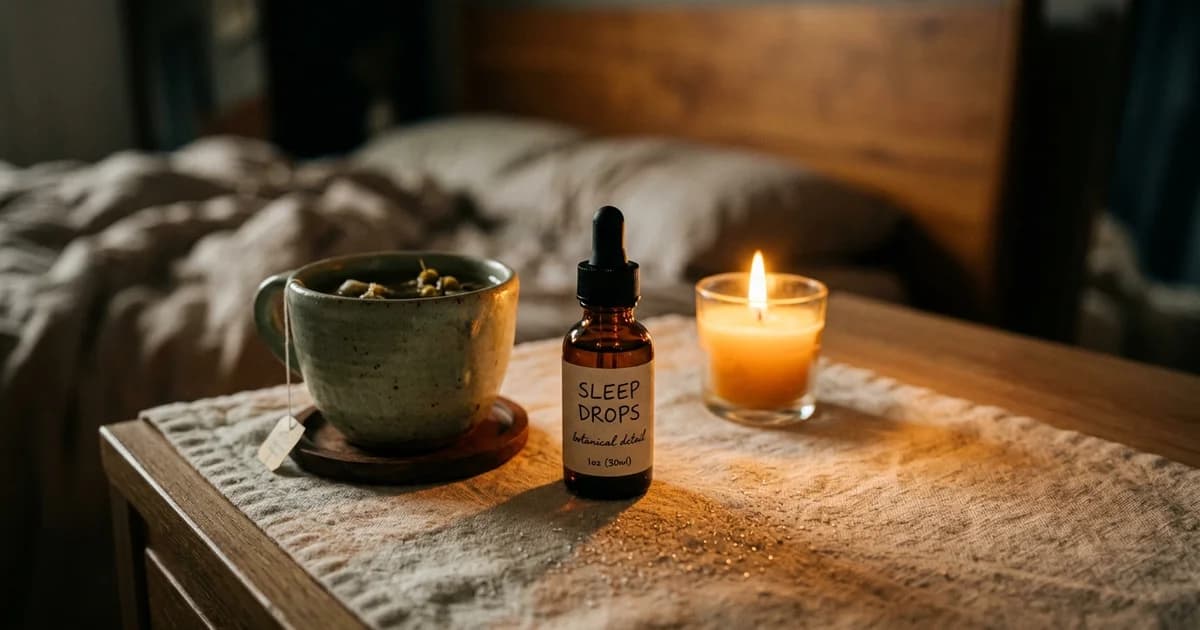
You took magnesium last night and still woke up at 3 a.m. staring at the ceiling. Sound familiar? The magnesium drops for sleep market has exploded, with dozens of brands promising deep, restorative rest from a single dropper. But the science behind magnesium drops for sleep is more specific than most product labels suggest. The form of magnesium matters. The dose matters. And the delivery method might matter less than you think.
Here's what the research actually says, which forms have clinical evidence behind them, and how to tell if magnesium drops for sleep are worth your money.
Key Takeaways
- Not all magnesium is the same. Different forms (glycinate, L-threonate, citrate, oxide) have wildly different absorption rates and effects on sleep.
- Two forms have the strongest clinical backing for sleep: magnesium bisglycinate and magnesium L-threonate.
- Nearly half of Americans don't get enough magnesium from food alone, which may directly affect sleep quality.
- Liquid magnesium drops for sleep can work, but the form inside the bottle matters far more than the delivery method.
Why Magnesium Affects Sleep in the First Place
Magnesium isn't a sedative. It doesn't knock you out like melatonin or a prescription sleep aid. Instead, it works on two systems in your brain that regulate how easily you fall asleep and how deeply you stay there.
First, magnesium acts on GABA receptors. GABA is your brain's primary inhibitory neurotransmitter, the chemical signal that tells overactive neurons to quiet down. According to a 2025 review published in Nature and Science of Sleep, magnesium ions potentiate GABAergic neurotransmission, dampening neural excitability and helping facilitate both the onset and maintenance of sleep. This mechanism is part of why magnesium drops for sleep have gained so much attention.
Second, magnesium blocks NMDA receptors, which are excitatory. Think of it as a two-pronged approach: magnesium turns up the brain's "calm down" signal while simultaneously turning down the "stay alert" signal.
This dual mechanism is why magnesium deficiency correlates so strongly with poor sleep. And the deficiency numbers are staggering. A report from Pharmacy Times noted that the standard American diet provides only about 50% of the recommended daily magnesium intake, meaning roughly half the population may be deficient. A 2012 study published in Nutrition Reviews found that 48% of the U.S. population consumed less than the required amount of magnesium from food in 2005-2006.
If your body doesn't have enough magnesium to properly activate GABA receptors and suppress NMDA activity, your nervous system stays in a heightened state. Falling asleep becomes harder. Staying asleep becomes harder. The quality of the sleep you do get suffers. That's the biological case for trying magnesium drops for sleep in the first place.
The Forms of Magnesium That Actually Help Sleep
This is where most magnesium drops for sleep products either deliver or fall apart. The magnesium market includes over a dozen different forms, and they are not interchangeable.
Magnesium Bisglycinate (Glycinate)
This is the form with the most direct sleep evidence. Magnesium bisglycinate bonds magnesium to glycine, an amino acid that independently promotes relaxation and sleep.
A 2025 randomized, placebo-controlled trial from Leibniz University Hannover enrolled 155 healthy adults with self-reported poor sleep quality. The magnesium bisglycinate group showed improvements in Insomnia Severity Index scores compared to placebo. The study used a double-blind design, the gold standard for supplement research.
The glycine component does double duty here. Glycine itself has been studied as a sleep aid, with research showing it can lower core body temperature, a physiological trigger for sleep onset. When you combine that with magnesium's GABA and NMDA receptor activity, bisglycinate becomes a two-ingredient sleep stack in a single compound.
Most magnesium drops on the market use magnesium bisglycinate for sleep, and for good reason. Bisglycinate is well-absorbed, gentle on the stomach (unlike magnesium citrate, which can cause GI distress), and has the most relevant clinical data for sleep.
Magnesium L-Threonate
This is the newer, more interesting form. Magnesium L-threonate was developed specifically for its ability to cross the blood-brain barrier more effectively than other forms. According to Momentous, magnesium threonate has been shown to pass through the blood-brain barrier more effectively than any other form of magnesium.
A 2024 randomized controlled trial published in Sleep Medicine: X tested magnesium L-threonate in adults with self-reported sleep problems. The results were notable: the MgT group showed improvements in both objective measures (via actigraphy) and subjective measures of sleep quality. Participants reported better alertness, coordination, and balance upon waking. The study also found improvements in deep and REM sleep stages, along with better mood, energy, and daily productivity.
As AJMC reported, the data showed that "MgT improved sleep quality, especially deep/REM sleep stages."
L-threonate is less commonly found in magnesium drops for sleep formulations, partly because it's more expensive to produce. But if you can find it, the brain-specific delivery makes it a strong option for sleep support.
Forms to Skip (for Sleep Purposes)
| Form | Primary Use | Sleep Evidence | Common Issue |
|---|---|---|---|
| Magnesium Oxide | General supplementation | Minimal | Poor absorption (~4%) |
| Magnesium Citrate | Digestive regularity | Weak | GI side effects |
| Magnesium Sulfate (Epsom salt) | Topical/bath use | Anecdotal only | Not well absorbed orally |
| Magnesium Malate | Energy, muscle soreness | None for sleep | May actually be energizing |
If your magnesium drops for sleep contain oxide or citrate as the primary form, you're paying for a product that's poorly suited for sleep support. Check the label. The specific form should be listed, not just "magnesium."
Magnesium Drops for Sleep: Do Liquid Forms Work Better?
Here's the honest answer: probably not, at least not by a meaningful margin.
The marketing claim behind liquid magnesium drops for sleep is faster absorption. And there's some logic to that. Liquids don't need to be broken down like tablets or capsules, so they can reach your digestive tract sooner. Some products even suggest sublingual absorption (holding the drops under your tongue), which would bypass the digestive system entirely. For product-by-product numbers, see our liquid magnesium products compared by form and mg per serving.
But the reality is more nuanced. Most magnesium drops for sleep are swallowed, not held sublingually. And even sublingual absorption of mineral ions is limited compared to something like, say, caffeine or nicotine, which are small organic molecules that pass through mucous membranes more readily.
What liquid drops do offer is flexibility in dosing. You can titrate up or down easily, which is useful since magnesium tolerance varies from person to person. They're also easier to take for people who struggle with pills.
The bottom line: the form of magnesium inside the drops matters ten times more than the fact that it's liquid. A capsule of magnesium bisglycinate will outperform liquid magnesium oxide every time, just as it outperforms most magnesium gummies for sleep on the market.
How Much Magnesium Do You Need for Sleep?
Most clinical trials studying magnesium for sleep use doses between 200 and 400 mg of elemental magnesium taken 30 to 60 minutes before bed. That's the elemental magnesium content, not the total weight of the compound. This distinction trips people up constantly, especially with magnesium drops for sleep where serving sizes vary widely between brands.
For example, a product might say "1,450 mg magnesium glycinate" on the label, but the actual elemental magnesium content could be 200 mg. Always check the supplement facts panel for the elemental amount.
A few dosing guidelines based on the research:
- Magnesium bisglycinate: 200-400 mg elemental magnesium, taken in the evening
- Magnesium L-threonate: The standard studied dose is around 144 mg elemental magnesium (typically from ~2,000 mg of the L-threonate compound)
- Start low: Begin with 200 mg and increase if needed. Too much magnesium at once can cause loose stools, regardless of the form.
The recommended daily allowance for magnesium is around 310-420 mg per day for adults, depending on age and sex. If you're already getting some from food (dark leafy greens, nuts, seeds, dark chocolate), you may not need the full 400 mg from a supplement.
What to Look for in Magnesium Drops for Sleep
If you're shopping for magnesium drops for sleep, here's a quick checklist:
- Form: Bisglycinate (glycinate) or L-threonate. Everything else is a compromise for sleep purposes.
- Elemental magnesium dose: Should be clearly listed. Aim for 200-400 mg per serving.
- Third-party testing: Look for NSF, USP, or Informed Sport certification. The supplement industry is loosely regulated, and independent testing matters.
- Minimal fillers: Some liquid formulations add sugar, artificial flavors, or unnecessary additives. Fewer ingredients is better.
- No proprietary blends: If the label says "proprietary magnesium blend" without listing individual amounts, move on. You have no idea what you're actually getting.
Sleep Is Half the Equation
Getting your magnesium drops for sleep dialed in is a smart move for sleep quality. But sleep is only one side of the performance coin. What you do with your waking hours matters just as much.
Poor sleep erodes focus, reaction time, and decision-making. Good sleep, supported by the right magnesium drops for sleep, restores them. And once you've built a solid nighttime routine, the question becomes: how do you make the most of the hours you're actually awake?
That's where Roon fits in. It's a zero-nicotine sublingual pouch built around a stack of caffeine (80 mg), L-theanine, theacrine, and methylliberine, designed to support 6-8 hours of sustained focus without the jitters or crash you get from coffee or energy drinks. No tolerance buildup. No afternoon wall.
Sleep well at night. Perform during the day. That's the whole system.