Magnesium Butter for Sleep: What Actually Works
Roon Team
Magnesium Butter for Sleep: What Actually Works
Magnesium butter for sleep has taken over social media. Scroll through any wellness corner of TikTok or Instagram and you'll find someone rubbing a thick, lavender-scented cream on their feet, swearing it knocked them out in minutes. The product category is booming, with brands like Sweet Bee Organics, NEOM, and Pantry Products all competing for your nightstand.
But here's the honest question nobody selling magnesium butter for sleep wants you to ask: does rubbing magnesium on your skin actually do anything for sleep? Or are you just paying $30 for a nice foot massage?
The answer is more nuanced than the influencers suggest. Let's break down the science, the hype, and what the best magnesium butter for sleep can (and can't) do for you.
Key Takeaways
- Magnesium itself matters for sleep. Low magnesium levels are linked to poor sleep quality, and oral supplementation has solid clinical backing.
- Transdermal absorption is still debated. A 2017 pilot study showed some promise, but a major review in the same year called the evidence "scientifically unsupported."
- The ritual might be the real benefit. NPR reported in 2025 that experts believe the massage and relaxation routine may matter more than the magnesium butter for sleep itself.
- Oral magnesium (glycinate or threonate) has stronger evidence for improving sleep than any topical product on the market, including the best magnesium butter for sleep.
What Is Magnesium Butter for Sleep, Exactly?
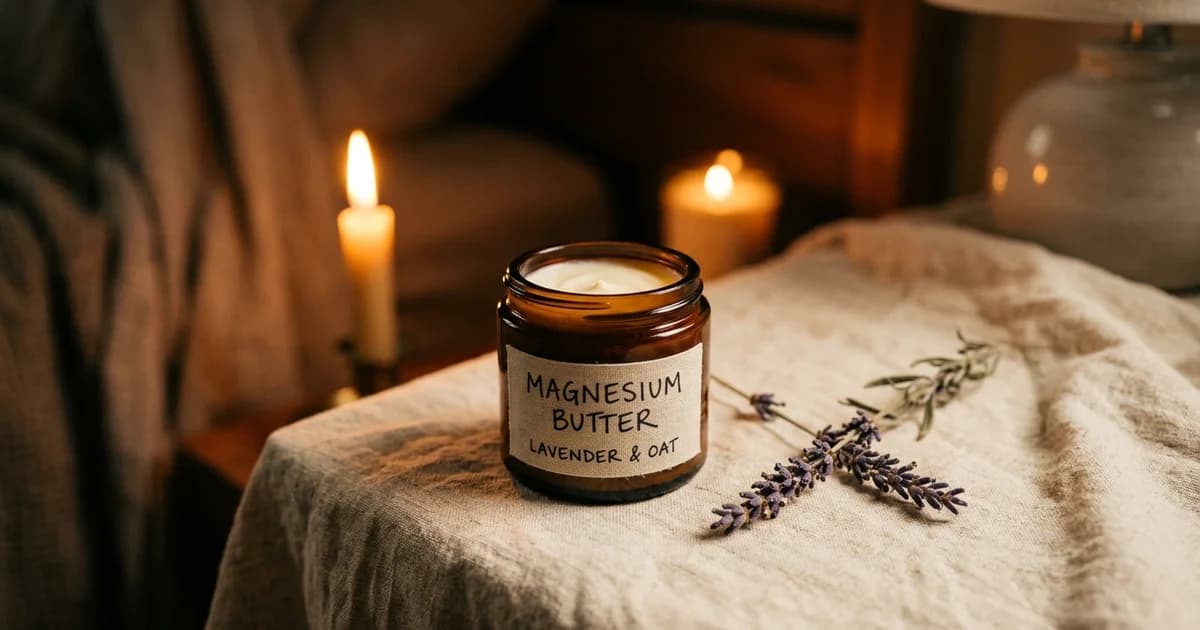
Magnesium butter is a thick, whipped topical cream made with magnesium chloride as the active ingredient. Most formulas blend it with shea butter, coconut oil, beeswax, and essential oils like lavender or chamomile to create a rich, skin-friendly texture.
The "butter" distinction separates magnesium butter for sleep from thinner magnesium lotions and sprays. It's denser, absorbs more slowly, and tends to feel less tingly on the skin than straight magnesium oil (which, despite the name, is just a concentrated magnesium chloride solution).
Popular products in this space include Sweet Bee Organics' Sweet Sleep Magnesium Butter, NEOM's Perfect Night's Sleep Magnesium Body Butter, and Pantry Products' Deep Sleep Magnesium Butter. Prices range from about $15 to $40 per jar.
The typical use case: scoop some out, rub the magnesium butter for sleep on the soles of your feet or your legs before bed (see the full guide on where to apply magnesium lotion for best results), and let the magnesium absorb through your skin while you sleep.
Simple enough. But the mechanism is where things get complicated.
The Science Behind Magnesium Butter for Sleep
Before we evaluate whether magnesium butter for sleep works, we need to separate two questions. First: does magnesium affect sleep? Second: can your skin absorb enough of it to matter?
Magnesium's Role in Sleep Regulation
The connection between magnesium and sleep quality is real and well-documented. Magnesium plays a direct role in regulating GABA receptors, the same neurotransmitter system targeted by sleep medications like Ambien. It also blocks NMDA receptors, which, when overactive, can disrupt sleep architecture.
A 2024 cross-sectional study published on PubMed analyzed over 20,500 adults and found a clear association between magnesium deficiency scores and poor sleep quality, particularly sleep apnea.
The deficiency problem is widespread. According to research cited by Atlanta TMS Clinic, more than half of U.S. adults don't get enough magnesium. Data from 2005-2006 showed nearly half the U.S. population consumed less magnesium than the recommended amount from food alone.
So the mineral itself? Legitimate sleep factor. No debate there. The question is whether magnesium butter for sleep delivers it effectively.
Can Your Skin Actually Absorb Magnesium?
This is where the magnesium butter for sleep conversation gets uncomfortable for brands selling these products.
A 2017 pilot study published in PLOS ONE tested whether magnesium cream could raise serum magnesium levels through the skin. With only 25 participants, the study found a small increase in the magnesium cream group compared to placebo, but the sample size was tiny and the results were modest.
In the same year, a review published in the journal Nutrients (available via PMC) evaluated the full body of evidence on transdermal magnesium. The conclusion was blunt: the idea that magnesium absorbs meaningfully through the skin is "scientifically unsupported." The review noted that the skin's primary function is to act as a barrier, and it does that job well.
Some research from BetterYou suggests that massage during application can accelerate initial absorption and that hair follicles may play a role in transdermal delivery. But the overall evidence base for magnesium butter for sleep remains thin.
This doesn't mean magnesium butter for sleep does nothing. It means the mechanism might not be what you think it is.
The Ritual Effect: Why Magnesium Butter for Sleep "Works" Even If Absorption Is Weak
NPR reported in September 2025 that dermatologist Nicholas Theodosakis believes any sleep benefits from magnesium lotion are likely from the massage used to apply it, or from the moisturizing ingredients themselves.
This tracks with what sleep researchers have known for years. A consistent bedtime ritual, the act of slowing down, massaging your feet, inhaling lavender, signals to your nervous system that it's time to wind down. That signal matters. A lot.
So when someone says their magnesium butter for sleep "works," they're probably not wrong. They're just attributing the effect to the wrong ingredient. The ritual of application, the tactile sensation, the aromatherapy from essential oils, these are all legitimate sleep cues. The magnesium chloride in the formula may be along for the ride.
Best Magnesium Butter for Sleep: What to Look For
If you're going to buy magnesium butter for sleep, and there are good reasons to even knowing the absorption limitations, our roundup of top topical magnesium products can help you find what separates a quality formula from an overpriced jar of shea butter with a sprinkle of magnesium.
Ingredients That Matter
| Ingredient | Why It Matters |
|---|---|
| Magnesium chloride | The most common topical form. Higher concentration = more potential for absorption. |
| Lavender essential oil | Actual evidence for relaxation and sleep onset when inhaled. |
| Chamomile | Mild calming properties, pleasant scent profile. |
| Shea butter / coconut oil | Carrier fats that improve skin feel and slow absorption for less tingling. |
| Aloe vera | Note: some research suggests aloe may actually block magnesium absorption through the skin. |
Red Flags to Avoid
- Proprietary blends with no concentration listed. If a brand won't tell you how much magnesium chloride is in the jar, that's a problem.
- Wild medical claims. Any magnesium butter for sleep claiming to "cure insomnia" or "treat restless leg syndrome" is breaking FDA rules and probably isn't trustworthy in general.
- Artificial fragrance. If you're using magnesium butter for sleep as a bedtime ritual, synthetic fragrances can actually be stimulating for some people. Look for products using real essential oils.
Top Products Worth Considering
Sweet Bee Organics Sweet Sleep Magnesium Butter is probably the most talked-about magnesium butter for sleep on the market. It uses magnesium chloride with lavender, chamomile, and passionflower, and has built a cult following with strong user reviews. Many consider it the best magnesium butter for sleep in terms of ingredient quality.
NEOM Perfect Night's Sleep Magnesium Body Butter ran a consumer perception study on 94 people and reported that 88% felt they had a good night's sleep after using the product. Consumer perception studies aren't clinical trials, but the numbers are worth noting.
Butter Me Up Organics takes a clean-ingredient approach with their organic magnesium lotion, focusing on minimal, food-grade ingredients.
Magnesium Butter vs. Oral Magnesium for Sleep
Here's the part most magnesium butter for sleep articles won't tell you: if your goal is specifically to raise your magnesium levels to improve sleep, oral supplementation has far stronger evidence.
A 2024 randomized, double-blind, placebo-controlled crossover trial gave 31 adults 1g of magnesium daily for two weeks. The magnesium group showed measurable improvements in sleep quality compared to placebo.
Oral magnesium glycinate and magnesium threonate are the two forms most commonly recommended for sleep, though oral magnesium powder for sleep like Natural Vitality Calm is also widely used. Glycinate is well-absorbed and less likely to cause digestive issues than magnesium citrate. Threonate crosses the blood-brain barrier more effectively, which makes it interesting for cognitive and sleep applications.
| Delivery Method | Evidence Strength | Best For |
|---|---|---|
| Oral magnesium (glycinate/threonate) | Strong (multiple RCTs) | Raising systemic magnesium levels, improving sleep quality |
| Magnesium butter/cream | Weak (limited pilot data) | Bedtime ritual, skin hydration, relaxation routine |
| Magnesium spray/oil | Weak (similar to cream) | Muscle soreness, quick application |
The honest recommendation? Use both. Take oral magnesium for the actual physiological benefit. Use magnesium butter for sleep as part of your wind-down routine for the ritual benefit. They serve different purposes, and that's fine.
Building a Sleep Stack That Actually Works
Magnesium butter for sleep fits best as one piece of a larger sleep hygiene strategy, not the whole strategy. A few things that have stronger evidence behind them:
- Consistent sleep and wake times. Your circadian rhythm responds to regularity more than any supplement.
- Oral magnesium glycinate or threonate. 200-400mg before bed, taken consistently.
- Cool bedroom temperature. 65-68°F is the sweet spot for most people.
- A wind-down ritual. This is where magnesium butter for sleep earns its place. The act of applying it, the scent, the tactile routine, all of it helps signal your brain that sleep is coming.
- Limited screen exposure in the last hour before bed. Blue light suppresses melatonin. You already know this. Do it anyway.
Sleep Better, Perform Better
Good sleep isn't just about feeling rested. It's the foundation of every cognitive function you rely on during the day: working memory, reaction time, decision-making, creative problem-solving. Shortchange your sleep and you're running your brain on fumes, no matter how much coffee you drink.
That's the connection most people miss. They optimize their mornings (cold plunge, espresso, supplements) but neglect the eight hours that determine whether any of that actually works. Whether you choose the best magnesium butter for sleep or oral supplementation, getting the mineral into your routine is a step in the right direction.
Get the sleep side right with magnesium butter for sleep and a solid nighttime routine. Then, for your waking hours, give your brain the support it actually needs. Roon combines caffeine, L-theanine, theacrine, and methylliberine in a single sublingual pouch, delivering 6-8 hours of sustained focus without jitters or a crash. No nicotine. No tolerance buildup. Just clean cognitive performance for the hours you're awake.
Sleep well. Then show up sharp.