Dopamine Detox Andrew Huberman
Roon Team

Dopamine Detox Andrew Huberman: What the Neuroscience Actually Says
The dopamine detox Andrew Huberman conversation has become one of the most misunderstood topics in online neuroscience. Andrew Huberman has never told you to sit in a dark room and stare at a wall. But that's what most people think a "dopamine detox" means. The Stanford neuroscientist's actual position is more nuanced, more useful, and backed by real data.
Here's what the dopamine detox Andrew Huberman framework actually recommends, and why it matters for anyone trying to regain control of their focus and motivation.
Key Takeaways
- Huberman doesn't endorse the viral "dopamine detox" trend of total sensory deprivation. He focuses on managing dopamine baselines and peaks.
- The real problem isn't dopamine itself. It's dopamine stacking, where you layer multiple stimulants on top of each other until your baseline crashes.
- A Huberman dopamine reset centers on strategic abstinence from high-dopamine behaviors, not avoiding all pleasure.
- Practical tools include cold exposure, effort-based reward systems, and avoiding the habit of pairing stimulants with every activity.
What the Dopamine Detox Andrew Huberman Discussion Gets Wrong
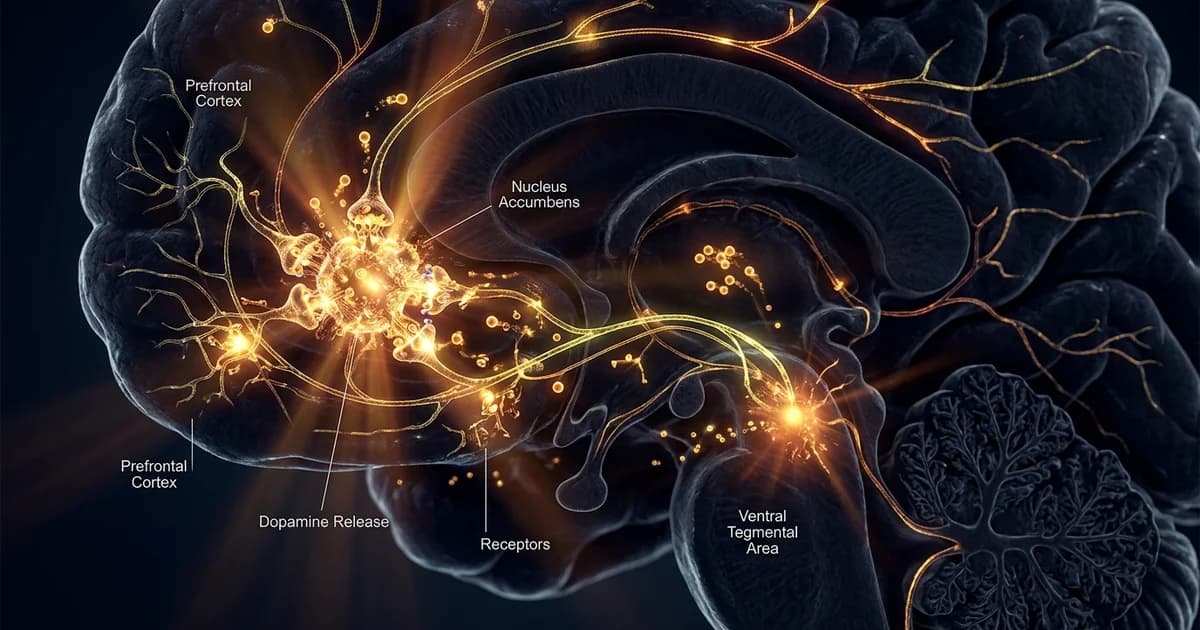
Dopamine doesn't work the way TikTok thinks it does. It's not a "pleasure chemical" you collect like coins in a video game. Huberman describes it as the molecule of motivation and wanting, not satisfaction.
In his Dopamine Masterclass episode, Huberman explains that dopamine operates on a system of baselines and peaks. Your baseline is your resting level of dopamine, the amount circulating in your brain at any given moment. Peaks are the spikes that happen when you do something rewarding, whether that's eating a great meal, finishing a workout, or scrolling through your phone.
The relationship between these two numbers determines how motivated you feel. And here's the part most people miss: every peak is followed by a trough that drops below your previous baseline. The bigger the spike, the deeper the dip.
This is the mechanism behind tolerance. It's why your third cup of coffee does less than your first. It's why the same playlist that used to fire you up for a workout now feels flat. Understanding this mechanism is central to the dopamine detox Andrew Huberman approach.
The Problem With "Dopamine Detox" as a Concept
The viral dopamine detox trend, popularized around 2019-2020, suggested that you could "reset" your dopamine by spending a day avoiding all stimulation. No phone, no music, no food beyond the basics. Some versions even recommended avoiding eye contact and conversation.
Huberman has pushed back on this framing. You can't actually deplete your brain of dopamine through normal activities, and you definitely can't "detox" from it. Dopamine is essential for basic motor function, learning, and survival. Parkinson's disease is what happens when dopamine-producing neurons die off. You don't want less dopamine. You want a healthy baseline. That distinction is what separates the dopamine detox Andrew Huberman recommends from the internet version.
What Huberman targets instead is the pattern of dopamine stacking, which he describes in his episode on overcoming procrastination. Stacking happens when you combine multiple dopamine-triggering stimuli into a single activity. Pre-workout plus energy drink plus loud music plus caffeine, all layered together before a gym session. Each one spikes dopamine on its own. Combined, they create an artificially massive peak that your brain can't sustain.
The crash that follows isn't just physical. It's motivational. Your brain recalibrates, and now the gym without all those extras feels pointless. You've trained your reward system to expect a hit that normal life can't deliver. This is exactly the cycle the dopamine detox Andrew Huberman protocol is designed to break.
The Huberman Dopamine Reset: What It Actually Looks Like
So what does a real Huberman dopamine reset involve? It's less dramatic than a "detox" and more sustainable. Here's how the dopamine detox Andrew Huberman method breaks down into practical steps.
1. Stop Stacking Dopamine Triggers
Huberman's first recommendation is to decouple your dopamine sources. If you always listen to music while running, sometimes run in silence. If you always drink coffee before deep work, occasionally skip it. The goal isn't to eliminate these things permanently. It's to prevent your brain from requiring the full stack to feel motivated.
He calls this intermittent reinforcement, and it's the same principle that makes slot machines addictive, except you're using it in reverse. By randomly varying your dopamine inputs, you keep your baseline stable and your peaks meaningful. This intermittent approach is the backbone of the dopamine detox Andrew Huberman strategy.
2. Use Cold Exposure Strategically
One of Huberman's most-cited tools for a Huberman dopamine reset is deliberate cold exposure. He references a study published in the European Journal of Applied Physiology that found cold water immersion at 14°C (57°F) increased plasma dopamine concentrations by 250% above baseline. Unlike stimulant-driven spikes, this increase was gradual and sustained, lasting for several hours without a sharp crash afterward.
Huberman's recommended protocol is roughly 11 minutes of total cold exposure per week, spread across 2-4 sessions. The water should be cold enough to make you want to get out but safe enough to stay in.
The key difference between cold exposure and something like a stimulant: the dopamine rise from cold water comes from your body's own stress response, not from an external chemical. This means it supports your baseline rather than borrowing against it, making cold exposure a core tool in the dopamine detox Andrew Huberman recommends.
3. Embrace the Trough
This is the counterintuitive piece. Huberman argues that the discomfort you feel after a dopamine peak, the flatness, the low motivation, is actually a feature of the system, not a bug. The trough is where your baseline resets.
Most people panic when they hit the trough and immediately reach for another stimulus. Another coffee. Another scroll session. Another hit of whatever got them high in the first place. This keeps the baseline suppressed and is the exact behavior the dopamine detox Andrew Huberman framework warns against.
Huberman's advice: sit with it. The trough passes. And when it does, your baseline comes back higher than it would have if you'd immediately chased another peak.
4. The 30-Day Reset for Serious Cases
For people dealing with genuine compulsive behavior around phones, social media, substances, or other high-dopamine habits, Huberman and Stanford psychiatrist Dr. Anna Lembke recommend a more structured approach. In their conversation on addiction, Lembke describes a 30-day abstinence protocol from the specific behavior or substance causing problems.
According to podcast notes from that episode, 30 days is the average time it takes for the brain to reset reward pathways. The first 10 days are the hardest. Anxiety, irritability, and cravings spike before they start to fade. By day 30, most people report a return to baseline, meaning normal activities feel rewarding again without needing the artificial boost.
This isn't a casual "dopamine detox weekend." It's a clinical recommendation from an addiction specialist at Stanford, and it represents the most intensive version of the Huberman dopamine reset protocol.
Dopamine Detox Andrew Huberman vs. the Internet Version: What He Gets Right
The internet turned dopamine into a villain. Huberman treats it like what it is: a biological system that responds to inputs. The system isn't broken. It's doing exactly what it evolved to do. The problem is that modern environments, engineered for maximum engagement, push the system harder than it was designed to handle.
Here's what the viral "detox" trend gets wrong compared to the dopamine detox Andrew Huberman actually teaches:
| Viral Dopamine Detox | Huberman's Actual Framework |
|---|---|
| Avoid all pleasure for a day | Strategically vary your dopamine inputs |
| Dopamine is "bad" in excess | Dopamine is neutral; the pattern of spikes and crashes matters |
| One day of deprivation resets everything | Real reset takes 14-30 days for entrenched habits |
| Sit in a dark room | Use cold exposure, exercise, and effort-based rewards |
| All-or-nothing approach | Intermittent reinforcement over time |
The dopamine detox Andrew Huberman framework works because it's grounded in how the dopaminergic system actually functions. It's not about punishment or deprivation. It's about giving your reward circuitry room to recalibrate.
Why Your Dopamine Detox Andrew Huberman Strategy Matters More Than Any Single Hack
The deeper point in Huberman's work is that dopamine management isn't a one-time event. It's an ongoing practice. The people who maintain sharp focus and sustained motivation over months and years aren't the ones who did a single dopamine detox. They're the ones who built daily habits that keep their baseline healthy.
That means being deliberate about what you stack. It means occasionally doing hard things without a reward attached. And it means recognizing that the low-motivation dip after a big win is temporary and normal, not something that needs to be medicated away with another stimulus.
The dopamine detox Andrew Huberman approach also raises an important question about the tools you use daily. Most stimulants, caffeine included, work by creating a dopamine spike that your brain eventually adapts to. You need more to get the same effect. That's tolerance, and it's the exact pattern a Huberman dopamine reset is designed to counteract.
So the question becomes: is there a way to support focus and motivation without constantly borrowing against your dopamine baseline?
Support Your Dopamine System, Don't Override It
The entire dopamine detox Andrew Huberman framework points to one principle: work with your neurochemistry, not against it. That means choosing inputs that support a healthy dopamine baseline rather than ones that spike it and leave you worse off.
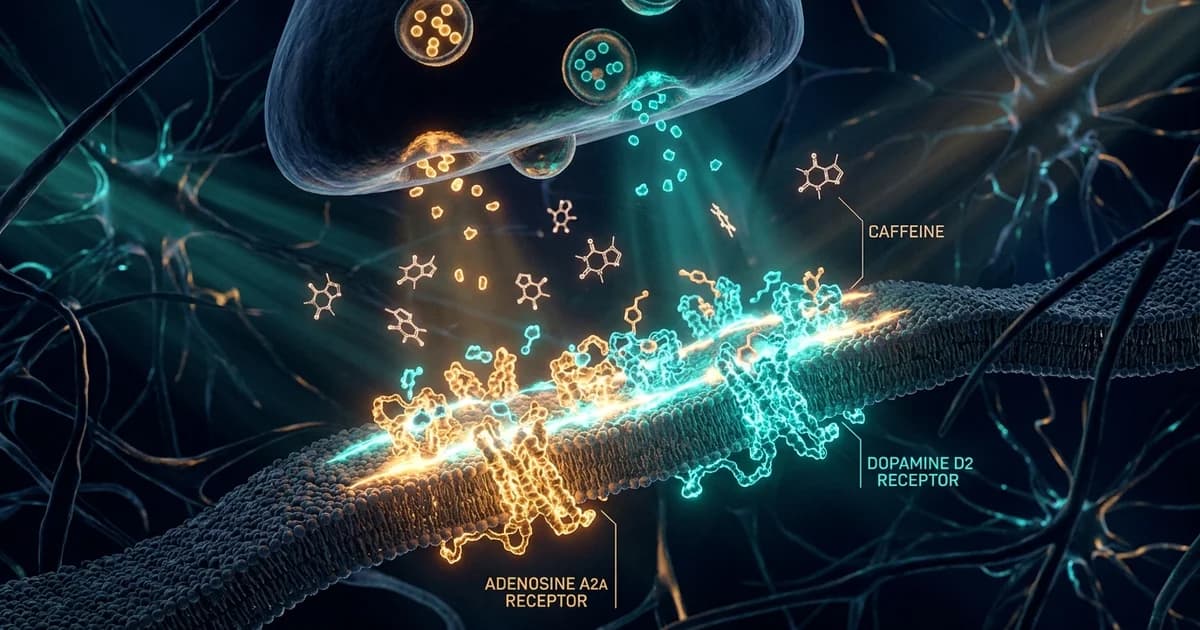
Roon was designed around this idea. Its active ingredients, Theacrine and Methylliberine, interact with dopamine and adenosine receptors in a way that research shows does not produce the same tolerance pattern as caffeine alone. Combined with caffeine (80mg, comparable to a cup of coffee) and L-Theanine, the formula delivers 6-8 hours of sustained focus without the spike-and-crash cycle that degrades your baseline over time. The difference isn't a smaller dose; it's the stack and the curve: L-Theanine smooths the caffeine, while Theacrine and Methylliberine extend it into hours of steady energy with no jitters, no crash, and no tolerance buildup.
If you're serious about applying the dopamine detox Andrew Huberman principles while still performing at a high level, that's the kind of approach worth considering. Not a detox. Not deprivation. Just smarter inputs.