L-Theanine vs GABA: How They Work Together
Roon Team
L-Theanine vs GABA: How They Work Together (And Why One Works Better Than the Other)
You've seen both on the supplement shelf. L-theanine and GABA sit side by side in the "calm and focus" aisle, promising similar things: less stress, better sleep, sharper thinking. But the l theanine vs gaba comparison isn't really a fair fight. One of these compounds has a serious delivery problem that most supplement brands don't want to talk about.
Here's what the science actually says about how they differ, how they overlap, and why one is far more useful as an oral supplement than the other.
Key Takeaways:
- GABA is your brain's primary inhibitory neurotransmitter, but oral GABA supplements struggle to cross the blood-brain barrier.
- L-theanine crosses the blood-brain barrier easily and indirectly raises your brain's GABA levels.
- When combined, GABA and L-theanine show stronger effects than either one alone, at least in animal models.
- For daily cognitive performance, L-theanine is the more practical and well-studied choice.
What GABA Actually Does in Your Brain
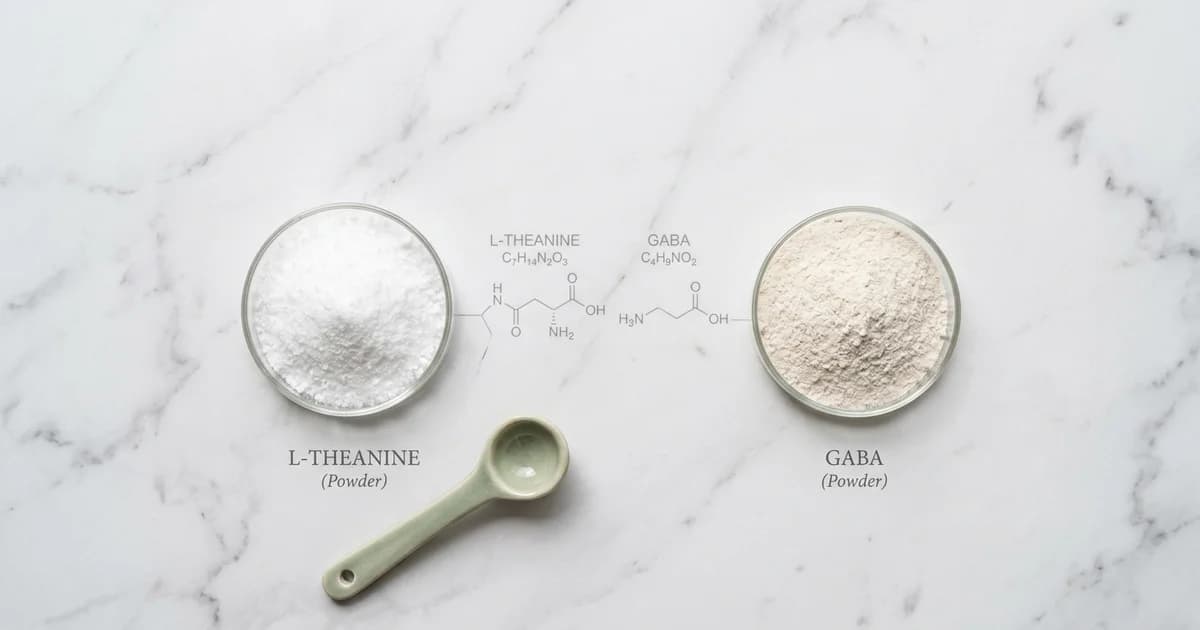
GABA (gamma-aminobutyric acid) is the main inhibitory neurotransmitter in your central nervous system. According to the Cleveland Clinic, GABA works by blocking specific signals in your brain and spinal cord, essentially slowing down neural activity. Think of GABA as the brakes on your nervous system.
Every time you feel calm after a stressful moment passes, GABA is part of that process. GABA reduces neuronal excitability, helps regulate anxiety, and plays a direct role in sleep onset. Drugs like benzodiazepines and certain sleep medications work precisely because they enhance GABA's effects at the receptor level.
Low GABA activity is associated with anxiety, insomnia, and difficulty managing stress. When GABA signaling works well, you feel composed. When GABA signaling fails, your brain stays in overdrive.
So the logic seems straightforward: if GABA calms the brain, just take more GABA. Right?
Not exactly.
The Blood-Brain Barrier Problem in the L Theanine vs GABA Debate
This is where the l theanine vs gaba conversation gets interesting. Your brain is protected by a highly selective membrane called the blood-brain barrier (BBB). The BBB decides what gets in and what stays out. And GABA, as an oral supplement, has a hard time getting through.
A systematic review published in Frontiers in Neuroscience examined whether oral GABA actually affects stress and sleep in humans. The conclusion: there is "limited evidence" for stress benefits and "very limited evidence" for sleep benefits. The core issue is that researchers still debate how much orally ingested GABA actually reaches the brain. Some studies suggest only small amounts cross the BBB, while others point to GABA transporter systems that might allow more through.
A 2023 review in PMC put it plainly: while there is substantial evidence that oral GABA may affect GABA receptors in peripheral tissues, there is comparatively less evidence supporting its direct action within the brain.
This doesn't mean GABA supplements do nothing. Some users report feeling calmer, and there are theories about gut-brain axis signaling and peripheral nervous system effects. The enteric nervous system in your gut has its own GABA receptors, and oral GABA may act on those, sending calming signals to the brain through the vagus nerve. But the mechanism is murky, and the evidence base is thin compared to other compounds.
The bottom line on GABA supplements: the molecule itself is essential. The delivery method is the problem.
What L-Theanine Does Differently in the L Theanine vs GABA Matchup
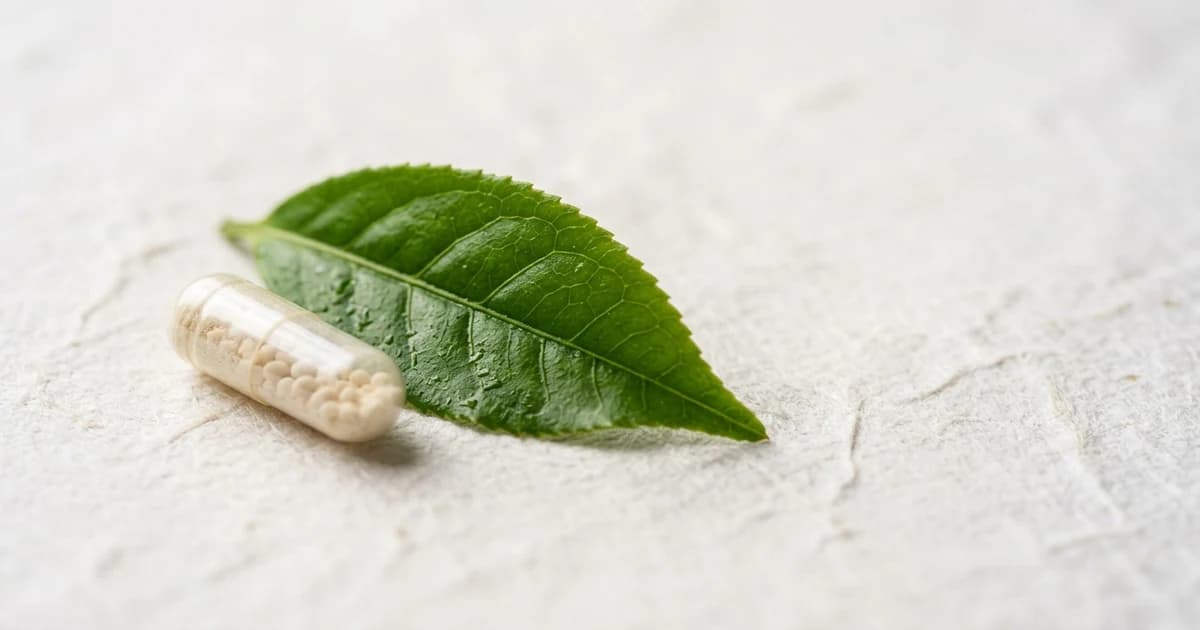
L-theanine is an amino acid found naturally in green tea. Structurally, l-theanine is an analog of glutamate, the brain's primary excitatory neurotransmitter. But unlike GABA, l-theanine crosses the blood-brain barrier without difficulty. Memorial Sloan Kettering Cancer Center confirms that as a non-protein amino acid, l-theanine crosses the BBB and exerts anxiolytic and calming effects through inhibitory neurotransmitter modulation.
Once inside the brain, l-theanine does something elegant: it raises GABA levels indirectly. According to Psychology Today, l-theanine elevates levels of GABA, serotonin, and dopamine, three neurotransmitters that regulate emotions, mood, and concentration.
So rather than trying to force GABA through a barrier it can barely cross, l-theanine slips through on its own and tells your brain to produce more GABA naturally.
L-theanine also has a measurable effect on brain wave activity. A 2021 randomized, triple-blind, placebo-controlled study published in Neurology and Therapy found that a single 200mg dose of l-theanine improved physiological indicators of stress, including increased alpha brain wave power in the frontal region and reduced salivary cortisol. Alpha waves are associated with a state of relaxed alertness, the mental state where you're calm but not drowsy.
L Theanine vs GABA: A Side-by-Side Comparison
| Factor | GABA (Oral Supplement) | L-Theanine |
|---|---|---|
| What it is | Inhibitory neurotransmitter taken directly | Amino acid from green tea |
| Crosses the BBB | Poorly, debated | Yes, readily |
| Effect on brain GABA | Unclear when taken orally | Raises GABA levels indirectly |
| Alpha wave activity | Not well-documented | Increases alpha waves at 200mg |
| Effect on other neurotransmitters | Primarily GABAergic | Also raises serotonin and dopamine |
| Clinical evidence base | Limited for oral forms | Strong, multiple RCTs |
| Typical dose | 100-750mg | 100-200mg |
The l theanine vs gaba comparison makes the practical difference clear. GABA is essential inside your brain, but getting GABA there through a capsule is the problem. L-theanine bypasses that issue entirely.
What Happens When You Combine L-Theanine and GABA
Despite GABA's bioavailability issues, the combination of GABA and l-theanine has shown some promising results, particularly for sleep.
A 2019 study published in Pharmaceutical Biology tested a GABA/l-theanine mixture in mice and found that the combination decreased sleep latency by 20.7% and increased sleep duration by 87.3% compared to either GABA or l-theanine alone. The researchers concluded that the mixture has a "positive combined effect on sleep quality and duration."
The same study found that the combination increased expression of GABA receptors and GluN1 glutamate receptor subunits in the brain, suggesting the two compounds affect different but complementary pathways. L-theanine may prime the receptor environment while GABA acts on those receptors directly, creating a stronger net effect than either ingredient alone.
There's a catch, though. This was an animal study using injected and oral dosing in mice. Human trials on the specific l theanine vs gaba combination are still sparse. The complementary effect is plausible and the mechanism makes sense, but we're waiting on stronger human data before drawing firm conclusions.
Why L-Theanine Is the Smarter Daily Choice
If you're weighing l theanine vs gaba for everyday cognitive performance, l-theanine wins on practicality and evidence.
L-theanine works through multiple pathways. L-theanine doesn't just bump up GABA. Animal neurochemistry studies suggest l-theanine increases brain serotonin, dopamine, and GABA levels while also having affinities for AMPA, kainate, and NMDA receptors. That's a broad neurochemical profile from a single amino acid.
L-theanine promotes calm without sedation. This is the key distinction in the l theanine vs gaba discussion. GABA's entire job is inhibition. L-theanine promotes relaxation while preserving (and sometimes enhancing) focus. That alpha wave boost translates to a mental state where you're alert but not wired.
L-theanine pairs well with stimulants. The GABA/l-theanine sleep study actually showed that their combination could reverse caffeine-induced sleep reduction in rats. L-theanine's ability to smooth out caffeine's rough edges is one of its most well-documented effects. L-theanine takes the jitters and anxiety out of stimulation, leaving you with clean energy and focus.
The dosing is simple. Most studies showing cognitive and stress benefits use between 100mg and 200mg of l-theanine. You don't need to megadose l-theanine, and it doesn't build tolerance the way many other compounds do.
L-theanine has a strong safety profile. L-theanine has been consumed in tea for thousands of years and is classified as Generally Recognized as Safe (GRAS) by the FDA. Side effects at standard doses are rare to nonexistent. That matters if you're looking for something you can take daily without worrying about diminishing returns or adverse reactions.
The Bottom Line on L Theanine vs GABA
GABA is one of the most important molecules in your brain. That's not up for debate. But taking GABA as a pill and expecting it to reach your neurons is a different story entirely. The science on oral GABA supplements is shaky, and the blood-brain barrier is a real obstacle that no marketing copy can wish away.
L-theanine solves the problem from the inside. L-theanine crosses into the brain, raises GABA naturally, boosts serotonin and dopamine alongside GABA, and generates the kind of calm, focused state that most people are actually looking for when they reach for a GABA supplement in the first place.
If the l theanine vs gaba question brought you here, the answer is clear: l-theanine is the more direct path, which is exactly why l-theanine is a core ingredient in Roon. Each Roon pouch delivers l-theanine alongside caffeine, theacrine, and methylliberine through sublingual absorption, putting the compound to work in minutes rather than waiting on your gut to sort it out. If you've been stacking supplements trying to get this right, it might be worth simplifying.