L-Theanine and Depression: What the Science Actually Says
Roon Team
L-Theanine and Depression: What the Science Actually Says
You're staring at a screen, reading the same sentence for the fourth time. The fog won't lift. Coffee made you jittery but didn't fix the flatness. So you start Googling amino acids, and the term l theanine depression keeps showing up in study after study. But does this tea-derived compound actually do anything meaningful for depressive symptoms, or is it just another supplement with more hype than evidence?
The answer is more interesting than you'd expect. And the research is finally catching up to the claims.
Key Takeaways:
- L-theanine modulates serotonin, dopamine, and GABA, three neurotransmitters directly tied to mood regulation.
- Clinical trials show measurable reductions in depressive symptoms when L-theanine is added to standard antidepressant therapy.
- Doses between 200 and 400 mg per day appear safe and well-tolerated in studies lasting up to eight weeks.
- L-theanine is not a replacement for professional mental health treatment, but the data supporting l theanine depression relief as a complementary tool is growing.
What Is L-Theanine, and Why Does It Matter for Depression?
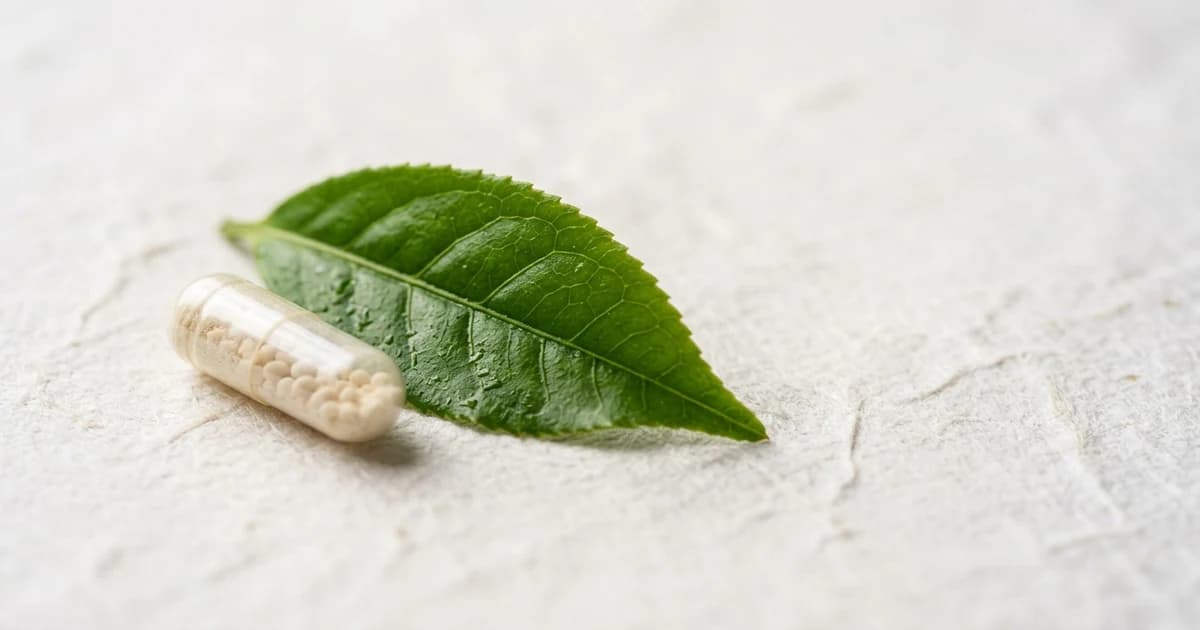
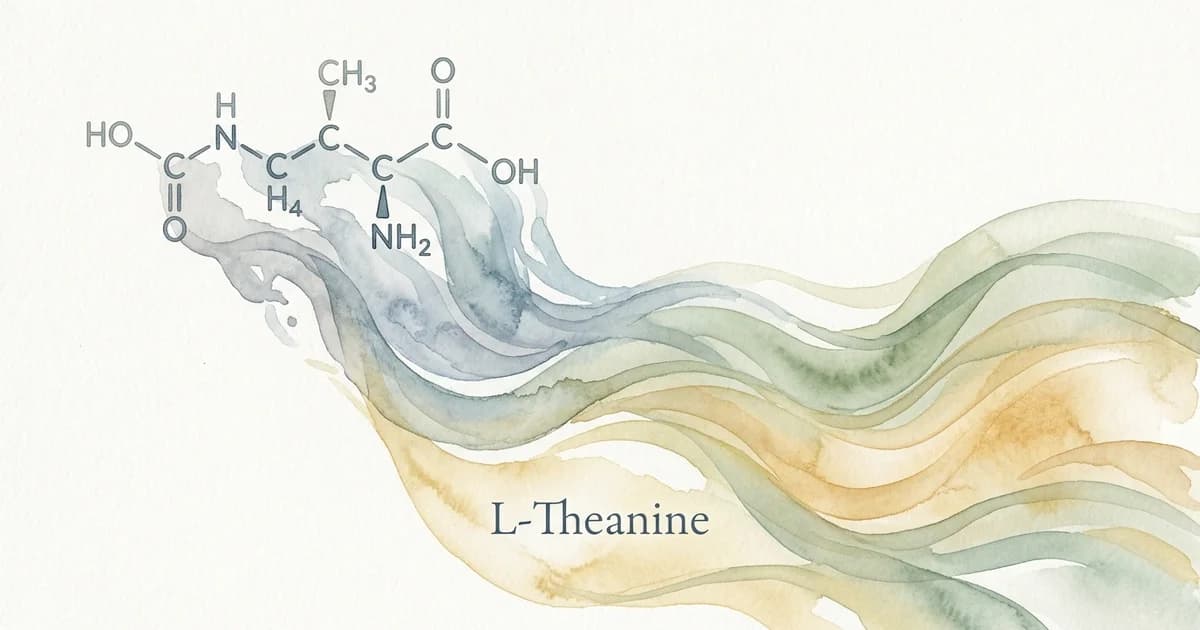
L-theanine (N-ethyl-L-glutamine) is an amino acid found almost exclusively in tea leaves, particularly green tea. L-theanine crosses the blood-brain barrier within about 30 minutes of ingestion, which is fast for a dietary amino acid.
Once it reaches the brain, L-theanine does something unusual: it influences multiple neurotransmitter systems at once. According to a neuropharmacology review published on PubMed, animal studies show that L-theanine increases brain levels of serotonin, dopamine, and GABA while also interacting with AMPA, kainate, and NMDA glutamate receptors. That's a wide pharmacological footprint for a single amino acid.
This matters for l theanine depression research because the condition isn't just a "serotonin problem." Modern neuroscience points to disruptions across multiple systems: dopamine (motivation and reward), GABA (inhibition and calm), and glutamate (excitation and neuroplasticity). L-theanine touches all of them.
How L-Theanine Affects the Brain Chemistry Behind Depression
Serotonin and Dopamine Modulation
Most antidepressants target serotonin. L-theanine takes a different route. As ScienceDirect reports, L-theanine increases dopamine, serotonin, and the inhibitory neurotransmitter glycine in the brain. L-theanine doesn't force these levels up the way a pharmaceutical might. Instead, it appears to shift the balance between excitatory and inhibitory signaling, letting calming pathways take priority.
Think of it less like flipping a switch and more like turning down the volume on neural noise.
GABA: The Calming Neurotransmitter
GABA is the brain's primary inhibitory neurotransmitter. Low GABA activity is linked to anxiety, insomnia, and depressive rumination (that relentless loop of negative thoughts you can't shut off). Psychology Today notes that L-theanine elevates levels of GABA along with serotonin and dopamine, and that these neurotransmitters work together to regulate emotions, mood, and concentration.
This multi-target action is part of what makes l theanine depression research so interesting to scientists. Single-target drugs sometimes miss the full picture. A compound that nudges several systems simultaneously, even gently, may fill gaps that SSRIs alone cannot.
As ZRT Laboratory explains, L-theanine appears to reduce excitatory pathways by activating inhibitory ones, triggering downstream increases in dopamine and serotonin in select brain regions. The net effect: less neural overactivity, more balanced mood signaling.
Alpha Brain Waves and the Relaxation Connection
Here's where l theanine depression benefits separate from most supplements. L-theanine promotes alpha brain wave activity, the electrical pattern your brain produces during states of calm, focused attention. A study published in Asia Pacific Journal of Clinical Nutrition found that L-theanine increases alpha frequency band activity, relaxing the mind without causing drowsiness.
Depression often comes with a wired-but-tired feeling. You're mentally exhausted yet unable to relax. Alpha wave promotion addresses that specific state. It's the neurological equivalent of your brain finally exhaling.
L Theanine Depression Evidence: What the Clinical Trials Show
Let's look at the actual human data.
The MDD Open-Label Study (Hidese et al.)
In a study published in Acta Neuropsychiatrica, 20 patients with major depressive disorder (MDD) received 250 mg/day of L-theanine alongside their existing medication for eight weeks. The results showed improvements in depressive symptoms, anxiety-trait scores, and sleep quality. The researchers concluded that chronic L-theanine administration "is safe and has multiple beneficial effects on depressive symptoms, anxiety, sleep disturbance and cognitive impairments in patients with MDD."
The limitation? The study was open-label, meaning there was no placebo group. That makes it hard to rule out expectation effects. But it established safety and pointed toward something worth investigating further.
The Sertraline Adjunct Trial (Shamabadi et al., 2023)
This is the stronger piece of l theanine depression evidence. A randomized, double-blind, placebo-controlled trial published in the Journal of Affective Disorders assigned 60 patients with MDD to receive either sertraline plus L-theanine or sertraline plus placebo. The L-theanine group showed superior response and remission rates by week six, and the frequency of side effects was comparable between groups.
In plain terms: adding L-theanine to a standard SSRI worked better than the SSRI alone, without adding extra side effects. That's a meaningful finding, even if the sample size was small.
Healthy Adults Under Stress (Hidese et al., 2019)
A randomized, placebo-controlled, crossover trial published in Nutrients tested L-theanine in 30 healthy adults. After four weeks, the L-theanine group showed decreased scores on the Self-rating Depression Scale, the State-Trait Anxiety Inventory, and the Pittsburgh Sleep Quality Index. Verbal fluency and executive function also improved.
This study matters because it suggests l theanine depression benefits aren't limited to people with diagnosed conditions. If you're dealing with subclinical low mood, stress-driven cognitive fog, or poor sleep that drags your mood down, the data suggests L-theanine may help there too.
The 2024 Systematic Review
A systematic review published in BMC Psychiatry examined L-theanine supplementation across multiple mental health conditions. The findings indicated that L-theanine reduced psychiatric symptoms more effectively than control conditions in individuals with schizophrenia, anxiety disorders, and ADHD. For l theanine depression specifically, the review highlighted the Shamabadi trial as evidence that L-theanine as an adjunct to sertraline outperforms placebo.
The pattern across these studies is consistent. L-theanine doesn't produce dramatic overnight changes. What it does produce are steady, measurable improvements in mood, anxiety, sleep, and cognition over weeks of consistent use. That profile fits well with what we know about how neurotransmitter balance actually shifts: gradually, not all at once.
The Gut-Brain Connection: A New Angle on L Theanine Depression
Emerging research is exploring how L-theanine affects depression through the gut. A 2025 study published in npj Science of Food found that L-theanine improved depression-like behavior in stressed mice by restoring intestinal homeostasis and modulating the gut-short-chain fatty acids-brain axis. The compound reduced neuroinflammation and restored gut barrier integrity.
This is animal research, so direct translation to humans requires caution. But it aligns with the broader scientific understanding that gut health and mental health are deeply connected, and it opens another potential pathway through which l theanine depression support may operate.
L Theanine Depression Dosage: What the Research Uses
| Study | Daily Dose | Duration | Population |
|---|---|---|---|
| Hidese et al. (open-label) | 250 mg | 8 weeks | MDD patients |
| Shamabadi et al. (RCT) | Not specified (adjunct) | 6 weeks | MDD patients |
| Hidese et al. (RCT, healthy adults) | 200 mg | 4 weeks | Healthy adults |
| ScienceDirect review | 200–400 mg | Up to 8 weeks | Mixed |
A review on ScienceDirect summarized that daily doses ranging from 200 to 400 mg for up to eight weeks appear safe and produce anxiolytic and anti-stress effects in both acute and chronic conditions. Most clinical l theanine depression research clusters around the 200 to 250 mg range.
For context, a typical cup of green tea contains about 25 mg of L-theanine. You'd need eight to ten cups per day to reach the doses used in studies. That's why supplementation is the practical route.
What L-Theanine Won't Do for Depression
Let's be direct about the boundaries.
L-theanine is not an antidepressant. It does not replace SSRIs, SNRIs, therapy, or any other evidence-based treatment for clinical depression. If you're experiencing persistent depressive symptoms, the first step is always a conversation with a healthcare provider.
The clinical trials we've covered used L-theanine as an add-on to existing treatment, not a standalone intervention. That distinction matters. No responsible reading of the l theanine depression data leads to "skip your medication and drink green tea instead."
What L-theanine appears to do, based on the current evidence, is support mood regulation through multiple neurochemical pathways. L-theanine may enhance the effects of standard treatments. It promotes a calm, focused mental state that is essentially the opposite of what depression feels like: foggy, flat, and stuck.
On the safety front, the data is reassuring. Across the studies reviewed here, L-theanine was well-tolerated with side effect profiles comparable to placebo. No dependency. No withdrawal symptoms. No cognitive dulling, which is a common complaint with some psychiatric medications.
It's a tool. A good one, based on the data. But a tool, not a cure.
A Simpler Way to Get Your L-Theanine
If the l theanine depression research has you interested in adding L-theanine to your daily routine, the question becomes delivery. Capsules work, but timing and absorption vary. Tea gives you too little per cup.
Roon takes a different approach. Each pouch delivers L-theanine alongside caffeine, theacrine, and methylliberine through sublingual absorption, meaning it enters your system faster than anything you swallow. No nicotine. No crash. Just a clean, sustained focus that lasts six to eight hours.
Roon is not marketed as a depression treatment, because it isn't one. But if you want the daily L-theanine that the research keeps pointing toward, packed into something you can use anywhere without brewing a pot of tea, it's worth a look.