Dopamine vs. Serotonin Difference: A Head-to-Head Comparison
Roon Team
Dopamine vs. Serotonin Difference: A Head-to-Head Comparison
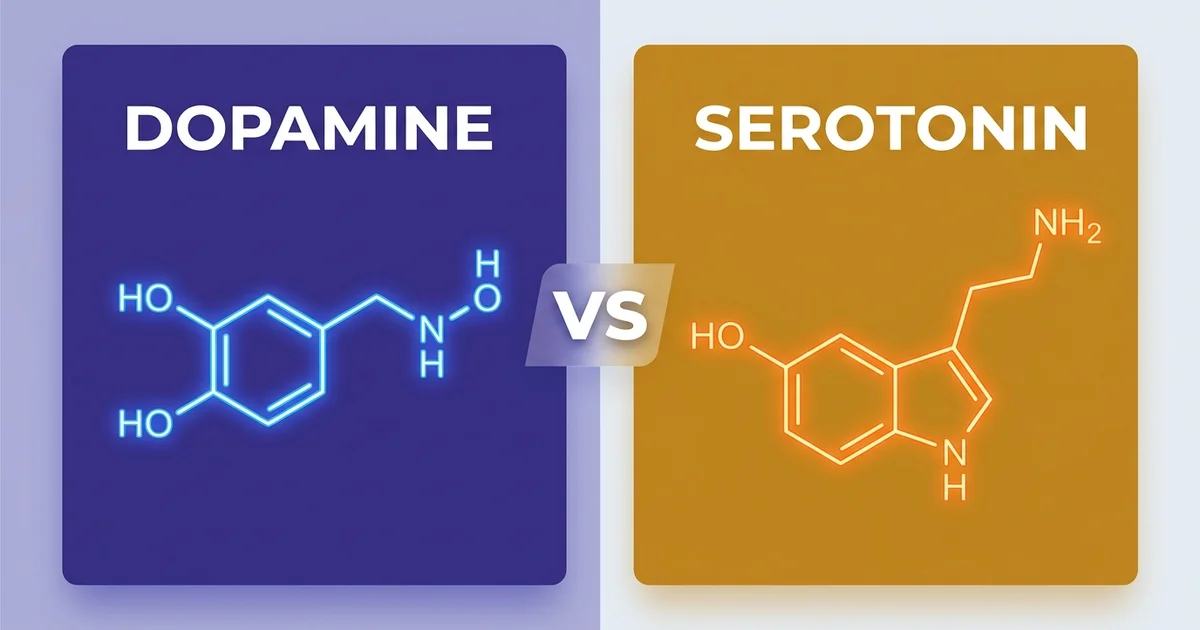
You've probably heard dopamine called the "motivation molecule" and serotonin the "happiness chemical," but understanding these three key brain chemicals goes much further than those labels. Those labels aren't wrong, exactly. But they're so reductive they might as well be wrong. The real dopamine vs serotonin difference runs deeper than pop-science Instagram posts suggest, and understanding it changes how you think about focus, mood, sleep, and the products you put in your body.
Here's what you actually need to know.
Key Takeaways
- Dopamine drives motivation, reward-seeking, and motor control. It's the reason you start a task.
- Serotonin regulates mood stability, sleep onset, and digestion. It's the reason you feel okay while doing it.
- The dopamine vs serotonin difference shows up in how the two neurotransmitters interact: an imbalance in one affects the other.
- Certain compounds, like L-Theanine, influence both dopamine and serotonin levels simultaneously.
What Is Dopamine, Really?
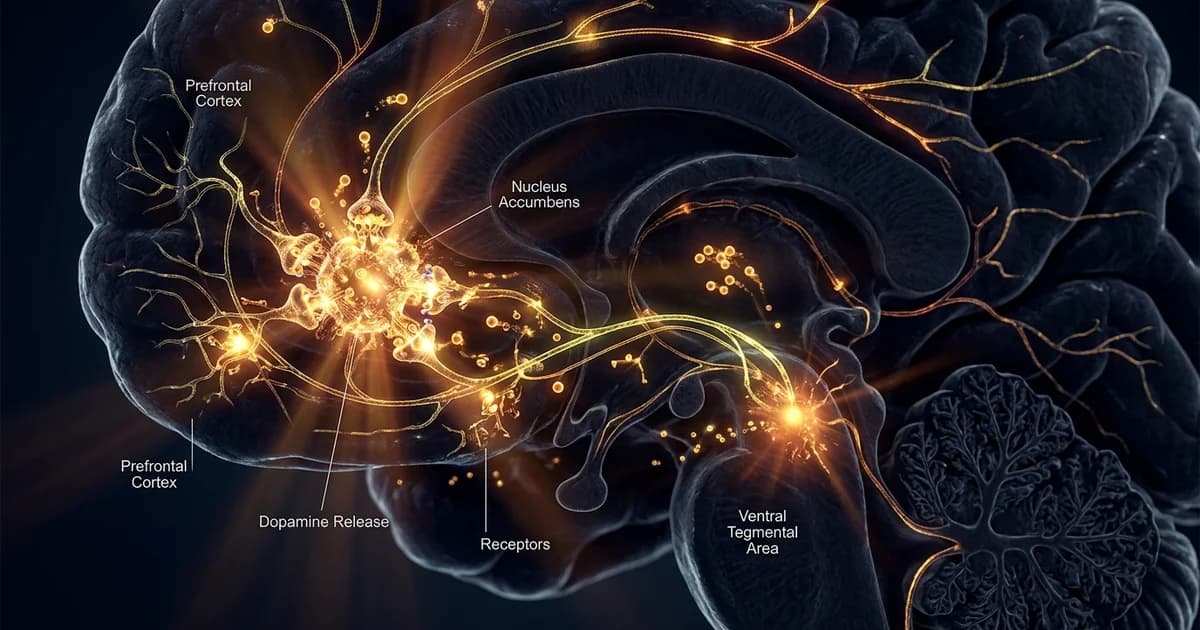
To fully grasp the dopamine vs serotonin difference, you need to understand each chemical on its own terms. Dopamine is a neurotransmitter produced in several areas of the brain, primarily the ventral tegmental area and the substantia nigra. According to research in PMC, some dopamine neurons encode motivational value, supporting brain networks for seeking, evaluation, and value learning.
But here's where most people get it wrong: dopamine isn't about pleasure itself. It's about the anticipation of pleasure. According to research published in the Journal of Neurophysiology, dopamine represents the motivational value of a cue or reward and promotes expression of reward-related behaviors. That distinction matters. Dopamine spikes when you expect a reward, not necessarily when you receive one.
Beyond motivation, dopamine plays a role in motor control, arousal, sleep regulation, and even how your kidneys process sodium. It's not a single-purpose chemical. It's a multi-system coordinator.
Dopamine's Role in Focus and Drive
When dopamine levels are healthy, you feel alert, motivated, and locked in. When they're depleted, whether from poor sleep, chronic stress, or overstimulation, the result is brain fog, procrastination, and that "I know what I should do but can't make myself do it" feeling.
Dopamine depletion doesn't just make you lazy, and the interplay of dopamine and serotonin in ADHD makes that gap between intention and action even harder to close. It makes the gap between intention and action feel impossibly wide. You can see the deadline. You understand the consequences. You still can't start. That's not a willpower problem. That's a neurochemistry problem, and it's one side of the dopamine vs serotonin difference that hits hardest in daily life.
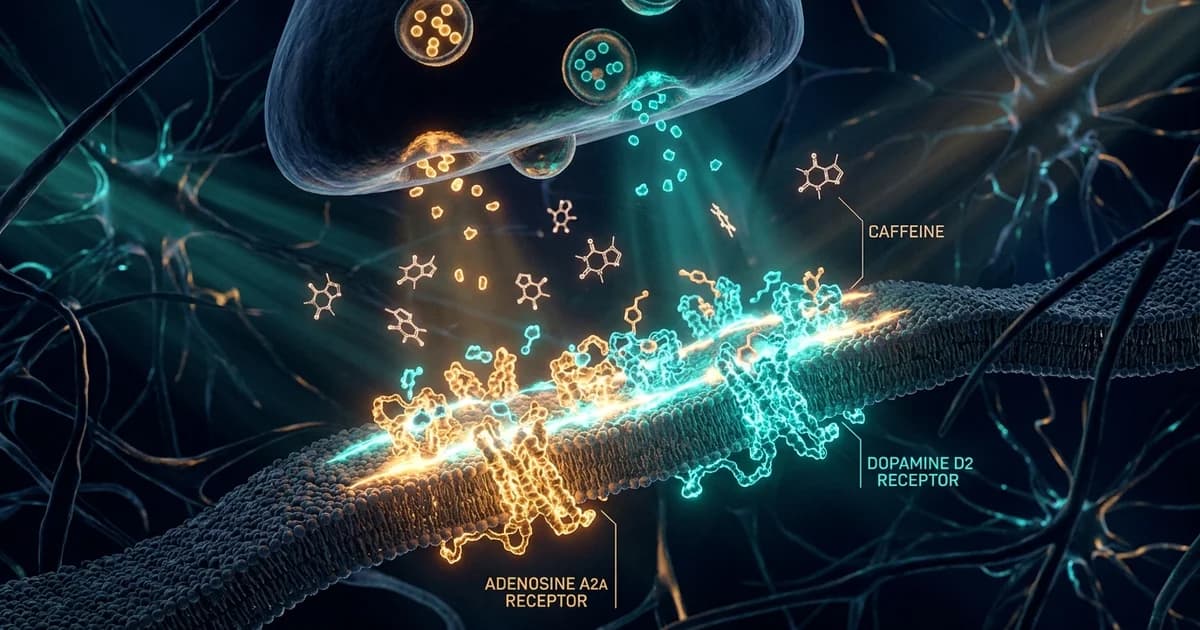
This is why so many cognitive performance products target the dopamine system. Caffeine, for example, works partly by blocking adenosine receptors, which indirectly increases dopamine signaling. The problem is that caffeine alone often overshoots, producing jitters and a hard crash.
What Is Serotonin, Really?
The other half of the dopamine vs serotonin difference starts in an unexpected place: your gut. Serotonin (5-hydroxytryptamine, or 5-HT) is the neurotransmitter most associated with emotional stability and well-being. But the most surprising fact about serotonin has nothing to do with your brain: approximately 90% of your body's serotonin is synthesized in the gastrointestinal tract, not in your head.
Your brain produces its own serotonin from the amino acid tryptophan, and this brain-derived serotonin is what influences mood. Gut-derived serotonin typically does not cross the blood-brain barrier, so the two pools operate somewhat independently. Still, the gut-brain connection is real. Disruptions in gut serotonin production are linked to digestive issues, and the relationship between gut health and mental health is one of the most active areas of neuroscience research.
Serotonin's Role in Mood and Sleep
Serotonin helps regulate mood, appetite, body temperature, and the sleep-wake cycle. In the dorsal raphe nucleus, high serotonin is associated with wakefulness, but an accumulation of serotonin over time may actually promote sleep onset. Serotonin is also involved in preventing rapid eye movement (REM) sleep.
Low serotonin levels are associated with depression, anxiety, and sleep disorders. This is the basis for SSRIs (selective serotonin reuptake inhibitors), the most commonly prescribed class of antidepressants, which work by keeping more serotonin available in the synaptic cleft.
Think of serotonin as the neurochemical floor beneath your mood. The dopamine vs serotonin difference is clearest here: dopamine might be the spark that gets you moving, but serotonin is what keeps you from feeling terrible while you do it. Without adequate serotonin, even a dopamine-fueled burst of productivity can feel hollow and anxious.
The Dopamine vs Serotonin Difference: A Side-by-Side Breakdown
Here's where the two neurotransmitters diverge most clearly:
| Feature | Dopamine | Serotonin |
|---|---|---|
| Primary Role | Motivation, reward, motor control | Mood stability, sleep, digestion |
| Produced Where | Midbrain (VTA, substantia nigra) | Brainstem (dorsal raphe) and gut (~90%) |
| "Feeling" | Drive, wanting, anticipation | Calm, contentment, well-being |
| Effect on Sleep | Promotes wakefulness, inhibits melatonin | Promotes wakefulness acutely; aids sleep onset over time |
| When Low | Brain fog, low motivation, fatigue | Depression, anxiety, sleep disruption |
| Key Precursor | Tyrosine | Tryptophan |
| Regulation | Constrained by synthesis and repackaging | Sensitive to uptake and metabolic degradation |
That last row highlights a lesser-known dopamine vs serotonin difference. A study published in PMC that simultaneously measured dopamine and serotonin release in rat brains found that serotonin transmission is "profoundly restricted in comparison with dopamine release despite comparable tissue content levels." In plain English: your brain keeps serotonin on a much tighter leash.
How Dopamine and Serotonin Interact
Understanding the dopamine vs serotonin difference also means understanding how these two neurotransmitters talk to each other. They don't operate in isolation. Research from the Harvard Brain Science Initiative explored what happens when serotonin neurons are prevented from receiving dopaminergic signals. The finding? In rodents, most dopamine-producing neurons express receptors for serotonin, giving serotonergic neurons influence over dopamine-regulated reward processing and motor control.
The relationship is bidirectional. Dopamine can modulate serotonin release, and serotonin can modulate dopamine release. This is why targeting just one system often produces side effects. SSRIs, for instance, can sometimes blunt motivation and emotional range, likely because altering serotonin levels ripples into the dopamine system.
The same principle applies to stimulants. Pure dopamine agonists can produce laser focus for an hour, then leave you irritable and emotionally flat. That's the serotonin side of the equation protesting. The dopamine vs serotonin difference isn't just academic; it has real consequences for anyone relying on single-pathway stimulants.
For cognitive performance, the implication is clear: the best approach isn't to crank up one neurotransmitter while ignoring the other. It's to support both systems in balance.
What the Dopamine vs Serotonin Difference Means for Cognitive Performance
If your goal is sustained focus without the emotional flatness of overstimulation or the crash of a single-system spike, you need compounds that work across both pathways.
L-Theanine is one of the few ingredients with evidence for doing exactly that. Animal neurochemistry studies show that L-Theanine increases brain serotonin, dopamine, and GABA levels. It doesn't just push one lever. It supports the broader neurochemical environment that makes sustained focus possible, effectively bridging the dopamine vs serotonin difference rather than picking a side.
Pair L-Theanine with a moderate dose of caffeine and the results get more interesting. A study published in Nutritional Neuroscience found that 97 mg of L-Theanine combined with 40 mg of caffeine improved accuracy during task switching and self-reported alertness, while also reducing tiredness. The caffeine provides the dopaminergic push. The L-Theanine smooths out the ride by supporting serotonin and GABA alongside it.
This combination, caffeine plus L-Theanine, is the foundation of a growing category of cognitive performance products designed to work with your neurochemistry rather than bulldozing through it.
A 2025 study on elite wrestlers published in the Journal of the International Society of Sports Nutrition confirmed this pattern: the caffeine-plus-L-Theanine combination enhanced cognitive performance to a greater extent than either supplement alone, even under physical fatigue.
Choosing the Right Cognitive Support
Most focus products on the market lean heavily on the dopamine side of the equation. High-dose caffeine, nicotine pouches, prescription stimulants: they all spike dopamine, produce a short burst of alertness, and then leave you dealing with the aftermath. Jitters. Crashes. Tolerance buildup that forces you to use more to get the same effect. They ignore the dopamine vs serotonin difference entirely.
The smarter play is a formulation that respects the dopamine-serotonin balance. That means a caffeine dose comparable to a cup of coffee (not 200+ mg), paired with L-Theanine for serotonin and GABA support, and ideally compounds like Theacrine and Methylliberine that extend the duration of focus without accelerating tolerance. Once you understand the dopamine vs serotonin difference, single-pathway stimulants start to look like a bad deal.
That's the exact stack behind Roon, a zero-nicotine sublingual pouch built around 80 mg of caffeine, L-Theanine, Theacrine, and Methylliberine. It's designed for 6 to 8 hours of clean, sustained focus, no jitters, no crash, no tolerance spiral. Instead of hammering one neurotransmitter system and hoping for the best, it works across the pathways that actually matter.
If you've been chasing focus with products that leave you wired and then wiped, it might be time to try something built on better science. See how Roon compares.