How Long to Reset Dopamine Receptors? What the Science Actually Says
Roon Team
How Long to Reset Dopamine Receptors? What the Science Actually Says
Your morning coffee stopped working three cups ago. The playlist that used to light you up sounds flat. You scroll through your phone for twenty minutes, feel nothing, and keep scrolling anyway. Something is off, and you suspect your dopamine system is to blame.
You're probably right. And the first question everyone asks is: how long to reset dopamine receptors? The honest answer is somewhere between a few weeks and over a year, depending on what caused the downregulation in the first place and what you do about it.
This isn't a vague "it depends" answer designed to waste your time. The research on how long to reset dopamine receptors gives us real timelines. Let's break them down.
Key Takeaways
- Dopamine receptor recovery follows a general timeline: initial improvements in 2 to 4 weeks, major recovery at 60 to 90 days, and full normalization potentially taking 6 to 12+ months.
- The cause of downregulation matters. Substance-driven damage takes longer to repair than behavioral overstimulation from screens or food.
- Exercise, sleep, and reduced stimulation are the three strongest evidence-backed accelerators when considering how long to reset dopamine receptors.
- "Dopamine fasting" is a real concept rooted in behavioral therapy, but most people misunderstand what it actually does.
What Dopamine Receptor Downregulation Actually Means
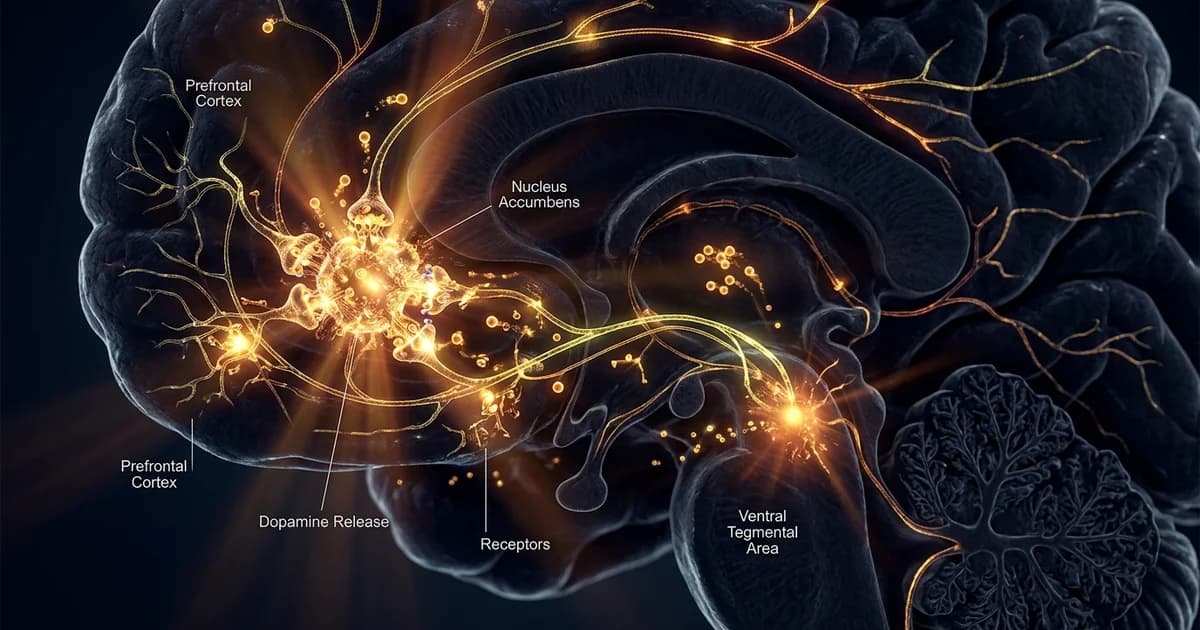
Dopamine doesn't make you feel pleasure. It makes you want things. It's the neurochemical signal that says "that was good, do it again." Your brain uses dopamine receptors, primarily the D2 subtype in the striatum, to receive that signal.
When you flood those receptors repeatedly, whether through drugs, constant social media use, or any high-stimulation behavior, your brain adapts. It pulls D2 receptors off the cell surface. This is called receptor downregulation, and it's your brain's attempt to maintain equilibrium under abnormal conditions.
The result: you need more stimulation to feel the same reward. That's tolerance. And the baseline state, without stimulation, feels flat, unmotivated, and grey. Understanding the dopamine reset basics is the first step in answering how long to reset dopamine receptors for your specific situation.
A PET imaging study published in the American Journal of Psychiatry confirmed that chronic cocaine exposure produces measurable decreases in D2 receptor binding, and that during abstinence, there are individual differences in rates of recovery. The same pattern shows up across alcohol, methamphetamine, and behavioral addictions.
How Long to Reset Dopamine Receptors: The Timeline
Recovery isn't a single event. It's a gradient. Here's what the research supports for how long to reset dopamine receptors across each phase.
Weeks 1 to 4: Early Stabilization
The first month is the hardest and shows the least visible progress. Your brain is still adjusting to lower stimulation levels. Cravings peak. Motivation is low.
But beneath the surface, things are shifting. According to recovery.com, most people notice initial improvements within 2 to 4 weeks. These early gains are subtle: slightly better sleep, a bit more interest in everyday activities, brief moments where music or food tastes better than expected. If you're tracking how long to reset dopamine receptors, this first month sets the foundation.
Days 30 to 90: The Critical Window
This is where the real structural recovery begins. Ohio State University's Health & Discovery notes that forming new brain pathways can take up to 90 days, which aligns with the timeline for adopting new habits.
Research cited by the National Institutes of Health found that decreased striatal D2 receptor levels persisted in alcohol use disorder patients up to 4 months after detoxification. That's the bad news. The good news is that longitudinal studies show D2 receptor downregulation is most prominent directly after detoxification and recovers during sustained abstinence.
For people recovering from behavioral overstimulation (screens, pornography, gambling) rather than substance use, this 30 to 90 day window tends to produce more noticeable improvements. The damage is typically less severe, so the recovery curve is steeper. This is the period that most directly answers how long to reset dopamine receptors for non-substance-related downregulation.
Months 3 to 12+: Full Normalization
Complete receptor recovery takes time. A review in Neuropsychopharmacology found that decreases in D2 receptor binding can persist for at least 3 to 4 months in humans and possibly up to a year in non-human primates, depending on the individual.
Transcend Ibogaine reports that after three months, most people report feeling natural happiness on a regular basis, with continued improvement over a six-month period.
The takeaway: you'll feel meaningfully better by month three. Full receptor normalization may take a year. But the trajectory is consistently upward if you stay the course.
What Slows Down the Dopamine Receptor Reset
Not all downregulation is equal. Several factors determine how long to reset dopamine receptors in your specific case.
Duration of overstimulation. Someone who spent two years glued to TikTok for six hours a day faces a different recovery curve than someone who did it for three months. Chronic exposure means more pronounced receptor changes.
The substance or behavior involved. Methamphetamine causes some of the most severe D2 receptor reductions documented in neuroimaging. Screen-based overstimulation, while real, operates on a smaller scale. A 2021 PET imaging study found that higher social app usage on smartphones correlated with lower dopamine synthesis capacity in the bilateral putamen, confirming that digital behavior does affect the dopamine system, just at a different magnitude than drugs.
Sleep deprivation. This one is a double hit. Research published in the Journal of Neuroscience found that even one night of sleep deprivation reduced D2/D3 receptor availability in the ventral striatum. If you're trying to reset dopamine receptors while running on five hours of sleep, you're working against yourself.
Genetics. Baseline D2 receptor density varies between individuals. Some people start with fewer receptors, making them more vulnerable to downregulation and slower to recover. This genetic variability is one reason the question of how long to reset dopamine receptors never has a single clean answer.
What Speeds Up the Process of Resetting Dopamine Receptors
Here's where you have real agency over how long to reset dopamine receptors.
High-Intensity Exercise
This is the single most well-supported intervention. A 2023 study published in Frontiers in Public Health found that high-intensity interval training (HIIT) increased D2 receptor levels and modulated brain dopamine signaling in rats. Earlier research in mouse models of neurological disease showed that high-intensity exercise increased striatal D2 receptor expression.
The mechanism is straightforward: exercise triggers natural dopamine release through a healthy pathway, and the brain responds by maintaining or increasing receptor density rather than pulling receptors away.
You don't need to run ultramarathons. Three to four sessions per week of genuine high-intensity work (sprints, heavy lifting, HIIT circuits) appears to be the effective range based on current animal research. If you're serious about shortening how long to reset dopamine receptors, consistent exercise is non-negotiable.
Sleep Optimization
Your D2 receptors recover during sleep. Disrupting that process actively harms receptor density, as the sleep deprivation research above demonstrates. Seven to nine hours of quality sleep isn't optional during dopamine receptor recovery. It's the foundation.
Stimulus Reduction (The Real "Dopamine Fast")
The term "dopamine fasting" has been badly misunderstood. Harvard Health clarifies that dopamine doesn't actually decrease when you avoid stimulating activities. You can't drain your dopamine tank by sitting in a dark room.
What you can do is reduce the frequency of high-dopamine behaviors so your receptors aren't under constant bombardment. The original concept, developed by Dr. Cameron Sepah, was rooted in cognitive behavioral therapy: identify behaviors causing distress and systematically reduce exposure to them.
That means fewer hours on social media, less processed food, less passive entertainment. Not zero stimulation. Just less artificial overstimulation, consistently, for weeks and months. This sustained reduction is what actually determines how long to reset dopamine receptors in practice.
Nutrition
Dopamine is synthesized from the amino acid tyrosine. Foods rich in tyrosine (eggs, fish, dairy, soy, nuts) provide the raw material your brain needs to rebuild normal dopamine production. Protein-rich meals support this process directly and can influence how long to reset dopamine receptors by ensuring your brain has the building blocks it needs.
The 90-Day Rule: A Practical Framework for How Long to Reset Dopamine Receptors
If you want a single number to work with, 90 days is the most commonly cited threshold across both clinical research and recovery programs. It's not a magic number. Some people recover faster. Some take longer.
But 90 days of consistent sleep, regular exercise, and reduced artificial stimulation gives your D2 receptors enough time to measurably upregulate. It's the point where most people report a clear shift: colors seem brighter, conversations feel more engaging, and the urge to reach for a quick dopamine hit weakens.
| Recovery Phase | Timeline | What to Expect |
|---|---|---|
| Early stabilization | Weeks 1-4 | Cravings peak, subtle mood improvements begin |
| Active recovery | Days 30-90 | Noticeable return of motivation and natural pleasure |
| Full normalization | Months 3-12+ | Receptor density approaches baseline levels |
Supporting Your Dopamine System Without Building Tolerance
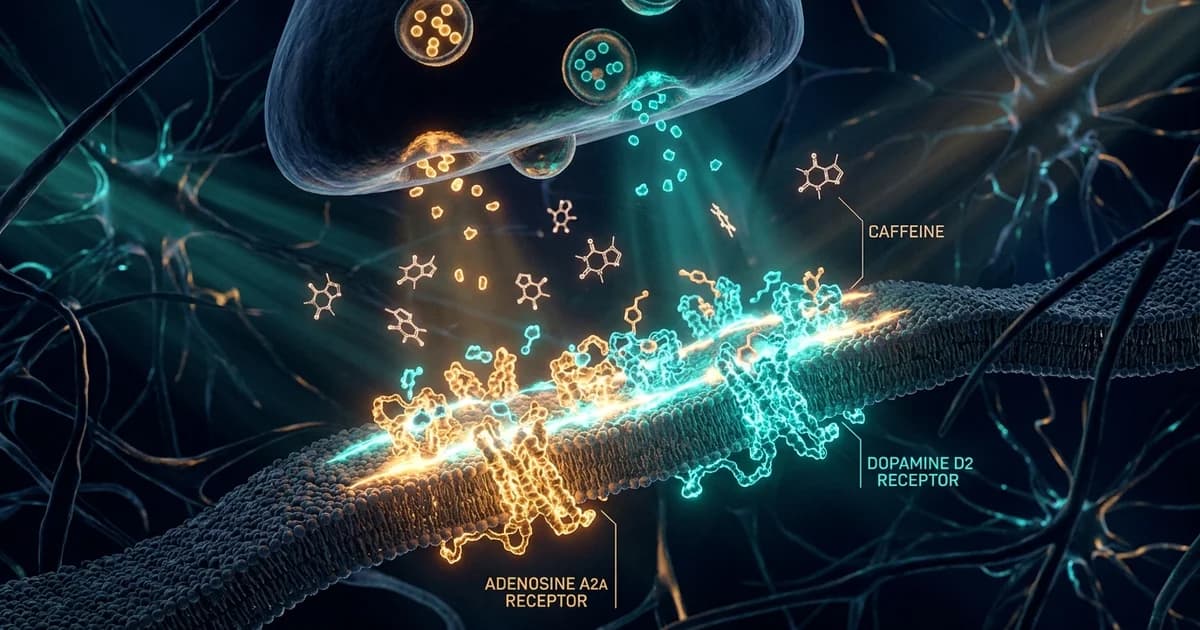
One of the frustrations of working through how long to reset dopamine receptors is that most stimulants make the problem worse. Caffeine, for instance, works partly through dopamine pathways, and chronic use leads to its own tolerance cycle, requiring more to get the same effect.
This is where the science of purine alkaloids gets interesting. Research on theacrine, a compound structurally similar to caffeine, shows that it modulates both adenosinergic and dopaminergic pathways without the tolerance buildup that caffeine produces. Studies on its locomotor effects found that seven days of theacrine administration did not induce tolerance, which is a stark contrast to chronic caffeine consumption.
Methylliberine, another purine alkaloid, works along similar pathways. Combined with caffeine and theacrine, research shows improved cognitive performance and reaction time without mood interference. For anyone navigating how long to reset dopamine receptors, choosing compounds that don't worsen tolerance is essential.
Roon was built around this exact principle. Its sublingual pouch delivers a calibrated stack of caffeine (80 mg), L-Theanine, theacrine, and methylliberine, designed to support focus and dopamine pathways without the tolerance escalation that undermines most stimulants. If you're working to restore your dopamine sensitivity, the last thing you need is another compound that makes the problem worse.
Support your dopamine system naturally. Learn more at takeroon.com.