How to Do a Dopamine Detox (Without the Pseudoscience)

How to Do a Dopamine Detox (Without the Pseudoscience)
You feel flat. Coffee barely registers. You scroll your phone for 20 minutes before realizing you opened it to check the weather. The things that used to excite you, a good book, a hard workout, a conversation that goes somewhere, feel like they're behind glass. This is what people mean when they talk about learning how to do a dopamine detox. And while the term gets thrown around loosely online, there's a real neurological problem underneath the hype.
The good news: you don't need to sit in a dark room for 24 hours staring at a wall. Knowing how to do a dopamine detox the right way has less to do with deprivation and more to do with deliberate behavioral recalibration. Here's what actually works, backed by neuroscience instead of TikTok trends.
Key Takeaways
- A "dopamine detox" doesn't literally reset your dopamine levels. It's a behavioral strategy rooted in cognitive behavioral therapy (CBT) that reduces compulsive, high-stimulation habits.
- You don't need to quit everything at once. Target one or two specific behaviors, like mindless scrolling or binge-watching, and replace them with lower-stimulation dopamine detox activities.
- The science supports stimulus control, not total abstinence. Make problematic triggers harder to access and rewarding alternatives easier.
- Consistency over intensity. A sustainable daily protocol beats a dramatic 48-hour fast every time.
What a Dopamine Detox Actually Is (and Isn't)
The term "dopamine fasting" was coined by Dr. Cameron Sepah, a psychiatrist at UC San Francisco. His original framework, Dopamine Fasting 2.0, had nothing to do with literally lowering dopamine in your brain. That's not how neurochemistry works. Your brain produces dopamine constantly, and you need it for basic motor function, motivation, and learning.
What Sepah actually described was a form of stimulus control, a well-established CBT technique. The idea: identify behaviors driven by compulsive reward-seeking (social media, junk food, pornography, video games) and systematically reduce your exposure to the triggers that set them off.
As Harvard Health put it, the goal is to become "less dominated by the unhealthy stimuli" that come with constant connectivity. The internet took that nuanced idea and turned it into "don't feel pleasure for 24 hours," which is both miserable and pointless.
So how do you do a dopamine detox the right way? The honest answer is: you don't detox dopamine itself. You retrain your relationship with stimulation.
Why Your Brain Feels "Fried" in the First Place
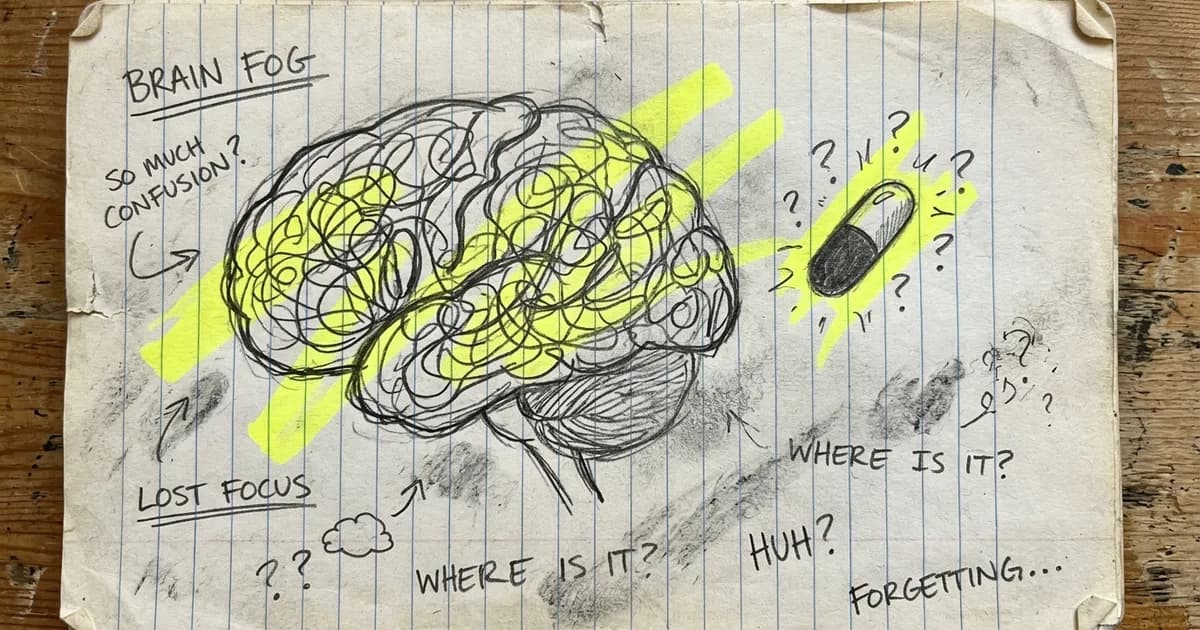
Understanding why your brain feels overloaded is the first step in learning how to do a dopamine detox effectively. Your dopamine system operates on contrast. A notification, a like, a new episode dropping: these all trigger small dopamine spikes. Do that hundreds of times a day, and your brain adjusts. It downregulates its sensitivity to match the constant flood. The baseline drops. Now the same stimuli that used to feel rewarding barely register.
This is the same mechanism behind drug tolerance, just at a lower intensity. Your D2 receptors aren't broken, and understanding D2 receptor sensitivity recalibration is key to seeing why behavioral change works. They've adapted to an environment that delivers reward at a pace your ancestors never encountered.
The result: you need more stimulation to feel the same thing. Three tabs open, music playing, phone in hand, and you're still bored. That's not a character flaw. That's your reward circuitry doing exactly what it was designed to do in an environment it wasn't designed for. This is precisely why a dopamine detox targets behavior patterns rather than brain chemistry directly.
How to Do a Dopamine Detox: A Step-by-Step Protocol
Forget the all-or-nothing approach. A 2024 literature review in PMC found that integrating mindfulness practices with structured digital detox periods produced better outcomes for mental clarity and reduced anxiety than extreme fasting protocols. Here's a practical framework for how to do a dopamine detox that actually sticks.
Step 1: Audit Your Triggers
Before you change anything, spend two days tracking your compulsive behaviors. Every time you reach for your phone without a purpose, open a new browser tab out of boredom, or eat something you didn't plan to eat, write it down.
You're looking for patterns. Most people discover that 80% of their mindless consumption happens in three or four specific contexts: first thing in the morning, during work breaks, after dinner, and in bed before sleep. This audit is the foundation of any effective dopamine detox protocol, and it is the first thing worth checking before downloading dopamine detox protocol guides from the internet.
Step 2: Pick Your Targets (Not Everything at Once)
Cleveland Clinic psychologist Dr. Susan Albers recommends treating this as an experiment, not a punishment. Pick one or two behaviors to modify. Trying to overhaul your entire life in a weekend is a recipe for failure and a rebound binge by Tuesday.
Good starting targets:
- Social media scrolling (the single highest-frequency dopamine trigger for most people)
- Algorithmic video content (YouTube autoplay, TikTok, Instagram Reels)
- Compulsive news checking
If you're wondering how do you do a dopamine detox without feeling deprived, the answer starts here: narrow your focus to the worst offenders instead of eliminating everything. We turn that narrowing process into a day-by-day plan in our guide to what to do during a dopamine detox.
Step 3: Apply Stimulus Control
This is the actual mechanism that makes a dopamine detox work. You're not relying on willpower. You're restructuring your environment.
According to Sepah's protocol, stimulus control means making the problematic behavior harder to access. Practically:
- Move your phone charger out of the bedroom. If it's not on your nightstand, you won't scroll before sleep or first thing in the morning.
- Delete social media apps from your phone. You can still access them from a browser, but the friction is enough to break the automatic habit loop.
- Use website blockers during work hours. Tools like Cold Turkey or Freedom remove the decision entirely.
- Turn off all non-essential notifications. Every buzz is a trigger. Kill it at the source.
Stimulus control is the backbone of how to do a dopamine detox without relying on sheer willpower alone.
Step 4: Replace, Don't Just Remove
This is where most dopamine detox guides fail. They tell you what to stop doing but not what to start doing. Your brain will seek stimulation regardless. Give it something better.
Dopamine detox activities that actually work:
| Activity | Why It Works |
|---|---|
| Walking outside (no headphones) | Restores default mode network activity, reduces cortisol |
| Resistance training | Produces endorphins and dopamine through earned effort |
| Reading physical books | Sustained attention practice without algorithmic interruption |
| Cooking a meal from scratch | Sensory engagement, delayed gratification |
| Journaling or writing by hand | Processes emotions without external validation |
| Face-to-face conversation | Social bonding releases oxytocin, a different reward pathway |
The key distinction: these dopamine detox activities produce dopamine through effort and engagement, not passive consumption. That's the difference between earned reward and cheap stimulation. Choosing the right dopamine detox activities is what separates a successful protocol from an exercise in misery.
Step 5: Set a Realistic Schedule
You don't need a 24-hour blackout. A more sustainable approach to how to do a dopamine detox looks like this:
- Daily: Two hours of screen-free time in the evening (start with one hour if that feels aggressive).
- Weekly: One full morning or afternoon without any devices. Use it for the replacement activities above.
- Monthly: One full day with no screens, no algorithmic content, no compulsive consumption.
Scale up as your tolerance for boredom improves. And it will improve. That's the whole point.
Step 6: Track What Changes
Keep a simple journal. Rate your focus, mood, and energy on a 1-10 scale each day. After two weeks, review the data. Most people report improved concentration and a lower threshold for enjoyment, meaning simpler activities start feeling satisfying again.
Cleveland Clinic's Dr. Albers specifically recommends this journaling step, noting that documenting the experiment helps you understand the actual impact of behavioral changes rather than relying on how you think you feel. Tracking results is how do you do a dopamine detox with real accountability instead of guesswork.
Common Mistakes That Sabotage a Dopamine Detox
Going too extreme, too fast. Sitting in silence for an entire day when you're used to constant stimulation isn't discipline. It's a stress response waiting to happen. Medical News Today notes that the decision to unplug may improve focus and mental clarity, but extreme practices can trigger anxiety and loneliness.
Treating it as a one-time event. A single weekend fast won't rewire neural pathways. The behavioral changes need to become part of your routine. Think of it like exercise: one session does almost nothing, but consistency compounds. Learning how to do a dopamine detox means committing to an ongoing practice.
Replacing one compulsion with another. Swapping Instagram for four hours of Netflix isn't a detox. It's a lateral move. The goal is reducing total passive consumption, not shifting it to a different screen.
Ignoring the underlying need. If you scroll when you're anxious, removing the phone doesn't fix the anxiety. It just removes the coping mechanism. Pair your dopamine detox with something that addresses the root cause, whether that's exercise, therapy, breathwork, or honest conversation.
What Happens to Your Brain After a Successful Dopamine Detox
When you reduce the frequency of high-intensity dopamine spikes, your receptor sensitivity gradually recalibrates. This isn't speculation. It's the same principle behind every tolerance-reversal protocol in pharmacology.
Within one to two weeks of a consistent dopamine detox, most people notice:
- Lower boredom threshold: Activities that felt dull (reading, walking, cooking) start to feel engaging again.
- Improved sustained attention: You can focus on a single task for longer without reaching for your phone.
- Better sleep: Removing screens before bed improves both sleep onset and sleep quality.
- More stable mood: Fewer dopamine spikes means fewer dopamine crashes.
The goal isn't to feel less. It's to feel more from less.
Supporting Your Dopamine System Beyond a Dopamine Detox
Behavioral strategies are the foundation of how to do a dopamine detox. But your neurochemistry also responds to what you put in your body.
Most people default to caffeine for focus, and it works, until tolerance sets in and you need two cups to feel what one used to do. That tolerance cycle is the same pattern you're trying to break with a dopamine detox.
This is where the biochemistry gets interesting. Theacrine, a purine alkaloid structurally similar to caffeine, activates both adenosine and dopamine receptors, but research published on medRxiv shows it does so without the tolerance buildup that makes caffeine progressively less effective. Methylliberine works through a similar mechanism with a faster onset.
A study on ResearchGate found that combining caffeine with theacrine and methylliberine improved cognitive performance and reaction time without negatively affecting mood. That combination, caffeine comparable to a cup of coffee, paired with compounds that support dopamine signaling without desensitizing it, aligns with the entire philosophy behind how to do a dopamine detox: get the benefit without the diminishing returns.
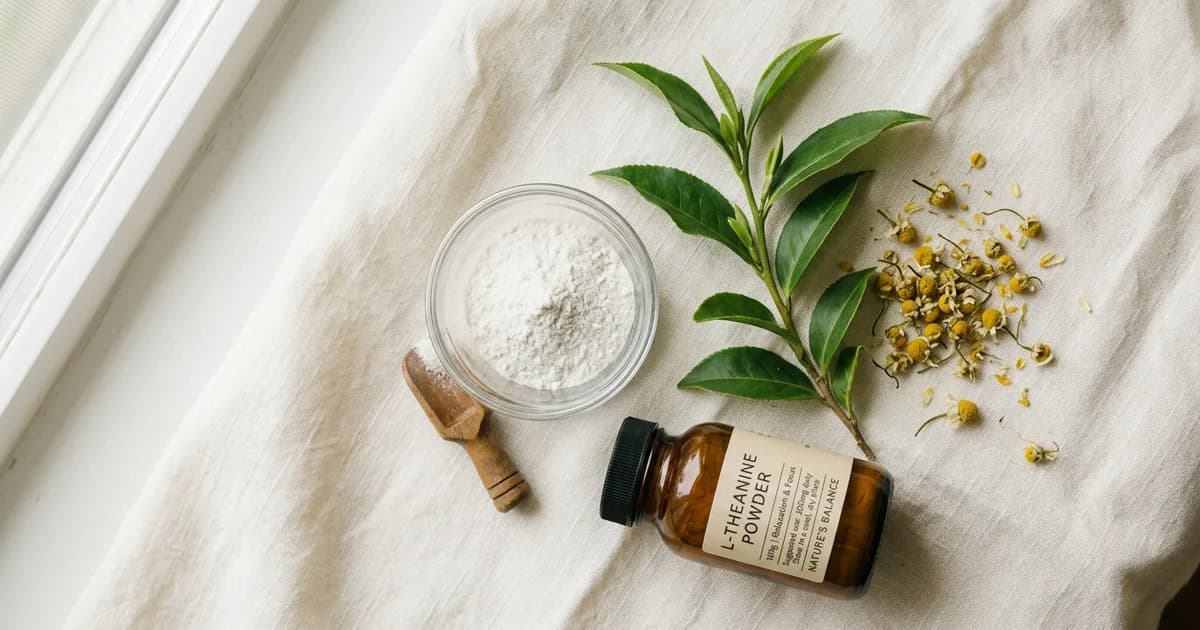
Roon was built around this exact stack. It pairs 80 mg of caffeine with L-Theanine, Theacrine, and Methylliberine in a sublingual pouch, delivering 6-8 hours of clean focus without the tolerance spiral. No jitters, no crash, no need to keep increasing the dose.
If you're serious about learning how to do a dopamine detox, start with the behavioral protocol above. And when you want neurochemical support that works with your brain instead of against it, give Roon a look.