How Much Caffeine in Matcha vs Coffee? The Real Numbers Behind Your Morning Cup
Roon Team
How Much Caffeine in Matcha vs Coffee? The Real Numbers Behind Your Morning Cup
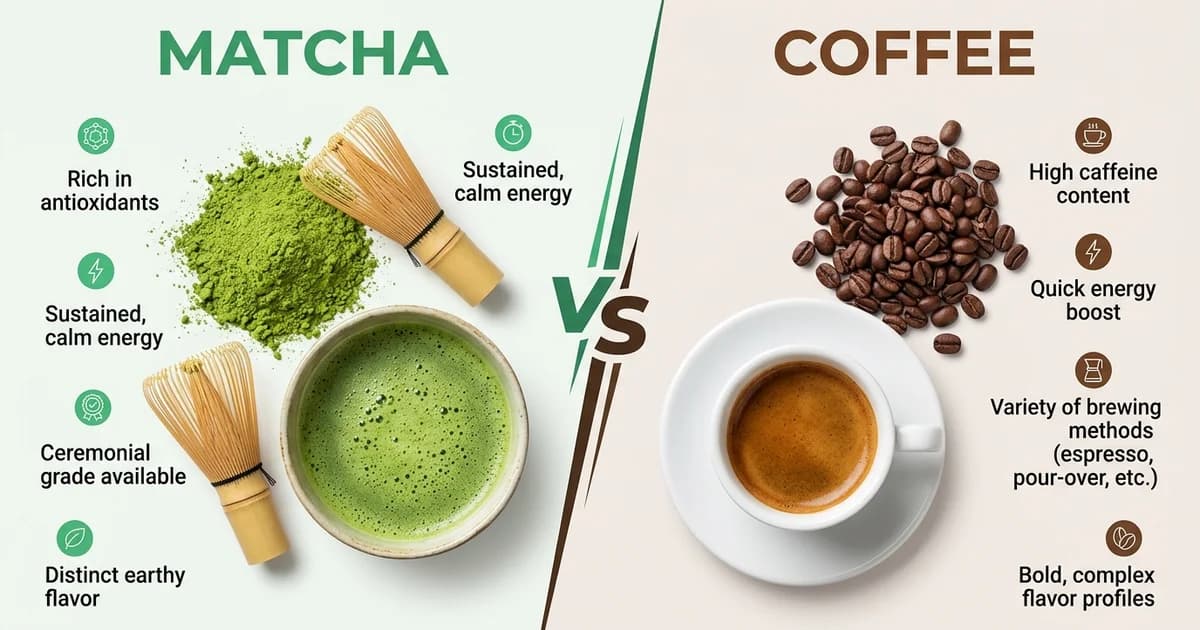
Short answer: An 8oz cup of brewed coffee carries roughly 80 to 100mg of caffeine, while a standard 2-gram serving of matcha sits around 40 to 70mg. Coffee wins on raw milligrams, but matcha pairs its caffeine with L-theanine, which is why the same dose can feel calmer and steadier. The more useful question is not how much caffeine each drink holds, but how that caffeine behaves once it reaches your system.
You already know both matcha and coffee contain caffeine. What you probably don't know about how much caffeine in matcha vs coffee is how differently that caffeine hits your brain, how long it lasts, and why the milligram count on the label only tells half the story.
So, how much caffeine in matcha vs coffee? A standard cup of brewed coffee contains roughly 80 to 100mg of caffeine. A typical serving of matcha (2 grams of powder) lands around 40 to 70mg. On raw caffeine alone, coffee usually comes out ahead. But raw numbers are a poor way to choose your stimulant.
Here's what actually matters: how the caffeine gets absorbed, what else comes along for the ride, and how you feel three hours later.
Key Takeaways
- Coffee delivers 80–100mg of caffeine per 8oz cup; matcha delivers roughly 40–70mg per serving.
- Matcha contains L-theanine, an amino acid associated with a smoother, calmer caffeine experience.
- Coffee appears to produce a sharper cortisol response in some of the research comparing caffeinated beverages, which may help explain the jitters and the afternoon crash.
- Neither option is objectively "better." Understanding how much caffeine in matcha vs coffee helps, but the right choice depends on what kind of focus you need and for how long.
How Much Caffeine in Matcha vs Coffee, Side by Side
Let's get specific. The caffeine content in both drinks varies based on preparation method, serving size, and quality of the source material. But here are the realistic ranges you'll encounter when comparing how much caffeine in matcha vs coffee:
| Drink | Typical Serving | Caffeine Range |
|---|---|---|
| Brewed Coffee (drip) | 8 oz | 80–100mg |
| Espresso (single shot) | 1 oz | 63mg |
| Espresso (double shot) | 2 oz | 126mg |
| Matcha (standard) | 2g powder | 40–70mg |
| Matcha (koicha/thick) | 4g powder | 80–135mg |
| Regular Green Tea | 8 oz | ~29mg |
A few things jump out. First, matcha contains roughly 19 to 44mg of caffeine per gram of powder, so the total depends entirely on how much powder you use. A thin ceremonial bowl and a thick koicha latte are two very different experiences.
Second, an 8oz cup of brewed coffee averages 80 to 100mg of caffeine, though cold brew and specialty methods can push that well above 150mg. The "cup of coffee" your coworker mentions could contain anywhere from 80 to 200mg depending on how it's made.
The raw milligram comparison favors coffee. But knowing how much caffeine in matcha vs coffee doesn't determine how alert, focused, or jittery you feel. That depends on pharmacokinetics: how fast the caffeine enters your bloodstream and what other compounds modulate its effects.
Why Matcha Caffeine Feels Different Than Coffee Caffeine
The molecule is the same. Caffeine is caffeine, whether it comes from a coffee bean or a tea leaf. So why does a cup of matcha produce a different subjective experience than a cup of coffee, even when the milligram counts are close?
Two reasons: L-theanine and absorption rate.
L-Theanine: Matcha's Built-In Modulator
Matcha is one of the richest dietary sources of L-theanine, an amino acid associated with increased alpha-wave activity and a calmer state of alertness. Alpha waves are associated with a state of calm, focused attention, the kind you experience during deep reading or meditation.
A study published in Nutritional Neuroscience tested a combination of 97mg L-theanine and 40mg caffeine against a placebo. The combination improved accuracy during task switching and increased self-reported alertness, while also reducing tiredness. The combination produced a more balanced effect than caffeine alone.
This is the core difference, and it's something the simple question of how much caffeine in matcha vs coffee doesn't capture. Coffee gives you caffeine. Matcha gives you caffeine alongside L-theanine, which helps explain why the experience often feels smoother. L-theanine allows the body to absorb matcha's caffeine more slowly, producing a sustained window of energy rather than a sharp spike and crash.
The Cortisol Problem With Coffee
Coffee usually hits fast, with blood levels rising quickly after drinking it, and your body responds accordingly.
A review of 15 studies presented at the 2025 ESPE/ESE Joint Congress found that coffee caused the strongest cortisol increase among caffeinated beverages, with levels rising roughly 50% above baseline. Cortisol is your stress hormone. In small doses, it sharpens attention. In large or repeated doses, it drives anxiety, irritability, and that wired-but-tired feeling you know too well.
Matcha still raises cortisol (it contains caffeine, after all), but the L-theanine appears to blunt the stress response. A study in PMC found that matcha's theanine content exhibited a measurable stress-reducing effect in both animal and human trials, even in the presence of caffeine.
This helps explain why two drinks with similar caffeine content can still feel very different. Comparing how much caffeine in matcha vs coffee tells you the dose, but the caffeine is the same molecule. Everything else around it is not.
How Long Does the Energy Last?
The half-life of caffeine in healthy adults is approximately 5 hours, meaning half the caffeine from your morning cup is still circulating at lunch. But "half-life" doesn't describe how the energy feels over time, and that's where the matcha vs coffee comparison gets more nuanced.
Coffee's energy curve often feels more like a spike. You feel the full effect within 30 to 45 minutes, ride a peak for an hour or two, then slide into a trough. Many people compensate by drinking a second cup in the afternoon, which pushes caffeine into the evening and disrupts sleep architecture.
Matcha's energy curve is flatter. Because matcha tends to feel gentler and steadier, the onset is more gradual, and the sustained alertness window stretches longer. Some sources report matcha's alertness lasting 3 to 6 hours without the sharp decline that follows coffee.
The tradeoff: if you need to feel awake right now, coffee's faster absorption makes it the better tool. If you need steady focus over a longer work session, matcha's pharmacological profile is better suited to the task. The question of how much caffeine in matcha vs coffee matters less than how that caffeine behaves once it's in your system.
The Tolerance Question
Here's something most caffeine comparisons skip entirely.
Both matcha and coffee rely on caffeine as their primary active compound. And caffeine has a well-documented tolerance curve. The NCBI notes that regular consumption leads to reduced sensitivity, which is why your first coffee of the year hits harder than your 300th.
This is where the conversation moves beyond how much caffeine in matcha vs coffee and into long-term cognitive performance, not just tomorrow morning's alertness. Caffeine tolerance can begin building quickly with consistent use. You need more to get the same effect, and withdrawal symptoms (headaches, fatigue, irritability) appear when you stop.
Matcha may make the experience feel smoother, but it does not solve the underlying caffeine-tolerance problem. You're still consuming caffeine. Your adenosine receptors still adapt.
Some newer compounds are specifically designed to address this gap, and understanding how caffeine pouches work helps explain why delivery format matters as much as dose. Theacrine, a purine alkaloid structurally similar to caffeine, has shown non-habituating effects in early studies, meaning the body doesn't build tolerance to it as quickly. A 2024 PMC study on tactical personnel described theacrine as having "a longer half-life, less habituation, and fewer side effects" compared to caffeine alone.
Beyond Caffeine: What Else Is in Your Cup?
Caffeine is the headline ingredient, but anyone asking how much caffeine in matcha vs coffee should also consider what else each drink delivers.
Matcha's Extra Benefits
Matcha is a concentrated source of catechins, particularly EGCG (epigallocatechin gallate). According to a review in PMC, catechins make up 90% of matcha's polyphenol content, and EGCG is the most abundant and active among them. These compounds have strong antioxidant activity and have been studied for their role in supporting cardiovascular and metabolic health.
Because you consume the entire tea leaf (ground into powder), matcha delivers a higher concentration of these compounds than steeped green tea.
Coffee's Extra Benefits
Coffee isn't nutritionally empty either. It contains chlorogenic acids, which have antioxidant activity, and is one of the largest sources of polyphenols in the Western diet. Regular coffee consumption has been associated with reduced risk of several chronic conditions in large observational studies.
The difference isn't that one drink is "healthy" and the other isn't. Both offer benefits beyond caffeine, though they do so through different compounds. The difference is in the type of focus they produce and how that focus degrades over time.
How Much Caffeine in Matcha vs Coffee: Which One Should You Choose?
If you need a faster, stronger lift for a shorter task, coffee is usually the better fit, though exploring coffee alternatives for focus can reveal options better matched to sustained work. If you need calm, sustained focus for deep work, matcha's L-theanine and slower caffeine delivery are a better match.
But here's the honest answer: knowing how much caffeine in matcha vs coffee helps you make a more informed choice, yet both options have the same fundamental limitation. They rely on caffeine, and caffeine tolerance is real.
Beyond the Matcha vs. Coffee Question
If the matcha vs coffee debate feels limiting, that's because it is. Both drinks are built around a single active compound with known tolerance issues, a pattern worth comparing when weighing matcha and mushroom coffee alternatives. The question of how much caffeine in matcha vs coffee becomes less relevant when you can design a better delivery system altogether.
Roon takes a different approach. It's a zero-nicotine sublingual pouch that combines 80mg of caffeine (comparable to a cup of coffee) with L-theanine, theacrine, and methylliberine, a format worth understanding if you're weighing nootropic pouches vs coffee pouches. The difference is the stack and the curve: L-theanine smooths the caffeine, while theacrine and methylliberine extend it to 6 to 8 hours of sustained focus without jitters, without a crash, and without the tolerance buildup that comes from relying on caffeine alone.
The bigger takeaway is that caffeine dose is only part of the story. What it is paired with matters just as much. See how Roon compares.
Frequently Asked Questions
Does matcha or coffee have more caffeine?
A standard 8oz cup of brewed coffee holds about 80 to 100mg of caffeine, while a typical 2-gram serving of matcha lands near 40 to 70mg. Coffee comes out ahead on raw dose. A thick koicha-style matcha made with 4 grams of powder can reach 80 to 135mg, so preparation and serving size shift the comparison more than the drink itself.
Why does matcha feel calmer than coffee if both contain caffeine?
The caffeine molecule is identical in both. The difference comes from L-theanine, an amino acid concentrated in matcha and associated with alpha-wave activity and a calmer state of alertness. In one study pairing L-theanine with caffeine, the combination improved task-switching accuracy and self-reported alertness more than caffeine alone. L-theanine also slows caffeine absorption, which tends to smooth the rise and soften the drop you notice after coffee.
Does matcha keep you awake longer than coffee?
For many people, yes. Coffee is absorbed quickly, so the lift arrives within 30 to 45 minutes and then tapers. Matcha's onset is more gradual, and some sources report sustained alertness lasting 3 to 6 hours. Caffeine's half-life is roughly 5 hours either way, so an afternoon serving of either drink can still affect sleep.
Is matcha or coffee better for focus?
It depends on the task. Coffee delivers a faster, stronger lift that suits short bursts of work. Matcha's L-theanine and slower caffeine release tend to favor calm, sustained focus across a longer session. Both rely on caffeine as their main active compound, so both carry the same tolerance ceiling over time, regardless of which cup you reach for.
Does matcha cause less of a crash and fewer jitters?
Often, yes. One review of caffeinated beverages found coffee produced the strongest cortisol increase, around 50% above baseline, which can feed jitters and an afternoon dip. Matcha still contains caffeine and still raises cortisol, but its L-theanine appears to blunt that stress response, which helps explain the smoother, steadier feeling many people describe after drinking it.
Can switching from coffee to matcha solve caffeine tolerance?
No. Tolerance builds around caffeine itself, and matcha and coffee both depend on caffeine, so your adenosine receptors adapt either way. Some formats pair caffeine with compounds like theacrine and methylliberine to extend its effect. Roon, for example, is a zero-nicotine pouch that stacks 80mg of caffeine with L-theanine, theacrine, and methylliberine. See the Roon formula.
By Roon Team