How Many Hours to Study for MCAT
How Many Hours to Study for MCAT (And How to Actually Use Them)
The honest answer to how many hours to study for MCAT is somewhere between 200 and 500, a range that mirrors the total hours for professional exams like the CPA. That range is enormous, and it should tell you something: raw hours don't determine your score. How you use those hours does.
Most prep companies quote 300 hours as the standard recommendation, a figure that parallels LSAT prep hour estimates for other high-stakes exams. The Princeton Review puts the sweet spot at 200 to 300 hours for students who score well. MedSchoolCoach recommends 400 to 500 hours in most cases. The AAMC itself, through its official study planning resources, suggests six to eight hours per day for a minimum of six weeks.
The real question isn't "how many hours to study for MCAT?" It's "how do I structure those hours so my brain actually retains what I study?"
Key Takeaways:
- Plan for 300 to 500 hours of total MCAT prep, spread over 3 to 6 months.
- Split your time roughly 50/50 between content review and practice questions or full-length exams.
- Quality of focus per hour matters more than total hours logged.
- Burnout is the single biggest threat to your study plan, and most students don't recognize it until it's too late.
Why How Many Hours to Study for MCAT Varies So Much
You'll find wildly different answers online because the MCAT tests an absurdly broad range of material. According to Kaplan, the exam covers General Chemistry, Organic Chemistry, Biology, Biochemistry, Physics, Psychology, Sociology, and Critical Analysis and Reasoning Skills (CARS). The test itself runs 6 hours and 15 minutes, not counting breaks.
Your starting point determines everything, much as it does with GRE study hour planning. A biochemistry major with a 3.9 GPA who aced Organic Chemistry needs far fewer hours than a career-changer who last took a science course five years ago. One student on Student Doctor Network put it bluntly: studying 8 to 10 hours a day sounds impressive on paper, but most people simply cannot retain information at that rate. That's why how many hours to study for MCAT depends less on ambition and more on your baseline knowledge.
Here's a rough framework based on your starting point:
| Your Starting Point | Recommended Total Hours | Suggested Timeline |
|---|---|---|
| Strong science GPA, recent coursework | 200–300 hours | 2–3 months |
| Average science background | 300–400 hours | 3–4 months |
| Non-traditional or long gap since coursework | 400–500+ hours | 4–6 months |
These aren't arbitrary. Shemmassian Academic Consulting recommends at least 300 hours and notes that if you're studying over 3 months (roughly 90 days), that works out to just over 3 hours per day. The math is simple. The execution is not.
How to Structure Your MCAT Study Hours
Knowing how many hours to study for MCAT is only half the equation. Logging 300 hours of passive textbook reading will not get you a 515. The structure of your study sessions matters as much as the total count.
Phase 1: Content Review (Roughly 50% of Your Time)
The first half of your prep should focus on relearning the foundational material. This means working through review books, watching content videos, and building an Anki deck or equivalent flashcard system for high-yield facts.
A common mistake is spending too long in this phase. Content review feels productive because you're "learning," but the MCAT doesn't test recall in isolation. It tests your ability to apply concepts to novel passages. If you're still doing pure content review in your final month, you've miscalculated how many hours to study for MCAT in each phase.
For a 3-month schedule, Shemmassian Consulting recommends splitting the prep into 6 weeks of mostly-content review followed by 6 weeks of mostly-practice. That balance is well supported by how top scorers actually prepare.
Phase 2: Practice and Full-Length Exams (The Other 50%)
This is where your score actually moves. Practice passages teach you how the MCAT asks questions, which is a skill entirely separate from knowing the content.
Full-length practice exams are non-negotiable. Plan to take at least 6 to 10 of them during your prep, spaced out over the final 4 to 6 weeks. Every full-length should be followed by a thorough review session where you analyze every wrong answer and every question you guessed on correctly. That review process often takes as long as the exam itself.
The AAMC's own practice materials are the gold standard here. Third-party tests from Blueprint, Kaplan, or Princeton Review are useful for building stamina, but AAMC materials most closely mirror the real exam's logic and difficulty.
Daily Structure That Actually Works
Once you've decided how many hours to study for MCAT each day, you need a plan for filling those hours. MedSchoolCoach recommends a minimum of 1.5 to 2 hours per day if you're studying over a longer timeline. For a more compressed schedule, 6 to 8 hours per day is the standard recommendation from the AAMC, which explicitly states that "six hours per day for six weeks will yield more progress than 12 hours per day for three weeks."
That's a critical insight. Your brain needs time to consolidate information between sessions. Cramming 12-hour days for three weeks straight doesn't just feel miserable. It produces worse results than a more moderate, sustained approach.
A solid daily block might look like this:
- Morning (2–3 hours): Content review or passage practice in your weakest section.
- Midday (1–2 hours): CARS practice (daily, without exception).
- Afternoon (2–3 hours): Mixed practice problems or Anki review.
- One full day off per week. This isn't optional. It's structural.
The Burnout Problem Nobody Talks About Enough
Here's what most guides on how many hours to study for MCAT skip: the cognitive cost of sustained high-intensity studying.
Blueprint Prep notes that burnout can "severely impair cognitive function, making it hard to focus during study sessions." The warning signs are specific: rereading the same page multiple times without absorbing the material, a noticeable drop in practice test scores, irritability, and disrupted sleep.
U.S. News reports that many students make the mistake of trying to study all day, every day, believing more time in front of books automatically means a higher score. It doesn't. The relationship between study hours and score improvement is not linear. After a certain point, additional hours in a fatigued state can actually reinforce mistakes and build bad habits.
The fix isn't complicated, but it requires discipline:
- Sleep 7 to 8 hours. Non-negotiable. Memory consolidation happens during sleep. Cutting sleep to add study hours is a net negative.
- Exercise regularly. Even 30 minutes of moderate activity improves focus and mood for the rest of the day.
- Take your rest day. Blueprint Prep explicitly advises scheduling a weekly day off to prevent burnout.
- Monitor your practice scores. A sustained decline is a signal to rest, not to study harder.
What a Competitive Score Actually Looks Like
All of this planning around how many hours to study for MCAT is aimed at one number. According to The Princeton Review, the average MCAT score across all applicants sits between 506 and 507. The average for matriculants (students who actually get in and enroll) is between 511 and 512.
AACOM data shows that in 2024, the highest mean section scores for applicants were in Psychological, Social, and Biological Foundations of Behavior, while the lowest were in Critical Analysis and Reasoning Skills. That tracks with what most students report: CARS is the hardest section to improve through brute-force studying because it tests reasoning patterns, not memorized facts.
If you're aiming for a top-20 MD program, you're likely targeting a 515 or above. That puts you in roughly the 90th percentile. Getting there from a 506 baseline requires not just more hours, but better hours. Understanding how many hours to study for MCAT is the starting point; optimizing those hours is what separates competitive applicants.
How to Get More Out of Every Study Hour
The difference between a 508 and a 515 often isn't 200 extra hours. It's better cognitive performance during the hours you're already putting in. Once you've settled on how many hours to study for MCAT, the next step is making each one count.
A few evidence-based strategies:
Active recall over passive review. Testing yourself on material is far more effective than rereading notes. Use flashcards, practice questions, and self-quizzing as your primary study methods.
Spaced repetition. Review material at increasing intervals rather than cramming the same topic in a single session. Anki automates this process, and most high scorers swear by it.
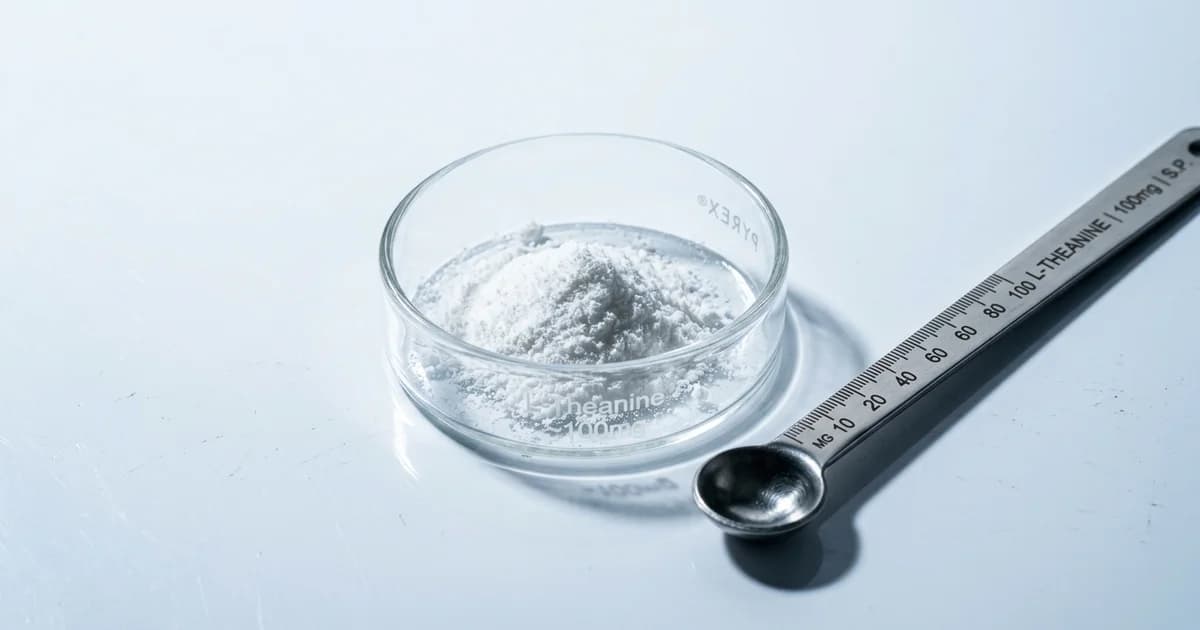
Strategic caffeine use. Caffeine improves attention and reaction time, but timing matters. A study published on PubMed found that 40mg of caffeine combined with 97mg of L-theanine helped participants focus attention during a demanding cognitive task. The combination outperformed caffeine alone because L-theanine improves attention-switching accuracy and subjective alertness, adding calm focus to caffeine's raw stimulation.
Timed practice from day one. The MCAT is a timed test. If you practice without time pressure, you're training a skill you won't use on test day.
Study Smarter Without a Prescription
Hundreds of hours of MCAT prep will test your focus in ways that no college course ever did. Figuring out how many hours to study for MCAT is one thing; actually sustaining focus across those hours is another challenge entirely. And if you've spent any time in premed circles, you know that some students turn to prescription stimulants to power through. That path comes with real risks: dependency, side effects, legal consequences, and the kind of tolerance buildup that leaves you needing more just to feel normal.
There's a better approach. Roon is a zero-nicotine sublingual pouch built around a stack of Caffeine (80mg), L-Theanine, Theacrine, and Methylliberine, four ingredients chosen for how they work together. You get 6 to 8 hours of clean, sustained focus without the jitters, the crash, or the tolerance buildup that comes with most stimulants.
No prescription. No sketchy grey-market pills. Just a smarter way to support the kind of sustained cognitive performance that 300+ hours of MCAT prep demands. Now that you know how many hours to study for MCAT, make sure every one of them counts.
Try Roon today and find out what your study hours are actually worth.