How Long Does It Take to Reset Dopamine? What the Science Actually Says
Roon Team

How Long Does It Take to Reset Dopamine? What the Science Actually Says
Your morning coffee stopped working three cups ago. The podcast you loved feels like background noise. Even the notification buzz on your phone barely registers. If you've been wondering how long does it take to reset dopamine, the honest answer is: it depends on what broke it in the first place.
The internet is full of "dopamine detox" content promising a factory reset for your brain in a weekend. That's not how neurochemistry works. Your dopamine system isn't a phone you can power cycle. It's a network of receptors, transporters, and signaling pathways that adapt to whatever you throw at them, for better or worse.
Here's what the research actually tells us about how long does it take to reset dopamine, what "resetting" really means, and what you can do to speed the process along.
Key Takeaways
- Dopamine "reset" timelines range from 2 weeks to 12+ months, depending on the source of dysregulation (screens, substances, or chronic overstimulation).
- Your brain doesn't run out of dopamine. The real issue is receptor sensitivity, specifically D2 receptor downregulation.
- The "dopamine fast" trend is mostly marketing. But the behavioral principle behind it (reducing compulsive stimulation) has real science behind it.
- Certain compounds support dopamine pathways without triggering tolerance, which matters for long-term cognitive performance.
What "Resetting Dopamine" Actually Means
The phrase "dopamine reset" is everywhere on social media, but it's a simplification. You're not resetting a single chemical. You're restoring the sensitivity of an entire signaling system.
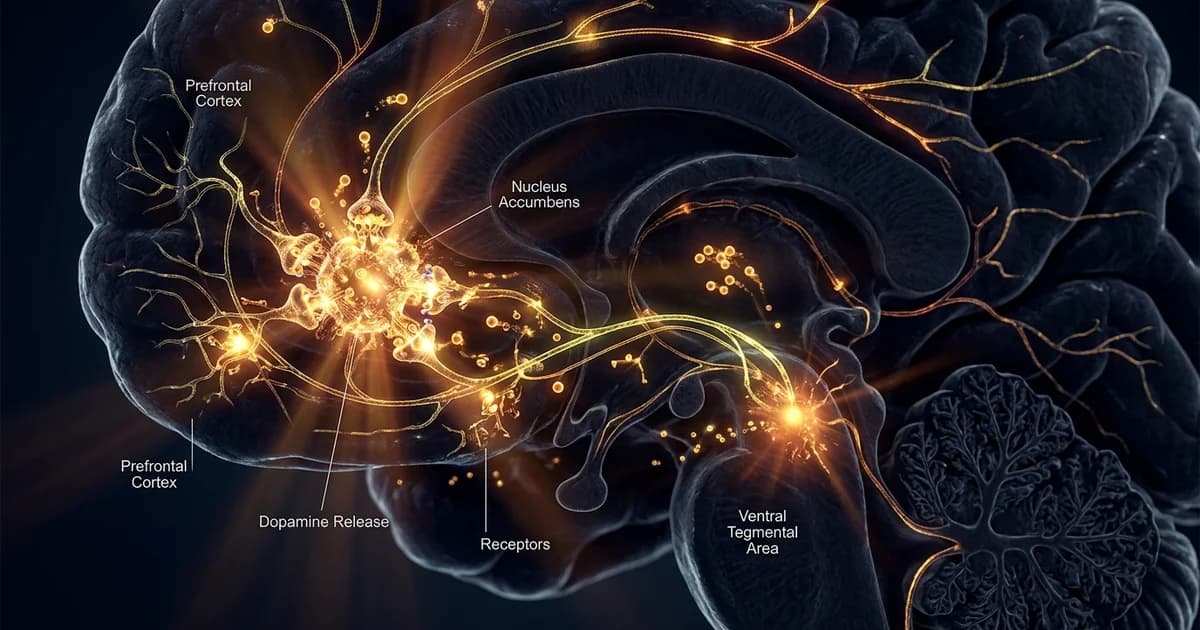
Dopamine itself is always present in your brain. According to Harvard Health, dopamine is one of the body's key neurotransmitters involved in reward, motivation, and learning. You can't "drain" it like a battery.
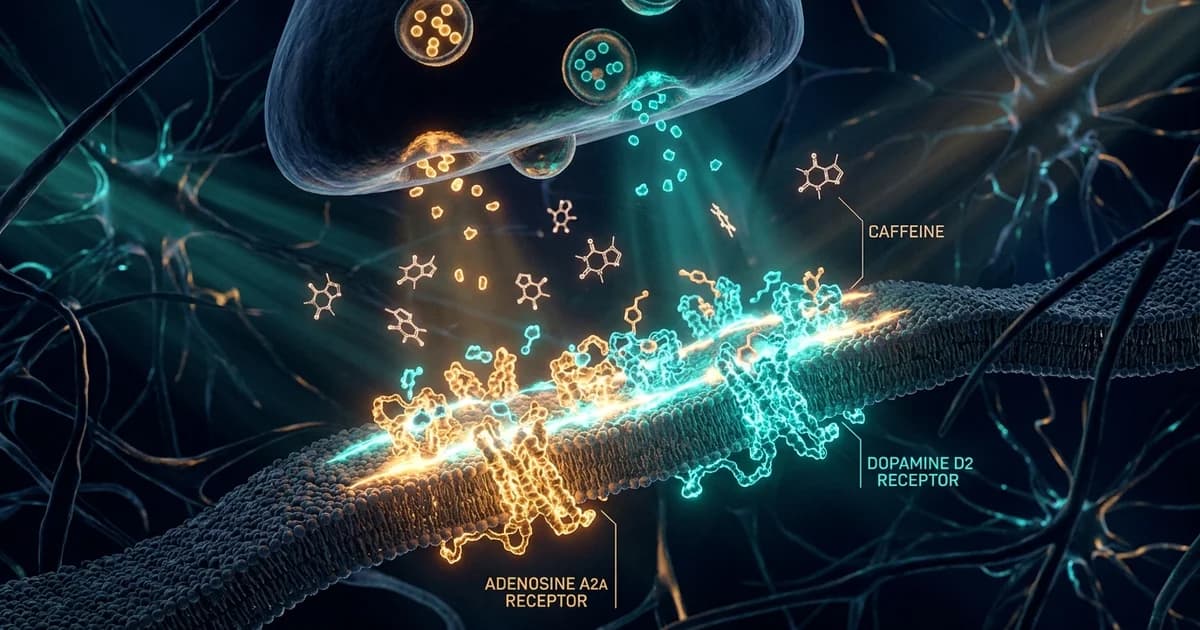
The real problem is D2 receptor downregulation. When you flood your brain with dopamine repeatedly (through substances, compulsive scrolling, junk food, or any high-reward behavior), your neurons respond by pulling D2 receptors off the cell surface. Fewer receptors means you need more stimulation to feel the same effect. That's tolerance. That's what people asking how long does it take to reset dopamine are actually trying to reverse.
A 2025 study published in Nature Communications showed that even seven days of sustained D2/D3 receptor antagonism in healthy humans resulted in impairments to motivated behavior and hedonic experience. The system is sensitive. It adapts fast.
How Long Does a Dopamine Reset Take? The Real Timelines
There's no single answer because the degree of dysregulation varies wildly. Here's what the data suggests across different scenarios.
Mild Overstimulation (Screens, Social Media, Junk Food)
If your main issue is doom-scrolling, binge-watching, or constant snacking, you're looking at a relatively short recovery window. Most neuroscientists studying how long does it take to reset dopamine suggest 2 to 4 weeks of reduced stimulation to notice measurable changes in motivation and reward sensitivity.
Research from Ohio State Health & Discovery notes that after several weeks or months of compulsive behavior, your brain's pathways can become less sensitive to dopamine. The flip side: reducing those inputs for a few weeks allows sensitivity to start returning.
A 2024 study in PMC found that frequent engagement with social media platforms alters dopamine pathways in ways analogous to substance dependency, affecting reward processing and emotional regulation. The good news is that these changes, while real, tend to be more reversible than substance-induced damage.
Moderate Dysregulation (Caffeine Dependence, Chronic Stress)
For people dealing with daily caffeine overconsumption or prolonged stress (both of which affect dopamine signaling), how long does a dopamine reset take stretches to 4 to 8 weeks. Cortisol, the stress hormone, directly suppresses dopamine receptor expression over time. Unwinding that takes patience.
Severe Dysregulation (Substance Use)
This is where understanding how long does it take to reset dopamine gets serious. According to Better Addiction Care, full dopamine receptor recovery can take 3 to 12 months or longer, depending on the substance used, duration of use, and individual brain chemistry.
For stimulants specifically, the data is stark. Recovery of dopamine transporter distribution may take about 60 days after a single cocaine exposure, but with repeated use, that window extends to 90 days or more. A landmark study by Nora Volkow's team at Brookhaven National Laboratory demonstrated that methamphetamine abusers showed significant depletion of dopamine transporters, and that meaningful recovery required protracted abstinence measured in months, not days.
The Timeline at a Glance
| Source of Dysregulation | Estimated Recovery Timeline | Key Factor |
|---|---|---|
| Screens / social media | 2–4 weeks | Behavioral change consistency |
| Caffeine overuse | 4–8 weeks | Adenosine receptor normalization |
| Chronic stress | 4–12 weeks | Cortisol reduction |
| Stimulant substances | 3–12+ months | D2 receptor and transporter recovery |
Why the "Dopamine Fast" Trend Gets It Half Right
The Silicon Valley "dopamine fast" went viral a few years ago, and the backlash was swift. Harvard Health called it a "misunderstanding of science" that spawned "a maladaptive fad." Fair criticism. You can't fast from a neurotransmitter.
But the behavioral principle underneath the hype has merit. Dr. Cameron Sepah, the UC San Francisco psychiatrist who coined the term, originally framed it not as literally reducing dopamine, but as taking breaks from compulsive, high-stimulation behaviors. That's just cognitive behavioral therapy with better branding.
The science supports this approach to how long to reset dopamine levels. Reducing exposure to rapid-reward stimuli (notifications, infinite scroll, slot-machine mechanics in apps) gives your D2 receptors room to upregulate. You don't need to sit in a dark room. You need to stop feeding the system a constant stream of micro-rewards.
How to Reset Dopamine Levels: Practical Strategies That Work
Knowing how long does it take to reset dopamine is useful. Knowing how to speed up the process is better. Here's what the evidence supports.
1. Cut the Highest-Dopamine Inputs First
Not all stimulation is equal. Social media, video games, and pornography trigger dopamine spikes that are disproportionate to the effort involved. That effort-to-reward mismatch is what drives downregulation fastest. Start by reducing or eliminating these for a defined period (two weeks minimum).
2. Exercise Consistently
Physical activity is one of the most reliable ways to reset dopamine levels naturally. Even 30 minutes of moderate exercise three to four times per week can support dopamine recovery, according to clinical recommendations. Resistance training and aerobic exercise both work. Pick whichever you'll actually do.
3. Prioritize Sleep
Dopamine receptor sensitivity is directly tied to sleep quality. Sleep deprivation reduces D2 receptor availability in the striatum, which is exactly the region you're trying to restore. Seven to nine hours isn't optional when figuring out how long does it take to reset dopamine. It's the foundation.
4. Pursue Effortful Rewards
The goal isn't to eliminate pleasure. It's to re-train your brain to find reward in activities that require effort: cooking a meal from scratch, finishing a hard workout, learning a new skill. These activities produce dopamine in a sustainable pattern that promotes receptor upregulation rather than downregulation.
5. Be Strategic About Stimulants
Most people trying to reset dopamine levels are still consuming caffeine daily. That's not necessarily a problem, but it matters how you consume it. High doses of caffeine (300mg+) can contribute to the overstimulation cycle. Lower, more precise doses paired with compounds that modulate the response tend to produce better outcomes.
This is where the biochemistry of your stimulant stack matters more than most people realize.
The Tolerance Problem: Why Most Stimulants Work Against Your Dopamine Reset
Here's the part that rarely gets discussed in dopamine detox content. If you're trying to restore receptor sensitivity while simultaneously hammering those same receptors with high-dose stimulants, you're running on a treadmill.
Caffeine, for example, works primarily on adenosine receptors, but it also affects dopamine signaling indirectly. And tolerance to caffeine builds within days. That's why your first cup of coffee felt electric and your fourth cup today barely moves the needle.
Research published on medRxiv highlights an interesting exception. Theacrine, a purine alkaloid structurally similar to caffeine, exerts its psychostimulatory effects via modulation of adenosinergic and dopaminergic pathways. But unlike caffeine, theacrine does not appear to be associated with tolerance. Studies on ResearchGate found that seven days of theacrine administration did not induce tolerance, a pattern that is typical with chronic caffeine use.
Methylliberine, a related compound, shows a similar profile. According to Wholistic Research, preliminary research suggests slower development of tolerance compared to caffeine, with a gradual tapering of effects rather than a sudden crash.
This distinction matters for anyone exploring how long does a dopamine reset take. If your goal is to support dopamine function over months and years (not just hours), the compounds you use need to work with your receptor biology, not against it.
Support Your Dopamine System for the Long Game
Resetting your dopamine sensitivity isn't a one-time event. It's an ongoing practice of managing your inputs, protecting your sleep, moving your body, and being deliberate about what you put in your system.
Roon was built around this principle. It combines caffeine (80 mg, comparable to a cup of coffee) with L-theanine, theacrine, and methylliberine in a zero-nicotine sublingual pouch, designed to support sustained focus for 6 to 8 hours without the jitter-crash cycle that degrades receptor sensitivity over time. The stack smooths and extends the caffeine curve, delivering steady energy with no crash and no tolerance buildup. No tolerance buildup. No nicotine. Just a cleaner way to support the dopamine system you're working to protect.
If you're serious about understanding how long does it take to reset dopamine, start with the behavioral changes. Then make sure the tools you're using every day aren't undoing your progress.