Just Going Through the Motions? Why Everything Feels Like Autopilot (and How to Feel Present Again)

Just Going Through the Motions? Why Everything Feels Like Autopilot (and How to Feel Present Again)
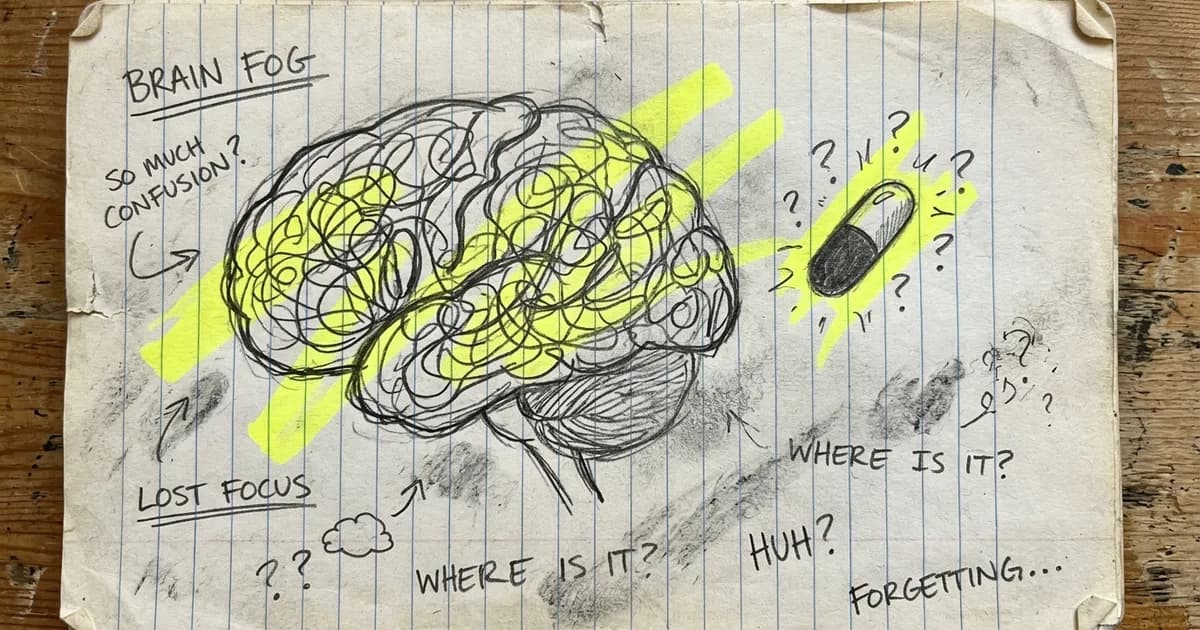
You wake up, you move through the day, you answer the emails and hit the deadlines, and somehow none of it registers. You are not sad, exactly. You are running on muscle memory. That dull, flat, "is this it" sensation has a name, and it is usually not depression. It is most often languishing: a neutral state of low engagement driven by monotony, chronic low-grade stress, poor recovery, and a brain that has habituated to an under-stimulating routine. The fix is not more effort. It is small, deliberate variation and a few real wins that give your brain something to respond to again.
This article is informational and is not medical advice. If your numbness is persistent or comes with hopelessness, please read the "When to See a Professional" section and talk to a licensed clinician.
Key Takeaways
- Feeling like you are going through the motions is most often languishing, a flat middle ground between flourishing and burnout, not a clinical disorder by itself.
- The mechanism is habituation: predictable, low-stimulation routines stop producing a response, so days blur and nothing lands.
- Languishing and depression can overlap, but they are not the same. Persistent anhedonia, numbness, or hopelessness warrants a professional.
- Small variation plus small, visible wins restores engagement faster than grinding harder.
- More caffeine, more hours, and more scrolling do not fix this. They usually deepen it.
Why Do I Feel Like I'm Just Going Through the Motions?
You feel like you are going through the motions because your brain has adapted to a routine that no longer gives it anything new to track. This is languishing, the absence of well-being rather than the presence of illness. The psychologist Corey Keyes defined mental health as a continuum, and in his foundational paper, The Mental Health Continuum: From Languishing to Flourishing in Life, he described languishing as a state in which a person is "neither mentally ill nor mentally healthy," free of diagnosable disorder yet empty of the vitality that defines flourishing.
That is the part most people miss. You can have nothing clinically wrong and still feel stalled. When the writer Adam Grant reintroduced the term during the pandemic, it spread because it named something millions felt but could not articulate: a sense of muddling through, of stagnation without crisis.
The good news is that languishing responds to specific inputs. Below is what it actually is, why monotony flattens you, and the protocol for feeling present again.
Living on Autopilot: What Languishing Actually Is
Languishing is a flat, neutral state that sits between flourishing and burnout, and it is defined more by what is missing than by what hurts. There is no acute pain, which is exactly why it goes undiagnosed. You are functional. You are also empty.
It helps to separate three states that get blurred together.
| State | What it feels like | Core driver | Functional? | Needs a clinician? |
|---|---|---|---|---|
| Languishing | Flat, indifferent, "going through the motions," days blur | Monotony, low stimulation, poor recovery | Usually yes | Not by itself; watch for escalation |
| Emptiness | A persistent void, disconnection from self or others | Often unmet emotional needs, sometimes a symptom of a disorder | Variable | If persistent, yes |
| Autopilot | Acting without conscious attention, "I drove home and don't remember it" | Habit and habituation; a normal brain efficiency | Yes | No, unless it dominates everything |
Autopilot itself is not a problem. Your brain automates the familiar so it can save energy. The problem is when nothing breaks the automation, and the autopilot expands to cover your entire week.
Keyes also found that languishing is not harmless. People in this state report functioning comparable to those with moderate depression on several measures, which is why catching it early matters even though it is not a diagnosis on its own.
Why Monotony and Low Stimulation Flatten You
Monotony flattens you because of habituation: your brain stops responding to predictable input. This is the same mechanism behind hedonic adaptation, the well-documented tendency to return to a stable baseline of feeling after both good and bad events. When every day is structurally identical, there is nothing new to adapt to, so the baseline itself goes gray.
Novelty is what interrupts this. Research on dopamine and learning shows that the brain's reward and attention systems respond most strongly to what is new or unexpected, and that response fades as a stimulus becomes predictable. A study indexed at the National Library of Medicine examined how predictability shapes habituation to novelty, reinforcing a simple point: predictable environments produce diminishing neural responses over time.
Translate that to your week. Same commute, same tasks, same three apps, same dinner. Your prediction error, the gap between what you expect and what happens, drops near zero. With nothing to predict, there is nothing to feel. That is the neurological signature of going through the motions.
Is This Depression? The Honest Line
Languishing is not depression, but the two can overlap, and the difference matters. Languishing is low engagement and flatness. Clinical depression involves persistent low mood plus a cluster of symptoms, and one of the most telling is anhedonia, the loss of the ability to feel pleasure. The Cleveland Clinic describes anhedonia as a core feature of depression in which activities that once felt rewarding no longer do, and notes it is also linked to other conditions.
Here is the practical distinction. With languishing, you can still imagine that a good trip, a new project, or a real conversation would feel good. You just have not had one lately. With anhedonia, the capacity for pleasure itself is dampened, so even the things you used to love land as nothing.
If you recognize the second description in yourself, treat that seriously. Read the "When to See a Professional" section below. Nothing in this article, and no product, treats mood disorders.
How to Reconnect With Small Wins
You reconnect by deliberately reintroducing variation and stacking small, visible wins, because agency, not consumption, is what reverses languishing. The goal is to manufacture the prediction error your routine has erased. This is a protocol you run, not a thing you buy.
- Introduce one small novelty per day. A different route, a new recipe, a 20-minute walk somewhere you have never been. Novelty does not need to be expensive. It needs to be new.
- Define a win you can finish today. Not "get organized." Instead, "clear the kitchen counter" or "draft the first paragraph." Completion is the signal your brain is missing.
- Make progress visible. Cross it off. Keep a short list of what you finished, not just what is left. Seeing accumulated wins rebuilds the sense that your actions matter.
- Reintroduce mild challenge. Languishing thrives on tasks that are too easy to engage you and too dull to resist. Pick one thing slightly above your current skill and work at it.
- Protect recovery. Sleep, movement, and genuine downtime are not optional. Poor recovery is one of the conditions that keeps you flat in the first place.
None of these require a purchase. They require attention and a few minutes of intention each day.
Where Energy and Focus Fit In
Reconnecting with small wins requires showing up with enough mental energy to actually start, and this is where focus support fits into the picture, not as a cure, but as one input among several. A re-engagement routine fails most often at the first step. You sit down to begin the new project and the fog is too thick to push through.
This is the honest, narrow role for cognitive-performance tools, including the category of caffeine-and-L-theanine focus products. The combination is one of the most studied in the space. A 2008 double-blind trial by Kelly et al., published in the Journal of Nutrition, found that L-theanine and caffeine together improved attention task accuracy and reduced overall alpha-band power in the visual cortex, a pattern the researchers linked to a more generalized deployment of attentional resources. The pairing supports sustained attention and tends to blunt the jittery edge of caffeine alone.
Be precise about what that means. These tools support the focused hours during which you do the re-engagement work. They do not create motivation, they do not restore meaning, and they are not a treatment for low mood. They help you start. The starting is on you.
What Won't Fix This
Three popular escape hatches reliably make languishing worse:
- More caffeine. Stacking stimulants on a flat baseline buys you wired exhaustion, not engagement, and degrades the recovery you need.
- More hours. Grinding longer on the same monotonous tasks deepens the habituation that caused the problem.
- Doom-scrolling. Passive, infinite novelty trains your brain to expect stimulation without effort or completion, which is the opposite of a small win.
When to See a Professional
See a licensed mental health professional if the flatness is persistent, worsening, or accompanied by symptoms beyond low engagement. Languishing usually lifts with variation, recovery, and small wins over a few weeks. When it does not, that is a signal to get help, not to push harder.
Talk to a doctor or therapist if you experience persistent numbness or anhedonia (an ongoing inability to feel pleasure), hopelessness, changes in sleep or appetite, or a loss of interest that lasts more than two weeks. These can indicate depression or another condition that responds to professional care.
If you are having thoughts of suicide or self-harm, this is urgent. In the United States, call or text 988 to reach the 988 Suicide and Crisis Lifeline, available 24/7. You do not need to be in crisis to reach out.
Feeling Present Again Is a Practice, Not a Purchase
Going through the motions is not a character flaw and rarely a disorder. It is what happens when a capable brain runs out of things to predict. The flatness you feel is the predictable result of monotony, thin recovery, and a routine your nervous system has fully memorized. Name it as languishing, and it stops being mysterious.
The way out is unglamorous and reliable. Introduce something new each day. Finish one thing you can see. Protect your sleep and movement. Add a little challenge back. The point is not to overhaul your life in a weekend. It is to give your brain a reason to pay attention again, one small signal at a time. Presence is rebuilt, not bought.
Frequently Asked Questions
Is going through the motions the same as being lazy?
No. Laziness implies a choice to avoid effort. Going through the motions describes the experience of doing the effort while feeling nothing from it. This pattern usually reflects languishing, a state of low engagement driven by monotony and poor recovery rather than a lack of willpower. The work is getting done. What is missing is the sense of meaning or reward attached to it, which is a different problem with a different solution.
How long does languishing usually last?
It varies, but languishing often responds within a few weeks to deliberate changes in routine, recovery, and small wins. It tends to persist when the underlying conditions stay fixed: the same monotonous schedule, chronic low-grade stress, and inadequate sleep. If you introduce variation and genuine downtime and still feel flat after several weeks, that is a reason to consult a professional rather than wait it out.
Can languishing turn into depression?
Languishing and depression are distinct, but research treats mental health as a continuum, and unaddressed languishing is associated with higher risk of future mental illness. That does not mean it always escalates. It means the flat state is worth taking seriously rather than ignoring. Watch for the shift from "nothing feels engaging lately" to "I can no longer feel pleasure at all," which points toward anhedonia and warrants professional evaluation.
Will more caffeine fix the feeling of being on autopilot?
No. Adding stimulants to a flat baseline tends to produce wired fatigue rather than real engagement, and it often worsens the sleep and recovery that languishing depends on. Caffeine, ideally paired with L-theanine, can support the focus you need to start a task. It cannot manufacture the meaning or novelty that reverses the underlying state. The fix is behavioral: variation, completion, and recovery.
What is the fastest way to feel present again?
Manufacture a small, completable win today and let yourself register finishing it. Pick one concrete task, finish it, and mark it done. Then add one small piece of novelty, a new route or a new activity, to interrupt the predictability that flattens you. These two moves, completion and novelty, directly target the mechanism behind going through the motions, which is why they work faster than vague resolutions to "do better."
How do I know if I should see a doctor instead of just changing my routine?
Change your routine first if the feeling is mild and recent. See a licensed professional if numbness, loss of interest, or hopelessness persists beyond two weeks, worsens, or comes with changes in sleep, appetite, or your ability to function. If you have any thoughts of self-harm, treat it as urgent and contact the 988 Suicide and Crisis Lifeline immediately. Routine changes help languishing; they are not a substitute for care.
One Repeatable Input for the Focused Hours of a Re-Engagement Routine
The protocol in this article runs on agency, not products. You introduce novelty, you finish small wins, you protect recovery. But the routine has a reliable failure point: the moment you sit down to start the new project and the fog will not lift. That is the narrow place a focus tool earns its spot.
Roon is a zero-nicotine sublingual pouch built for exactly that window. Each pouch pairs 80 mg caffeine with 60 mg L-theanine, plus 25 mg methylliberine (Dynamine) and 5 mg theacrine (TeaCrine), the caffeine-and-L-theanine combination shown in the research above to support sustained attention without the jittery edge. The format is clean, repeatable, and designed for several focused hours without a crash.
Be clear about what this is. Roon supports focus during the hours you do the work. It is not a treatment for low mood, depression, or languishing, and it will not restore meaning or motivation on its own. Those come from the variation, the wins, and the recovery. If you want one steady input for the focused hours of your re-engagement routine, try Roon. The rest of the work is still yours.
By Roon Team