Dry January Drinks: What Actually Works (and What's Just Hype)
Roon Team
Dry January Drinks: What Actually Works (and What's Just Hype)
Thirty percent of Americans participated in Dry January in 2025, a 36% jump from the year before. That's not a fad. That's a behavioral shift. And if you're reading this, you're probably one of the millions looking for dry January drinks that don't feel like a punishment.
Good news: the options for dry January drinks have never been better. Bad news: most "best of" lists just throw 30 products at you and call it a day. This piece is different. We'll cover what actually works, what the science says about ditching alcohol for a month, and how to pick dry January drink alternatives that you'll still want in February.
Key Takeaways:
- A month without alcohol improves sleep, mood, liver function, and blood pressure, according to a 2025 Brown University review.
- The non-alcoholic beverage market is growing fast, with the U.S. segment projected to reach $246.9 billion by 2032.
- The best dry January drinks replace the ritual of drinking, not just the liquid.
- Going alcohol-free doesn't mean going stimulant-free. Smart caffeine and nootropic alternatives exist.
Why Dry January Drinks Matter More Than You Think
Skipping alcohol for 31 days sounds simple. The hard part isn't willpower. It's the empty space where a drink used to be.
Think about it. You get home from work. You open the fridge. Your hand reaches for a beer or a bottle of wine because that's the signal your brain uses to shift from "work mode" to "off mode." Remove the drink, and the ritual collapses. You're standing in your kitchen, slightly confused, holding a glass of tap water that feels deeply unsatisfying.
This is why dry January drink alternatives exist. They fill the gap. They give your brain the sensory cue it needs to transition without the ethanol. The right dry January drinks serve as a stand-in for the habit, not just the beverage.
And the people who succeed at Dry January tend to understand this. Research published in Alcohol and Alcoholism found that participants who completed the month reported not just physical benefits like weight loss and improved sleep, but also psychological ones: better mood, sharper concentration, and a stronger sense of control over their habits.
The takeaway? What you drink instead of alcohol matters almost as much as the decision to stop. Choosing the right dry January drinks can make or break your month.
The Real Health Benefits of Going Alcohol-Free for a Month
Let's put some numbers behind the hype.
A 2025 scoping review from Brown University analyzed the existing body of Dry January research and found consistent results across studies. Participants who abstained for the full month reported:
- Better sleep quality (both falling asleep faster and staying asleep longer)
- Improved mood and mental clarity
- Weight loss (alcohol is calorically dense, and most people don't compensate by eating more)
- Healthier liver function and lower blood pressure
The review also found something most people don't expect: Dry January participants tended to drink less for months afterward. This wasn't just a reset. It was a recalibration. And having satisfying dry January drinks on hand played a role in sustaining those habits.
Data from Oar Health backs this up. Their nationwide study found that 47% of people who drink at least once a month have attempted Dry January before, with millennials leading the way at 51% participation. This isn't a fringe wellness experiment anymore. It's mainstream behavior.
The Best Dry January Drinks, by Category
Not all dry January drink alternatives are created equal. Here's a breakdown of what's actually worth your money and your taste buds.
Non-Alcoholic Beers and Wines
The non-alcoholic beer category has improved dramatically. Brands like Athletic Brewing and Partake now produce beers that taste like actual beer, not like someone watered down a Budweiser and added a prayer. On the wine side, dealcoholized wines (where real wine has its alcohol removed through vacuum distillation) tend to taste better than wines that were never fermented in the first place. Both rank among the most popular dry January drinks for good reason.
What to look for: Check the sugar content. Some NA wines compensate for the missing alcohol by adding sweetness, which defeats the health purpose.
Functional Beverages and Adaptogens
This is where the market for dry January drinks has exploded. Drinks infused with adaptogens like ashwagandha, reishi, or lion's mane are everywhere. Some contain L-theanine for calm focus. Others use magnesium for relaxation.
The appeal is obvious: you get a drink that does something beyond hydration. The risk is equally obvious: many of these products contain proprietary blends with undisclosed dosages, which means you have no idea if you're getting an effective amount of anything.
What to look for: Transparent labels with specific milligram dosages for every active ingredient. The best dry January drinks in this category are upfront about what's inside.
Mocktails and Craft Sodas
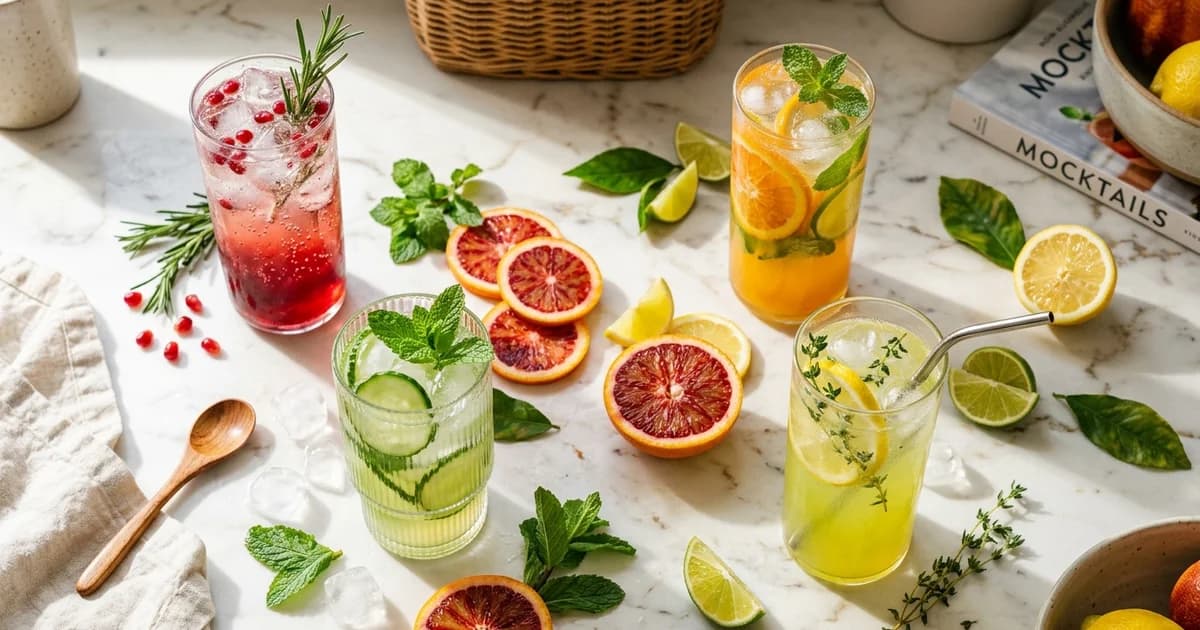
Premixed mocktails have gone from sad afterthought to legitimate category. Brands are using real botanicals, bitters, and citrus to create dry January drinks that feel complex and adult. Craft sodas with ginger, turmeric, or hibiscus offer another route, though they tend to be higher in sugar.
What to look for: Drinks with fewer than 10g of sugar per serving. The whole point of Dry January is feeling better, not trading one source of empty calories for another.
Sparkling Water (The Reliable Workhorse)
Don't underestimate plain sparkling water with a squeeze of citrus. It's zero calories, zero sugar, and the carbonation gives you the sensory experience of "having a drink" that flat water simply can't match. As far as dry January drinks go, sparkling water is the simplest and most accessible option. Keep a case of it cold and accessible. It sounds boring. It works.
A Comparison of Popular Dry January Drink Alternatives
| Category | Examples | Avg. Calories | Sugar | Functional Benefit | Best For |
|---|---|---|---|---|---|
| NA Beer | Athletic Brewing, Partake | 50-90 | 2-5g | Minimal | Beer lovers, social settings |
| NA Wine | Leitz, Surely | 20-50 | 2-8g | Minimal | Wine drinkers, dinner pairing |
| Functional Drinks | Kin Euphorics, Recess | 15-45 | 0-6g | Adaptogens, nootropics | Mood/relaxation seekers |
| Premixed Mocktails | Ghia, Curious Elixirs | 30-60 | 4-10g | Botanicals | Cocktail lovers |
| Sparkling Water | Topo Chico, Spindrift | 0-15 | 0-3g | Hydration | Everyone, daily use |
How to Actually Stick With Dry January (Beyond Just Buying Dry January Drinks)
Stocking your fridge with dry January drink alternatives is step one, but tips for completing Dry January go well beyond what's in your fridge. But most people who fail Dry January don't fail because of bad drink choices. They fail because they didn't address the underlying triggers.
Replace the Ritual, Not Just the Substance
Knowing how to do Dry January right means understanding that alcohol is a habit loop: cue, routine, reward. The cue might be stress, boredom, or a social setting. The routine is pouring a drink. The reward is relaxation (or at least the perception of it). If you only swap the liquid but keep everything else the same, you're halfway there. Pairing your dry January drinks with a new reward, like 20 minutes of reading, a walk, or a focused work session, makes you much more likely to make it stick.
Watch Out for Sugar Creep
One of the most common traps during Dry January is replacing alcohol calories with sugar calories. Your body craves the quick energy hit that alcohol used to provide, and sugary dry January drinks fill that void perfectly. Track your sugar intake for the first two weeks. You'll probably be surprised.
Tell People What You're Doing
Circana's data shows that Gen Z is leading the sober curious movement, and social acceptance of not drinking is at an all-time high. You don't need to be apologetic about it. Telling friends and coworkers creates accountability and, more often than not, you'll find someone who wants to join you.
What Happens After January?
Here's the part most Dry January articles skip.
The Brown University review found that the benefits don't evaporate on February 1st. Many participants maintained lower drinking levels for six months or longer after completing the challenge. The month acts as a proof of concept: your brain learns that it can relax, socialize, and decompress without alcohol, and that lesson tends to persist. Many people keep their favorite dry January drinks in the rotation year-round.
The sober curious movement reflects this. It's not about permanent abstinence for most people. It's about intentionality. Drinking when you choose to, not because the situation expects it.
And that mindset extends beyond alcohol. Once you start questioning default habits, you start questioning all of them. Once you start questioning default habits, you start questioning all of them, including swapping one substance for another rather than addressing the underlying trigger.
Clean Focus for the Sober Curious
If Dry January taught you anything, it's that what you put in your body shapes how you think and feel. That principle doesn't stop at alcohol, and it doesn't stop at dry January drinks.
Roon was built for people who think this way. It's a zero-nicotine, sublingual pouch that combines 80mg of caffeine with L-theanine, theacrine, and methylliberine for sustained focus that lasts 6 to 8 hours without the jitters or the crash. A study published in Nutritional Neuroscience found that the combination of L-theanine and caffeine improved attention and focus during demanding cognitive tasks.
No alcohol. No nicotine. No sugar. Just clean, calibrated performance for people who've decided that feeling good shouldn't require a tradeoff.
If you're rethinking what you consume this January, rethink your focus too.