Cold Exposure and Dopamine: The Real Science of Cold Plunges for Focus and Mood
Step into 50-degree water and your body reacts before your brain catches up. Your breath shortens, your skin tightens, and within minutes something shifts. People describe it as a clean, lit-up calm that holds for hours.
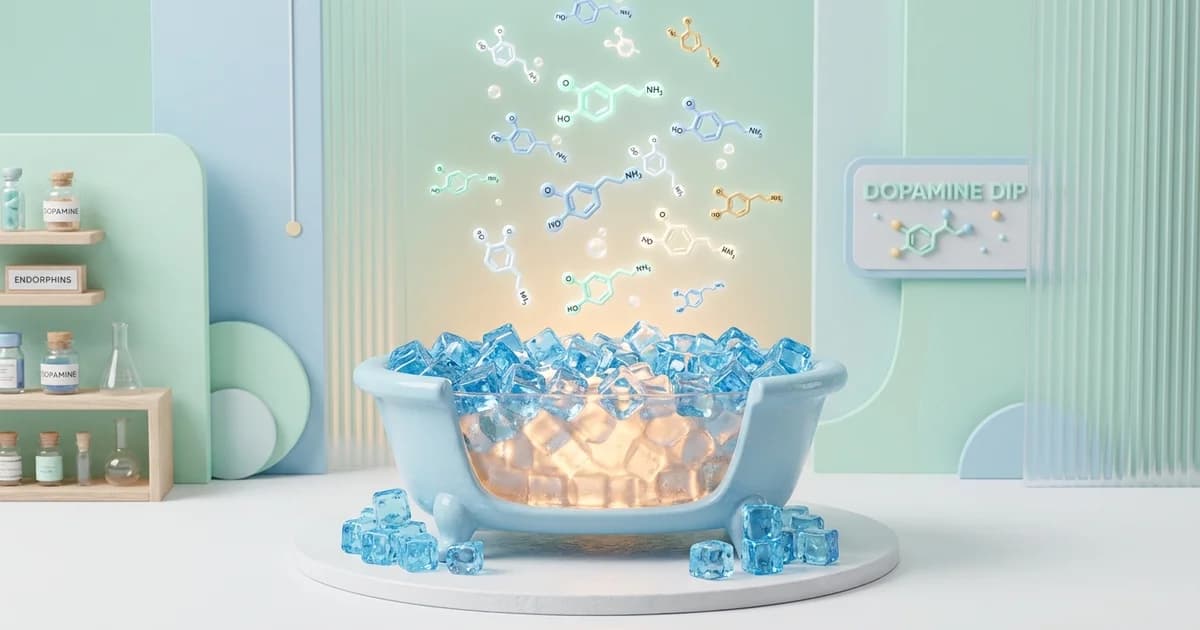
That feeling is real, and the cold exposure dopamine response is the reason most often given for it. The story usually goes like this: cold water spikes dopamine by 250 percent, and that surge explains the focus and the mood lift. The number is accurate. The interpretation is where things get messy.
This piece unpacks what the data actually shows, what it does not, and how to use cold deliberately if focus and mood are what you are after.
Key Takeaways
- A landmark study found that one hour in 14°C water raised plasma dopamine by 250 percent and norepinephrine by 530 percent.
- The catch: that dopamine was measured in the blood, and peripheral dopamine barely crosses into the brain. Norepinephrine drives most of the cognitive effect.
- A 2025 meta-analysis found cold water immersion reduced stress 12 hours later, not immediately, and mood benefits were inconsistent across studies.
- You do not need long sessions. Roughly 11 minutes total per week, split across a few short exposures, covers the evidence-backed dose.
- Cold is a behavioral lever for catecholamines. It works alongside, not instead of, other focus tools.
What the 250 Percent Dopamine Study Actually Found
The famous figure comes from a single, well-cited physiology paper. Researchers immersed participants in water at different temperatures and measured their blood chemistry afterward.
At 14°C, the results were striking. Plasma noradrenaline rose 530 percent and dopamine rose 250 percent, according to the study published in the European Journal of Applied Physiology. Those numbers have since traveled across every cold plunge blog and podcast on the internet.
Here is the part that rarely makes it into the headline. That dopamine was measured in plasma, meaning the bloodstream, not the brain. And peripheral dopamine and brain dopamine are not the same currency.
The Caveat Nobody Mentions: Blood Is Not Brain
Peripheral dopamine does almost nothing for your mood directly, because it cannot reach the neurons that matter. According to the NIH's StatPearls reference, dopamine does not cross the blood-brain barrier in appreciable amounts, so its central effects are minimal when it circulates in the body.
So a 250 percent jump in blood dopamine is not the same as a 250 percent jump in the dopamine driving your reward and focus circuits. The two systems are walled off from each other by design.
This does not mean cold does nothing for your head. It means the mechanism is more interesting than the meme suggests. The brain runs its own catecholamine response to cold, and the standout player is norepinephrine.
Why Norepinephrine Does the Heavy Lifting
Norepinephrine is the brain's alertness and attention chemical. The same study that gave us the dopamine figure showed an even larger norepinephrine response, and norepinephrine has central effects that map cleanly onto what people feel after a plunge.
When the locus coeruleus, a small brainstem region, fires norepinephrine, attention sharpens and reaction time tightens. That is the crisp, alert state behind cold plunge focus. If you want to understand the chemistry that actually produces that sharpened attention, our breakdown of how norepinephrine controls alertness and focus goes deeper.
The dopamine talk gets the attention. Norepinephrine deserves more of the credit.
Does Cold Exposure Boost Focus and Mood? What the Evidence Says
Short answer: the alertness boost is real and immediate, the mood benefit is real but delayed and less consistent. The question "does cold exposure boost focus" has a cleaner answer than the question about mood.
The most thorough review to date pooled dozens of studies. The 2025 systematic review and meta-analysis in PLOS One found that cold water immersion produced time-dependent effects rather than instant ones.
The standout finding on mood and stress was about timing. The researchers reported a meaningful reduction in stress 12 hours after immersion, with no reliable effect immediately, at one hour, or at four hours. The benefit shows up later, not in the cold itself.
That same review was candid about the limits. As coverage from ScienceDaily noted, results varied widely because protocols were inconsistent and many studies were small. Cold water immersion mood effects looked promising for wellbeing and sleep, but the data was not strong enough to call mood a guaranteed outcome.
So the honest read: the acute alertness from cold is well supported and tied to norepinephrine. The downstream calm and stress reduction are plausible and showed up in the meta-analysis, but they are slower and more variable than the dopamine hype implies.
Cold Plunge vs Cold Shower: Do You Need the Ice Bath?
You do not need a $5,000 tub. The cold shower dopamine and alertness response shares the same physiology as a plunge, as long as the water is cold enough and you stay in long enough to trigger the stress response.
The temperature threshold matters more than the equipment. The original physiology work showed that 20°C water barely moved norepinephrine, while 14°C drove the 530 percent spike. Cold has to actually be cold.
Here is how the common methods compare for someone chasing focus and mood, not athletic recovery.
| Method | Typical temp | Triggers catecholamine surge? | Practicality | Best for |
|---|---|---|---|---|
| Ice bath / plunge | 4–12°C | Yes, strongly | Low, needs setup | Ice bath mental benefits, biggest acute effect |
| Cold shower | 10–16°C | Yes, if cold and long enough | High, free | Daily morning alertness |
| Cold lake / ocean | Varies, often 5–15°C | Yes, seasonal | Medium | Adherence and enjoyment |
| Face/cold water on face | ~10°C | Mild, dive reflex only | Very high | Quick calming, not full effect |
The takeaway from the table is simple. A genuinely cold shower you actually take beats an ice bath you avoid.
How to Use Cold for Focus Without Overdoing It
You need far less cold than the extreme end of the internet suggests. The widely cited guideline is roughly 11 minutes of total cold exposure per week, split across two to four short sessions of two to five minutes each.
Practical structure for focus and mood:
- Aim for uncomfortable but safe. The water should feel like you want to get out but could stay.
- Keep sessions short. Two to four minutes is enough once you are genuinely cold.
- Front-load your day. Morning cold pairs the norepinephrine spike with the hours you need to be sharp.
- Skip cold right after heavy strength training. Cold can blunt some muscle adaptation, so separate them if hypertrophy matters to you.
- Let the body rewarm on its own when possible, which extends the metabolic effect.
One safety note. Cold water causes an immediate gasp reflex and raises blood pressure, so anyone with heart conditions should clear it with a doctor first. This is general information, not medical advice.
Conclusion
Cold exposure earns its reputation, just not for the reason most people repeat. The blood dopamine number that gets quoted everywhere is real, but it lives in your bloodstream, not your brain, and it is norepinephrine that drives the sharp, alert state you feel after a plunge.
The mood and stress benefits are slower and less certain than the marketing suggests, showing up hours later rather than in the moment. Used well, in short and genuinely cold doses a few times a week, cold is a reliable behavioral switch for catecholamines. It is a tool with real effects and honest limits, and knowing which is which makes it far more useful.
Frequently Asked Questions
Does cold exposure really increase dopamine by 250 percent?
The 250 percent figure is accurate but often misread. It comes from a physiology study that measured plasma dopamine, meaning dopamine in the blood, after an hour in 14°C water. Peripheral dopamine barely crosses into the brain, so that number does not translate directly to a 250 percent boost in the brain's reward chemistry. The real cognitive effect leans more on norepinephrine.
How long do the effects of a cold plunge last?
The acute alertness from norepinephrine fades over the hours after you warm up. The mood and stress side looks slower. A 2025 PLOS One meta-analysis found the clearest stress reduction showed up around 12 hours after immersion, not immediately, which suggests some benefits build over the day rather than hitting instantly.
Is a cold shower as effective as an ice bath?
For focus and mood, a sufficiently cold shower triggers the same catecholamine response as a plunge. The key is temperature and duration. Lukewarm water will not do it. If the shower is genuinely cold and you stay in for a few minutes, you get most of the cold shower dopamine and alertness effect without the cost of a tub.
How cold and how long should the water be?
Cold enough that you want to leave but can safely stay, usually somewhere in the single digits to low teens Celsius. Two to five minutes per session is plenty. The common weekly target is around 11 minutes of total cold across two to four sessions, which lines up with the evidence rather than chasing ever-longer exposures.
Does cold exposure help with focus immediately?
Yes, the alertness effect is fast. Norepinephrine release sharpens attention and reaction time within minutes of cold contact, which is why people feel clear-headed right after. That immediate sharpening is better supported than the slower mood benefits, so cold is a reasonable pre-work or pre-study primer.
Can cold exposure replace caffeine for focus?
Not really, because they work through different and complementary routes. Cold drives a catecholamine surge through the stress response, while caffeine blocks adenosine and reduces the feeling of fatigue. Many people use both. Cold gives the acute spike, and a focus aid handles sustained attention across the working hours that follow.
Is cold exposure safe for everyone?
No. Cold water causes an immediate gasp reflex and a sharp rise in blood pressure and heart rate, which can be dangerous for people with cardiovascular conditions. Anyone with a heart issue, pregnancy, or related concern should talk to a doctor before starting. This article is educational and not a substitute for medical advice.
Two Levers for the Same Catecholamine System
Cold exposure is a behavioral lever. It nudges your catecholamine system through stress, and that gives you a clean burst of alertness when you need to be sharp. The honest caveat runs through this whole article: most of that benefit is norepinephrine and acute, not a brain-wide dopamine flood.
Roon is the ingredient lever for the same goal. It is a sublingual pouch with 80 mg caffeine, 60 mg L-theanine, 25 mg methylliberine (Dynamine), and 5 mg theacrine (TeaCrine), built for a 5 to 10 minute onset and 6 to 8 hours of steady focus without the jitters or the afternoon crash. Where a cold plunge gives you a fast spike, Roon is designed to hold attention across the working hours that follow.
These are two independent tools, not rivals. A cold shower in the morning and a Roon pouch when the real work starts cover different parts of the same problem. Roon is not a treatment for any condition and it will not warm you up after a plunge, but if sustained, clean focus is the goal, try Roon as the chemistry-side complement to your cold routine.
Written by Roon Team