Caffeine + L-Theanine for Gaming: Why the Calm-Focus Stack Beats Straight Caffeine for Aim
Roon Team
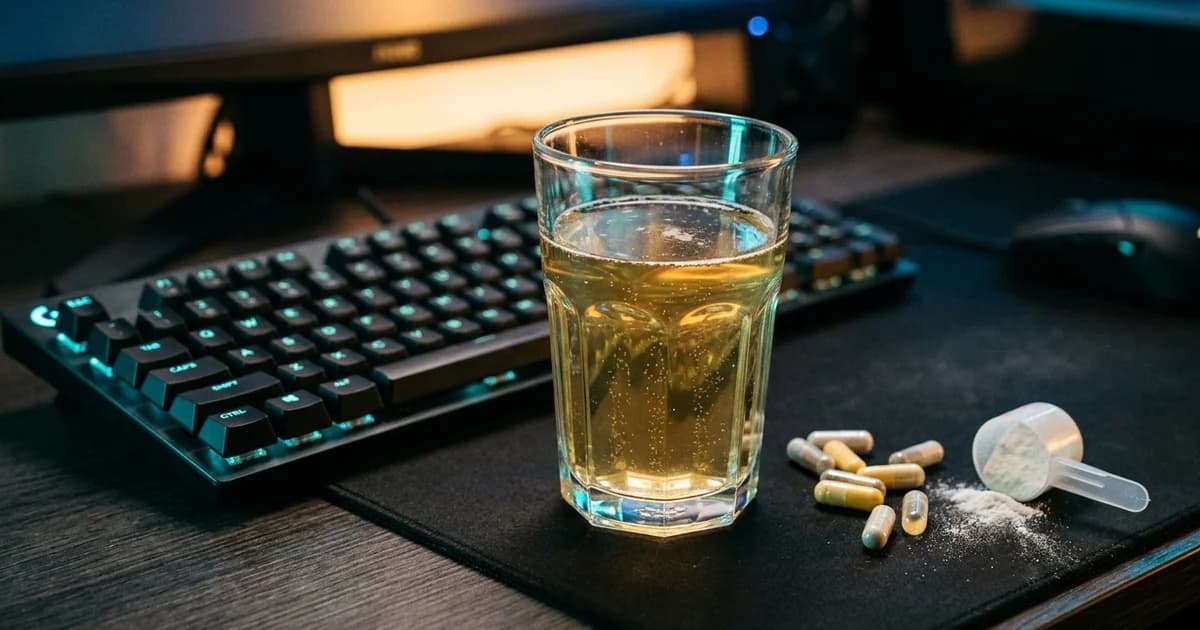
Caffeine + L-Theanine for Gaming: Why the Calm-Focus Stack Beats Straight Caffeine for Aim
You chug an energy drink before a ranked session. Twenty minutes in, your aim feels twitchy, your hands are warm, and your tracking is overcorrecting on every flick. That is l theanine caffeine territory, or rather, the problem that L-theanine plus caffeine was made to fix.
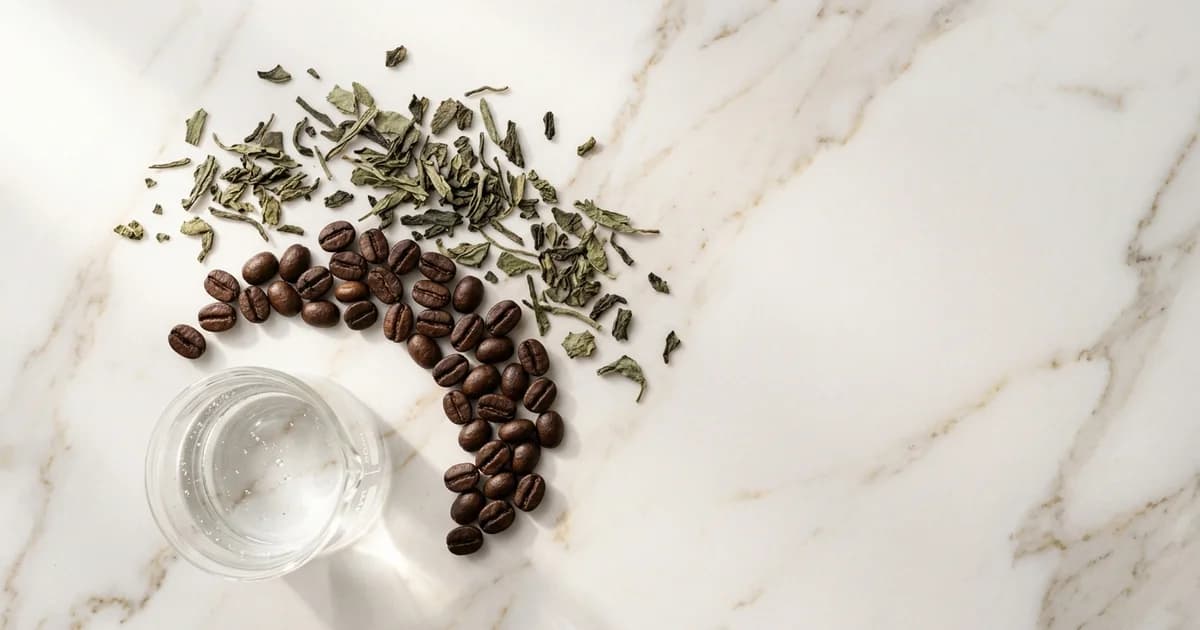
Caffeine alone sharpens reaction time, but it also raises your heart rate and feeds the kind of edginess that wrecks fine motor control. Pair it with L-theanine, the amino acid in green tea, and you get the alertness without the shake. That pairing, often called the calm-focus stack, is the most studied nootropic combination available, and it maps almost perfectly onto what competitive gamers actually need.
This guide breaks down the science, the dosing, and why the stack beats raw caffeine when your rank is on the line.
Key Takeaways
- Caffeine clearly improves shooting accuracy and reaction time in FPS players, but higher doses come with anxiety and jitter risk.
- L-theanine smooths out caffeine's rough edges by raising alpha brain waves and reducing tension, without making you drowsy.
- Combined, the two improve attention, accuracy, and reaction time better than either one alone.
- A roughly 2:1 to 1:1 ratio of L-theanine to caffeine is the sweet spot most research uses.
Does L-Theanine Help With Focus? What the Science Actually Says
Yes. L-theanine helps with focus by shifting your brain into a state of relaxed alertness, and the clearest evidence is electrical. L-theanine reliably increases alpha brain wave activity, the pattern your brain produces during calm, wakeful concentration.
According to a review on L-theanine and alpha brain waves, researchers at Oxford Brookes University found that L-Theanine increased frontal midline alpha activity, which is associated with improved attention and reduced mind-wandering. The same review notes that participants who took 50 mg of L-Theanine had markedly elevated alpha brain wave activity after just 30 minutes.
This matters for gaming because mind-wandering is what kills consistency over a long session. You do not lose a match because you cannot aim once. You lose because your attention drifts on round 14 and you peek a corner you already cleared.
The calming side is just as relevant. In one trial described by Allergy Research Group, a single dose of 200 mg of L-theanine helped reduce perceived tension-anxiety scores amongst young university students performing a challenging mental task, and L-theanine did not cause drowsiness or impair concentration in this trial. That last part is the whole point. L-theanine for focus works because it calms you down without slowing you down.
Caffeine and Aim: The Esports Evidence
Caffeine improves shooting accuracy and reaction time in first-person shooter players, and the data is recent and specific. A 2024 study in Frontiers in Sports and Active Living tested 24 FPS players on a KovaaK's aim trainer using static clicking and reactive tracking tasks.
This study investigated the effects of two different doses of caffeine on the shooting performance and reaction time of 24 first-person shooter players, who consumed either a water control, a 1 mg per kg dose, or a 3 mg per kg dose of caffeine. The study referenced earlier work showing that an acute 3 mg per kg dose of caffeine markedly enhanced hit time and hit accuracy on a shooting task, and simple reaction time, in professional esports players. For a 70 kg gamer, 3 mg per kg lands right around 210 mg of caffeine, roughly two cups of coffee.
So caffeine works. The catch is the side effects at the doses that produce the biggest gains. The Frontiers authors flagged that caffeine can bring increased anxiety and gastrointestinal disturbance, although typically reported at higher doses or in non-habitual caffeine consumers.
That is the trade no gamer wants. More caffeine sharpens your reactions but can leave your hands tense and your stomach unsettled. There is a better way to get the alertness.
Why the Combination Beats Straight Caffeine
The combination of caffeine and L-theanine improves cognitive performance and alertness more than caffeine alone, and it does it while damping the anxiety caffeine causes. This is the central finding across decades of research on the stack.
A PubMed-indexed study on the combination found that caffeine plus L-theanine improved both cognitive performance and subjective alertness. A broader review on ScienceDirect put it plainly: beneficial green tea effects on cognition are observed under the combined influence of both caffeine and l-theanine, whereas separate administration of either substance was found to have a lesser impact.
The cleanest proof for aim-style tasks comes from a sport built on precision. In a double-blind study on elite curling athletes, researchers tested caffeine alone, L-theanine alone, and the two together against placebo. The conclusion was direct: it has been demonstrated in this study that the best shooting scores and cognitive performance were achieved, particularly with the combined intake of caffeine and L-theanine.
Curling is essentially a precision shooting sport played under pressure. Steady hands, fine control, and sustained concentration decide the outcome. Swap the stone for a mouse and the demands look a lot like a tense overtime round.
The Mechanism in Plain Terms
Caffeine blocks adenosine, the molecule that makes you feel tired, which is why it speeds up reaction time. The downside is that it also ramps up the sympathetic nervous system, the source of that jittery, fight-or-flight edge.
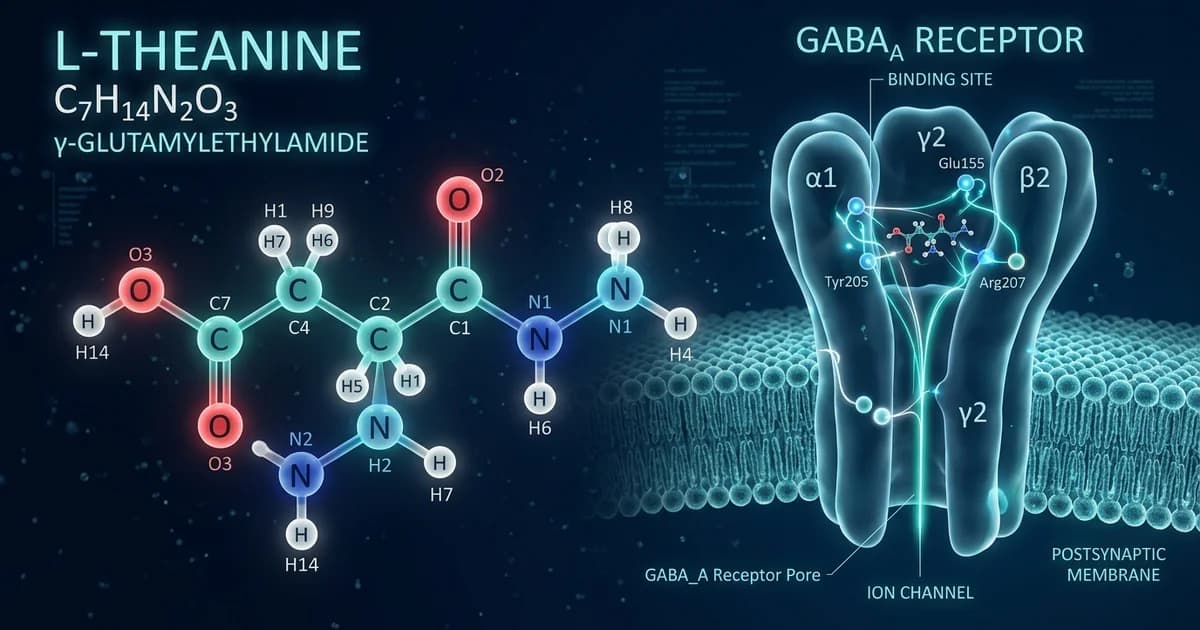
L-theanine pushes in the opposite direction. Once inside the brain, it modulates the activity of several neurotransmitters, including GABA, dopamine, and serotonin, setting the stage for a relaxed but wakeful state linked to increases in alpha wave activity. Run both at once and you keep caffeine's speed while L-theanine sands down the anxiety and physical tension.
The result for a gamer is steadier tracking, less overcorrection, and a heart rate that does not spike every time you take a fight.
The Right Ratio and Dose for Gaming
Most research uses L-theanine and caffeine in a ratio between 2:1 and 1:1. In doses ranging between 50 and 250 mg L-theanine and 40 to 250 mg caffeine, improvements were observed in performance domains such as attention, accuracy, mental fatigue, reaction time, memory formation, and recall.
For gaming, you want enough caffeine to sharpen reaction time without tipping into the anxiety zone. Here is how common options stack up.
| Format | Caffeine | L-Theanine | Onset | Crash Risk | Jitter Control |
|---|---|---|---|---|---|
| Black coffee | ~95 mg | 0 mg | 30-45 min | Moderate | None |
| Energy drink | 150-300 mg | 0 mg | 20-40 min | High | None |
| Pre-workout | 200-350 mg | Varies | 20-30 min | High | Low |
| Coffee + L-theanine capsule | ~95 mg | 100-200 mg | 30-45 min | Low | Good |
| Roon sublingual pouch | 80 mg | 60 mg | 5-10 min | Low | Good |
Roon also adds 25 mg methylliberine (Dynamine) and 5 mg theacrine (TeaCrine), two compounds related to caffeine that extend the focus window without the comedown. The sublingual format is the practical edge here, since it absorbs through the tissue under your tongue instead of waiting on digestion.
A quick note on timing. Caffeine has a half-life of several hours, so a 2 a.m. ranked grind on a full energy drink can wreck the sleep that actually keeps your aim sharp. Lower, steadier dosing is friendlier to your recovery.
How This Fits a Real Gaming Session
The stack shines over long sessions, not just the first ten minutes. Caffeine alone tends to spike and fade, and the fade often arrives mid-match.
L-theanine helps maintain the calm-attention state across hours of play, which supports consistency when fatigue and tilt usually creep in. If you have ever played great for an hour and then fallen apart, that drop-off is the gap the stack is built to cover.
For deeper context on the individual pieces, our guides on how L-theanine supports focus and the science of caffeine and reaction time go further into the mechanisms.
Conclusion
Straight caffeine works for aim, and the esports data proves it. But the doses that produce the biggest gains in shooting accuracy and reaction time also raise the odds of anxiety, tense hands, and a stomach you would rather not feel mid-match.
Adding L-theanine fixes that trade. The combination improves attention, accuracy, and reaction time more than caffeine alone, while the amino acid raises alpha brain waves and keeps you calm without making you drowsy. The elite curling data showed the best precision came from the two together, and aim is just precision under pressure.
If you compete, the calm-focus stack is not a hack. It is the most evidence-backed way to stay sharp and steady from the first round to the last.
Frequently Asked Questions
Does L-theanine help with focus during gaming?
Yes. L-theanine helps with focus by raising alpha brain waves, the brain pattern tied to relaxed, sustained attention. Research from Oxford Brookes University found it increased frontal midline alpha activity, which is linked to better attention and less mind-wandering. For gamers, that translates to staying locked in over long sessions instead of drifting after the first hour. It does this without sedation, so your reaction time stays intact.
How much caffeine should I take before gaming?
Research on FPS players found that around 3 mg per kg of body weight improved shooting accuracy and reaction time, which is roughly 200 mg for a 70 kg player. That said, higher doses raise the risk of anxiety and jitters. Many gamers do better with a moderate 80 to 150 mg paired with L-theanine, which keeps the alertness while smoothing the edge. Adjust down if you are caffeine-sensitive.
What is the best ratio of L-theanine to caffeine?
Most studies use a ratio between 2:1 and 1:1 of L-theanine to caffeine. Common research doses ran from 50 to 250 mg of L-theanine alongside 40 to 250 mg of caffeine. A practical gaming target is something like 60 to 200 mg of L-theanine with 80 to 100 mg of caffeine. The goal is enough caffeine to sharpen reaction time without the anxiety, and enough L-theanine to keep your hands and mind steady.
Will L-theanine make me sleepy mid-match?
No. L-theanine promotes calm without sedation. In trials, it reduced tension and anxiety during demanding mental tasks while not causing drowsiness or impairing concentration. It raises alpha waves, the same calm-alert state linked to focused meditation, rather than the slow waves of sleep. Paired with caffeine, it actively keeps you awake and sharp, just without the wired feeling.
Does the caffeine and L-theanine stack reduce jitters and sweaty hands?
It helps. Caffeine activates the sympathetic nervous system, which drives jitters and tense, sweaty hands. L-theanine pushes the other way by modulating GABA and raising alpha activity, which lowers perceived tension. The combination keeps caffeine's reaction-time boost while reducing the physical edge that hurts fine motor control. For aim-heavy games, steadier hands mean less overcorrection on tracking and flicks.
Is the calm-focus stack better than an energy drink for gaming?
For sustained, precise performance, yes. Energy drinks deliver caffeine fast but offer no L-theanine, so you get the alertness and the jitters together, often followed by a crash. The stack gives you cleaner focus with steadier hands and a gentler fade. The curling study, a precision-shooting sport, found the best accuracy came from caffeine plus L-theanine, not caffeine alone.
The Calm-Focus Stack, Built for the Mouse Hand
This article has argued one thing: caffeine sharpens your aim, but the doses that help most can also leave your hands tense and your reactions twitchy. L-theanine is the fix, and the research keeps pointing the same way.
That is exactly what Roon is built around. Each sublingual pouch carries 80 mg caffeine, 60 mg L-theanine, 25 mg methylliberine (Dynamine), and 5 mg theacrine (TeaCrine), absorbed under your tongue for a 5 to 10 minute onset and a 6 to 8 hour window of steady focus with no jitters, no crash, and no tolerance buildup. It is discreet enough to keep in your desk drawer and skip the energy-drink sugar crash entirely.
Roon is not a replacement for sleep, hydration, or actual aim training, and it will not carry a bad day. What it can do is hold your focus and reaction time steady from your warmup to your last ranked game. If you want the calm-focus stack without the sweaty-hands tradeoff, try Roon for your next session.
Written by Roon Team