Caffeine + L-Theanine: The Combo Behind Smooth, Jitter-Free Energy (and the Ratio That Matters)
Roon Team
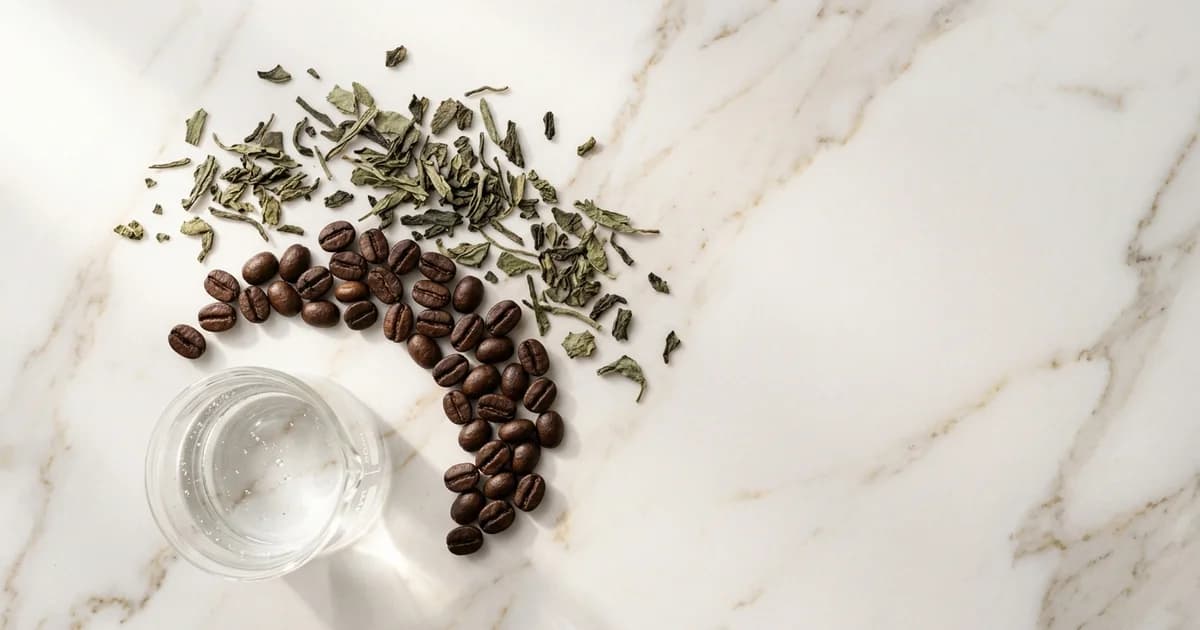
Caffeine + L-Theanine: The Combo Behind Smooth, Jitter-Free Energy (and the Ratio That Matters)
Caffeine works. That is the problem. It blocks the brain chemical that makes you feel tired, so alertness climbs fast. But push the dose, and the same molecule that sharpens you also tightens your chest, speeds your pulse, and leaves your hands faintly buzzing. If you want caffeine without jitters, the fix is not less coffee. It is one specific amino acid that tea drinkers have been getting by accident for centuries.
That amino acid is L-theanine. Paired with caffeine in the right amount, it smooths the rough edges off the stimulant while keeping the focus intact.
Most people who hate caffeine do not actually hate caffeine. They hate the jitters, the racing heart, and the 2 p.m. crash. L-theanine addresses all three.
Key Takeaways
- L-theanine and caffeine work better together than either does alone, improving focus while cutting the jittery, anxious edge of stimulants.
- The most studied l-theanine caffeine ratio is roughly 2:1 theanine to caffeine, though lower doses of theanine still help.
- L-theanine raises alpha brain waves, the pattern tied to calm, alert states.
- The afternoon crash comes from rebound brain chemistry, not from caffeine itself, which means how you dose matters more than how much you drink.
Why Caffeine Alone Leaves You Wired
Caffeine does one main thing exceptionally well: it blocks adenosine, the molecule that builds up across the day and signals your brain to slow down. Block adenosine and you feel awake. Simple.
The trouble starts at the edges of that effect. Caffeine also nudges up adrenaline and constricts blood vessels, which is where the racing heart and the tight, anxious feeling come from. Take more than your system likes, and the alert signal tips into an agitated one.
Then comes the drop. The primary biological driver of a caffeine crash is the rebound of adenosine activity after caffeine clearance. That rebound produces a feeling of tiredness that can appear sudden and intense. The afternoon slump is not a sign you need more coffee. It is the bill coming due for the morning's.
This matters because a lot of people are running this loop daily. A survey found that roughly 69% of the U.S. population consumes at least one caffeinated beverage per day, including caffeinated energy drink options, with coffee the largest contributor. Most of them have simply accepted the jitters and the crash as the cost of staying sharp.
They are not.
What L-Theanine Actually Does to Your Brain
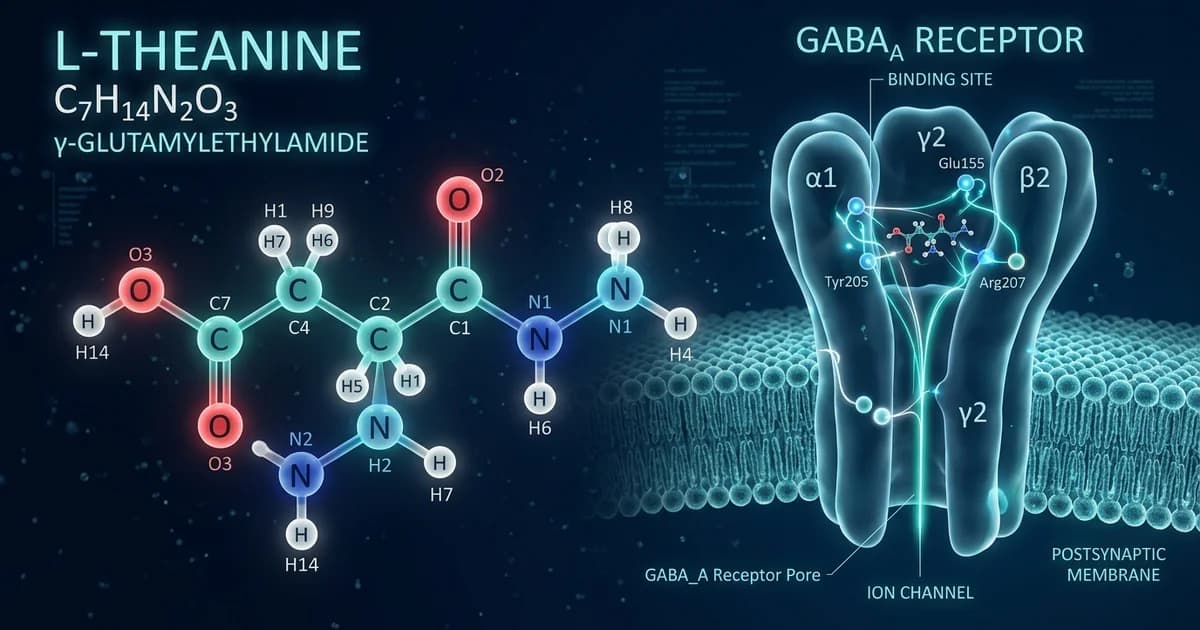
L-theanine is an amino acid found almost exclusively in tea leaves. On its own it does not make you sleepy or particularly stimulated. It changes the texture of your alertness.
Its signature effect shows up on an EEG. L-theanine has been shown to increase the production of alpha brain waves, which indicate a relaxed state of alertness. Alpha waves are the pattern you see in someone who is focused but calm, like a person deep in a task they enjoy rather than one bracing for a deadline.
It also works on the chemistry that drives anxious feelings. L-theanine appears to reduce excitatory pathways by activating and channeling the brain's calming mechanisms, and its administration has been linked to reduced cortisol levels. That is the part of the puzzle caffeine cannot solve for itself.
Put plainly: caffeine turns the volume up, and L-theanine cleans up the static.
L-Theanine and Caffeine: Why the Combination Beats Either Alone
The pairing is one of the most replicated findings in cognitive performance research. Taken together, l theanine with caffeine consistently produces sharper focus and a calmer baseline than caffeine by itself.
A foundational study tested the duo on demanding mental tasks. Researchers found that 97 mg of L-theanine combined with 40 mg of caffeine helped participants focus attention during a demanding cognitive task, an effect that did not appear with placebo. The combination held attention steady where caffeine alone tended to scatter it.
More recent work pushed the doses higher and tested people under real stress: sleep deprivation. In a double-blind crossover trial published in the British Journal of Nutrition, overnight sleep-deprived adults took a high-dose L-theanine and caffeine combination. The results showed that the combination improved both accuracy and reaction time. Participants responded about 40 milliseconds faster on average and were better at correctly identifying imminent accidents compared to placebo.
That last detail is the whole point. The combination did not just make people feel better. It measurably improved how they performed under pressure.
The Anti-Jitter Effect
This is the mechanism behind smooth energy. L-theanine specifically counters the anxious, wired side of caffeine without dulling the alertness you actually want.
According to a review of the stack from nootropicbrainsupplements.com, L-theanine counteracts caffeine-induced anxiety without diminishing alertness, and a 2:1 ratio produces less jitteriness than equivalent caffeine doses alone according to controlled trials. You keep the focus. You lose the buzz.
The L-Theanine Caffeine Ratio That Matters
The most studied l-theanine caffeine ratio is 2:1, meaning twice as much L-theanine as caffeine. A common starting point is 200 mg L-theanine to 100 mg caffeine.
According to SmarterVitamins, numerous studies indicate that a 2:1 ratio of L-theanine to caffeine, such as 200mg to 100mg, is beneficial for enhancing cognitive performance and mood. That ratio is the safe default if you are mixing your own.
But the ratio is a guideline, not a law. The original focus research used a lower theanine-to-caffeine ratio and still showed clear benefits. What matters more is that L-theanine is present at a dose high enough to do its job, generally somewhere from 50 mg up to 200 mg.
Here is how the common ratios stack up.
| L-theanine : Caffeine | Example Doses | What You Feel |
|---|---|---|
| 2:1 | 200 mg : 100 mg | Maximum calm, smoothest focus, lowest jitter |
| 1:1 | 100 mg : 100 mg | Balanced focus with a noticeable lift |
| ~0.75:1 | 60 mg : 80 mg | Strong, clean alertness with the edge taken off |
| Caffeine only | 0 mg : 100 mg | Fast lift, higher risk of jitters and crash |
The point is not to chase one magic number. It is to make sure caffeine never travels alone.
Why Sublingual Delivery Changes the Timing
How you take the combination affects how fast it works. Swallowed capsules have to pass through your stomach and liver before anything reaches your blood, which adds a lag.
Sublingual delivery, holding the compounds under your tongue, skips that detour. According to Nootropics Depot, traditional L-theanine capsules can take 45 to 90 minutes to show effects, while sublingual delivery lets you feel the calming effects within 15 to 30 minutes. For caffeine, the speed gap is even more useful when you need focus on a deadline rather than an hour from now.
Faster in also tends to mean a cleaner curve, since you are not waiting on digestion to release the dose in an uneven trickle.
Solving the Crash, Not Just the Jitters
L-theanine fixes the jitters. It does less for the crash, because the crash is a separate problem rooted in adenosine rebound. This is where a third ingredient earns its place.
Theacrine is a compound structurally similar to caffeine, found in kucha tea. Its standout trait is what it does not do. According to Holistic Nootropics, a 2016 safety study published in the Journal of the International Society of Sports Nutrition followed participants taking TeaCrine daily for eight weeks and found no tolerance, no habituation, and no increased dosing requirements.
That tolerance resistance is rare for a stimulant. Research shows theacrine maintains its energizing effects over seven days of consecutive use, a timeframe where caffeine typically shows diminished effectiveness.
The practical upshot: theacrine extends the energy window and helps flatten the back end of the curve, so the focus tapers off instead of falling off a cliff.
Frequently Asked Questions
How much L-theanine should I take with caffeine for jitters?
Start with at least as much L-theanine as caffeine, and ideally up to twice as much. A 2:1 ratio of 200 mg L-theanine to 100 mg caffeine is the most studied for blunting jitters. If you are sensitive to stimulants, lean toward more L-theanine. The amino acid counters the anxious, wired feeling without cutting into the alertness you want from caffeine.
Does L-theanine cancel out caffeine?
No. L-theanine does not block caffeine's alerting effect or make you sleepy. It changes the quality of the stimulation, raising alpha brain waves tied to calm focus while reducing the jittery edge. You still feel awake and sharp. You just feel it as steady concentration rather than a racing, anxious buzz.
Can caffeine and L-theanine cause a crash?
L-theanine smooths the jitters but does not directly prevent the crash. The afternoon slump comes from adenosine rebounding once caffeine clears your system. The size of that crash depends on your dose and your tolerance. Pairing the combo with a longer-acting compound like theacrine, or simply keeping your caffeine dose moderate, does more for the crash than L-theanine alone.
What is the best l-theanine caffeine ratio for focus?
For most people, a 1:1 to 2:1 ratio of L-theanine to caffeine works well. Higher theanine favors calm and anti-jitter effects. A closer ratio favors a stronger, more energetic lift. The original focus studies showed benefits even with less theanine than caffeine, so the exact number matters less than making sure both compounds are present.
How long does the caffeine and L-theanine combo last?
Caffeine's effects typically run four to six hours before tapering, and L-theanine's calming influence is felt for a few hours as well. The combination itself does not extend caffeine's duration. To stretch the window into the six-to-eight-hour range without a hard crash, people often add a slower, tolerance-resistant compound like theacrine.
Is it better to take caffeine and L-theanine sublingually?
Sublingual delivery is faster. Holding the compounds under your tongue lets them reach your blood without passing through digestion first, so onset can land in minutes rather than the 45 to 90 minutes a capsule may need. If timing matters, for instance before a meeting or a workout, the sublingual route is the more practical choice.
The Slump Is a Dosing Problem, Not a Coffee Problem
The jittery, crash-prone version of caffeine is not the only version available. Caffeine alone gives you a fast lift and an uneven ride. Pair it with L-theanine, and the same alertness arrives calm and focused, with the anxious edge filed off. Add a tolerance-resistant compound, and you stretch the useful window while softening the landing.
None of this requires more caffeine, and for those exploring alternatives to caffeine alone, it requires the right partners in the right amounts. The science here is settled and repeatable: smooth energy is a formula, not a gamble.
Caffeine That Never Travels Alone, Built Into a Pouch
If the takeaway is that caffeine should never travel alone, Roon is that principle in physical form. Each sublingual pouch carries 80 mg caffeine, 60 mg L-theanine, 25 mg methylliberine (Dynamine), and 5 mg theacrine (TeaCrine), so the L-theanine and the anti-jitter chemistry are already dosed alongside the stimulant. The sublingual format means it absorbs in roughly 5 to 10 minutes rather than waiting on your stomach.
The theacrine is the part that addresses the crash, not just the jitters. It is built to hold the focus across a 6 to 8 hour window without the tolerance buildup that forces your coffee dose up over time.
Roon is not a replacement for sleep, and it will not undo a genuine sleep deficit. What it does is give you the caffeine and L-theanine pairing the research keeps pointing to, with the back end of the curve handled. If you have spent years riding the jitter-and-crash loop, try Roon as the smoother version of the same energy.
Written by Roon Team