Roon vs OTC Focus Supplements (Natural Alternatives)
Roon Team
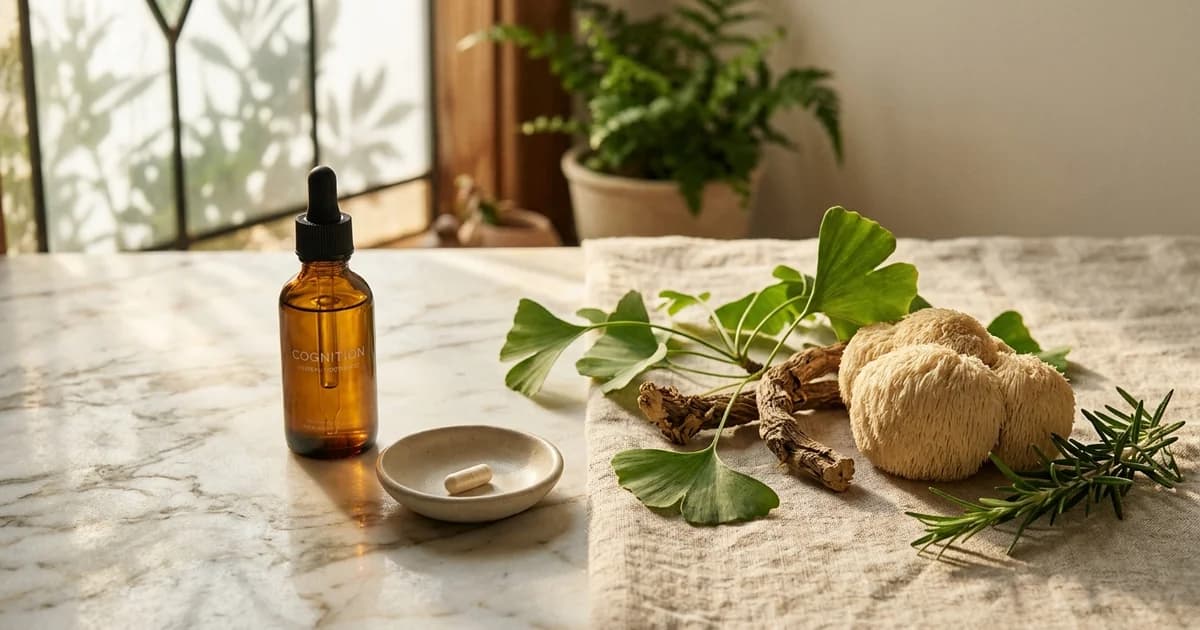
5 Things to Look for in the Best OTC Focus Supplement (and Why Most Miss the Mark)
You've probably stared at a wall of supplement bottles, each one promising laser focus and all-day energy, and walked away more confused than when you started. The market for OTC focus supplements has exploded, but most products rely on the same playbook: stuff a capsule with a dozen underdosed ingredients, slap "focus blend" on the label, and hope nobody checks the math.
Finding the best OTC focus supplement comes down to five specific, non-negotiable criteria. Not brand hype. Not influencer endorsements. Five things you can verify on the label before you spend a dollar. This guide breaks each one down, explains the science behind it, and shows you exactly what separates a product that works from one that just looks good on a shelf.
Key Takeaways:
- Transparent dosing (no proprietary blends) is the single fastest way to filter out underdosed products.
- The caffeine + L-theanine combination has the strongest evidence base for focus and attention among natural focus enhancers.
- Sustained-release compounds like Dynamine™ and TeaCrine™ extend the performance window without increasing stimulant load.
- Third-party testing is the only way to confirm what's actually in the tin, bottle, or packet.
1. Transparent Dosing: No Proprietary Blends, No Excuses
The first thing to check on any non-prescription focus supplement is whether you can see the exact dose of every single active ingredient. If the label says "Focus Blend: 500 mg" and lists six ingredients underneath without individual amounts, that's a proprietary blend. And it's a red flag.
Here's why: the FDA allows supplement makers to list ingredients in descending order of weight inside a proprietary blend, but they don't require disclosure of individual amounts. That means the first ingredient could be 490 mg of cheap filler and the last five could be sprinkled in at trace levels. A 2023 analysis published in PMC found that proprietary blends complicate accurate exposure estimates for bioactive ingredients, making it nearly impossible for consumers (or their doctors) to assess safety or efficacy.
What to look for: Every active ingredient listed with its exact milligram dose on the Supplement Facts panel. If a brand won't tell you how much of each compound you're getting, they're either underdosing or hiding behind marketing.
Typical offender: Alpha Brain's original formula uses proprietary blends for its three main complexes, which multiple reviewers have flagged as making it difficult to tell how much of each ingredient is actually present per serving.
2. Ingredients That Work Together: The Caffeine + L-Theanine Foundation
Caffeine alone is a blunt instrument. It increases alertness, yes, but it also raises anxiety, spikes blood pressure, and wears off with a crash. The best natural focus supplements pair caffeine with L-theanine, an amino acid found in tea leaves, because the two compounds balance each other out.
A 2022 systematic review in PMC examined the cognitive effects of caffeine and L-theanine in combination and found improvements in attention and task-switching accuracy beyond what either compound achieved alone. A 2025 study on elite wrestlers found that caffeine plus L-theanine maintained faster reaction times under fatigue, while caffeine alone failed to hold that advantage after exhaustive exercise.
L-theanine also promotes alpha brainwave activity, the pattern associated with calm, alert focus. A randomized, placebo-controlled trial published in Neurology and Therapy found that a single dose of L-theanine led to greater increases in frontal-region alpha power compared to placebo, supporting its role as a natural anxiolytic that doesn't sedate.
Best for: Anyone who wants focus without the jittery edge. The research consistently points to a caffeine-to-theanine ratio in the range of 1:1 to 1:2 as the sweet spot.
Typical dose: 50–100 mg caffeine paired with 50–200 mg L-theanine.
3. Sustained-Release Compounds: Extending the Window Without Stacking Stimulants
A common mistake with OTC focus aids: taking more caffeine to make the effect last longer. That approach hits a wall fast, both because of tolerance and because high caffeine doses bring diminishing returns and increasing side effects.
A smarter approach uses compounds that extend caffeine's effective window. Two stand out in the research: methylliberine (Dynamine™) and theacrine (TeaCrine™). Both are purine alkaloids structurally related to caffeine, but they behave differently in the body.
A randomized crossover study published in Cureus tested 50 young male e-gamers on caffeine alone (125 mg) versus caffeine combined with Dynamine (75 mg) and TeaCrine (50 mg). The combination improved both cognitive performance and reaction time compared to caffeine alone, without negatively affecting mood. A follow-up study in the same population confirmed improvements in neurophysiological measures and first-person shooter performance.
The tolerance angle matters too. An 8-week safety study published in JISSN found that TeaCrine showed no signs of habituation at doses up to 300 mg per day, meaning participants didn't need to increase their dose to get the same effect. That's the opposite of what happens with caffeine over time.
Best for: People who need 4+ hours of sustained output, not a 90-minute spike followed by a slump.
4. Third-Party Testing: Trust, but Verify
The supplement industry operates under a simple reality: the FDA does not approve dietary supplements before they hit shelves. Products are assumed safe until proven otherwise. That puts the burden of quality control on the manufacturer, and not every manufacturer takes it seriously.
Third-party testing fills that gap. Organizations like NSF International test products to confirm that what's on the label is actually in the product, and that harmful contaminants aren't. According to the Office of Dietary Supplements (OPSS), laboratory testing is the only way to verify the actual ingredients and amounts in a dietary supplement product.
What to look for: NSF Certified for Sport, Informed Sport, USP Verified, or similar third-party seals. Even if a product doesn't carry a formal certification, look for brands that publish Certificate of Analysis (COA) documents or reference independent lab testing on their site.
Why it matters for legal focus enhancers: If you're an athlete, a military member, or anyone subject to drug testing, third-party certification isn't optional. NSF's Certified for Sport program is the only independent third-party program that tests for substances banned by major athletic organizations.
5. A Formula That Checks Every Box: Why Roon Stands Out
Most OTC focus supplements get one or two of these criteria right. A product might have transparent dosing but rely on caffeine alone. Another might include L-theanine but hide behind a proprietary blend. Finding a formula that hits all five marks is harder than it should be.
Roon is a zero-nicotine sublingual pouch built around a four-ingredient nootropic stack: 80 mg caffeine, 60 mg L-theanine, 25 mg methylliberine (Dynamine™), and 5 mg theacrine (TeaCrine™). Every dose is printed on the label. No proprietary blends. No filler ingredients you can't pronounce.
The caffeine and L-theanine base delivers the combined focus effect the research supports. Dynamine and TeaCrine extend the performance curve, designed for sustained focus rather than a short spike. And because it's a sublingual pouch, absorption bypasses the GI tract for faster, more consistent delivery than capsules or drinks.
Here's how Roon stacks up against common alternatives on the five criteria:
| Criteria | Roon | Typical Capsule Nootropic | Energy Drink | Caffeine Pill |
|---|---|---|---|---|
| Transparent dosing | ✅ Every ingredient listed with exact mg | ❌ Often uses proprietary blends | ⚠️ Varies by brand | ✅ Usually single-ingredient |
| Caffeine + L-theanine pairing | ✅ 80 mg + 60 mg | ⚠️ Some include both, often underdosed | ❌ Rarely includes L-theanine | ❌ Caffeine only |
| Sustained-release compounds | ✅ Dynamine + TeaCrine | ⚠️ Rare | ❌ No | ❌ No |
| Third-party quality standards | ✅ Tested ingredients | ⚠️ Varies widely | ⚠️ Varies widely | ⚠️ Varies widely |
| Convenient format | ✅ Sublingual pouch, no water needed | ❌ Capsule, needs water | ⚠️ Liquid, bulky | ✅ Small pill |
How to Evaluate Any OTC Focus Supplement in 60 Seconds
You don't need a pharmacology degree. Just run through this checklist:
- Flip the label. Can you see the exact milligram dose of every active ingredient? If not, put it back.
- Look for the caffeine + L-theanine pairing. This is the most researched, most reliable foundation for a focus supplement. If a product has caffeine but no L-theanine (or vice versa), it's incomplete.
- Check for duration-extending compounds. Dynamine, TeaCrine, or other evidence-backed ingredients that stretch the focus window beyond caffeine's typical 3-4 hour half-life.
- Find the third-party testing proof. A seal on the label, a COA on the website, or a clear statement about independent lab verification.
- Consider the delivery format. Sublingual absorption is faster and more predictable than capsules that have to survive your stomach acid first.
If a product clears all five, it's worth trying. If it fails on two or more, keep looking.
The Bottom Line
The best OTC focus supplement isn't the one with the longest ingredient list or the loudest marketing. It's the one that gives you full transparency, pairs its ingredients based on actual research, extends the focus window without piling on stimulants, and proves its quality through independent testing.
Roon was built around exactly those principles: a clean, four-ingredient nootropic stack in a sublingual format, with every dose on the label. If you've been cycling through capsules, energy drinks, and caffeine pills without finding something that actually lasts, give it a try.